
Residential Roof Leak Repair: How to Protect Your Home Before Damage Spreads
Residential roof leak repair is a time-sensitive home protection issue, not a cosmetic upgrade. National data from Angi and HomeAdvisor show that more than 70% of water damage claims originate from roof problems, and timely repairs can reduce total restoration costs by up to 60%. When a leak appears, you are racing against water intrusion that can escalate from a small stain into structural rot, mold growth, and electrical hazards in a matter of weeks. The most effective way to stop that damage curve is to partner with a qualified local contractor who specializes in professional roofing services in Pasadena such as comprehensive residential roof repair and maintenance. According to industry data, professional roof leak repair costs typically range from $360 to $1,550, but the cost of not addressing the issue promptly can run into the tens of thousands of dollars in secondary damage.
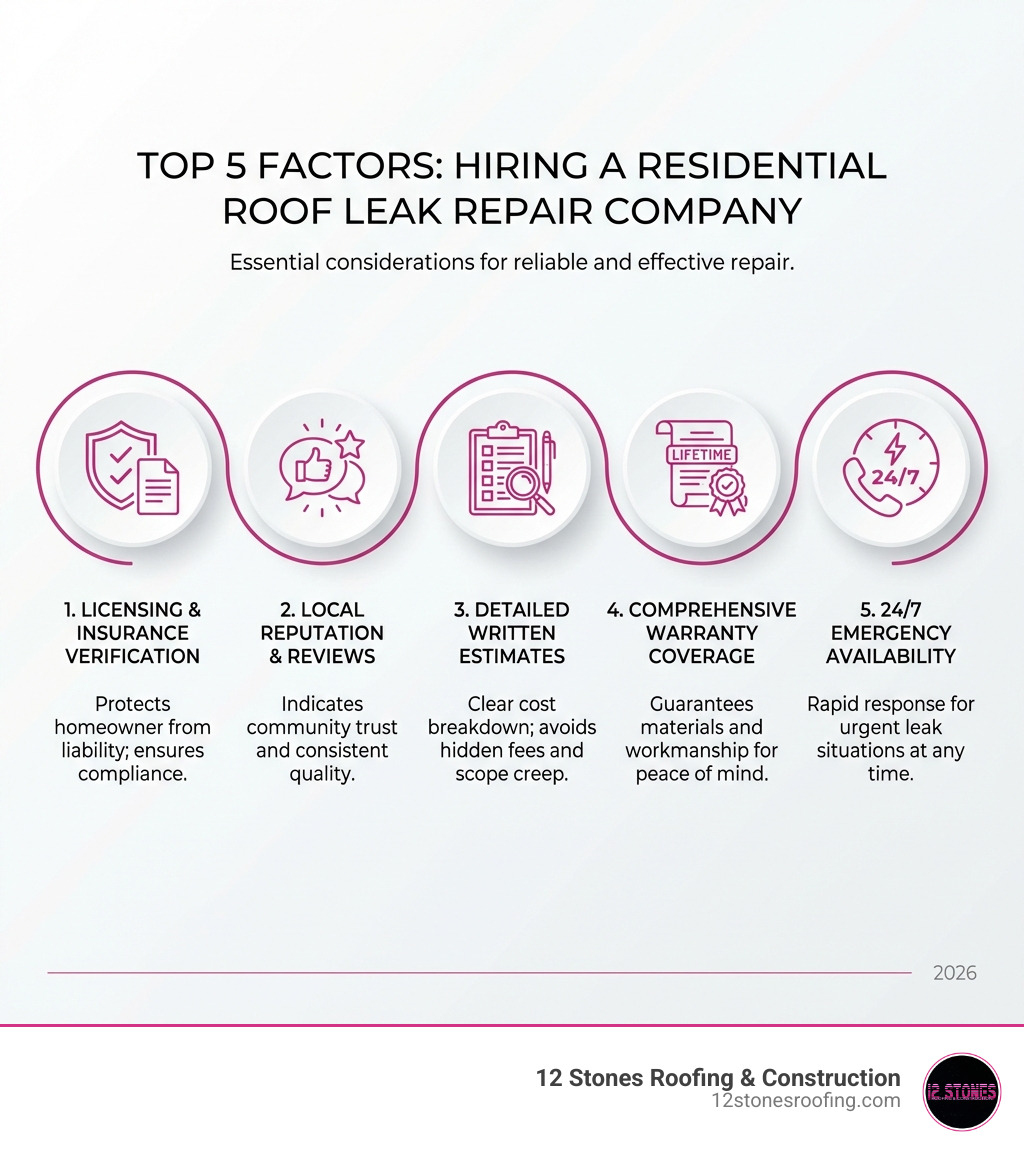
If you’re searching for a reliable roof leak repair company, here’s what you need to know:
- Verify licensing and insurance – Protect yourself from liability
- Check local experience – Ensure they understand Texas weather patterns and building codes
- Get a detailed written estimate – Avoid surprise costs and scope creep
- Confirm warranty coverage – Both materials and workmanship should be guaranteed
- Ask about emergency services – Leaks don’t wait for business hours
The right contractor will perform a thorough inspection of your attic, interior, and roof exterior before providing a quote. They should have proven experience with your specific roofing material, whether it’s asphalt shingles, metal, or tile. They should also be able to assist with insurance claims if your leak was caused by storm damage—a common issue in the Gulf Coast region.
I’m Jason Roberts, owner of 12 Stones Roofing & Construction, and I’ve personally overseen hundreds of residential roof leak repair projects across the Pasadena area over the past decade. My team and I understand the urgency of a leaking roof and the importance of getting it fixed right the first time, whether it’s a simple flashing repair or a complex multi-point leak requiring structural work. If you’re currently dealing with a leaky roof and need immediate assistance, we offer comprehensive emergency roofing services to protect your home.
Quick look at Residential roof leak repair:
The Hidden Dangers of Roof Leaks: Costs, Health Risks, and Structural Damage
A roof leak is a problem that compounds over time and consistently costs more the longer it is ignored. The national average cost for a professional roof leak repair is between $360 and $1,550, but multiple insurance studies show that unchecked leaks can trigger $10,000–$30,000 in structural, electrical, and mold remediation costs over a 2–3 year period. Understanding the long-term consequences underscores the urgency of immediate action. When water breaches your roof’s defenses, it does not stay put; it migrates through framing, insulation, and wall cavities, causing hidden damage that can compromise your home’s safety and value.

- Structural rot: Water can saturate wooden beams, rafters, and sheathing, leading to rot, weakening the very bones of your home. This can even cause ceilings to sag or collapse over time if left unaddressed.
- Mold and mildew growth: Persistent moisture creates a perfect breeding ground for mold and mildew, which can spread rapidly through your attic, walls, and HVAC system. Studies from the EPA and CDC consistently link indoor mold exposure to increased asthma attacks and respiratory irritation.
- Damaged insulation: Wet insulation loses up to 40% of its thermal performance, leading to higher energy bills as your HVAC system works harder to maintain indoor temperatures. Replacing water-damaged insulation can be a costly and messy affair.
- Electrical hazards: Water and electricity are a dangerous combination. Leaks can trickle down to electrical wiring, light fixtures, and outlets, creating fire hazards or leading to power outages.
- Compromised home value: Unrepaired leaks can significantly diminish your home’s curb appeal and resale value. Real estate data shows that documented water damage can reduce offers by 5–15%, as buyers price in future repairs and risk.
For more information on the financial impact, we’ve explored more on the costs of water damage.
Common Causes of Residential Roof Leaks
Most leaks originate from points of failure or penetration on the roof. Knowing the common culprits can help you communicate effectively with a roofing contractor and understand the nature of your residential roof leak repair.
- Damaged shingles: Missing, cracked, curled, or blistering shingles are primary entry points for water. Strong winds, hail, or even just prolonged exposure to the intense Texas sun can cause this damage.
- Aged or cracked flashing: Flashing, the thin metal or rubber material installed around chimneys, skylights, vents, and wall intersections, is crucial for sealing these vulnerable areas. Over time, it can corrode, crack, or become loose, allowing water to seep underneath.
- Clogged gutters: When gutters are blocked by leaves and debris, water can’t drain properly. It backs up, overflows, and can pool on your roof, finding its way under shingles or behind fascia boards.
- Damaged vent boots: Plumbing vent pipes, exhaust vents, and attic vents penetrate your roof. The rubber or metal boots sealing these penetrations can crack, rot, or become dislodged, creating direct pathways for water.
- Ice dams: While less common in Pasadena, TX, during rare freezes, ice dams can form when melting snow refreezes at the eaves, preventing proper drainage. This can force water under shingles and into your home.
- Improper installation: Sometimes, leaks are a result of shortcuts or mistakes made during the initial roof installation or a previous repair. This can include incorrect nailing, insufficient underlayment, or poorly sealed flashing.
To understand how various weather events contribute to these issues, learn how rain damages roofs.
How to Find a Roof Leak and Decide When to Call a Professional
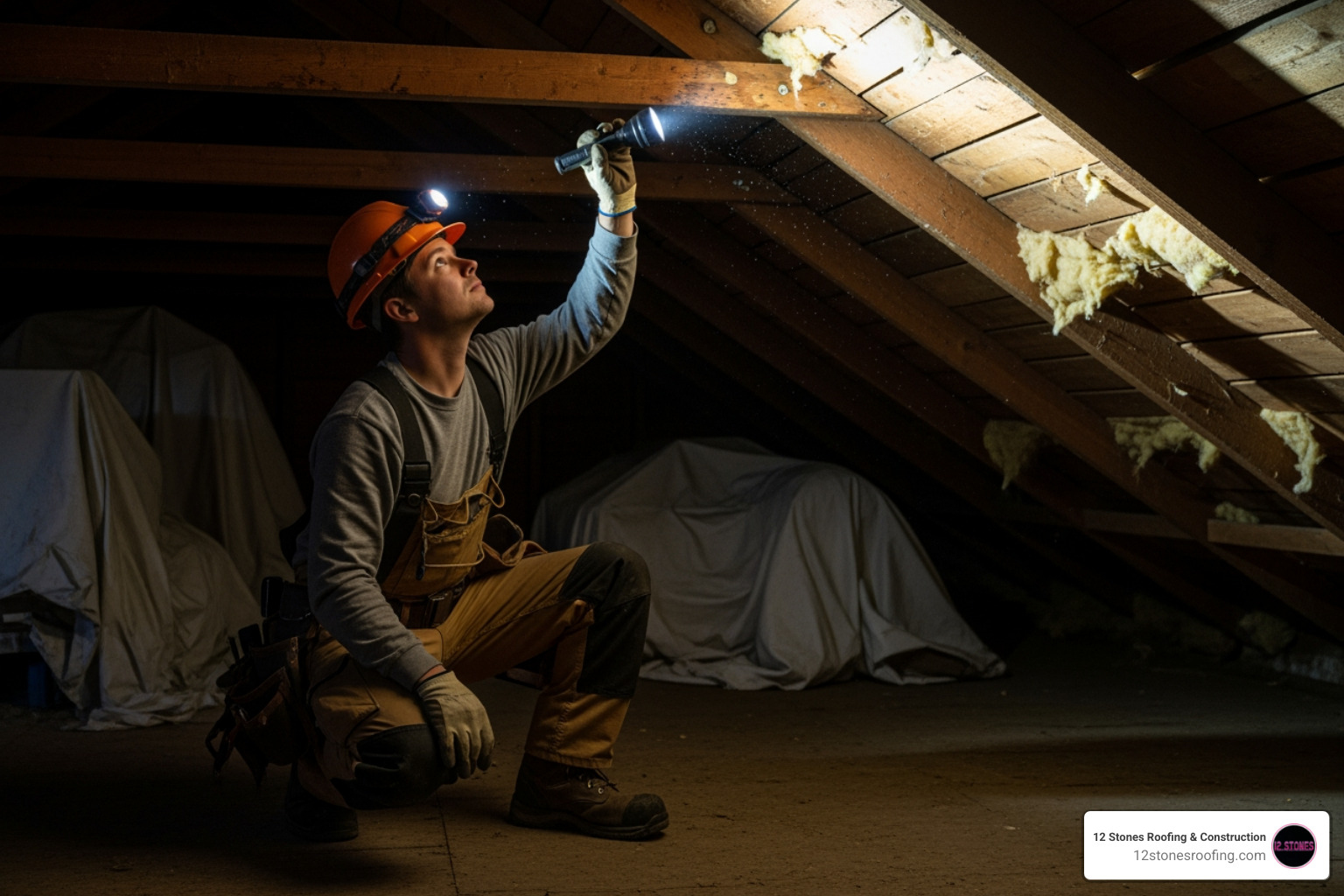
Before you can hire a company, you need to confirm you have a leak and assess the situation. A structured inspection process—starting inside, then moving to the attic, and finally the roof exterior—allows homeowners and professionals to pinpoint leak sources with greater than 80% accuracy on the first visit. While some homeowners can perform a basic inspection, safety should always be the top priority. Water often travels horizontally along rafters or sheathing before dripping, so the visible stain inside might not be directly below the actual entry point on the roof.
Immediate Signs and Symptoms to Look For:
-
Interior signs:
- Water stains: Brown or yellow stains on ceilings or walls are classic indicators. They can be subtle at first but grow over time.
- Musty odors: A persistent musty or damp smell, especially in the attic or upper floors, often signals hidden mold growth due to a leak.
- Sagging drywall: If your ceiling or wall material feels soft to the touch or visibly sags, it indicates significant water saturation and potential structural damage.
- Active drips: The most obvious sign, an active drip during or after rain, means water has fully breached your home’s defenses.
-
Exterior signs:
- Missing shingles: Visually inspect your roof from the ground, or use binoculars, for any missing, cracked, or curled shingles.
- Damaged flashing: Look for bent, rusted, or loose flashing around chimneys, skylights, and vents.
- Granules in gutters: If you have asphalt shingles, an excessive amount of granules in your gutters indicates the shingles are deteriorating and nearing the end of their lifespan.
- Water pooling: Check for areas where water might be collecting on a flat roof or behind obstructions.
For a comprehensive approach to identifying these issues, refer to a homeowner’s guide to leak detection.
Temporary Fixes vs. Professional Residential Roof Leak Repair
If you have an active leak during a storm, a temporary solution can prevent further damage while you wait for a professional. However, these are not permanent solutions and should always be followed up with a proper residential roof leak repair. Think of them as first aid for your roof, buying you crucial time.
- Tarping the roof: This is often the most effective temporary solution for significant damage. Locate the source of the leak and cover it with a heavy-duty plastic tarp, extending it several feet beyond the damaged area. Secure the tarp tightly with 2x4s or heavy objects to prevent wind from dislodging it.
- Applying roofing cement: For small cracks or holes in shingles, a dab of roofing cement or mastic can provide a temporary seal. Lift the damaged shingle, apply the cement underneath, and press it down firmly.
- Using silicone caulk: Around vent boots or small gaps in flashing, a bead of exterior-grade silicone caulk can offer a short-term fix. Ensure the area is dry and clean for best adhesion.
For more detailed instructions on these methods, explore DIY temporary solutions and our guide to emergency roof tarping.
When to Stop and Call a Professional
DIY repairs are tempting, but they can often cause more harm than good and may void your roof’s warranty. It is absolutely necessary to call a professional for residential roof leak repair if you notice any of the following signs:
- Widespread damage: If multiple areas of your roof are damaged, or the leak is large and persistent, it’s beyond a simple patch.
- Multiple leak points: A single leak is one thing, but if water is entering your home from several spots, it indicates a more systemic issue that requires expert diagnosis.
- A sagging roof deck: This is a serious structural concern. A professional needs to assess the integrity of your roof’s decking and framing immediately.
- You are uncomfortable with heights: Safety first! Working on a roof can be dangerous, especially if it’s wet, steep, or you’re not experienced. Falls can lead to severe injuries.
- The leak persists after a DIY attempt: If your temporary fix or minor repair didn’t stop the leak, it means the underlying problem is more complex than you initially thought.
- The roof is over 15-20 years old: For asphalt shingle roofs, this age often means the materials are nearing the end of their lifespan. Even a small leak could be a symptom of widespread deterioration, potentially warranting a replacement rather than just a repair.
For expert assistance in the Pasadena area, it’s best to find professional roofers in Pasadena who understand the local climate and building requirements.
The Ultimate Checklist: 10 Data-Backed Tips for Hiring a Residential Roof Leak Repair Company
Choosing the right contractor is the most important step in ensuring a successful residential roof leak repair. Home improvement industry reports consistently show that homeowners who vet at least three contractors, verify licensing, and review written estimates reduce their risk of cost overruns by more than 30%. Use this checklist to vet potential companies and ensure you hire a qualified, reliable professional. We understand that entrusting your home to someone else is a big decision, and we’re here to help you make an informed choice.
1. Verify They Are Licensed and Insured
This is non-negotiable. A legitimate contractor must carry general liability insurance and worker’s compensation. General liability insurance protects your property from damage caused by the contractor, while worker’s compensation covers their employees in case of injury on your property. Without these, you could be held liable for accidents or damages. Always ask for proof of both and verify their current status. Some contractors are also bonded, offering an additional layer of financial protection for you, the homeowner.
2. Check for Local Experience and Reputation
A company with deep roots in your community, like us here in Pasadena, TX, understands local building codes, permit requirements, and, crucially, the unique weather patterns we face. Texas weather, with its intense sun, sudden thunderstorms, and occasional hail, can wreak havoc on roofs. A local expert will know which materials perform best and how to address common issues specific to our area. Check online reviews on platforms like Google, Yelp, and the Better Business Bureau (BBB) for their rating. Ask for local references—a reputable company will be happy to provide them. We pride ourselves on our community ties; read our testimonials to see what our neighbors say about us.
3. Ask About Their Inspection Process
A thorough contractor won’t give a quote over the phone. They should perform a comprehensive inspection of the interior (looking for stains, mold, and sagging), the attic (checking for water trails, damp insulation, and structural integrity), and the roof exterior (assessing shingles, flashing, vents, and overall condition) to accurately diagnose the problem. A leak visible inside can be several feet from the actual entry point on the roof, so a meticulous investigation is key. Some advanced companies even use drone inspections for hard-to-reach areas, providing a detailed overview without risking safety. Learn more about our detailed roof inspection process.
4. Understand the Warranties Offered
When investing in a residential roof leak repair, warranties provide peace of mind. There are generally two types: a material warranty (from the manufacturer, covering defects in the roofing products) and a workmanship warranty (from the contractor, guaranteeing the quality of their installation and repair work). A confident and reliable contractor will stand behind their work with a solid workmanship warranty, typically ranging from 5 to 10 years, sometimes longer. Clarify the duration of both warranties and whether they are transferable if you sell your home. We believe in the quality of our work, which is why we offer our roofing warranty to every client.
5. Get a Detailed, Written Estimate
Never accept a verbal quote. A professional estimate should be itemized, detailing the scope of work, all materials to be used (including brand and type), labor costs, and a projected timeline for completion. This transparency prevents surprise costs later and ensures you understand exactly what you’re paying for. It also serves as a contract, outlining the expectations for both parties. According to Angi, the cost to repair a roof that is leaking can range from about $360 to $1,550 on average when hiring a local roof repair company, but this can vary widely based on the specifics detailed in your estimate. Understanding factors that determine repair cost will help you evaluate the estimate.
6. Inquire About Safety Protocols
Professional roofing is a dangerous job, especially when dealing with slippery surfaces or damaged structures. We take safety very seriously. Ask the company about their safety training, the equipment they use (like harnesses, non-slip shoes, and sturdy ladders), and the protocols they follow on-site to protect both their crew and your property. This demonstrates their professionalism and commitment to preventing accidents. Reputable companies adhere to OSHA (Occupational Safety and Health Administration) guidelines and prioritize a clean, safe work environment.
7. Confirm Their Knowledge of Different Roof Types
Leaks and repairs vary significantly based on the roofing material. An asphalt shingle roof will have different vulnerabilities and repair methods than a metal, tile, or flat roof. Ensure the contractor has proven experience with your specific roof type. For instance, repairing a residential metal roof requires different tools and expertise than patching asphalt shingle roofing. If you have tile roofing or a flat roofing system, confirm their specialized knowledge in those areas as well.
8. Discuss Their Experience with Insurance Claims
If the leak was caused by a storm—a common occurrence in Pasadena, TX, with our frequent thunderstorms, hail, and even tornadoes—you might be able to file an insurance claim. A seasoned contractor can be an invaluable asset in navigating this process. We can help assess storm damage, provide detailed documentation and photos, and even meet with your insurance adjuster to ensure all damage is properly identified and covered. This expertise can significantly streamline your roofing insurance claims process.
9. Evaluate Their Communication and Professionalism
From the initial phone call to the final walkthrough, the company should be responsive, respectful, and clear in their communication. Do they return calls promptly? Do they explain the repair process in an understandable way? Are they punctual for appointments? These seemingly small details are often strong indicators of the quality of their work and their overall commitment to customer satisfaction. A professional demeanor reflects a well-organized and trustworthy operation.
10. Ask About Emergency Services and Response Time
Leaks don’t wait for business hours, especially after a severe storm. A top-tier company will offer emergency services to mitigate damage quickly. In a crisis, a rapid response can prevent extensive water damage to your home’s interior. Inquire about their typical response time for urgent situations and what steps they take to secure your roof temporarily until a permanent repair can be made. We understand the urgency; that’s why we offer comprehensive emergency roofing services for our Pasadena neighbors.
Proactive Protection: How to Prevent Future Roof Leaks
The best repair is the one you never have to make. Regular maintenance is the key to extending your roof’s lifespan and preventing future leaks. A professional inspection should be done at least once a year or after any major storm, especially given the unpredictable Texas weather.
- Regular inspections: We recommend professional roof inspections at least twice a year (spring and fall) and always after severe weather events. This helps catch minor issues like cracked caulk or loose shingles before they escalate into major leaks.
- Gutter cleaning: Keep your gutters and downspouts free of leaves, twigs, and other debris. Clogged gutters prevent water from draining away from your roof and foundation, causing it to back up and potentially seep under shingles.
- Trimming tree branches: Overhanging branches can scrape against your roof, damaging shingles. They also drop leaves and debris, contributing to gutter clogs, and pose a risk of falling during strong winds, causing significant damage. Keep them trimmed at least three feet away from your roof.
- Attic ventilation check: Ensure your attic is properly ventilated. Poor ventilation can lead to heat and moisture buildup, which can damage your roof deck and insulation from the inside out, making it more susceptible to leaks and mold.
For a thorough guide, you can download our roof maintenance checklist.
Frequently Asked Questions about Roof Leak Repair
What is the difference between a roof repair and a roof replacement?
A roof repair addresses a specific, localized issue, such as replacing a few missing shingles, sealing a faulty flashing around a chimney, or patching a small puncture. It’s suitable when the damage is limited and the rest of the roof is in good condition and has a significant portion of its lifespan remaining. A roof replacement, on the other hand, involves removing the entire existing roofing system and installing a new one. This is necessary when the roof system is at the end of its lifespan (typically 12-20 years for asphalt shingles, 40-70 years for metal roofs) or has widespread, systemic damage that cannot be effectively patched, such as extensive rot, multiple leaks, or significant storm damage across a large area. A professional inspection will determine the right course of action, weighing the cost-effectiveness and long-term benefits of each option.
How much does a professional residential roof leak repair cost?
The cost of a professional residential roof leak repair typically ranges from $360 to $1,550. However, this is a broad average, and the final price depends on several factors:
- Roofing material: Repairs for asphalt shingles (generally $200-$1,000) are usually less expensive than for metal roofs (starting at $500 for minor issues, up to $3,000 for panel replacement) or EPDM/flat roofs ($300-$600, serious issues over $2,000).
- Accessibility and pitch of the roof: Steep or hard-to-access roofs require more specialized equipment and safety measures, increasing labor costs.
- Extent of the damage: A small, isolated leak will cost less to fix than multiple leaks or extensive damage requiring larger sections of material replacement.
- Underlying structural damage: If water has seeped into the roof deck or rafters, requiring repair or replacement of these structural components, the cost will significantly increase.
- Emergency services: Repairs needed outside of standard business hours or under urgent conditions may incur additional fees.
For homeowners attempting DIY, costs can range from $10 to $120 for materials. However, as we’ve discussed, DIY often carries risks and may not be a long-term solution.
Will my homeowner’s insurance cover a leaking roof?
Homeowner’s insurance typically covers roof leaks caused by sudden, accidental events, often referred to as “acts of God.” This includes damage from severe weather events common in our Pasadena area, such as hail, wind, falling tree limbs, or tornadoes. If your roof leak is a direct result of such an event, your policy is likely to cover the repair or even replacement costs.
However, insurance generally does not cover leaks resulting from old age, wear and tear, or a lack of maintenance. If the leak developed slowly over time due to neglected upkeep, a deteriorating roof past its expected lifespan, or poor installation from years ago, your claim might be denied. It’s crucial to document the damage thoroughly with photos and videos, contact your insurance provider promptly after finding the leak, and have a professional assessment done. Many roofing companies, including ours, can assist in navigating the claims process.
Don’t Wait for a Drip to Become a Disaster
Choosing the right company for your residential roof leak repair is a critical decision that protects your home’s structural integrity and your family’s safety. By following these tips, you can confidently hire a qualified, trustworthy contractor who will get the job done right. For homeowners in the Pasadena, TX area, 12 Stones Roofing & Construction provides expert diagnostics and reliable repairs backed by years of local experience. We understand the unique challenges our local climate poses to your roof and are dedicated to providing transparent, high-quality service.
If you’re facing a roof leak, don’t delay. Schedule an emergency roof inspection online or call us directly at (281) 931-2116 to secure your home before the next storm hits.