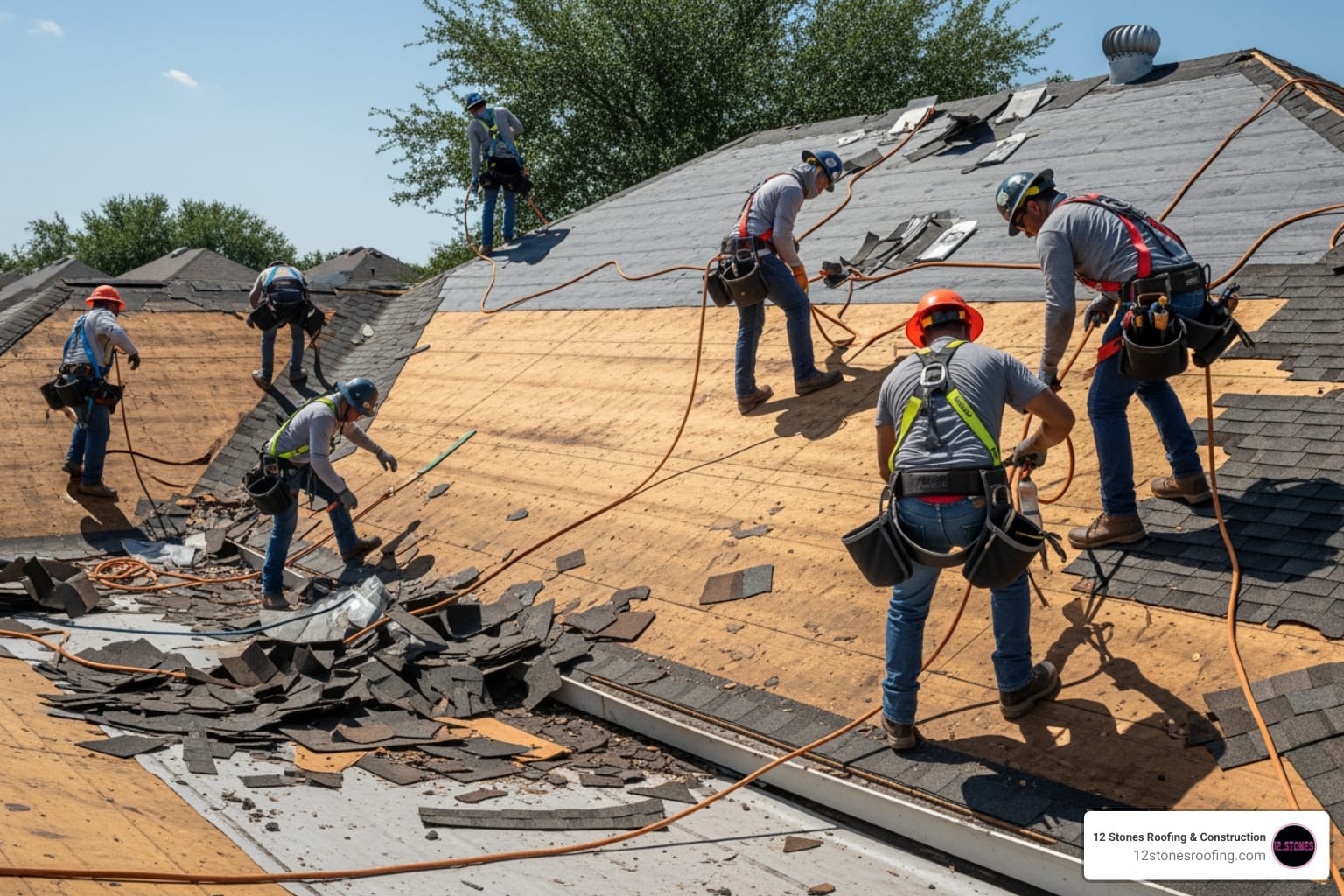

Bitumen Roof Patch: Your First Line of Defense Against Leaks
A bitumen roof patch is a versatile, asphalt-based sealant essential for addressing leaks and damage on various roofing systems, especially modified bitumen roofing. This waterproof, durable material is the go-to solution for property owners needing a quick fix for cracks, splits, and failing seams. If you want a pro to handle it start to finish, book service with a trusted roofing contractor at 12 Stones Roofing & Construction. Understanding how to properly use a bitumen patch can save you significant time and money on future roof repair costs. This guide provides everything you need to know.
What is Bitumen Roof Patch?
A durable, asphalt-based sealant used for repairing leaks and damage on various roofing materials.
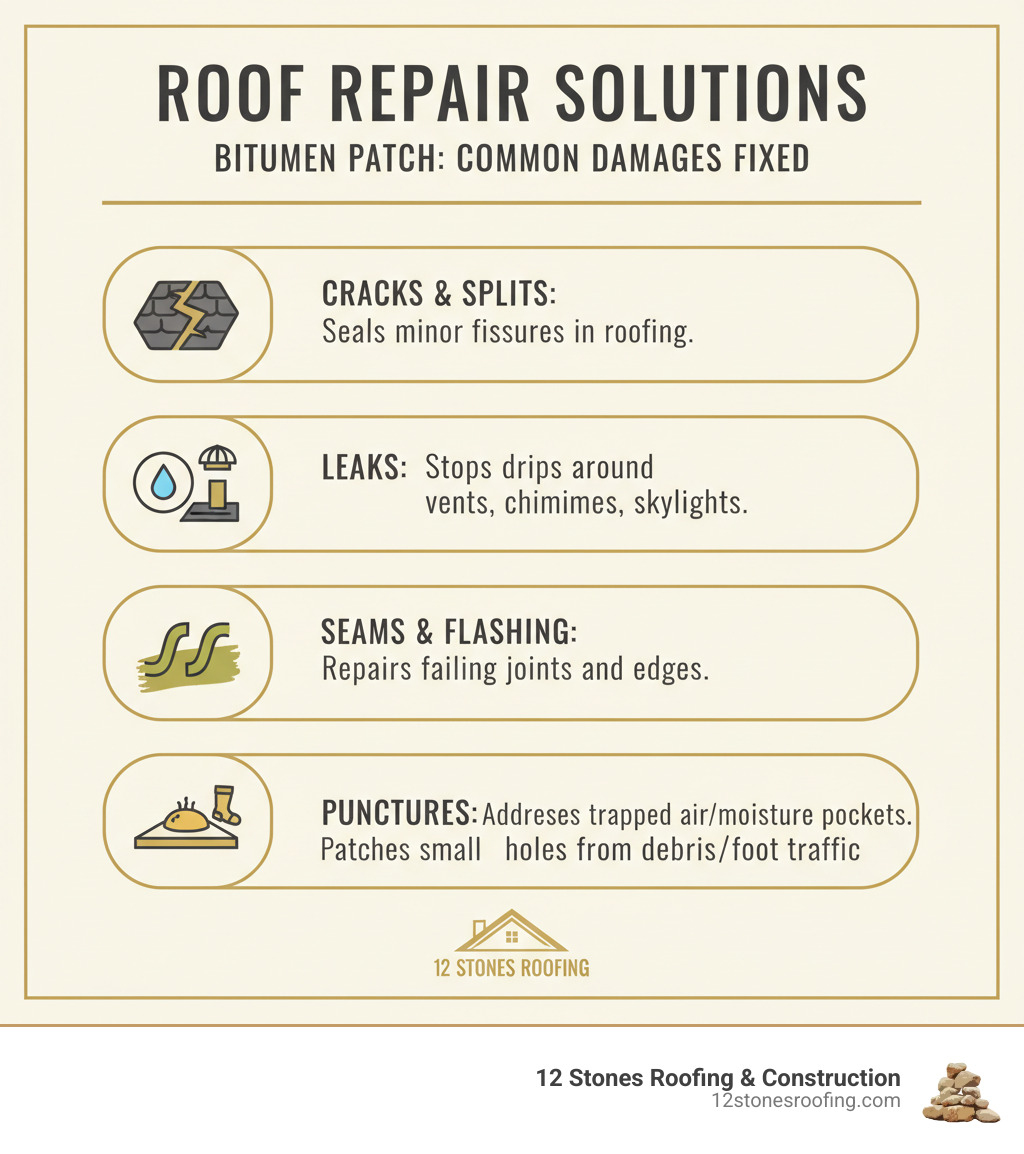
What Damages Can Bitumen Roof Patch Fix?
- Cracks & Splits: Seals minor fissures in roofing membranes and shingles.
- Leaks: Stops drips around roof penetrations like vents, chimneys, and skylights.
- Seams & Flashing: Repairs failing joints and edges where materials meet.
- Blisters: Addresses trapped air or moisture pockets on flat roofs.
- Punctures: Patches small holes caused by debris or foot traffic.
As the Owner of 12 Stones Roofing & Construction, my decade of experience in the Gulf Coast region has provided deep insight into effective bitumen roof patch solutions. This expertise allows me to share practical, reliable advice for both residential and commercial properties.
What is Bitumen Roof Patch and When Should You Use It?
Think of a bitumen roof patch as your roof’s emergency first-aid kit. It’s a high-performance, asphalt-based compound, also known as roof cement or mastic, engineered to seal and repair damaged roofing surfaces. Its core ingredient is bitumen, a sticky, black petroleum derivative prized for its exceptional waterproofing and adhesion.
We recommend using a bitumen patch to address these common roofing issues:
- Cracks and Splits: Fills and seals fissures caused by age or thermal stress.
- Blisters: Treats bubbles of trapped moisture or air once properly cut and dried.
- Failing Seams: Reseals vulnerable joints where roofing materials separate.
- Punctures: Quickly seals holes from falling branches, hail, or foot traffic.
- Flashing Issues: Provides a flexible, waterproof seal around chimneys, vents, and skylights.
Bitumen patch is highly versatile and compatible with many roofing materials. It adheres seamlessly to modified bitumen roofing and traditional built-up roofing (BUR) systems. It can also salvage asphalt shingles with minor cracks and even repair leaks around fasteners on some metal roofs. Essentially, any asphalt-based roofing system is a prime candidate for this type of repair. For a deeper understanding of different roof types, see our guide on flat roof material types.
The Different Formulations of Bitumen Roof Patch
Bitumen roof patches come in several formulations, each suited for different repair scenarios:
- Trowel-grade Cement: A thick, mastic-like consistency perfect for filling larger cracks and embedding reinforcing fabric. It’s applied with a trowel and won’t sag on vertical surfaces.
- Brush-grade Sealant: A thinner consistency that spreads easily with a brush, ideal for coating smaller areas or sealing seams.
- Self-adhesive Tape/Patches: Pre-formed, peel-and-stick sheets or rolls for quick emergency repairs, especially on flat areas.
- Caulk Tubes: Dispensed with a caulking gun for precise application around small penetrations like pipes and vents.
Packaging ranges from 10.1 oz caulk tubes for minor jobs to 1-gallon and 5-gallon pails for larger residential or professional projects. Before starting, gather essential tools: a trowel, wire brush, utility knife, reinforcing fabric, roofing primer, and safety gear like gloves and eye protection.
Key Benefits of Using Bitumen for Repairs
Based on our experience with roofs across the Gulf Coast, bitumen roof patch is a trusted solution for several key reasons:
- Exceptional Waterproof Seal: It creates a robust, impermeable barrier that stops water intrusion effectively.
- Excellent Adhesion: The patch bonds tenaciously to modified bitumen, asphalt shingles, and other common roofing materials, ensuring it stays put.
- Flexibility and Elasticity: Polymer-modified patches stretch to accommodate your roof’s expansion and contraction with temperature changes, preventing cracks.
- UV Resistance: Many formulations withstand prolonged sun exposure. Some can be coated with reflective materials to improve UV protection and reduce heat absorption.
- Cost-Effectiveness: It is an economical way to address minor to moderate damage compared to the cost of extensive repairs or replacement.
- DIY-Friendly: For small cracks and isolated leaks, bitumen caulk or self-adhesive patches are accessible for a careful homeowner to apply.
- All-Weather Application: Certain products can be applied to wet or damp surfaces, allowing for immediate emergency repairs during a storm.
Bitumen vs. Other Sealants: A Quick Comparison
When choosing a sealant, it helps to know how bitumen roof patch compares to alternatives like acrylics and silicones.
- Cost: Bitumen is generally the most affordable option. Acrylics are mid-range, while silicones have a higher initial cost.
- Durability: Bitumen offers solid, weather-resistant performance. Silicones excel in long-term durability, while acrylics can become brittle over time.
- UV Resistance: Silicones offer the best UV resistance. Bitumen performs well, especially when coated, while acrylics are fair to good.
- Wet Surface Application: This is a key advantage for bitumen, as many formulations can be applied to damp surfaces for emergency repairs. Most acrylics require a dry surface, and only specialized silicones work in wet conditions.
- Flexibility: Silicones are the most flexible. Polymer-modified bitumen also offers good flexibility, while acrylics can lose elasticity with age.
- Paintability: Acrylics are often paintable. Bitumen and silicone sealants are generally not.
For roofing systems in areas like Pasadena, TX—where high humidity and intense sun are common—a quality bitumen roof patch consistently delivers robust performance and excellent value, especially for asphalt-based roofs.
How to Apply Bitumen Roof Patch for a Lasting Repair
Applying a bitumen roof patch requires attention to detail to ensure a durable, long-lasting repair. Proper preparation is the most critical part of the process.
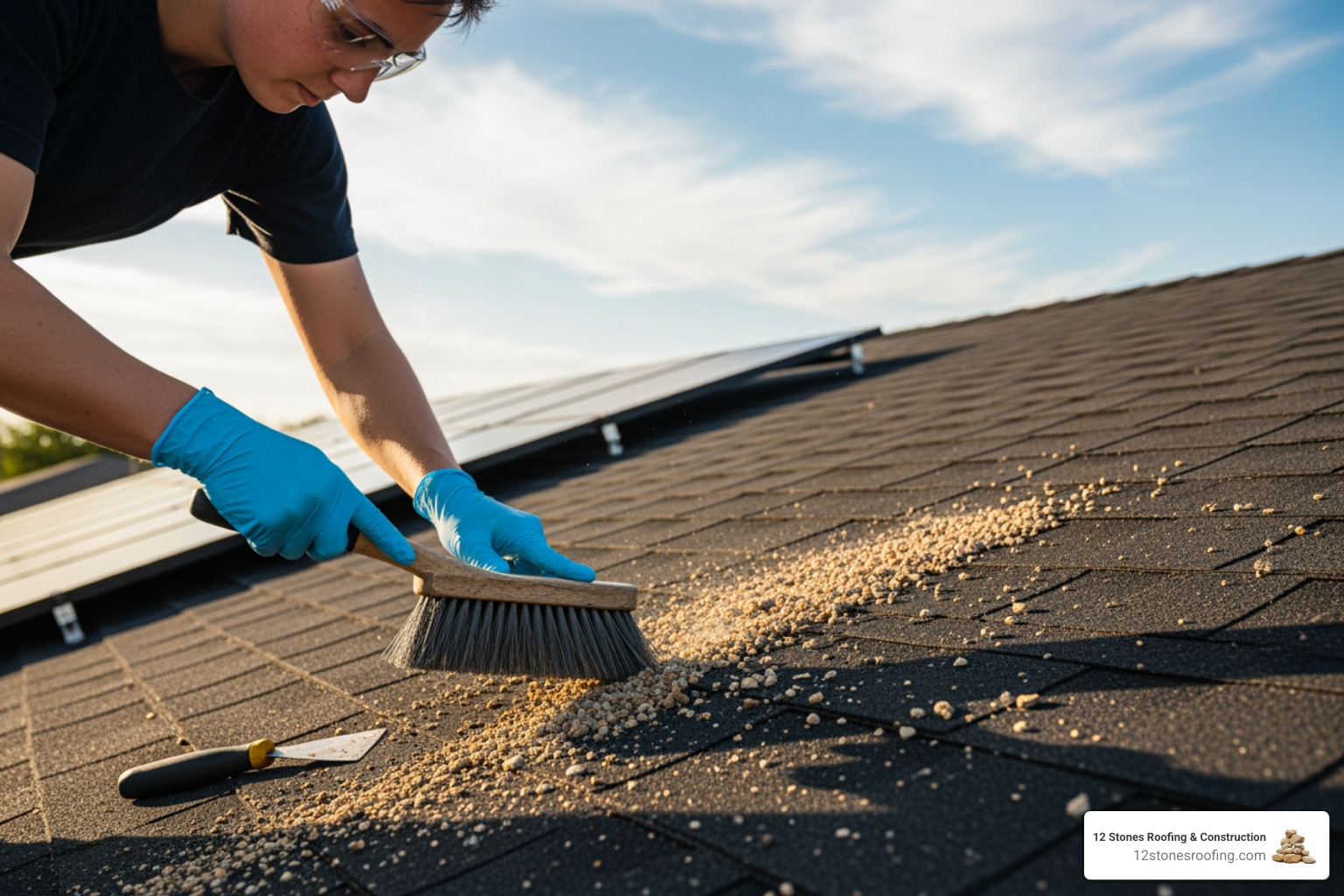
Before you begin, prioritize safety. Always wear Personal Protective Equipment (PPE), including safety glasses, gloves, and sturdy footwear. Ensure adequate ventilation, as some products have a VOC content up to 250 g/L MAX. High-quality patches often meet standards like ASTM D-3019 Type III, which guarantees they meet specific performance requirements.
Step 1: Preparing the Damaged Area
A successful repair starts with a clean, stable surface. If you skip this step, the patch will not adhere correctly.
- Locate and Clean: Identify the source of the leak. Use a stiff wire brush or broom to thoroughly clean the area, removing all loose debris, dirt, gravel, and old roofing material.
- Address Damage: For blisters, carefully cut an ‘X’ shape with a utility knife, fold back the flaps, and let the area dry completely. For cracks and punctures, ensure the edges are clean and free of loose material.
- Dry and Prime: The surface should be as dry as possible for optimal adhesion, though some products (like APOC 109 or Shell Tixophalte Wet) are designed for wet application in emergencies. For porous surfaces, apply a compatible roofing primer and allow it to become tacky before patching.
Step 2: Applying the Bitumen Roof Patch
With the area prepared, you can now apply the patch to create a watertight seal.
- Apply First Layer: Using a trowel, apply a generous, even layer of trowel-grade cement about 1/8-inch thick. Extend the patch at least two to three inches beyond the damaged area. For blisters, apply cement inside the cut-out area before pressing the flaps down.
- Embed Reinforcing Fabric: For added strength over cracks or seams, press a layer of reinforcing fabric (like fiberglass mesh) firmly into the wet bitumen. Ensure it is fully saturated and free of air bubbles. This step is crucial for long-term durability.
- Apply Second Layer: Apply a second layer of bitumen patch, completely covering the fabric.
- Feather the Edges: Smooth the edges of the patch, feathering them down to blend with the existing roof surface. This prevents water from pooling at the edges of the repair.
- Seal All Edges: For self-adhesive patches, apply a bead of bitumen sealant around all edges to guarantee a watertight seal.
For more comprehensive guidance, our guide to leaky flat roof repair offers additional in-depth solutions.
Step 3: Safety and Curing
After application, the patch needs time to cure properly.
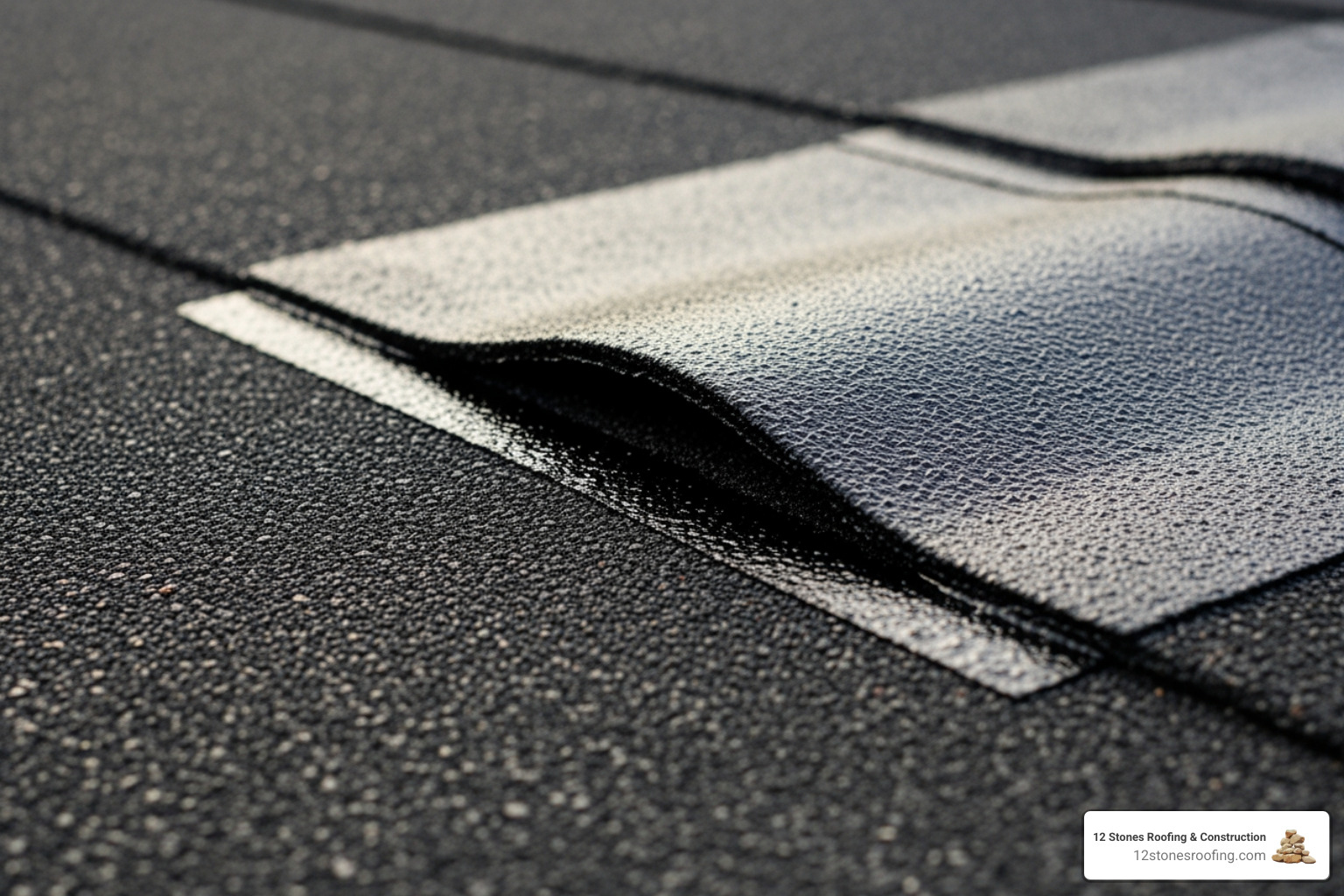
- Curing Time: The initial set time is typically 24 to 48 hours, during which you should avoid walking on the patch. However, a full cure can take up to 30 days, depending on temperature, humidity, and thickness. The patch will be rain-resistant shortly after application.
- Ventilation: Continue to ensure good ventilation as the product cures, especially for solvent-based formulas.
- Cleanup: Clean your tools immediately with mineral spirits or a specialized cleaner. Once cured, bitumen is extremely difficult to remove.
- Disposal: Dispose of all waste materials according to local regulations.
Performance, Durability, and Maintenance of Your Patch
A properly applied bitumen roof patch can significantly extend your roof’s life. Understanding its performance capabilities and maintenance needs will help you get the most out of your repair.
How Long Does a Bitumen Roof Patch Last?
A high-quality bitumen roof patch repair can last from 5 to 10 years. Several factors influence this lifespan:
- Product Quality: High-performance, polymer-modified patches with warranties (some up to 10 years) will outlast basic formulations.
- Application: Proper surface preparation and application technique, including the use of reinforcing fabric, are critical for longevity.
- Environmental Conditions: Intense heat, heavy rain, and storms test any repair. Quality bitumen patches are designed for extreme temperatures, remaining flexible from -50°C (-58°F) to +90°C (194°F) once cured. They are also rain-ready shortly after application, providing immediate protection.
- Underlying Roof Condition: A patch can only be as strong as the roof material it’s bonded to. If the surrounding roof is failing, the patch may fail with it.
Maintaining Your Repaired Roof Area
Regular maintenance is key to maximizing the life of your patch and your entire roof.
- Inspect Regularly: We recommend inspecting your roof twice a year (spring and fall) and after major storms. Look for new cracks, lifting edges on the patch, or general wear.
- Clean Debris: Every few months, clear leaves, branches, and dirt from your roof surface and drainage systems. This prevents water from pooling, which puts stress on patched areas. Trim overhanging tree branches to prevent damage.
- Check for New Damage: While inspecting, keep an eye out for new issues like loose seams or punctures elsewhere on the roof. Catching problems early prevents them from escalating.
- Consider Reflective Coatings: In a hot climate like ours, applying a reflective roof coating every few years can protect the entire roof, including patches, from UV degradation. This reduces heat stress and can lower cooling costs by 15% to 30%.
For more tips on keeping your roof in top condition, check out our guide on flat roof maintenance services.
Frequently Asked Questions about Bitumen Patching
Over our years of serving Pasadena, TX, and the surrounding areas, we’ve answered many common questions about using a bitumen roof patch. Here are our expert insights.
Can bitumen roof patch be applied in the rain?
Yes, many bitumen roof patch products are formulated for all-weather application, meaning they can adhere to wet or damp surfaces. This is a significant advantage for stopping an active leak during a storm. Products like APOC 109 Asphalt Roof Cement are specifically made for these conditions. However, for maximum longevity, we always recommend applying the patch to a dry surface whenever possible. If you do make a repair in the rain, it’s wise to inspect it again once the weather clears to ensure a perfect seal.
Is bitumen patch suitable for large roof repairs?
A bitumen roof patch is an excellent solution for minor to moderate repairs, such as sealing small cracks, isolated blisters, or a failing seam. It is ideal for spot treatments. However, it is not intended for widespread damage. If your roof has multiple large leaks or damage covering more than 10-15 square feet, it is a clear sign that you need a professional assessment. Repetitive patching in the same area also indicates a deeper problem with the underlying roofing system.
What is the typical cost of bitumen roof patch?
The good news is that bitumen roof patch is a very affordable repair material. The price varies by type and brand, but you can typically expect the following ranges:
- Caulk Tubes (10.1 oz): $7 to $15
- 1-Gallon Pail: $30 to $50
- 5-Gallon Pail: $100 to $200
While the material cost is low, the true value of a bitumen patch lies in its ability to prevent far more costly water damage to your property’s structure and interior. A small investment in a timely repair can save you thousands of dollars down the road.
When a Patch Isn’t Enough: Know When to Call the Pros
A bitumen roof patch is an excellent tool for minor repairs, but it isn’t a permanent solution for an aging or extensively damaged roof. Applying patches to a roof with widespread wear, frequent leaks, or damage across large sections (over 10-15 square feet) only delays an inevitable, more costly problem.
If you find yourself making frequent repairs or are unsure about the source of a persistent leak, it’s time to call a professional. An expert can perform a thorough assessment to identify the root cause of the issue. This allows them to determine if a simple patch is sufficient or if a more robust repair or replacement is needed to protect your property for the long term.
For homeowners and businesses in Pasadena, TX, and the surrounding areas, the team at 12 Stones Roofing & Construction is here to help. We provide expert inspections and high-quality solutions for all types of roofing systems, including modified bitumen roofing. Don’t let a small problem turn into a catastrophe—ensure your roof is in expert hands. For a comprehensive assessment, contact us today.