
Why Understanding Tile Roof Walkability Matters for Homeowners
Can you walk on a tiled roof? The short answer is yes, but only with extreme caution and when absolutely necessary. Walking on a tile roof poses significant risks to both your personal safety and the roof’s integrity, as tiles are not designed to support concentrated foot traffic and can easily crack under pressure. According to the National Safety Council, falls from roofs account for over 34% of all construction-related fatalities, with homeowners representing a growing percentage of these incidents. For any concerns about your roof’s condition or if you need safe access for repairs, consulting with professional tile roofing specialists is always the safest first step.
Quick Answer: Is It Safe to Walk on a Tile Roof?
- Generally not recommended: Most tile manufacturers do not warrant breakage from foot traffic.
- High risk of tile damage: Tiles can crack, break, or become displaced.
- Personal injury danger: Slips and falls are common on tile surfaces, especially when wet.
- Best practice: Hire a professional for any work requiring roof access.
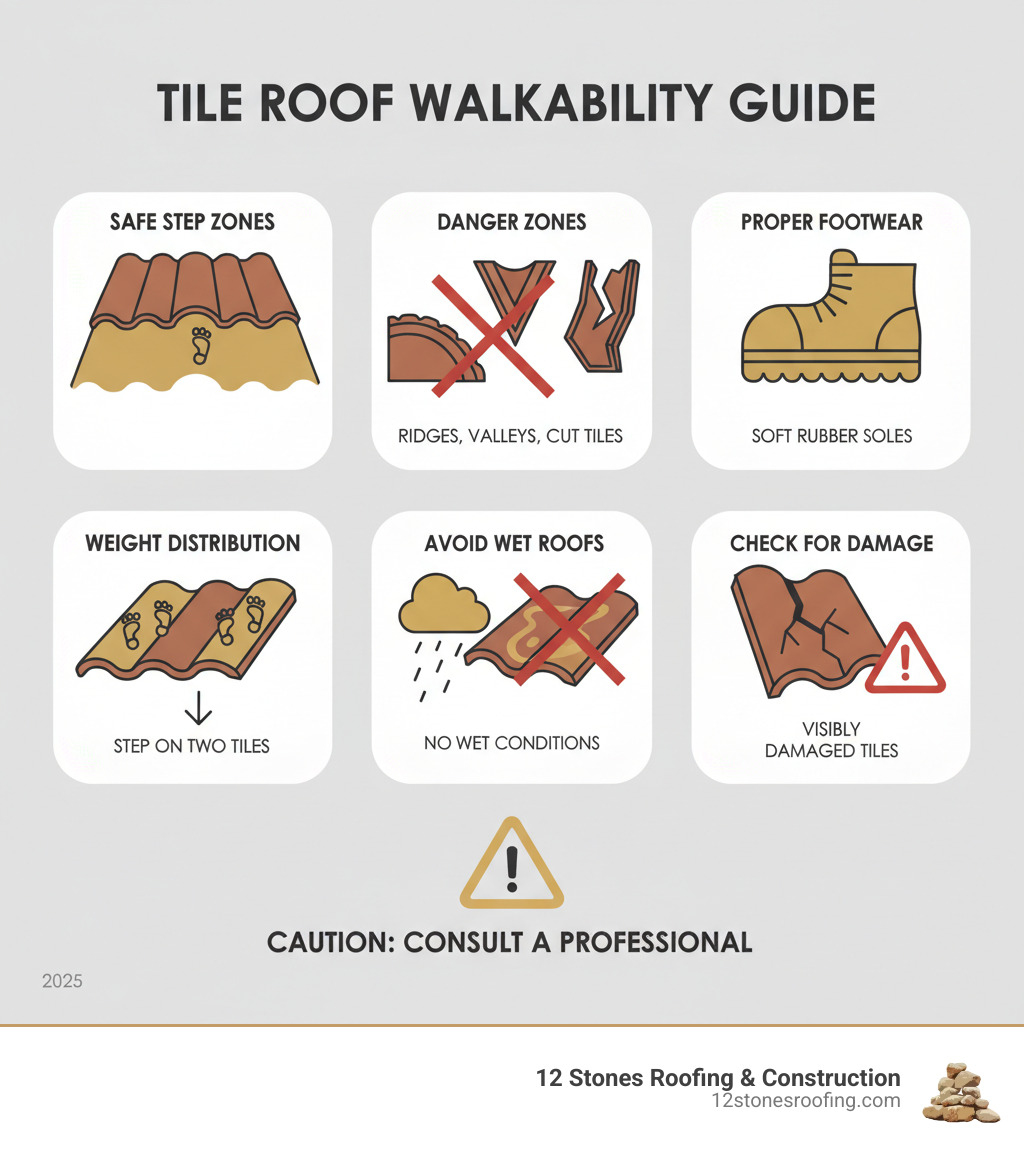
- If unavoidable: Use specific techniques, such as stepping on the lower third of overlapping tiles and wearing soft-soled shoes.
This guide provides a comprehensive look at the risks, safety protocols, and when it’s best to leave the job to the experts.
Tile roofs are prized for their durability, but they are surprisingly fragile underfoot. The pressure from a single step in the wrong place can crack a tile, leading to water damage and costly repairs. As Jason Roberts, Owner of 12 Stones Roofing & Construction, notes, “I’ve seen countless tiles damaged by well-meaning property owners who didn’t know the proper techniques. We are committed to educating homeowners about safe roof access practices to prevent these expensive mistakes.”
The Dual Dangers: Personal Safety and Roof Integrity
When homeowners ask can you walk on a tiled roof, they often underestimate the dual risks involved: danger to themselves and danger to their home. One wrong step can lead to both a trip to the emergency room and a call to your insurance company. Data from the Consumer Product Safety Commission shows that over 164,000 emergency room visits annually result from ladder and roof-related falls, with medical costs averaging $24,000 per incident.
Tile Fragility and Costly Repairs
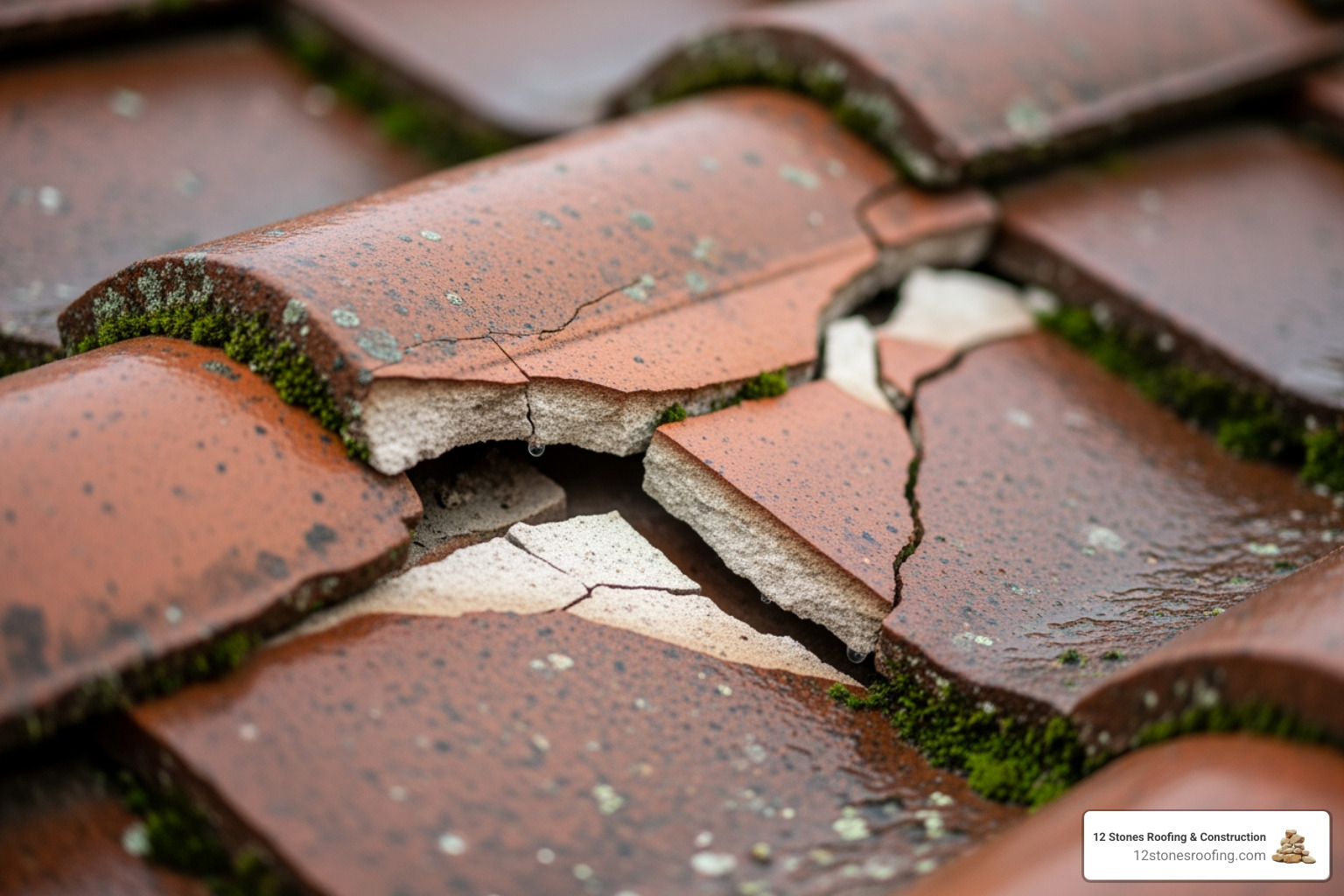
Clay, concrete, and slate tiles can withstand decades of harsh weather, but they were not designed to support the concentrated weight of a person. Tile manufacturers specifically do not warrant breakage from foot traffic, meaning you will pay for any damage out of pocket. Industry studies indicate that a single broken tile costs between $150-$500 to replace when factoring in labor and materials. Tiles are installed to distribute weight evenly across the roof structure. Stepping in the middle of a tile applies pressure to an unsupported section, causing it to crack. A single broken tile exposes the underlayment to UV rays and moisture, creating an entry point for water. What starts as one crack can quickly lead to widespread Roof Damage From Rain, affecting your home’s decking, rafters, and interior.
Personal Safety and Structural Risks
Beyond property damage, your physical safety is the most immediate concern. Falls from roofs are a leading cause of serious injury, with the Bureau of Labor Statistics reporting that falls from heights account for 33.5% of all construction fatalities. The curved or uneven surface of tiles creates an unstable walking area, and the danger multiplies when tiles are wet, becoming as slick as ice. Always wait at least two days after rain before considering roof access.
On older roofs, the wooden support battens beneath the tiles can deteriorate. If a batten is compromised by age or rot, your foot could break through the roof entirely, leading to a catastrophic fall and extensive structural damage. A single broken tile is a critical breach in your home’s defense, allowing moisture to seep underneath and cause wood rot and mold growth. Furthermore, walking on your roof can void your manufacturer’s warranty if an adjuster determines the damage was caused by improper foot traffic.
Can You Walk on a Tiled Roof? A Step-by-Step Safety Protocol
Walking on a tile roof should always be a last resort. If you must access your roof, following proper safety protocols is essential. These guidelines are based on industry standards from organizations like the Tile Roofing Institute and can significantly reduce, but not eliminate, risk.
Pre-Walk Checklist: Preparing for Roof Access
Before you begin, complete this checklist:
- Ground Inspection: Use binoculars to survey the roof for cracked tiles, loose sections, or moss. If you see significant damage, call a professional.
- Weather Check: Never walk on a wet, icy, or windy roof. Wait at least two full days after rain. Wet tiles are extremely slippery.
- Proper Footwear: Wear soft, rubber-soled shoes with excellent grip, like sneakers. Hard-soled boots concentrate pressure and can crack tiles.
- Safety Gear: For any pitched roof, a safety harness anchored to a solid structure is non-negotiable. Use roof ladders or foam pads to distribute your weight. Ensure your extension ladder is on level ground and extends three feet above the roof edge, following the 4-to-1 rule for stability. For more details, review ladder safety tips from Popular Mechanics.
- Have a Helper: Never work alone. Have someone on the ground with a phone in case of an emergency.
The Right Way to Walk on a Tiled Roof
If you proceed, the key is to distribute your weight as widely and evenly as possible.
- Step on the Strongest Points: Always step on the lower third of each tile where it overlaps the tile below. This is the most supported area. For curved or barrel tiles, place your feet on the high points or “peaks” of adjacent tiles.
- Distribute Your Weight: Place each foot on a different tile to spread the load. Walk on the balls of your feet to maintain balance and control.
- Move Deliberately: Take slow, intentional steps. Maintain three points of contact whenever possible and avoid sudden movements or jumping.
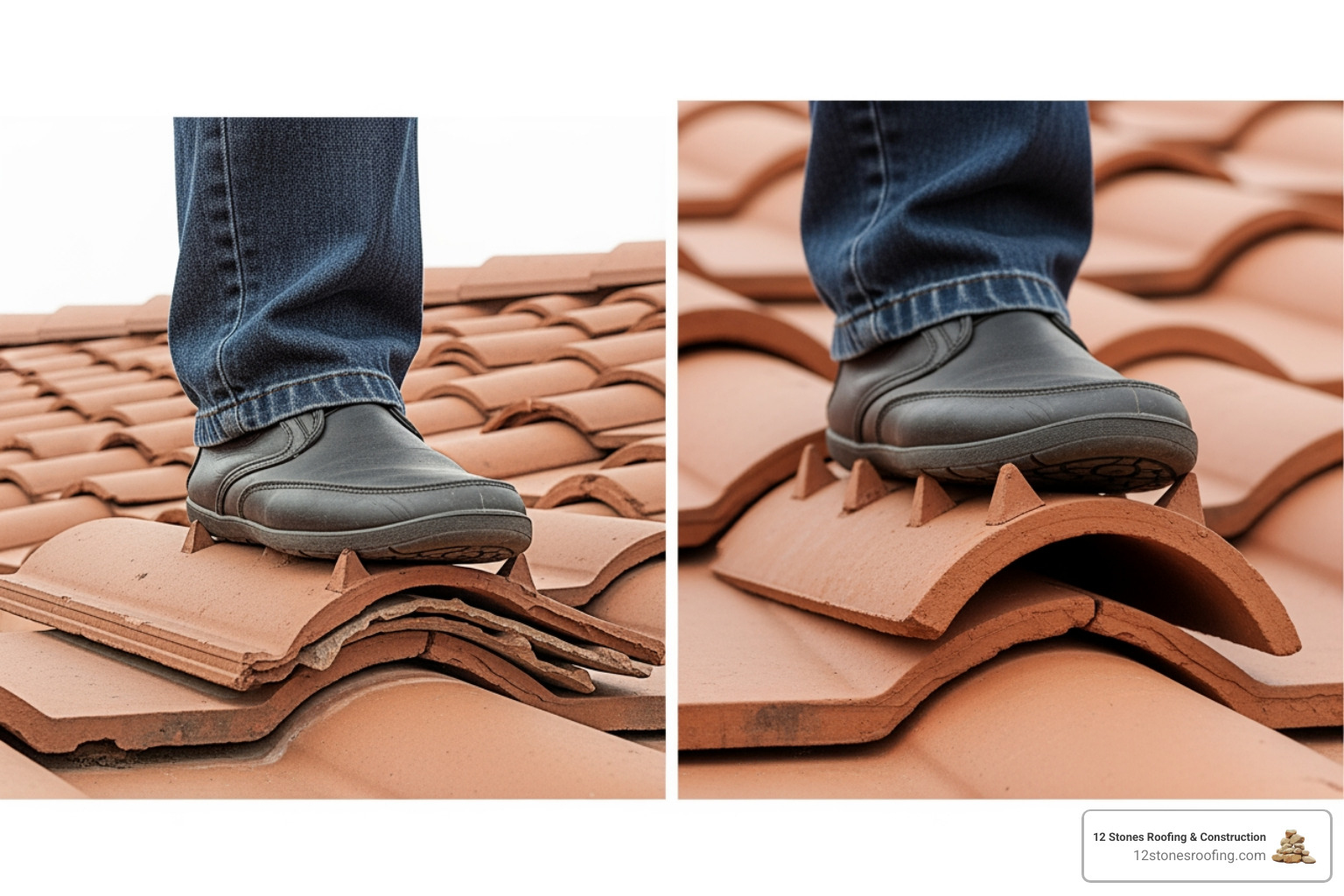
Red Zones: Where You Should Never Step
Avoiding certain areas is just as important as knowing where to step. Never walk on:
- Cut Tiles: Found near edges, valleys, and chimneys, these are structurally weak.
- Ridge and Hip Tiles: The tiles at the peak and angles of the roof are fragile and critical for weatherproofing.
- Roof Valleys and Water Channels: These areas are designed for water runoff, not foot traffic, and are easily damaged.
- Visibly Damaged or Moss-Covered Tiles: These areas are unstable and slippery.
- Roof Edges: The perimeter of the roof has less support and poses the greatest fall risk.
Clay vs. Concrete: Does the Tile Type Matter?
Yes, the type of tile on your roof significantly influences its fragility and how you should walk on it. While all tile requires caution, understanding these differences is key to preventing damage. Research from the Tile Roofing Institute indicates that clay tiles break 40% more frequently than concrete tiles under foot traffic, while slate tiles have a 75% higher breakage rate than both.
| Tile Type | General Durability | Fragility Underfoot | Walking Technique Considerations | Average Breakage Rate Under Foot Traffic |
|---|---|---|---|---|
| Clay | High (weather) | Very High | Step only on peaks (barrel) or bottom 3″ (flat); extremely fragile. | 18-22% |
| Concrete | High (weather) | High | More forgiving than clay, but still requires stepping on the bottom 3″ or peaks. | 12-15% |
| Slate | Extremely High (weather) | Extremely High | Highly brittle; avoid walking on it. Professional-only access recommended. | 30-35% |
Clay and Concrete Tiles
Clay tiles, especially traditional barrel styles, are beautiful but inherently brittle. When asking can you walk on a tiled roof made of clay, the answer is with extreme care. Pressure applied in the wrong spot, like the valley of a curved tile, will almost certainly cause a crack. Laboratory tests show clay tiles can only support 200-250 pounds of concentrated weight before fracturing. Concrete tiles are generally more robust and slightly more forgiving, supporting 300-350 pounds of concentrated weight, but they can still crack under improper foot traffic. The same walking principles apply: step on the lower, overlapping third of the tile.
Slate and Older Tiles
Slate is a unique case. It is one of the most durable roofing materials against weather but is incredibly brittle under direct foot pressure. Walking on a slate roof is almost guaranteed to cause breakage and should be left to professionals. Studies show that slate tiles have a tensile strength of only 7-14 MPa perpendicular to the grain, making them extremely vulnerable to point loads.
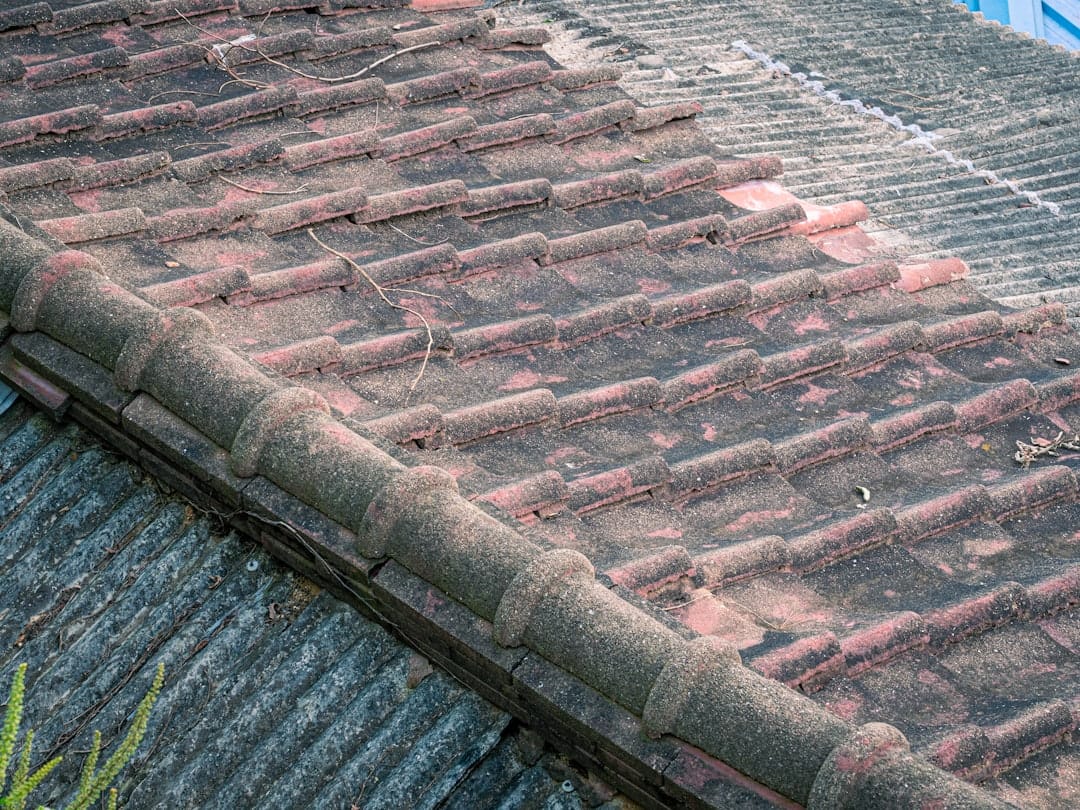
The age of the tile also matters. While some tiles get stronger as they cure, older roofs present other risks. The underlying wooden battens can weaken over time, and a misstep could cause you to fall through the roof structure. Older tiles may also be covered in slick algae or have hairline cracks that are invisible until weight is applied. For issues with older roofs, our Tile Roof Repair Pasadena Complete Guide offers specialized advice.
When to Call the Professionals: Knowing Your Limits
The safest way to steer a tile roof is to let a professional do it for you. There are clear signs that a DIY approach is too risky and could lead to injury or expensive mistakes.
Call a professional roofer if you encounter any of the following:
- A Steep Roof Pitch: If the angle of your roof makes you feel unstable, it is too dangerous to walk on without specialized equipment and experience. The risk of a slide or fall increases exponentially with the pitch.
- Extensive or Visible Damage: If you can see multiple broken tiles, sagging areas, or signs of leaks from the ground, walking on the roof could worsen the problem. A professional can assess the full scope of damage safely.
- Lack of Proper Safety Equipment: If you don’t have a safety harness, roof ladders, and proper footwear, you are not equipped for the job. The cost of this gear is often more than a professional service call.
- Fear of Heights: Discomfort with heights can impair judgment and balance, making a dangerous situation even worse. Trust your instincts and stay on the ground.
- Complex Repairs or Inspections: Identifying the root cause of a roof problem requires expertise. What looks like a simple broken tile could be a symptom of underlayment failure or compromised structural supports.
The peace of mind that comes with hiring a licensed and insured contractor is invaluable. When you work with professional Roofers Near Me Pasadena like 12 Stones Roofing & Construction, you are protected. If a professional damages a tile, their insurance covers it. If you do, the cost comes out of your pocket. Often, the smartest investment is recognizing when a job is beyond your skill set.
Frequently Asked Questions about Walking on Tile Roofs
How much weight can a tile roof hold?
A tile roof’s weight capacity refers to distributed weight, not the concentrated pressure of a footstep. A roof structure can support thousands of pounds of tiles spread evenly across its surface (clay tiles can weigh up to 2,000 pounds per 100 sq. ft.). However, a single tile is not designed to support the concentrated weight of a person. Engineering specifications show that most clay tiles are rated for only 200-250 pounds of point load, while concrete tiles can handle 300-350 pounds before fracturing.
What happens if I break a roof tile?
A broken tile is an immediate breach of your roof’s water-shedding system. It exposes the underlayment to UV rays and moisture, which can quickly lead to leaks, wood rot, and mold growth. Insurance industry data reveals that water damage from a single broken tile averages $3,500 in repairs when left unaddressed for 30 days, escalating to $8,000-$12,000 after 90 days. If you notice a broken tile, it’s critical to have it repaired as soon as possible by a licensed roofing professional.
What kind of shoes are best for walking on a tile roof?
The best footwear is soft, rubber-soled shoes with excellent grip, such as high-quality sneakers or flexible work boots. Testing by roofing safety organizations shows that soft-soled shoes reduce tile breakage by 35% compared to hard-soled boots. Soft soles distribute your weight more evenly and provide superior traction on smooth tile surfaces. Avoid hard-soled boots or any footwear that concentrates pressure, as they can easily scratch or crack tiles.
Your Roof’s Safety is Our Priority
Throughout this guide, we’ve explored the question can you walk on a tiled roof from every angle. The answer is clear: it is a high-risk activity that should be avoided whenever possible. Statistics show that 97% of tile damage from foot traffic could have been prevented by hiring a professional. While we’ve provided techniques to minimize danger, the safest approach is always to leave roof work to trained professionals. The cost of a service call is almost always less than the potential expense of injuries, broken tiles, and water damage.
At 12 Stones Roofing & Construction, we understand the unique challenges that Texas weather poses to tile roofs. Our team is equipped with the proper safety gear, training, and insurance to handle any job with the utmost care, giving you complete peace of mind. We treat every roof as if it were our own.
We provide expert Tile Roofing services throughout Pasadena and the surrounding areas. Whether you need an inspection, a minor repair, or guidance on maintenance, we are here to provide a safe and reliable solution. Call us at (832) 660-5888 to schedule your professional roof assessment. The best way to protect your investment is to let our professionals do what we do best. That’s the smart choice for your home, your family, and your wallet.