
Texas Commercial Roof Installation Cost: The Numbers Every Property Owner Should Know
In Texas, the installed cost of a new commercial roof ranges from $7 to $15+ per square foot; a 10,000-square-foot building should budget $70,000 to $150,000+. That range is driven by material choice, roof complexity, and whether a full tear-off is required. For property owners in Pasadena and the greater Houston area, working with a trusted partner matters—connect with a trusted Texas commercial roofing contractor to get a precise, line-item estimate for your building.
Understanding commercial roof installation cost is critical for Texas property owners, as it represents one of the largest capital expenses for a building. In Texas, installation typically ranges from $7 to $15+ per square foot. For a standard 10,000-square-foot roof, this translates to a total project cost of $70,000 to $150,000 or more. The final price depends on the material chosen, the complexity of the roof, and whether a full tear-off is required. For property owners in Pasadena seeking reliable and transparent pricing, our team at 12 Stones Roofing & Construction provides expert guidance. This guide breaks down every factor to help you budget accurately and make a smart investment.
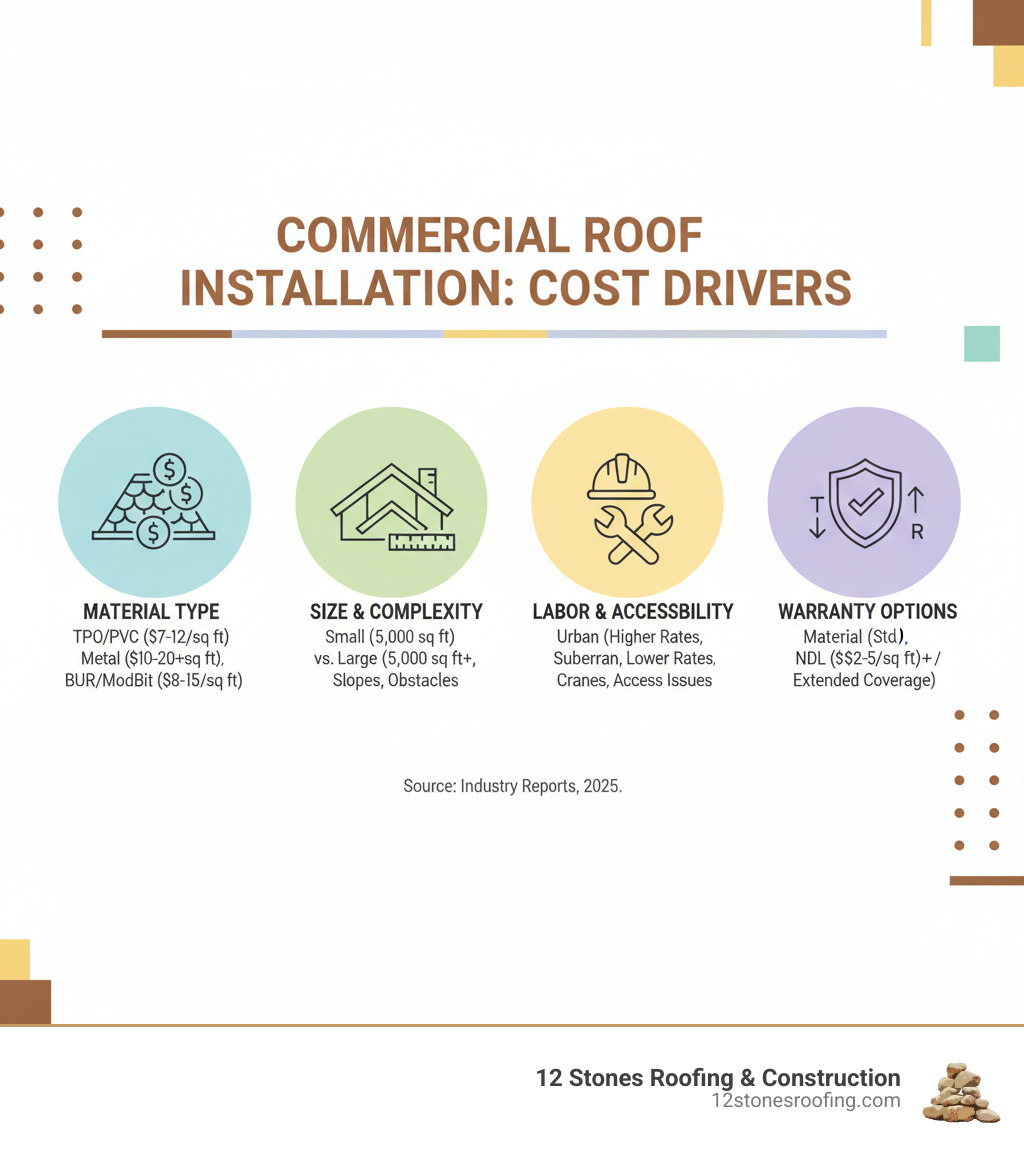
Key Cost Drivers at a Glance:
| Factor | Impact on Cost |
|---|---|
| Material Type | TPO: $11–$15/sq. ft.; Metal: $12–$17/sq. ft.; Coatings: $4–$9/sq. ft. |
| Roof Size | Larger roofs benefit from economies of scale, lowering cost per square foot |
| Labor & Accessibility | Labor accounts for ~60% of total cost; urban sites and height add expenses |
| Tear-Off vs. Recover | Full tear-off adds $1–$4/sq. ft.; recovers are cheaper but code-limited |
| Warranty Coverage | NDL warranties add $0.15–$0.50/sq. ft. but provide comprehensive protection |
Whether you’re dealing with storm damage or planning a proactive replacement, knowing these cost variables helps you budget accurately and avoid surprises. With over a decade of hands-on experience, 12 Stones Roofing & Construction is equipped to guide you through every factor that impacts your investment.
7 Cost Drivers That Set Your Commercial Roofing Price (Benchmarks Inside)
When property owners inquire about commercial roof installation cost, they learn that the price involves more than just square footage and material. Every project is unique, with final costs varying by tens of thousands of dollars based on a complex interplay of factors. In our experience serving Pasadena and the greater Houston area (find experienced Houston roofers near me), we’ve found that labor constitutes about 60% of the total roof replacement cost, with materials making up the remaining 40%. This ratio explains why two identically sized buildings can have vastly different price tags.
Roof Size and Complexity: The Biggest Price Drivers
While a larger roof requires more materials and labor, the cost per square foot often decreases on larger projects due to economies of scale. Mobilization, equipment staging, and long, uninterrupted membrane runs become more efficient. For example, a 5,000 sq. ft. TPO roof might cost $9–$12 per sq. ft., while a 100,000+ sq. ft. project could drop to $6.50–$9 per sq. ft.
However, roof complexity can quickly increase costs. Factors include:
- Roof Slope and Pitch: Most commercial roofs are low-slope, but steeper pitches require additional safety equipment and slow down installation. Our guide on Roof Slope Types explains these cost impacts.
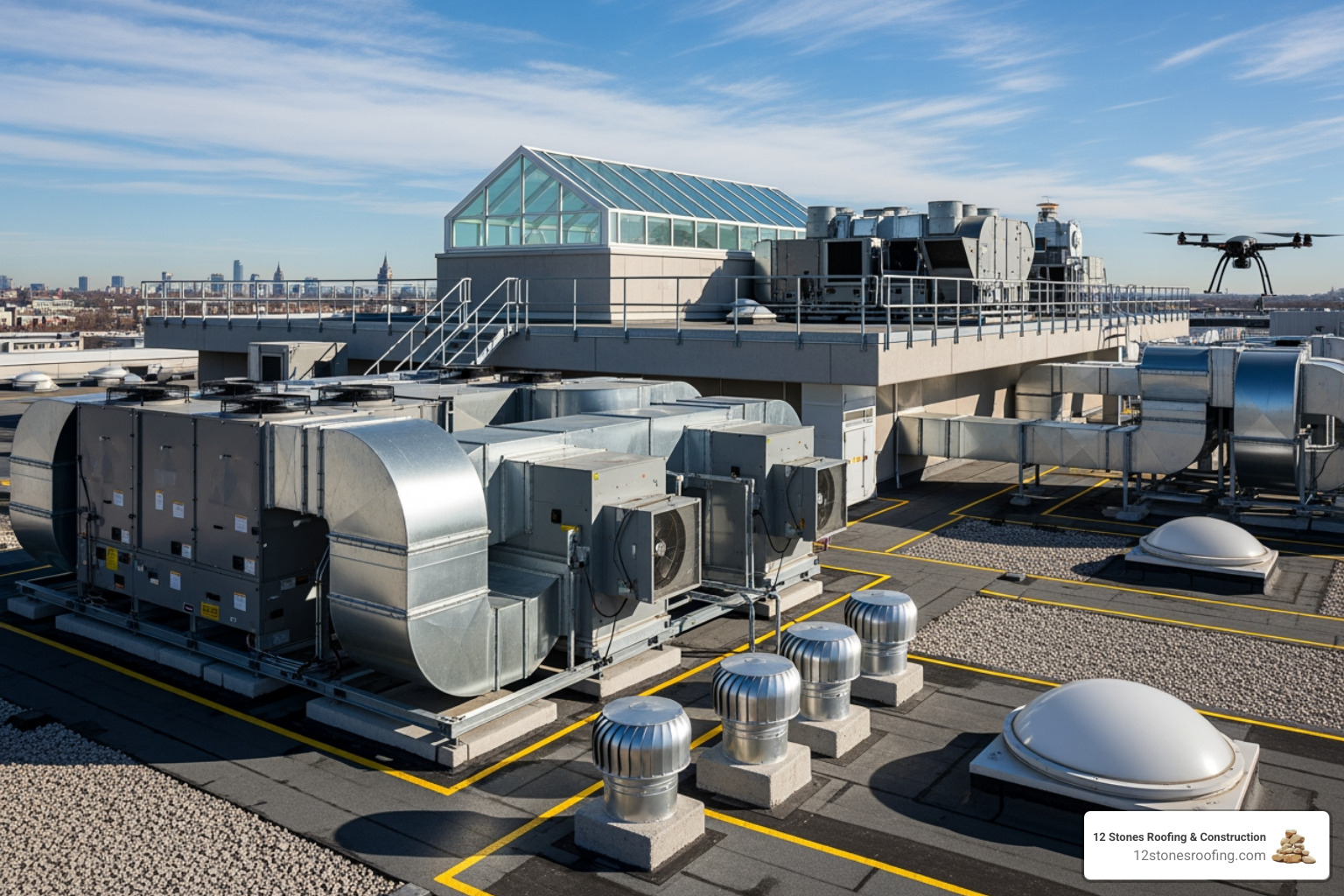
- Penetrations: Every HVAC unit, vent pipe, and skylight needs careful flashing, adding $95 to $135 per penetration to the project cost.
- Parapet Walls: These low perimeter walls require specialized flashing and drainage work, adding to labor hours.
Material Selection: The Core of Your Investment
While complexity is a major variable, material selection is the most significant single factor determining your commercial roof installation cost. The choice between a budget-friendly membrane and a premium metal system affects not only the upfront investment but also long-term maintenance, energy efficiency, and lifespan. We will detail the costs for each material type in the next section.
Labor, Accessibility, and Safety Requirements
The 60% labor component is influenced by several on-site realities. Local labor rates in urban centers like Houston are typically higher than in suburban areas. Building height and location also play a major role; a ten-story urban office building requires more equipment, safety measures, and logistical planning than a single-story suburban warehouse.
Site accessibility is another key factor. If a site has limited space for material delivery and staging, it often requires more complex logistics and additional labor hours. For taller buildings, crane rental is a necessary expense. Finally, strict adherence to OSHA fall protection standards is non-negotiable. The required guardrails, harnesses, and safety planning are essential costs for a safe and professional job site.
Existing Roof Condition and Tear-Off Requirements
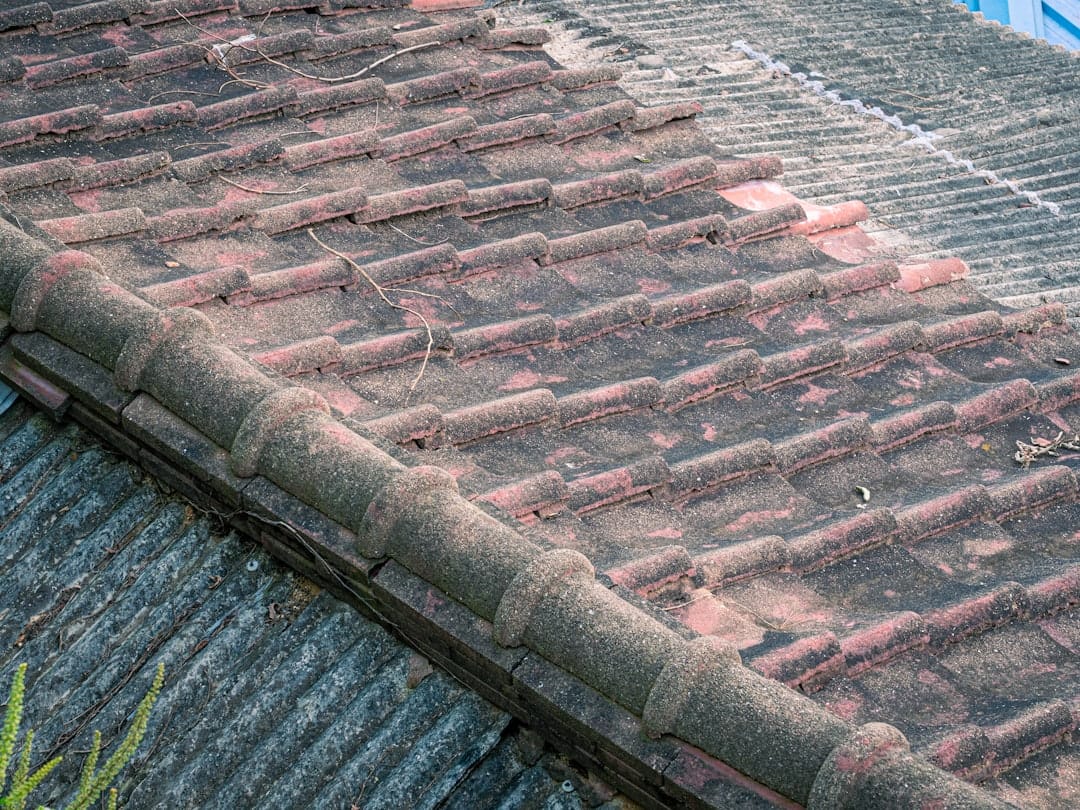
Your current roof’s condition can dramatically alter the project scope. Building codes typically permit a maximum of two roof layers (see IBC roof recover provisions summarized at UpCodes). If your building already has two, a full tear-off is mandatory. This process adds $1–$4 per square foot to the cost.
A recover (installing a new roof over the old one) is only possible if the existing system is dry and structurally sound. We use core cuts and infrared scans to detect water damage and saturated insulation, which must be removed. Leaving wet materials in place would compromise the new roof from day one. Furthermore, if the underlying roof deck is found to have rot or rust during a tear-off, repairs can add upwards of $11 per square foot. While a recover can cut upfront costs by 20–35%, a full tear-off provides a clean slate for a long-lasting system. If you see issues, consult our guide on Signs You Need a Roof Replacement.
Warranty Options and Coverage
A warranty protects your investment, and its scope directly affects your commercial roof installation cost.
- Manufacturer Material Warranties (10-20 years) typically cover only the cost of defective materials, not labor.
- Contractor Workmanship Warranties cover the quality of the installation itself.
- NDL (No Dollar Limit) Warranties are the gold standard, covering both materials and labor for 20-30 years with no cost cap. These premium warranties add $0.15–$0.50 per square foot but offer complete peace of mind.
Longer warranties cost more upfront but provide greater long-term security. It is also crucial to understand whether coverage is prorated or full over the warranty’s term. Our Roofing Warranty Guide breaks down these options in detail.
Average Commercial Roof Installation Cost by Material Type
Choosing the right material is the biggest decision affecting your commercial roof installation cost. Each system has a unique profile of durability, efficiency, and price. The costs below represent the average installed price per square foot in the Pasadena and Houston area, including materials and labor.
| Material Type | Cost/Sq. Ft. (Installed) | Lifespan | Key Benefits |
|---|---|---|---|
| TPO | $11 – $15 | 15 – 25 years | Cost-effective, energy-efficient, heat-reflective, puncture-resistant |
| EPDM | $12 – $16 | 15 – 25 years | Durable, weather-resistant, easy to repair, flexible, UV stable |
| PVC | $12 – $15 | 20 – 30 years | Chemical-resistant, fire-resistant, strong seams, durable |
| Metal (Standing Seam) | $13 – $17 | 40 – 70 years | Long-lasting, energy-efficient, fire-resistant, low maintenance, recyclable |
| Modified Bitumen | $9.50 – $16 | 10 – 20 years | Durable, flexible, good waterproofing, easy to repair |
| Built-Up Roof (BUR) | $10 – $14.50 | 15 – 30 years | Proven performance, robust, good fire resistance, multi-layer protection |
| Silicone Coating | $5 – $9 | 10 – 20 years+ | Extends roof life, seamless, waterproof, highly reflective, UV stable |
| Acrylic Coating | $4 – $8 | 5 – 10 years+ | Cost-effective, reflective, good UV protection, improves existing roof |
Single-Ply Membranes (TPO, EPDM, PVC)
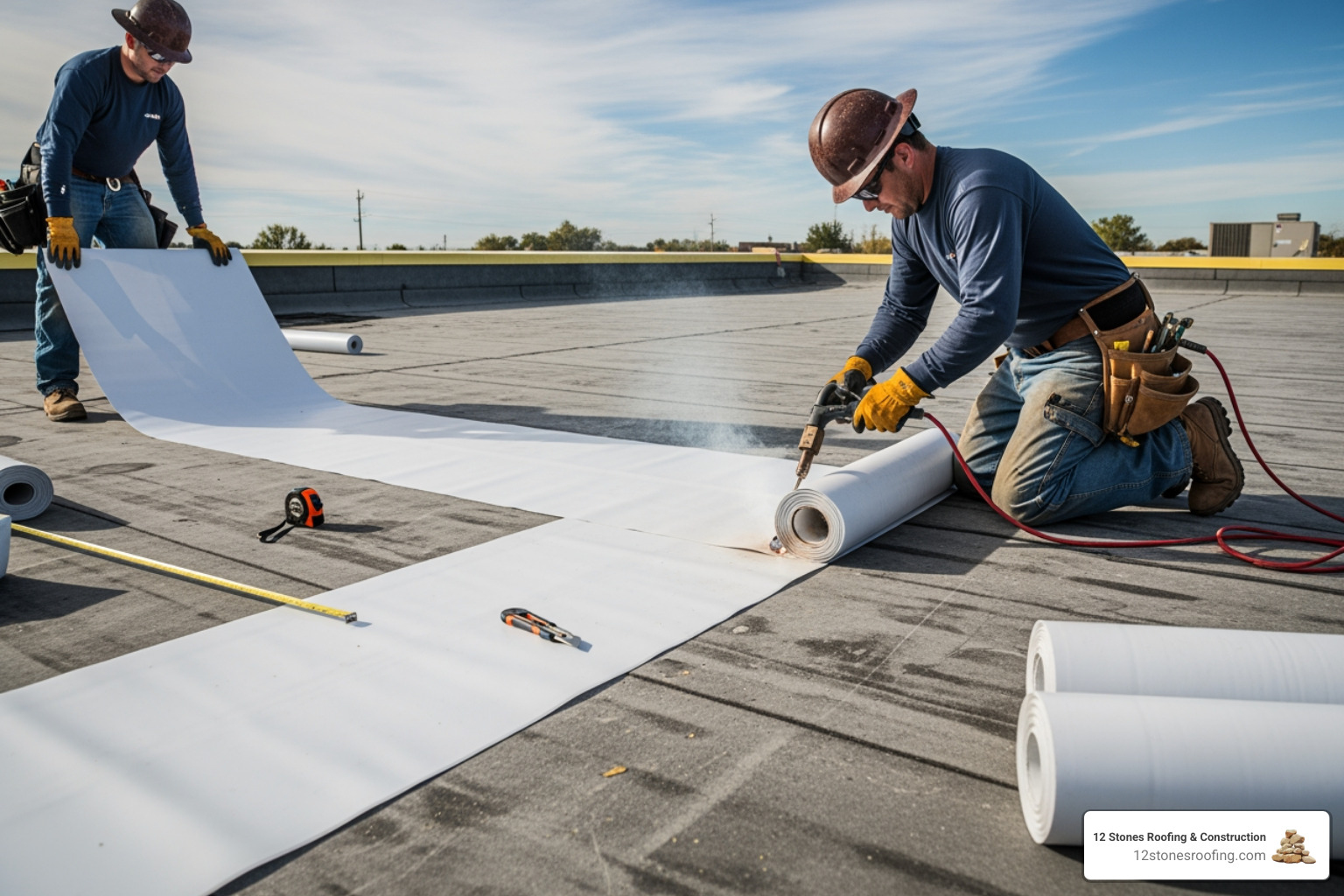
Single-ply membranes are popular in Texas for their performance and affordability.
- TPO (Thermoplastic Polyolefin): Costing $11 to $15 per square foot, TPO is a top choice for its energy efficiency. Its white surface reflects sunlight, reducing cooling costs, and its heat-welded seams create a monolithic, waterproof barrier.
- EPDM (Ethylene Propylene Diene Monomer): Known as rubber roofing, EPDM costs $12 to $16 per square foot. It is exceptionally durable, flexible in extreme temperatures, and easy to repair, with a proven track record spanning decades.
- PVC (Polyvinyl Chloride): At $12 to $15 per square foot, PVC is ideal for facilities like restaurants or industrial plants due to its superior resistance to chemicals, grease, and fire. Its heat-welded seams provide excellent durability.
Metal Roofing Systems
Metal roofs offer best longevity, often lasting 40-70 years.
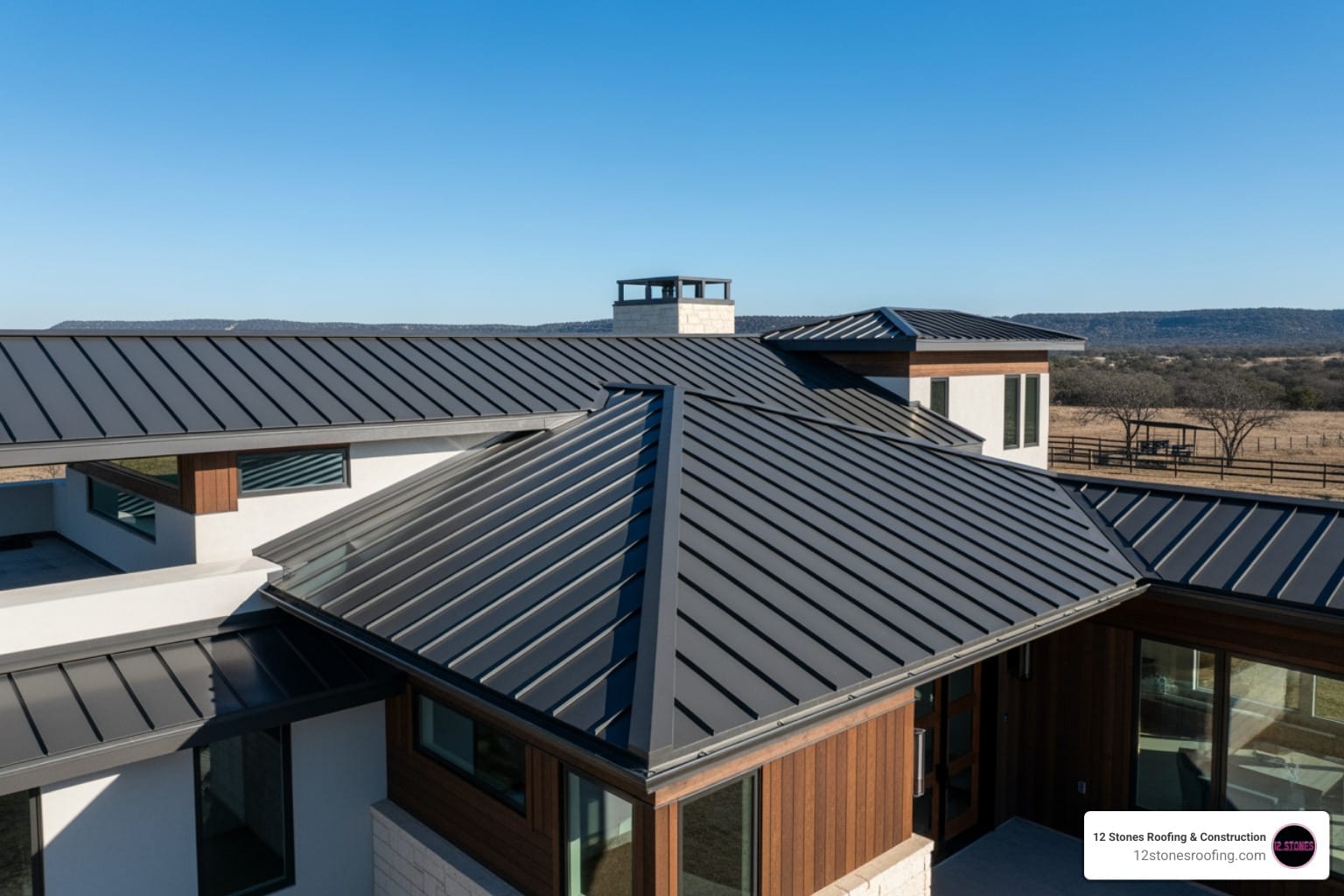
- Standing Seam Metal: This premium system costs $13 to $17 per square foot. Its interlocking panels conceal fasteners, protecting them from the elements and allowing for thermal expansion. This design offers superior protection against leaks.
- Exposed Fastener Metal: A more economical option at $10.50 to $14.50 per square foot, this system is durable but requires periodic inspection of the screw gaskets. It provides excellent value for warehouses and budget-conscious projects.
Asphaltic Systems (Modified Bitumen & BUR)
These traditional systems offer robust, multi-layer protection.
- Modified Bitumen (Mod-Bit): Costing $9.50 to $16 per square foot, this system combines asphalt with polymers for improved flexibility and durability. It is installed in multiple layers, creating a tough, waterproof barrier.
- Built-Up Roofing (BUR): A “tar and gravel” roof costs $10 to $14.50 per square foot. It consists of alternating layers of asphalt and reinforcing felt, topped with gravel for UV and fire protection. This redundancy makes it highly reliable.
Roof Coatings
Coatings extend the life of an existing roof at a fraction of the replacement cost.
- Silicone Coatings ($5 to $9 per sq. ft.): Ideal for flat roofs with ponding water issues, silicone creates a seamless, waterproof membrane that is highly reflective and UV-stable, adding 10-20 years of life.
- Acrylic Coatings ($4 to $8 per sq. ft.): A budget-friendly, reflective option for roofs with good drainage. Acrylics can reduce cooling costs and add 5-10 years of service life. Learn about their benefits in our guide to Sustainable Roofing Options.
Additional Project Costs to Consider
When budgeting for your commercial roof installation cost, it’s crucial to account for expenses beyond the initial quote. A contingency fund of 10–15% is a wise precaution for any major roofing project.
Insulation Upgrades and Energy Code Compliance
Upgrading insulation impacts both upfront cost and long-term operating expenses. Polyisocyanurate (Polyiso) is the standard for commercial roofs due to its high R-value. For flat roofs, tapered insulation systems are essential to create a slope for proper water drainage, preventing leaks and extending the roof’s lifespan.
Texas building codes mandate minimum R-values for energy efficiency, which may require more insulation than your current roof has. Insulation costs typically range from $2.25 to $7.00+ per square foot, depending on the type and thickness. This investment often pays for itself through lower energy bills. Learn more about maximizing these savings in our guide to Energy Efficient Roof Replacement.
Permits, Deck Repairs, and Disposal Fees
Several other costs are a necessary part of a professional installation. Building permits are required for most commercial roof replacements in the Pasadena area, and our team handles this process to ensure full compliance.
During a tear-off, we may find that the underlying deck needs replacement due to rot or water damage. This critical repair can add $11 or more per square foot but is essential for the new roof’s structural integrity. The tear-off itself adds $1 to $4 per square foot to cover labor and removal. Finally, landfill and disposal fees for old materials are based on weight and can be significant for large projects. For a transparent estimate covering all potential costs, request a Free Roof Replacement Estimate from our team.
How to Budget for Your New Commercial Roof and Maximize ROI
A new commercial roof is a significant investment that, when planned strategically, becomes a long-term asset that reduces operating costs and increases property value.
Smart Budgeting Tips for Commercial Roof Installation

Proper planning is key to a smooth roofing project. To manage your commercial roof installation cost effectively:
- Obtain multiple quotes: Get detailed proposals from at least three reputable commercial roofers to compare scope, materials, and warranties.
- Set aside a contingency fund: Budget an extra 10–15% for unexpected issues like hidden deck damage.
- Compare bids for value, not just price: The lowest bid may signal inferior materials or workmanship. Look for transparency and detailed specifications.
- Prioritize quality and warranty: A higher upfront cost for premium materials and a comprehensive warranty often delivers better long-term value and lower life-cycle costs.
If you need help managing the upfront investment, we offer flexible solutions. Explore your options on our Roof Financing Options page.
Long-Term Financial Benefits of a Quality Roof
A professionally installed roof delivers compounding financial returns over its lifespan.
- Lower Energy Bills: Reflective materials like white TPO or coatings can reduce a building’s cooling load by up to 30%, leading to thousands in annual savings.
- Reduced Maintenance Costs: A quality roof requires less frequent and less expensive repairs, freeing up your operating budget.
- Increased Property Value: A new, high-performance roof is a major selling point for prospective buyers and tenants, potentially leading to a higher sale price or better lease rates.
- Potential Tax Deductions: Under Section 179 of the IRS tax code, many businesses can expense qualifying roof improvements in the year of installation. Consult your tax advisor to see if you qualify.
Protecting your investment with regular care is crucial. Our Roof Maintenance Checklist offers practical guidance for maximizing your roof’s lifespan.
Frequently Asked Questions About Commercial Roof Installation Cost
Property owners in Pasadena often have similar questions when budgeting for a new roof. Here are answers to the most common concerns regarding commercial roof installation cost.
What is the most affordable commercial roofing system?
For extending the life of a structurally sound roof, roof coatings are the most affordable option, typically costing $4 to $9 per square foot. They are applied over the existing surface, avoiding tear-off costs.
For a full replacement, TPO roofing is often the most economical choice among modern systems. With installed costs between $11 and $15 per square foot, it offers an excellent balance of performance, energy efficiency, and price.
How long does a commercial roof installation take?
The project timeline depends on size, complexity, and weather. A small, simple roof might take a few days to a week. A large warehouse with numerous rooftop units and a full tear-off could take four to six weeks or more. We provide a realistic timeline with every estimate, factoring in your building’s specific needs.
Is it less expensive to recover or replace a commercial roof?
A recover is almost always cheaper upfront than a full replacement because it eliminates the labor and disposal costs of a tear-off, potentially reducing the initial investment by 20–35%. However, a recover is only an option if the existing roof is dry, structurally sound, and the building has only one roof layer. Building codes limit roofs to two layers. A full replacement, while more expensive initially, allows for deck inspection and insulation upgrades, often providing better long-term value.
Get a Transparent, Line-Item Quote for Your Pasadena Commercial Roof
Understanding the factors that drive commercial roof installation cost—from materials and tear-off requirements to warranty coverage—empowers you to make a smart decision that protects your property for decades. An investment in quality materials and expert installation pays dividends in energy savings, reduced maintenance, and peace of mind.
A new commercial roof is a commitment to your building’s future. At 12 Stones Roofing & Construction, we have spent over a decade helping Pasadena property owners steer these decisions with clarity. We believe in transparent pricing and detailed estimates that account for every aspect of your project.
Our local expertise means we design roof systems to withstand the unique challenges of Gulf Coast weather. We don’t offer one-size-fits-all solutions; instead, we inspect your property and present options custom to your budget, timeline, and building needs.
Ready to move forward with confidence? We’ll provide a clear, detailed estimate customized to your building’s specifications—no surprises, just honest answers and expert guidance. Explore our full range of commercial roofing services to see how we can protect your Pasadena property for the long haul.