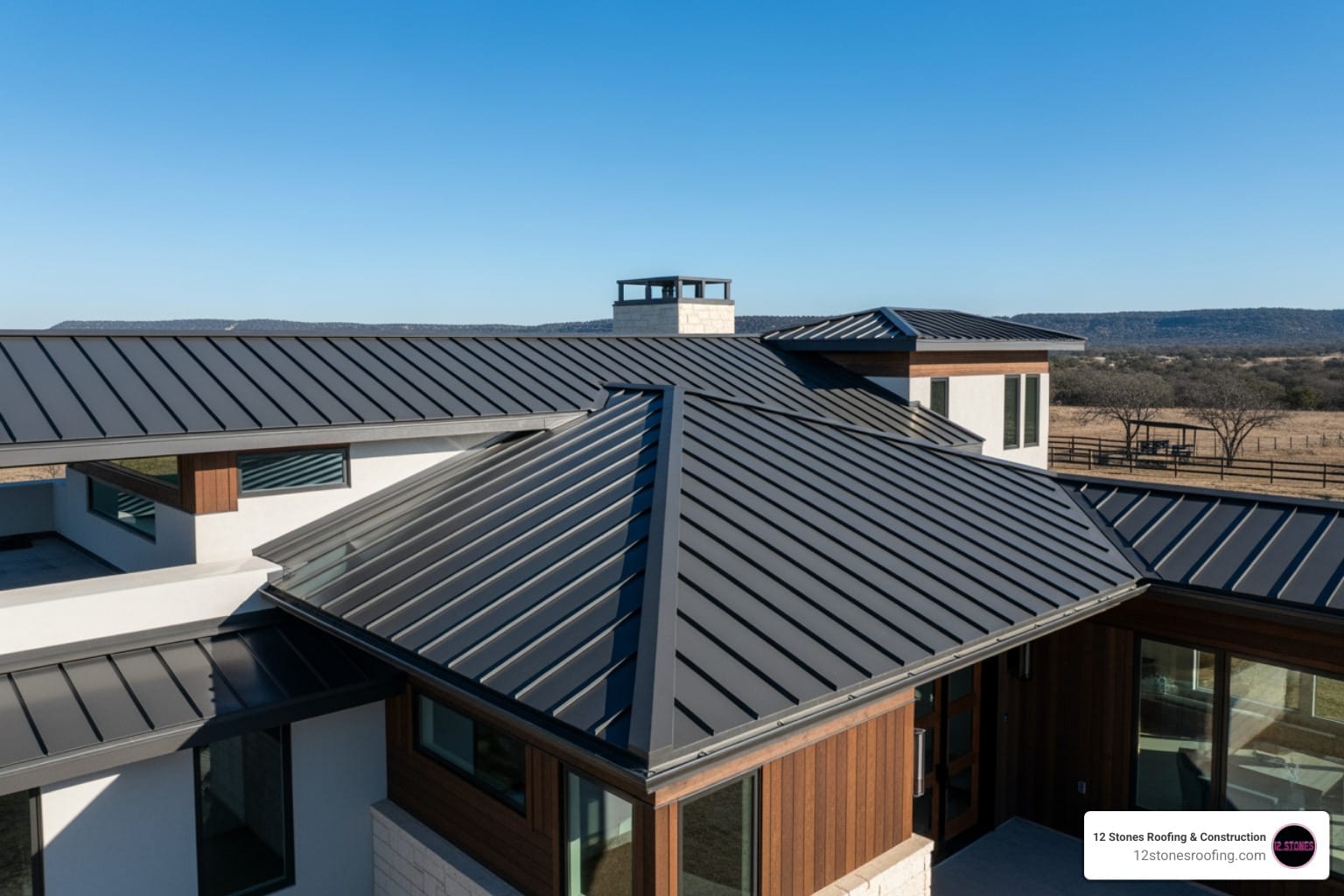

Energy‑Efficient Commercial Roofing in Texas: Slash Cooling Costs Up to 40%
Quick answer: In Texas, a reflective, well‑insulated commercial roof can cut cooling energy use 10–30% and total utility bills by up to 40% in hot climates. Partnering with a trusted Texas commercial roofing contractor ensures your design meets local heat, humidity, and storm demands. Energy efficient commercial roofing uses advanced materials and design to reduce a building’s energy consumption. In Texas, where summer heat drives up cooling costs, your roof is a critical financial asset. Upgrading to an energy-efficient system with professional commercial roofing services is a strategic investment that delivers monthly returns.
Key features include:
- Reflective “cool roof” materials that bounce sunlight away.
- High-quality insulation to prevent heat transfer.
- Proper ventilation and air sealing to control moisture and temperature.
These systems can lead to cost savings of up to 40% on energy bills and reduce air conditioning use by 15% in hot climates.
With commercial buildings accounting for 20% of U.S. energy use, optimizing your roof has a major impact. The difference between a standard dark roof and a reflective cool roof can mean interior temperature reductions of up to 50°F. This translates to less HVAC strain, lower utility bills, and a more comfortable environment for everyone in your Pasadena or Houston-area business.
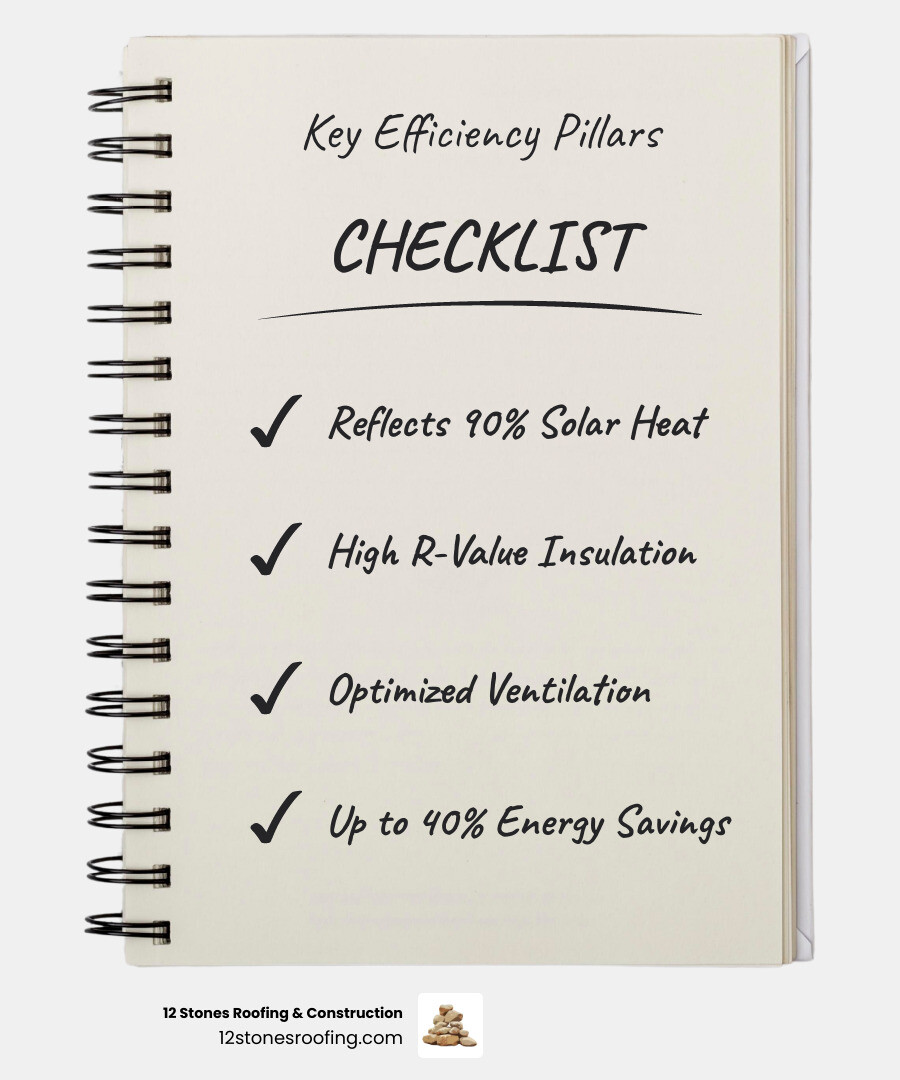
Profit Impact: What an Energy‑Efficient Roof Does to Your P&L
A building’s roof is its first line of defense against the elements and a major factor in its energy consumption. In Pasadena and greater Houston roofers near me, the relentless Texas heat and humidity can turn a conventional roof into a massive energy drain, forcing HVAC systems to work overtime.
Investing in energy efficient commercial roofing is a strategic business decision that offers substantial, long-term cost savings and improved operational resilience. It’s a roof that actively works to keep your building cool, reducing your environmental footprint and protecting your bottom line against scorching Texas summers.
Why Bother? The Top 3 Benefits of Energy-Efficient Roofing
Investing in energy efficient commercial roofing offers measurable benefits that affect your bottom line, employees, and company reputation. A highly reflective roof can re-emit up to 90% of absorbed solar radiation, meaning the sun’s heat bounces back into the sky instead of soaking into your building. This single characteristic creates a cascade of benefits.
1. Drastic Reduction in Energy Costs
This is where most business owners see the most immediate impact. When your roof stops acting like a heat magnet, your air conditioning system gets a much-needed break.
- Lower HVAC Usage: Less runtime on your heating, ventilation, and air conditioning equipment means fewer repairs, less maintenance, and a longer lifespan for these expensive systems.
- Reduced Peak Electricity Demand: In Texas, electricity rates spike during peak afternoon hours. By keeping your building naturally cooler, you avoid drawing maximum power during these expensive periods.
A cool roof can cut a building’s annual air conditioning use by up to 15%, according to the U.S. Department of Energy, with some businesses seeing up to 40% in overall energy cost savings. If the upfront investment is a concern, we offer roof financing options to make this smart decision more accessible.
2. Improved Building & Occupant Comfort
An uncomfortable workspace affects everything from morale to customer satisfaction. Energy efficient commercial roofing transforms your indoor environment.
- Stable Indoor Temperatures: Cool roofs can reduce interior temperatures by up to 50°F compared to dark roofs, eliminating frustrating hot and cold zones. This is especially valuable in warehouses, where extreme heat can be dangerous for workers and damaging to inventory.
- Less Strain on HVAC Systems: Because the roof handles more thermal regulation, mechanical systems run less, experience less wear, and last years longer.
- Improved Employee Productivity: Research shows that comfortable temperatures significantly improve concentration and efficiency. A comfortable employee is a productive one.
- Extended Roof Lifespan: A cooler roof surface experiences less thermal shock and UV degradation, meaning the material breaks down slower and your investment protects itself.
3. Boosted Sustainability & Corporate Reputation
Today, a company’s environmental commitment is a key differentiator. Energy efficient commercial roofing provides a tangible demonstration of your dedication to sustainability.
- Reduced Carbon Footprint: Cutting energy consumption directly reduces the greenhouse gas emissions associated with power generation.
- Mitigated Urban Heat Island Effect: Dark roofs make cities like Houston hotter than surrounding rural areas. Cool roofs reflect sunlight, helping to lower ambient air temperatures. You can learn how cool roofs help communities combat this challenge.
- Green Building Certifications: An energy-efficient roof is a major contributor to achieving certifications like LEED (Leadership in Energy and Environmental Design), which can be a “treasure trove of credits” for LEED certification.
- Positive Brand Image: Showcasing a commitment to sustainability resonates with customers and employees, creating a powerful competitive advantage.
The Core Components of Energy-Efficient Commercial Roofing
An energy efficient commercial roofing system is a combination of materials and design strategies. Understanding these core elements is the difference between a roof that just sits there and one that actively saves you money.
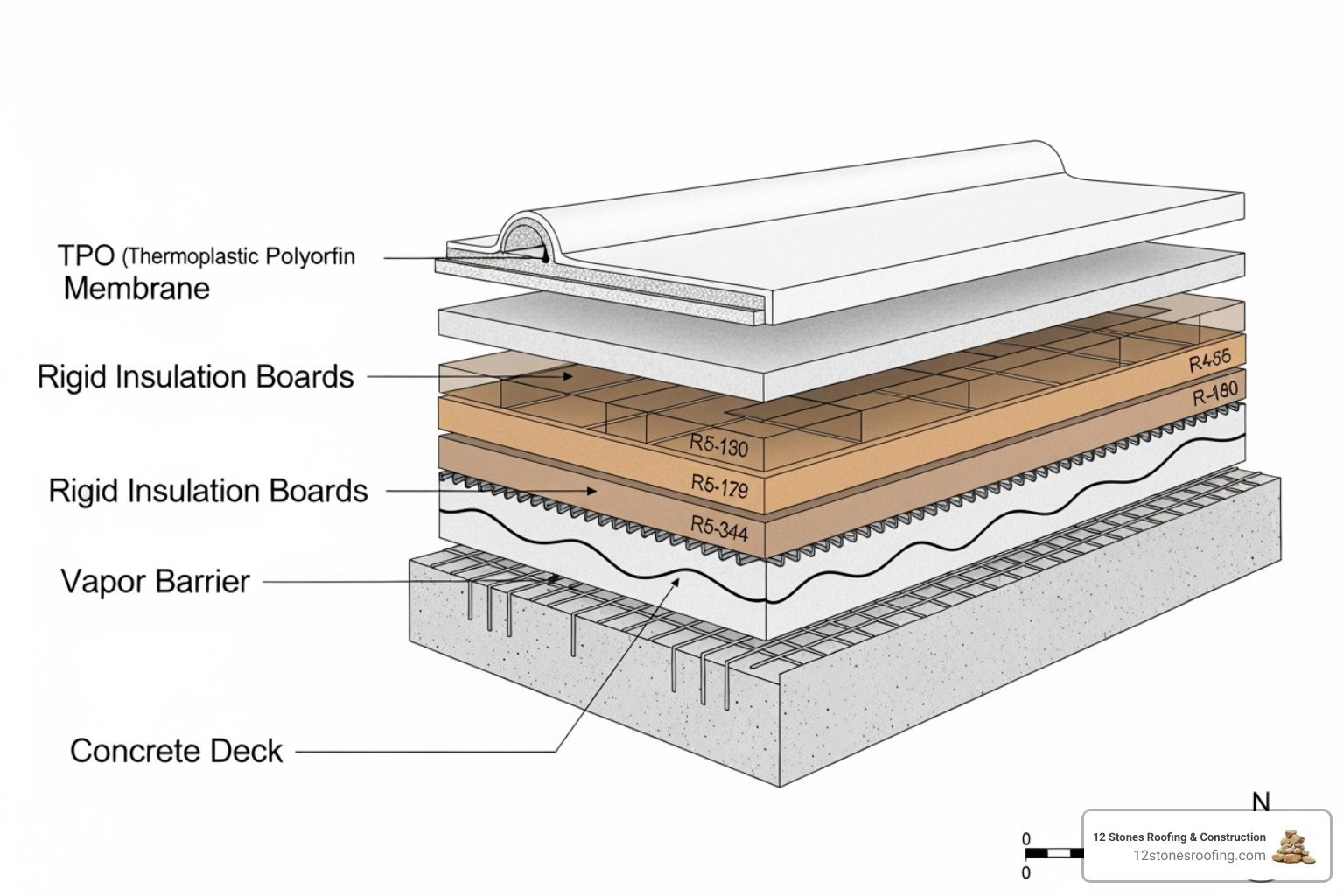
How Reflective Materials (Cool Roofs) Work
A roof’s “coolness” is defined by two key properties: high solar reflectance and high thermal emittance.
- Solar reflectance measures how much sunlight is bounced back into the atmosphere.
- Thermal emittance describes the roof’s ability to release any heat it has absorbed.
White or light-colored surfaces excel at both, keeping the roof surface up to 50°F cooler than traditional dark materials. The Cool Roof Rating Council (CRRC) provides third-party ratings for these properties, and you can find rated products in the CRRC directory to compare materials. For Texas businesses, maximizing these properties is essential.
The Critical Role of High-R-Value Insulation
While reflective surfaces handle the sun, insulation prevents heat transfer. This is where R-value, a measure of a material’s resistance to heat flow, is critical. A higher R-value means better insulation. In summer, it keeps heat out; in winter, it keeps heat in.
Polyisocyanurate insulation (or “polyiso”) is one of the most effective options, delivering a high R-value per inch. We install polyiso as rigid boards to provide consistent performance. The energy saved by polyiso insulation over its lifespan can be 47 times the energy used to create it. Our installations meet or exceed industry benchmarks like the ASHRAE standards, and we follow local R-value standards to ensure year-round comfort.
Proper Roof Ventilation and Air Sealing
Proper ventilation and air sealing are critical for long-term performance. Overlooking them can compromise an otherwise excellent roof system.
- Moisture Control: In our humid Texas climate, proper ventilation is non-negotiable. It creates airflow that removes trapped moisture, preventing mold growth, structural damage, and compromised insulation.
- Temperature Regulation: Ventilation allows trapped hot air to escape, reducing the heat load on your building and helping the reflective roof work more efficiently.
- Air Sealing: We carefully seal every roof penetration—vents, HVAC units, skylights—to create an air barrier. This prevents your conditioned air from leaking out, just like you wouldn’t leave your front door open while running the AC. You can explore resources on proper ventilation materials to learn more.
When these three components work together, they create a roof that actively reduces energy costs and extends the life of your building.
Best Energy‑Efficient Commercial Roofing Systems (With Performance Benefits)
Choosing the right energy efficient commercial roofing system depends on your building, climate, and budget. In Pasadena and Houston, the goal is a resilient shield that protects your investment while controlling operating costs.
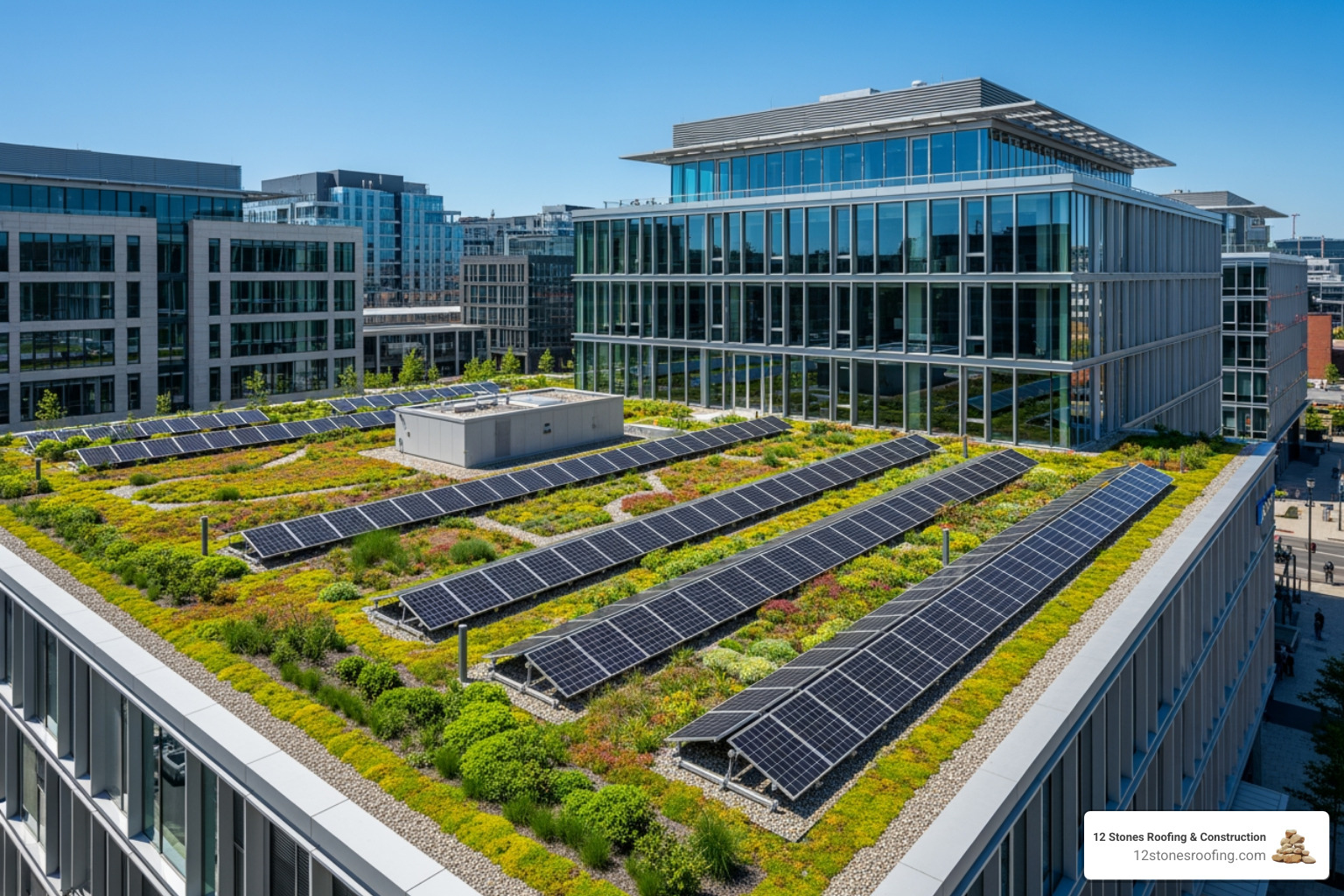
What are the primary types of energy-efficient commercial roofing?
The most common energy-efficient systems include TPO (Thermoplastic Olefin) and PVC (Polyvinyl Chloride) for their reflectivity, Metal Roofing for its durability and reflective coatings, Modified Bitumen with cool roof coatings, and Green Roofs for natural insulation. Each offers unique benefits, and our team can help you select the ideal system for the Texas climate.
Cool Single-Ply Membranes: TPO & PVC
Single-ply membranes are ideal for the flat and low-slope roofs common on commercial buildings.
- Thermoplastic Olefin (TPO): A champion of energy efficiency, TPO’s bright white surface reflects solar radiation effectively. Its heat-welded seams create a monolithic, watertight surface without weak points.
- Polyvinyl Chloride (PVC): Offering similar reflectivity to TPO, PVC adds outstanding resistance to chemicals, punctures, and fire. This makes it ideal for restaurants or manufacturing facilities.
Reflective Metal Roofing
Metal roofing combines durability, sustainability, and energy efficiency. Modern systems come with factory-applied coatings engineered to maximize solar reflectance, re-emitting up to 90% of absorbed solar radiation. These roofs routinely last 40 to 60 years, providing peace of mind against Texas storms. Many systems also contain significant recycled content and are 100% recyclable. The Metal Roofing Alliance states a quality metal roof can save owners up to 40% in energy costs.
Green (Vegetative) Roofs & Blue Roofs
For a bold statement in sustainability, green and blue roofs offer transformative benefits.
- Green Roofs: These systems create a living ecosystem on your roof. Vegetation provides natural insulation, manages stormwater, and extends the membrane’s life. Plants cool the building through evapotranspiration, preventing heat from ever reaching the structure. The EPA’s research on green roofs confirms they also reduce the urban heat island effect.
- Blue Roofs: These systems focus on stormwater management by temporarily detaining rainwater and releasing it slowly. This is a major benefit in flood-prone areas like Houston. Some designs also use the detained water for evaporative cooling.
Integrated Systems: Daylighting and Solar Panels
Your roof can actively contribute to your energy strategy.
- Daylighting: Modern skylights and solar tubes harness natural sunlight to reduce reliance on artificial lighting, a major commercial energy expense. They are engineered to maximize light while minimizing heat gain.
- Solar Panels: Photovoltaic (PV) systems convert sunlight directly into electricity, offsetting your grid consumption. In sunny Texas, solar makes strong economic sense, and businesses may qualify for incentives like the 179D Commercial Buildings Energy-Efficiency Tax Deduction.
These integrated systems are valuable for achieving green building goals, as a roof can be a “treasure trove of credits” for LEED certification.
Practical & Financial Considerations for Your Business
Switching to an energy efficient commercial roofing system is a significant decision. We believe in ensuring you’re fully informed about the installation, maintenance, and long-term financial returns.
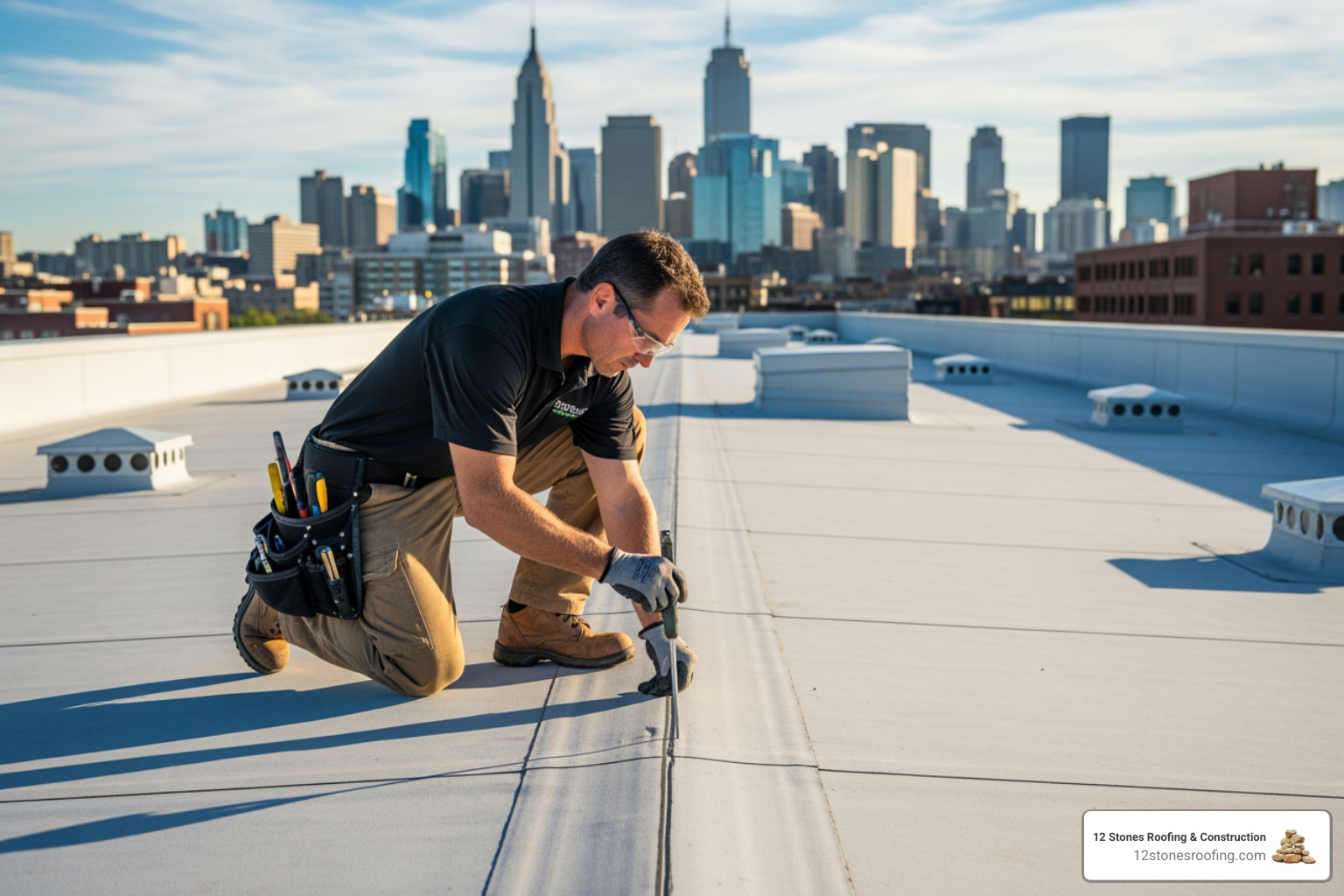
How climate impacts your choice of energy-efficient commercial roofing
In Pasadena and Houston, climate is the deciding factor. Our region’s challenges dictate which solutions deliver the best performance.
- High Heat: High solar reflectance is critical. White or light-colored cool roofs are your most powerful defense against skyrocketing cooling costs.
- High Humidity: Proper ventilation and moisture control are non-negotiable to prevent condensation, mold, and compromised insulation.
- Hurricane Season: Durability and wind uplift resistance must go hand-in-hand with energy efficiency. Your roof must perform efficiently and survive severe weather.
While colder climates prioritize insulation (R-value), our focus is keeping heat out. For more local insights, see a guide to commercial roofing in Pasadena.
New Construction vs. Roof Renovation
The approach to energy efficient commercial roofing differs for new builds versus renovations.
With new construction, you have the freedom to design for maximum performance from the start, integrating systems like daylighting and solar panels seamlessly. This allows for a truly high-performance roof with exceptional long-term savings.
Roof renovation works within existing constraints. Compatibility with the current structure is key, and retrofitting systems like green roofs may require reinforcement. However, significant improvements are still possible. Cool roof coatings can transform an existing dark roof, while a full energy-efficient roof replacement offers nearly the same optimization opportunities as new construction.
Cost, ROI, and Available Incentives
While an energy efficient commercial roofing system involves an initial investment, the long-term financial benefits are substantial. The savings from reduced energy consumption—often 10-30% on air conditioning—lead to a favorable payback period, typically just a few years. After that, your roof generates savings every month.
An energy-efficient building is also more attractive to tenants and buyers, increasing your overall property value. Furthermore, businesses may qualify for tax incentives like the 179D Commercial Buildings Energy-Efficiency Tax Deduction, which can significantly offset upfront costs.
The Importance of Maintenance for Lasting Efficiency
Installing an energy-efficient roof is the first step; maintaining it ensures you continue to reap the benefits.
- Regular Inspections: Routine check-ups catch minor issues like debris, punctures, or drainage problems before they become costly.
- Periodic Cleaning: Dirt and pollutants can reduce a cool roof’s reflectivity. Cleaning the surface maintains its performance.
- Prompt Repairs: Immediately addressing leaks or damage prevents moisture infiltration that can compromise insulation and lead to energy loss.
A proactive maintenance approach maximizes your energy savings and protects your investment. To help, you can download a roof maintenance checklist from our resources.
Take the Next Step Toward a Smarter Commercial Roof
You’ve seen how energy efficient commercial roofing can slash operating costs, meet sustainability goals, and improve your building’s environment. The right system is a strategic asset that protects your building and your bottom line. As local experts in the demanding Texas climate, 12 Stones Roofing & Construction knows what works in Pasadena and Houston. We help businesses transform their roofs from energy drains into high-performance assets.
The path to savings starts with understanding your options. Every building is different, and a professional assessment is the best way to determine the ideal solution for your property’s unique needs. Whether you’re facing an aging roof, planning new construction, or looking to improve your bottom line, we provide honest, transparent guidance.
Ready to see what an energy-efficient roof can do for your business? Schedule a professional assessment with our team. We’ll evaluate your current system and provide clear, customized recommendations. Learn more about our dedicated commercial roofing solutions and let’s build a roof that works as hard as you do.