
Why EPDM Rubber Roofing Materials Dominate Low-Slope Applications
EPDM rubber roofing materials are synthetic rubber membranes engineered specifically for flat and low-slope roofs, and industry surveys show they cover over 20 billion square feet of roofing in North America alone. These membranes routinely deliver 40+ years of watertight performance when properly installed. For property owners comparing long-term options, EPDM consistently ranks among the lowest lifecycle-cost systems. If you are evaluating flat roof solutions, start by reviewing our core commercial and residential roofing services to see how EPDM fits into a complete building protection strategy.
Quick Facts About EPDM Rubber Roofing Materials:
- Composition: Synthetic rubber (ethylene-propylene-diene monomer) derived from oil and natural gas
- Available Thicknesses: 45 mil, 60 mil, and 90 mil
- Colors: Black, white, and gray
- Width Options: Rolls from 7.5 feet up to 50 feet wide
- Installation Methods: Fully adhered, mechanically attached, or ballasted
- Lifespan: 40-50 years with proper maintenance
- Temperature Resistance: Remains flexible down to -400F
- Environmental Impact: Lowest Global Warming Potential among single-ply membranes
For decades, property owners have sought durable and reliable protection for low-slope and flat roofing systems. As a leading provider of expert roofing solutions, we know that EPDM has consistently proven to be a top-tier solution. Whether facing the punishing heat of Texas summers or the occasional hail storm, this versatile material stands up to the harshest conditions.
The challenge with flat and low-slope roofs is simple: water doesn’t run off quickly. Traditional sloped roofing materials rely on gravity to shed water rapidly, but flat roofs need a continuous, seamless barrier that can withstand standing water, UV radiation, temperature extremes, and physical damage from foot traffic or debris. EPDM’s unique chemical structure addresses all these challenges simultaneously.
As Jason Roberts, Owner of 12 Stones Roofing & Construction, I’ve installed and serviced countless EPDM rubber roofing materials across commercial and residential properties throughout the Gulf Coast region, witnessing how this proven membrane consistently outperforms expectations. This hands-on experience with EPDM systems—from installation to long-term performance—informs every recommendation we make to property owners seeking reliable, cost-effective roofing solutions. If you’re considering this robust option for your property, explore our dedicated EPDM roofing services to see how we can help.
0b0F, available in 45-60-90 mil thicknesses, three installation methods fully adhered mechanically attached and ballasted, lowest environmental impact among single-ply membranes, 465% elongation for hail resistance, and cost-effective repairs – epdm rubber roofing materials infographic 4_facts_emoji_light-gradient” src=”https://images.bannerbear.com/direct/4mGpW3zwpg0ZK0AxQw/requests/000/123/265/519/DdWb1LGkNYNxGAND670OKvRAP/e7d1598803b1d39ed15d385ee6528701a7f3102d.jpg”/>
What is EPDM? Composition and Best Durability
At its core, EPDM is an extremely durable synthetic rubber roofing membrane (ethylene propylene diene terpolymer). It’s widely used in low-slope buildings across the United States and worldwide, and for good reason. Its primary ingredients, ethylene and propylene, are derived from oil and natural gas, giving it a robust chemical foundation. The addition of a diene monomer allows for vulcanization, a process that cross-links the polymer chains, significantly enhancing its strength and elasticity.
The Science Behind the Strength
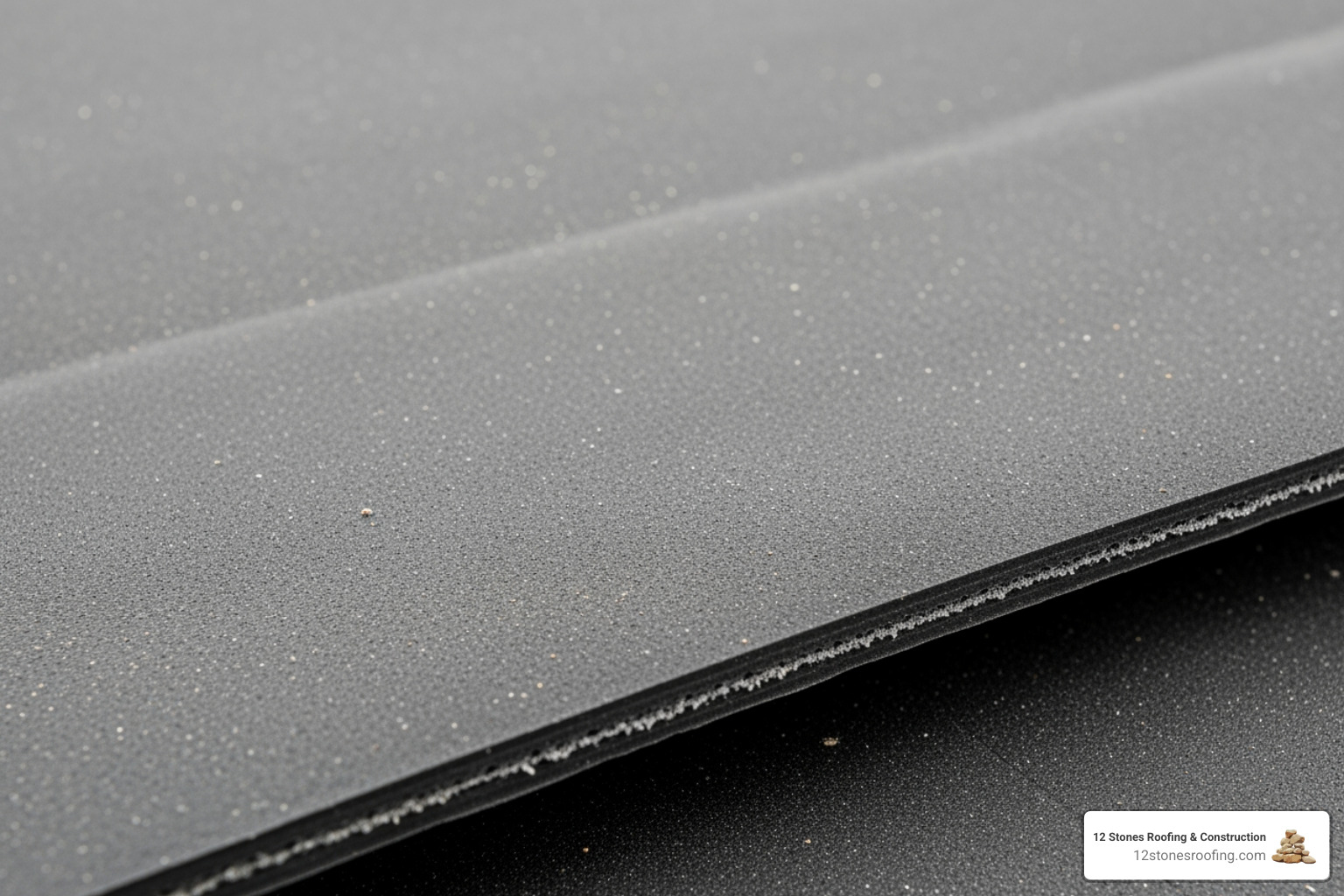
The secret to EPDM’s remarkable performance lies in its sophisticated chemical composition and the vulcanization process. This transforms the raw polymers into a thermoset material. Unlike thermoplastic materials, which can be repeatedly melted and reshaped, EPDM’s cross-linked chemical bonds provide permanent strength and flexibility. This means it won’t become brittle or crack under thermal stress over time.
One of the most impressive characteristics of EPDM is its ability to maintain flexibility in extreme cold, staying pliable even down to -40°F. This makes it an excellent choice for regions experiencing significant temperature fluctuations, preventing the membrane from cracking or becoming rigid in winter. Our experience with EPDM in places like Pasadena, TX, shows that it handles the wide temperature swings we often see, from scorching summers to surprisingly chilly winter nights, with ease.
Furthermore, EPDM boasts industry-leading weathering resistance. Tests show it can withstand over 41,580 kJ/m² of total radiant exposure without cracking or crazing. This incredible resilience is largely due to the inclusion of carbon black in the membrane. For black EPDM, carbon black acts as a powerful UV absorber, converting harmful UV rays into heat rather than allowing them to degrade the polymer structure. This is a key factor in its impressive longevity.
The material’s high elasticity is another major advantage. With an elongation capacity of 465%, EPDM can stretch and recover significantly without losing its integrity. This property contributes to its superior hail damage resistance, allowing the membrane to absorb impacts rather than tearing or puncturing. This makes EPDM an incredibly reliable choice for protecting your property against severe weather events common in our area. To learn more about the fundamental properties of this material, you can explore what EPDM is on the EPDM Roofs Association website.
Benefits vs. Drawbacks: A Balanced View
Every roofing material has its strengths and weaknesses, and EPDM is no exception. We believe in providing our clients with a transparent, balanced view to help them make the best decision for their property.
Pros of EPDM Rubber Roofing Materials:
- Exceptional Longevity: EPDM is renowned for its long service life, often lasting 40-50 years with proper installation and maintenance. This durability means fewer replacements and a lower lifecycle cost for property owners.
- Durability and Puncture Resistance: Thanks to its synthetic rubber composition and high elongation (up to 465%), EPDM offers excellent resistance to tears, impacts from hail, and general wear and tear.
- Cost-Effective Installation: EPDM is generally one of the more affordable single-ply membrane options, both in terms of material cost and labor, especially for large, open roof areas due to its wide sheet availability.
- Ease of Repair: Should damage occur, EPDM is relatively easy to repair. Simple patches using specialized tape and adhesive can quickly restore the membrane’s integrity, often without requiring specialized heavy-duty equipment.
- Excellent Weather Resistance: It performs exceptionally well in extreme temperatures, remaining flexible in cold conditions and resisting UV degradation for decades.
- Waterproof: EPDM creates a seamless, watertight barrier that is highly resistant to ponding water, a common challenge for flat roofs.
Cons of EPDM Rubber Roofing Materials:
- Heat Absorption (Black EPDM): Traditional black EPDM membranes absorb solar radiation, which can lead to higher surface temperatures and potentially increase cooling costs in warmer climates. However, white EPDM options address this concern.
- Vulnerability to Oils and Solvents: EPDM can degrade when exposed to petroleum-based products, oils, and certain solvents. Care must be taken to prevent contact with these substances.
- Seam Integrity: While EPDM sheets are large, seams are often necessary. The long-term performance of an EPDM roof heavily relies on the expert installation of these seams, typically sealed with liquid adhesives or specially formulated tape. Improperly installed seams are the most common point of failure.
- Aesthetic (Traditional Black): For some, the industrial look of black EPDM might not be as aesthetically pleasing as other roofing options, though white and gray varieties offer alternatives.
Understanding these points is crucial when evaluating EPDM for your property. While the drawbacks are manageable with proper planning and maintenance, the benefits, particularly its longevity and durability, are compelling. For more insights into common issues with flat roofs, including those related to seams, you can read our guide on leaky flat roof repair.
A Guide to EPDM Rubber Roofing Materials and System Types
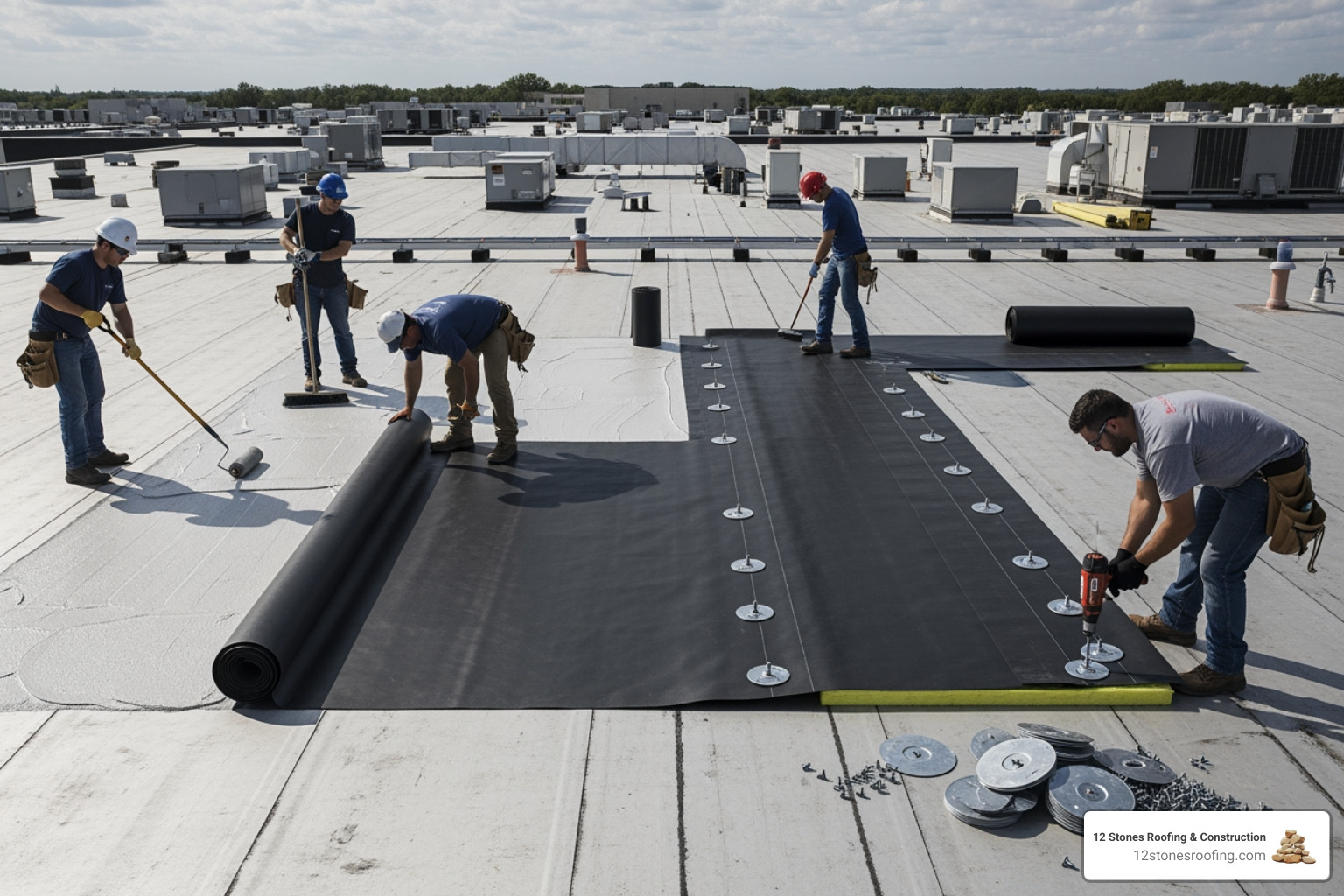
Choosing the right EPDM system involves understanding the various membrane types and installation methods available. This section details the specific material options and installation systems, allowing for a customized roofing solution that meets the unique demands of any building, whether it’s a commercial warehouse or a residential flat roof right here in Pasadena.
Choosing Your Membrane: A Breakdown of EPDM Rubber Roofing Materials
EPDM membranes come in several forms, each designed to meet specific performance and budgetary needs.
- Thickness Options: The thickness of the membrane is measured in “mils” (one-thousandths of an inch).
- 45 mil: This is the most common and cost-effective thickness, often compared to the thickness of a dime. It’s suitable for many applications, offering excellent durability.
- 60 mil: Considered an industry standard, 60-mil EPDM provides improved durability and puncture resistance, making it a popular choice for commercial properties and areas with higher foot traffic. For example, Henry EPDM Membrane is commonly available in this thickness.
- 90 mil: For the most demanding applications requiring maximum durability and puncture resistance, 90-mil EPDM is the heavy-duty option. It offers superior protection against impacts and harsh environmental conditions.
- Color Choices: While black EPDM is the most traditional, other options are available to suit aesthetic preferences and energy efficiency goals.
- Black EPDM: Excellent for converting UV rays into heat, which can be beneficial in colder climates by reducing heating costs. It’s extremely durable and widely available in large sheets, up to 50 feet wide and 100 feet long, which can significantly reduce the number of seams needed for most applications.
- White EPDM: This innovative option combines the high-performance standards of traditional EPDM with a highly reflective surface. White EPDM uses titanium dioxide to reflect UV rays, significantly cutting energy costs by keeping the building cooler, especially in warm climates like ours. This can lead to reduced air-conditioning expenses without sacrificing durability.
- Gray EPDM: A less common but available option, gray EPDM offers a neutral aesthetic that can blend well with various building designs.
- Reinforced vs. Non-reinforced Membranes:
- Non-reinforced (NR): These are cured EPDM sheets available in 45, 60, and 90 mil thicknesses. They offer inherent flexibility and excellent weathering characteristics.
- Reinforced (R): These membranes incorporate a tough polyester scrim (a mat of woven fibers) within the EPDM material. This reinforcement significantly improves tear strength, dimensional stability, and puncture resistance, making them ideal for areas subjected to greater stress or potential physical damage. For instance, JM EPDM R Systems are reinforced with a 1,000+ denier polyester mat.
The manufacturing process also plays a role in quality. Our EPDM production facility is one of the world’s most technologically advanced, allowing us to extrude our sheets instead of using the traditional calendering process. This results in EPDM that is manufactured thicker with a more uniform surface finish, leading to cleaner sheets that require less preparation for a stronger bond during installation.
Installation Methods: Securing Your Investment
The versatility of EPDM extends to its installation methods, each suited for different building designs, budgets, and performance requirements.
- Fully Adhered Systems: In this method, the EPDM membrane is fully bonded to the substrate using a strong, specialized adhesive. This creates a smooth, clean appearance and offers excellent wind uplift resistance. Fully adhered systems are ideal for roofs with unusual or contoured shapes, as well as for buildings in high-wind zones. The absence of mechanical fasteners penetrating the membrane is a significant advantage in terms of waterproofing.
- Mechanically Attached Systems: This is a very common and cost-effective installation method, particularly for large, open roof areas. The EPDM membrane is mechanically fastened to the roof deck using plates and screws along the seams or in rows across the roof surface. Overlapping membrane sheets are then sealed with tape or adhesive to create a watertight seal. This method allows for quicker installation times, especially with innovations like EPDM R FIT Mechanically Fastened systems, which reduce the need for adhesives in the field. You can see how this works in action by watching this video: Watch Here: EPDM R FIT (MF).
- Ballasted Systems: This is one of the oldest and simplest EPDM installation methods. The EPDM membrane is loose-laid over the roof deck and insulation, then held in place by a layer of ballast, typically smooth, round river rock or concrete pavers. Ballasted systems offer excellent fire resistance and provide additional thermal mass, which can help with energy efficiency. However, they require a roof structure capable of supporting the significant additional weight (around 10-12 pounds per square foot) and are generally limited to roofs with a slope not exceeding 2/12.
Each installation method has its own set of advantages, and our team at 12 Stones Roofing & Construction can help you determine the best approach for your specific property in Pasadena or the surrounding areas, considering factors like structural capacity, wind uplift requirements, and budget.
EPDM vs. TPO & PVC: Which Single-Ply Membrane is Right for You?
When considering single-ply roofing, EPDM often enters the conversation alongside two other popular materials: Thermoplastic Polyolefin (TPO) and Polyvinyl Chloride (PVC). While all three offer excellent performance for flat and low-slope roofs, they have distinct characteristics that make them better suited for different applications. Here’s a comparative look to help you understand their differences:
| Criteria | EPDM (Ethylene Propylene Diene Monomer) | TPO (Thermoplastic Polyolefin) | PVC (Polyvinyl Chloride) |
|---|---|---|---|
| Lifespan | 40-50 years (excellent) | 20-30 years (very good) | 20-30 years (very good) |
| Cost per sq. ft. | Generally lower (especially for black EPDM) | Mid-range | Higher |
| Seam Strength | Adhesives/Tapes (requires meticulous application) | Heat-welded (strongest, virtually monolithic) | Heat-welded (strong, highly resistant to chemicals) |
| Puncture Resistance | Very good (high elongation) | Good | Good (often reinforced) |
| UV Resistance | Excellent (carbon black in black EPDM, titanium dioxide in white EPDM) | Excellent (reflective surface) | Excellent (reflective surface) |
| Energy Efficiency | Black EPDM absorbs heat; White EPDM reflects heat (excellent) | Excellent (highly reflective, reduces cooling costs) | Excellent (highly reflective, reduces cooling costs) |
| Flexibility (Cold) | Excellent (remains flexible down to -40°F) | Good (can become stiffer in extreme cold) | Good (can become stiffer in extreme cold) |
| Chemical Resistance | Good (but vulnerable to oils/solvents) | Good (resistant to some chemicals) | Excellent (highly resistant to a wide range of chemicals, fats, oils) |
| Environmental Impact | Lowest Global Warming Potential, Acid Rain, and smog contribution (per EPA TRACI model) | Higher GWP than EPDM, but recyclable | Higher GWP than EPDM, but recyclable; concerns about plasticizers |
EPDM’s Proven Track Record: EPDM has been a staple in the commercial roofing industry for over half a century. Its long history of reliable performance, exceptional flexibility, and ability to withstand extreme weather conditions, including the occasional severe storms we experience in Texas, makes it a trusted choice. While black EPDM absorbs heat, its white counterpart provides excellent reflectivity, rivaling other membranes in energy efficiency.
TPO Roofing as a Thermoplastic Alternative: TPO roofing is a popular thermoplastic membrane known for its heat-welded seams, which create a monolithic, watertight surface. It’s often chosen for its reflective properties, which can significantly reduce a building’s cooling load in warm climates. TPO is a strong contender for those prioritizing energy efficiency and heat-welded seam integrity.
PVC’s Chemical Resistance: PVC is another thermoplastic option, highly valued for its superior chemical resistance, making it an excellent choice for restaurants or industrial facilities where grease and chemical exposure are concerns. Like TPO, PVC seams are hot-air welded, offering exceptional strength.
When making a decision, we often guide our clients through these comparisons, considering the specific needs of their building, their budget, and their long-term goals. While TPO and PVC offer strong heat-welded seams and excellent reflectivity, EPDM’s unparalleled longevity, cold-weather flexibility, and lower environmental footprint (as measured by Global Warming Potential, Acid Rain impact, and smog contribution using EPA’s TRACI model) often make it the most compelling choice for many commercial and residential flat roofs.
EPDM System Essentials: Maintenance, Costs, and Environmental Impact
Proper installation and regular maintenance are key to maximizing the impressive lifespan of an EPDM roof. Understanding the associated costs and environmental benefits helps in making a fully informed decision for your property. For businesses in the region, knowing these details is crucial for long-term planning and protecting your investment. You can find more comprehensive information in our commercial roofing in Houston, TX guide.
Maintenance and Common Applications for EPDM Rubber Roofing Materials
One of the significant advantages of EPDM is its relatively low maintenance requirements, especially compared to some other roofing systems. However, “low maintenance” doesn’t mean “no maintenance.” Regular care is essential to ensure your EPDM roof reaches its full 40-50 year lifespan.
Maintenance Requirements for EPDM Roofing Systems:
- Annual Inspections: We recommend at least annual inspections, ideally in the spring and fall, and especially after any severe weather events (like hailstorms or strong winds common in Pasadena, TX). Look for signs of wear, punctures, or damage.
- Seam and Flashing Checks: The integrity of seams and flashing around penetrations (vents, pipes, skylights) is crucial. Check for any signs of lifting, cracking, or deterioration in the sealant or tape. These are the most common areas for potential leaks if not maintained.
- Drain Cleaning: Ensure all roof drains, gutters, and scuppers are clear of debris (leaves, dirt, standing water). Proper drainage prevents water from ponding on the roof, which, while EPDM can handle it, is best avoided to prolong the roof’s life and prevent potential issues.
- Debris Removal: Regularly remove any accumulated leaves, branches, or other debris that could hold moisture or cause punctures.
- Minor Repairs: EPDM is easy to repair. Small cuts or punctures can often be fixed with simple tools and a specialized patch kit (primer and laminated patch), making maintenance straightforward and cost-effective.
- Cleaning: For areas where contaminants (like oils or grease) might accumulate, regular cleaning with a low-sudsing soap and water is recommended to prevent degradation. We also use specialized weathered membrane cleaners for deeper cleaning.
For more detailed guidance on keeping your flat roof in top condition, refer to our flat roof maintenance services.
Common Applications for EPDM Rubber Roofing Materials:
EPDM’s versatility and durability make it suitable for a wide range of applications:
- Low-Slope Commercial Roofs: This is EPDM’s most prevalent application, covering large retail stores, warehouses, office buildings, and manufacturing facilities due to its cost-effectiveness, ease of installation, and long lifespan.
- Residential Flat Roofs: For homes with low-slope or flat sections, such as garages, additions, or porch roofs, EPDM provides a reliable, watertight solution.
- Institutional Buildings: Schools, hospitals, and government buildings frequently use EPDM for its durability and minimal disruption during installation.
- RVs and Campers: EPDM is a popular choice for recreational vehicles due to its lightweight nature, flexibility, and resistance to UV and weather extremes.
- Patios and Decks: For waterproofing under liftd patios or rooftop decks, EPDM offers a robust and long-lasting barrier.
Accessories, Costs, and Sustainability
A complete EPDM roofing system relies on more than just the membrane itself. A range of specialized accessories ensures a watertight and durable installation.
Essential EPDM Accessories:
- Seam Tape: Self-adhering, extruded EPDM pressure-sensitive tape is critical for creating strong, watertight seams between membrane sheets.
- Primers: Essential for preparing the EPDM surface before applying seam tape or adhesives, ensuring a strong, lasting bond.
- Adhesives: Used for fully adhered systems or for bonding flashing to the membrane. Options include water-based and low VOC (Volatile Organic Compound) compliant adhesives.
- Flashing: Pre-formed or custom-cut EPDM pieces used to seal around roof penetrations (pipes, vents, drains, curbs) and at transitions, preventing water intrusion.
- Pourable Sealers: Used for irregularly shaped penetrations, these sealants flow into gaps and cure to form a watertight seal.
- Walkway Pads: Durable rubber pads installed in high-traffic areas on the roof to protect the EPDM membrane from wear and tear.
- Weathered Membrane Cleaner: Used to clean the membrane surface, removing dirt, debris, and release agents before repairs or coating applications.
- Insulation and Cover Boards: Essential components placed beneath the EPDM membrane to improve thermal performance and provide a smooth, stable substrate.
Typical Costs Associated with EPDM Roofing Materials:
The cost of an EPDM roof system can vary significantly based on several factors, including the membrane thickness, the chosen installation method, the complexity of the roof (e.g., number of penetrations, size), labor rates, and regional material costs.
- Material Cost: Generally, 45-mil EPDM is the most affordable, with 60-mil and 90-mil options increasing in price due to their improved durability. White EPDM membranes can also be slightly more expensive than black.
- Labor Cost: Installation method heavily influences labor costs. Ballasted systems typically have lower labor costs for membrane installation but higher material costs for the ballast. Fully adhered systems can be more labor-intensive due to extensive adhesive application, while mechanically attached systems often strike a balance.
- Accessories: The number and complexity of flashing details, as well as the need for specialized adhesives and primers, will add to the overall cost.
While a small leak repair might start under $500, a full commercial roof replacement in Pasadena can reach tens of thousands, depending on the scale. We always provide a free inspection and a clear, detailed estimate before any work begins, so you know exactly what to expect.
Environmental Considerations and Sustainability Aspects of EPDM Roofing:
EPDM is recognized for its strong environmental profile, particularly in comparison to other single-ply roofing materials.
- Lowest Environmental Impact: According to a Lifecycle Assessment using EPA’s TRACI model, EPDM had the lowest Global Warming Potential, lowest Acid Rain impact, and lowest contribution to smog when compared to TPO, PVC, and Modified Bitumen. This makes it a responsible choice for environmentally conscious property owners.
- Long Lifespan: Its exceptional durability and lifespan of 40-50 years mean fewer roof replacements over time, significantly reducing the amount of waste sent to landfills.
- Energy Efficiency (White EPDM): White EPDM membranes contribute to energy efficiency by reflecting solar radiation, which can lead to reduced air conditioning demands and lower energy consumption, especially in warm climates like ours. This aligns with principles of energy efficient commercial roofing.
- Recyclability: While GenFlex specifies 0% post-consumer or post-industrial recycled content, EPDM itself is a material that can be recycled at the end of its long service life, contributing to a circular economy.
Its combination of durability, low maintenance, and positive environmental attributes makes EPDM a sustainable and smart long-term investment for roofing systems.
Conclusion: Trust EPDM for Long-Term Protection
EPDM rubber roofing materials stand as a testament to durability, versatility, and reliability in flat and low-slope roofing. Its unique composition, exceptional flexibility in extreme temperatures, superior resistance to UV radiation and hail, and impressive lifespan of 40-50 years make it a compelling choice for property owners seeking a long-term solution. Whether you’re looking for cost-effectiveness, robust weather protection, or a material with a lower environmental footprint, EPDM consistently delivers.
The ability of EPDM to withstand the challenging conditions, from intense heat to unexpected cold fronts and hailstorms, is why we confidently recommend it. Our expertise in installing and maintaining these systems ensures that your investment is well-protected.
For professional installation and expert advice on commercial roofing services in Pasadena and the surrounding areas, it’s crucial to partner with experienced contractors who understand the nuances of EPDM systems. At 12 Stones Roofing & Construction, we pride ourselves on delivering top-tier roofing solutions custom to your specific needs. Our local knowledge and commitment to quality ensure that your EPDM roof will perform optimally for decades to come. If you’re in the Pasadena area and need reliable roofing services, check out our local expertise here: Roofers Near Me: Pasadena.
To explore how an EPDM system can protect your property, learn more about our EPDM roofing services.