
Why Fixing Leaky Pipe Quickly Can Save Your Home and Your Wallet
Promptly fixing leaky pipe issues is a critical home maintenance task. A small drip can quickly escalate into rotting wood, ceiling damage, and dangerous mold, all while inflating your water bill. Taking immediate action is essential for protecting your property, and our team at 12 Stones Roofing & Construction provides expert home maintenance and restoration services to safeguard your investment.
Quick Answer for Fixing Leaky Pipe:
- Shut off the water at the nearest valve or main supply.
- Drain the line by opening downstream faucets.
- Dry the pipe and clean the surrounding area.
- Apply a temporary fix like epoxy putty, silicone tape, or a pipe clamp.
- Monitor the repair and schedule a permanent fix with a professional.
When a pipe leaks, the primary concern is water damage spreading through walls and ceilings. This is a valid fear, as unchecked leaks cause extensive damage and create conditions for unhealthy mold. The good news is that you can take immediate steps to stop the flow and prevent further damage while arranging for a permanent repair.
Similar to how a small roof leak can compromise your home’s structure, a leaking pipe can lead to significant damage. Just as you wouldn’t ignore water stains on your ceiling from a roof repair issue, you shouldn’t delay addressing a plumbing leak.
I’m Jason Roberts, owner of 12 Stones Roofing & Construction in Pasadena, Texas. For over a decade, I’ve helped property owners address water intrusion, from fixing leaky pipe emergencies to comprehensive water damage restoration. I know how quickly a small problem can become a costly disaster.

First Response: What to Do Immediately When You Find a Leak
Finding a leaky pipe requires immediate action. The first few minutes are crucial to prevent a minor issue from becoming a costly water damage repair. Your goal is to stop the water, ensure safety, and mitigate damage.
Step 1: Shut Off the Water Supply
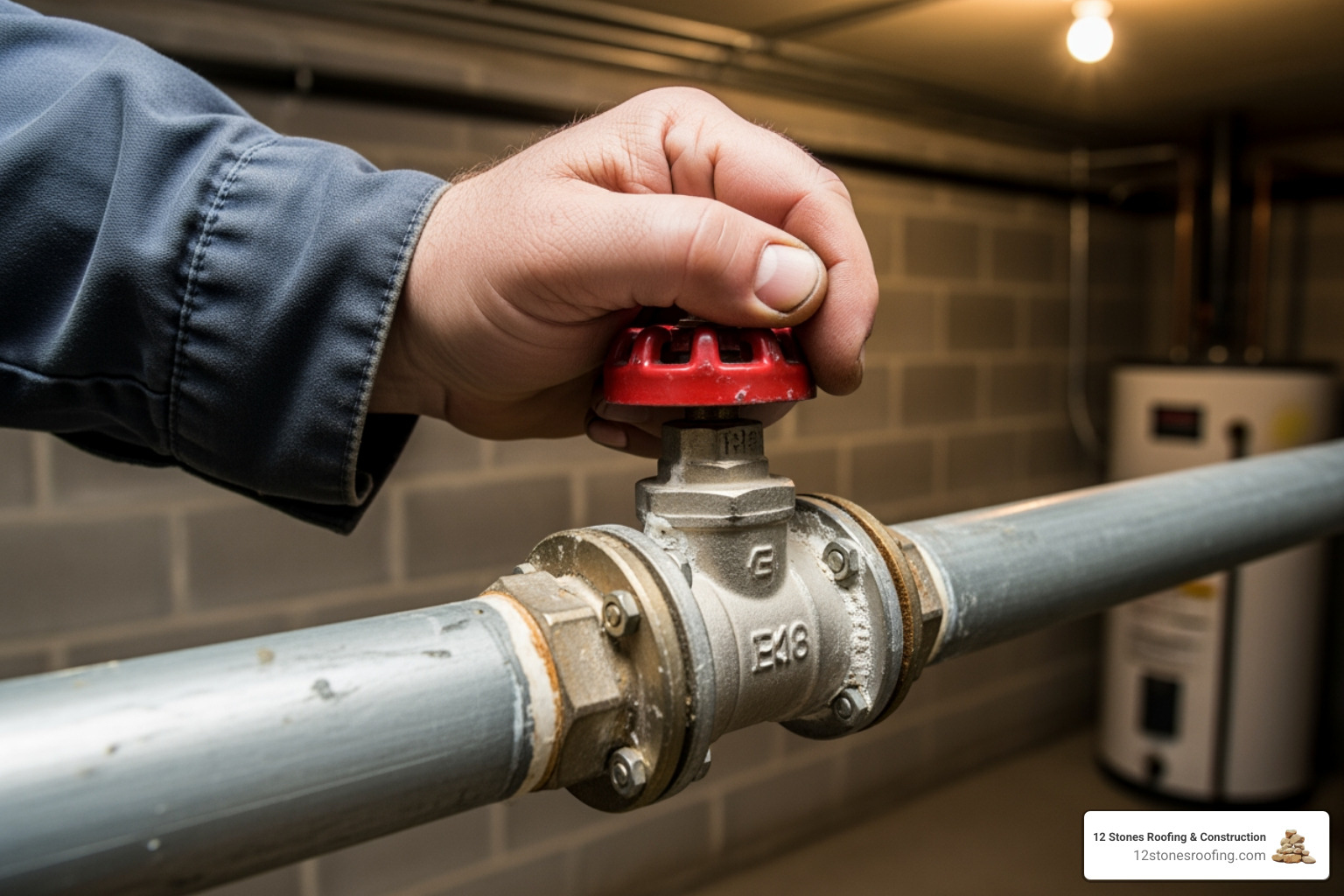
Your first move when fixing leaky pipe problems is to cut the water supply. Locate the correct valve and turn it off.
- Main Water Shut-Off Valve: Every homeowner should know its location. In most Pasadena, TX homes, it’s near the water meter, on an exterior wall, or in a utility room. Turn the valve clockwise until it stops.
- Fixture-Specific Valve: For leaks at a sink or toilet, use the smaller valve located underneath or behind the fixture. This avoids shutting off water to the entire house.
After turning off the water, open the nearest faucets to drain remaining water from the pipes. This relieves pressure in the system, making repairs easier and less messy.
Step 2: Ensure the Area is Safe
Before starting any cleanup, confirm the area is safe. Water and electricity are a deadly combination.
- Check for Electrical Hazards: If water is near outlets, fixtures, or appliances, turn off power at the circuit breaker. Use a non-contact voltage tester to confirm the power is off before touching anything in the wet area.
- Move Valuables: Relocate any electronics or other valuable items away from the leak zone.
- Damage Mitigation: Use buckets, towels, and mops to contain the water. Create barriers with towels to stop water from spreading. The faster you remove standing water, the lower the risk of rot, warping, or mold.
Water accumulating in hidden areas creates a perfect environment for mold. If water has already stained or sagged your ceiling, you’ll need to address that damage quickly, much like you would with water damage from roof leaks. Following these steps systematically will protect your home and prepare you for the temporary repair.
Identifying the Leak: Signs, Sources, and Pipe Materials
Before you can start fixing leaky pipe problems, you need to know what you’re dealing with. A proper diagnosis is key to an effective repair.
What are the common signs of a leaky pipe?
Some leaks are obvious, but others are subtle. Knowing what to look for can save you thousands in repair costs.
- Visible Signs: Look for water stains on ceilings, walls, or floors. Peeling paint, warped wood, or moisture pooling under sinks are clear red flags.
- Musty Odors: A persistent musty or earthy smell often signals hidden mold growth from an unseen leak.
- High Water Bill: An unexplained spike in your water bill is a strong indicator of a hidden leak. The EPA notes that household leaks can waste nearly 10,000 gallons of water annually.
- Sounds of Water: If you hear running water when all faucets are off, you may have a leak.
- Sewage Odor: A strong sewage smell is an urgent issue that requires immediate professional help, as it may indicate a drain line leak.
Common Leak Sources
Certain parts of your plumbing are more vulnerable to leaks.
- Pipe Joints and Connections: These are the most common failure points, as fittings can loosen and seals can degrade over time.
- Corrosion: Older galvanized iron pipes often rust from the inside out, creating weak spots. Even copper pipes can corrode and develop pinhole leaks.
- Cracks: Water freezing inside pipes can cause them to crack or burst. High water pressure also puts stress on the system, leading to failures.
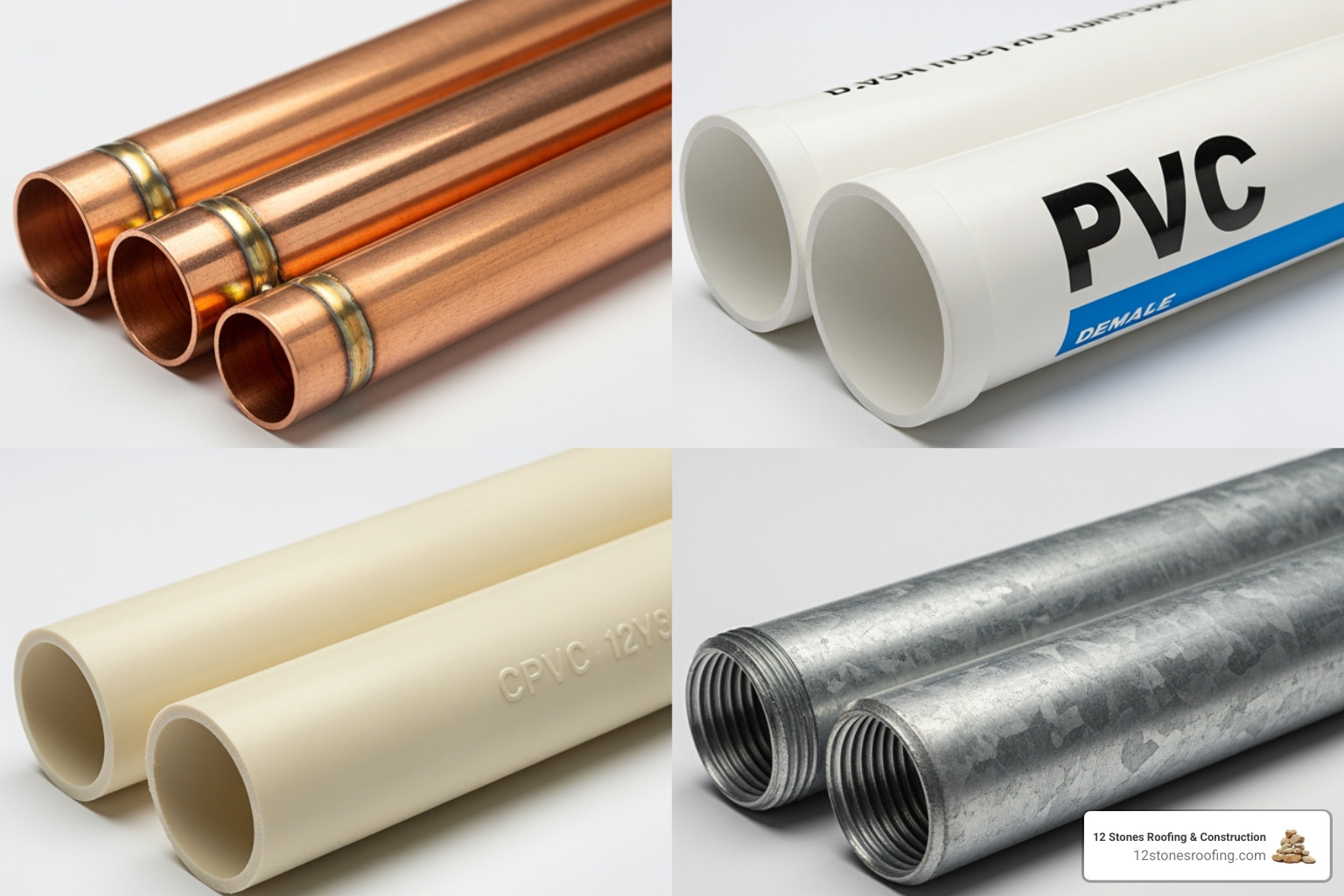
How can I identify the type of pipe material to ensure compatibility with repair products?
Using the right repair product for your pipe material is crucial for a successful fix.
- Copper: Reddish-brown in color, common in homes from the 1950s to 2000s. Durable but can develop pinhole leaks.
- PVC and CPVC: PVC is white and used for cold water and drainage. CPVC is cream-colored and used for hot and cold water.
- PEX: Flexible plastic tubing, often red, blue, or white. Popular in modern construction due to its flexibility and freeze resistance.
- Galvanized Steel: Grey, heavy pipes found in pre-1960s homes. Prone to internal rust, which leads to leaks and reduced water pressure.
A Homeowner’s Guide to Fixing Leaky Pipe Temporarily
A temporary fix is emergency first aid for your plumbing. It’s not a permanent solution, but it stops water damage in its tracks while you arrange for a professional repair.
Understanding the Difference: Temporary vs. Permanent Repair
Temporary repairs are designed to buy you time. They stop the immediate water flow to prevent damage to your floors, ceilings, and walls. Most repair tapes, putties, and clamps are for short-term use only. A permanent repair involves replacing damaged pipe sections or installing code-compliant fittings for a long-lasting solution. Don’t rely on a quick patch indefinitely.
DIY Solutions: Buying Yourself Time
Knowing how to apply a quick fix can save you time and money in an emergency. However, remember these are stop-gap measures, not substitutes for professional work.
Safety First: Protect Yourself
Before fixing leaky pipe issues, protect yourself. Wear nitrile gloves, especially when using epoxy putty, and eye protection to guard against splashes and debris.
Tools and Materials for a Quick Fix
Keep these items on hand for a plumbing emergency:
- Epoxy putty (plumbing-specific)
- Self-fusing silicone tape
- Pipe repair clamp with rubber gasket
- Sandpaper or wire brush
- Clean rags and a bucket
- Adjustable wrench or screwdriver
Method 1: How to Use Epoxy Putty for Fixing Leaky Pipe
Epoxy putty is ideal for pinhole leaks and small cracks on most pipe materials.
- Prep the Pipe: Ensure the surface is completely dry. Roughen the area around the leak with sandpaper.
- Mix the Putty: Wearing gloves, knead the putty until it’s a uniform color. You have about 3-5 minutes to work with it.
- Apply the Putty: Press the putty firmly over the leak, extending it past the damaged area. Mold it around the pipe to ensure a tight seal.
- Cure: Let the putty harden according to package directions (usually an hour for a full cure) before turning the water back on. For a visual guide, see this video on How to Use Oatey Epoxy putty.
Method 2: How to Apply Self-Fusing Silicone Tape
This tape is excellent for leaks at joints and on low-pressure pipes. It fuses to itself when stretched, creating a watertight seal.
- Dry the Pipe: The pipe must be completely dry for the tape to bond.
- Wrap and Stretch: Start wrapping several inches before the leak. Stretch the tape firmly as you wrap, which is crucial for fusion.
- Overlap: Overlap each layer by about half an inch, extending several inches past the leak on both sides. Apply 10-15 layers for a strong seal.
Method 3: How to Use a Pipe Repair Clamp
A pipe clamp is the most robust temporary fix for larger cracks on straight pipe sections.
- Prep the Pipe: Clean and dry the area around the leak.
- Position the Clamp: Place the rubber gasket directly over the leak. Fit the metal clamp halves around the pipe.
- Tighten: Insert and tighten the bolts evenly until the clamp is snug and the leak stops. Do not overtighten, as this can crack the pipe.
Temporary vs. Permanent Repairs: When to Call a Professional
Quick fixes are heroes in a pinch, but they aren’t meant to last forever. Fixing leaky pipe issues permanently requires professional tools and expertise. Knowing when to call a pro is as important as knowing how to apply a temporary patch.
A temporary repair is a band-aid, not a cure. Leaving it in place for too long can lead to bigger, more expensive problems.
DIY Limitations and Signs of a Major Problem
Some leaks are simply beyond a DIY fix. Recognizing these signs is key to smart homeownership. Call in the experts if you see these red flags:
- A Burst Pipe: This is an emergency that needs a professional immediately. A temporary fix won’t hold against the pressure.
- Hidden Leaks: If you suspect leaks in walls or ceilings (indicated by stains or musty smells), a plumber has specialized equipment to find the source without unnecessary demolition.
- Multiple Leaks or Severe Corrosion: Several drips or widespread rust indicate a systemic problem. A plumber can assess the entire system and recommend a lasting solution, like repiping.
- Failed DIY Attempts: If your temporary fix fails or the leak returns quickly, it’s time to call a professional. Repeated patching can make the problem worse.
- High Risk vs. Cost: While a tiny drip is manageable, major jobs like sewer line problems or whole-house repiping are for licensed plumbers. DIY attempts on complex jobs often lead to more damage and higher costs.
Just as a persistent roof leak might signal you need a full roof repair, multiple pipe leaks often mean your home’s plumbing system needs a professional overhaul. Don’t let a small leak grow into a huge headache!
After the Fix: Cleanup and Prevention
After fixing leaky pipe temporarily, the job isn’t over. The cleanup and prevention phase is critical to avoid mold and future structural damage.
Cleaning Up to Prevent Mold and Further Damage
Lingering moisture is the primary enemy after a leak. Even a small amount can lead to big problems.
- Remove Standing Water: Use towels, mops, or a wet/dry vacuum to soak up all visible water. Pay close attention to cabinets, as particle board deteriorates quickly when wet.
- Dry the Area Thoroughly: Open windows, use fans, and run a dehumidifier to circulate air and remove moisture. This is especially important in the humid Pasadena, TX climate.
- Disinfect Surfaces: Wipe down all affected areas with a solution of one cup of bleach per gallon of water to kill mold spores. Always wear cleaning gloves.
- Check for Hidden Moisture: Feel for dampness and look for discoloration behind walls and under flooring. A musty smell is a key indicator of hidden moisture. Our Water Damaged Ceiling Repair Guide can help you spot less obvious damage.
Proactive Measures for Preventing Future Leaks
A little prevention goes a long way in keeping your plumbing system healthy.
- Regular Inspections: Every few months, inspect exposed pipes under sinks, in basements, and behind toilets for corrosion, drips, or discoloration.
- Insulate Vulnerable Pipes: Use foam insulation on pipes in unheated areas like crawl spaces or attics to prevent them from freezing and bursting during cold snaps.
- Monitor Water Pressure: High water pressure (above 60 psi) stresses your plumbing. Consider installing a pressure-reducing valve to keep it between 40-60 psi.
- Address Corrosion Early: If you have older galvanized pipes showing signs of rust or causing low pressure, start planning for replacement before an emergency occurs.
- Adopt a Maintenance Mindset: Just as your roof needs regular care, as outlined in a Roof Maintenance Checklist, your plumbing does too. Fix small leaks promptly and avoid harsh chemical drain cleaners. For more tips, the EPA offers great resources on leak prevention.
Frequently Asked Questions about Fixing Leaky Pipe
It’s natural to have questions when dealing with a plumbing leak. Here are answers to some of the most common concerns about fixing leaky pipe issues.
What are the biggest risks of not fixing a leaky pipe promptly?
The biggest risks are extensive water damage (warped floors, stained ceilings, rotted wood), the growth of unhealthy mold and mildew, and significantly higher water bills from wasted water. Prompt action protects your home, health, and budget.
Are repair methods different for plastic (PVC) vs. metal (Copper) pipes?
Yes. While temporary fixes like clamps and silicone tape can work on both, permanent repairs are material-specific. Copper pipes are typically repaired by cutting and soldering a new piece or using compression fittings. PVC pipes require cutting the damaged section and using a special cement to solvent-weld new pipe and fittings. PEX tubing uses specialized crimp rings for a secure repair.
How long do temporary pipe leak repairs last?
Temporary repairs are a stop-gap measure, designed to last from a few days to a few months. Their lifespan depends on the product quality, application, and water pressure. They are not a permanent solution. It is crucial to follow up with a professional repair to prevent a future failure, which could cause even more significant damage.
Your Next Steps for a Permanent Solution
A leaky pipe is a clear warning sign. While the quick fixes we’ve discussed are excellent for emergencies, they are only a pause button, not a final solution. Think of them as a temporary bandage, not a permanent cure.
Leaving a temporary repair in place is like ignoring a check engine light—the small issue can eventually become a major problem, leading to serious water damage, mold, and expensive restoration work.
Here at 12 Stones Roofing & Construction, we’ve seen how water can wreak havoc on a home, whether from a roof leak or a pipe. We understand the stress a leak can cause. After you’ve managed the immediate crisis of fixing leaky pipe, getting a professional assessment is your smartest next step to understand the full extent of the problem.
Don’t let a temporary patch become a permanent headache. If you’re in the Pasadena, TX area and have experienced a leak, our team is ready to help you find and fix the root cause. For expert water damage restoration and a comprehensive inspection, explore our Water Damage Repair services. Let’s make sure that leak is gone for good!