
Why Understanding Hail Damage on Metal Roofs Matters for Texas Homeowners
Answer first: Hail can leave anything from harmless dimples to leaks that damage interiors, so fast, expert inspection after a storm is essential. Texas led the nation for hail incidents in 2023, and severe events routinely turn minor roof scars into costly failures if overlooked. If you need a trusted local pro, our Pasadena roofing contractor team can assess your roof and document findings for insurance, so you act decisively.
A hail damaged metal roof can show minor cosmetic dents or serious functional failures like punctures and warped panels. Metal is among the most hail-resistant roofing options, but it isn’t invincible. Early identification prevents leaks, corrosion, and surprise expenses. Understanding what counts as cosmetic versus functional damage guides smarter repair and claim decisions.
Key Facts About Hail Damaged Metal Roofs:
- Cosmetic vs. functional: Dents may be aesthetic only; damage to seams, fasteners, or coatings can compromise water-shedding.
- Impact resistance: Many quality metal roofs carry a UL Class 4 rating, the highest impact certification.
- Insurance: Policies often treat cosmetic vs. structural damage differently, affecting claim approvals.
- Repair paths: Repairs range from dent and coating touch-ups to panel replacement, depending on severity.
- Long-term risks: Unrepaired damage can lead to rust, leaks, reduced efficiency, and voided warranties.
In Texas, hailstorms are a recurring threat. Baseball-sized hail can fall at over 100 mph, and national hail losses exceed $1 billion annually. The real challenge is knowing when a small dent is just cosmetic—and when it signals a bigger issue.
I’m Jason Roberts, owner of 12 Stones Roofing & Construction. For over a decade, we’ve assessed hail-damaged metal roofs across the Gulf Coast and helped homeowners steer claims while protecting their homes.
How Hail Actually Damages a Metal Roof
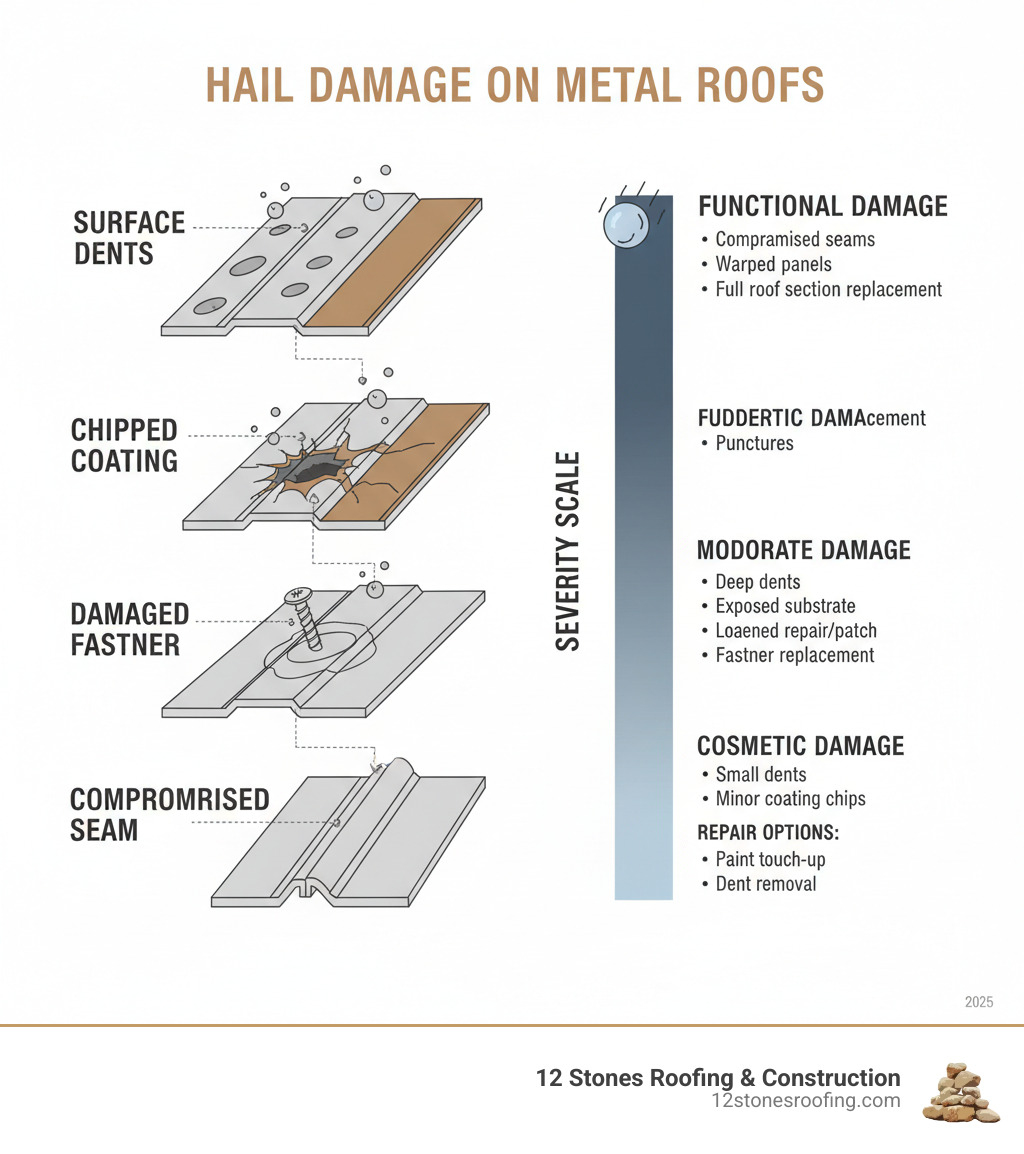
Hail damage on a metal roof ranges from subtle cosmetic dings to functional failures that threaten water tightness. With hail-related property damage exceeding $1 billion annually, a post-storm check is critical.
Key Visual Signs of Hail Damage
After a storm, a close inspection helps identify both obvious and hidden issues:
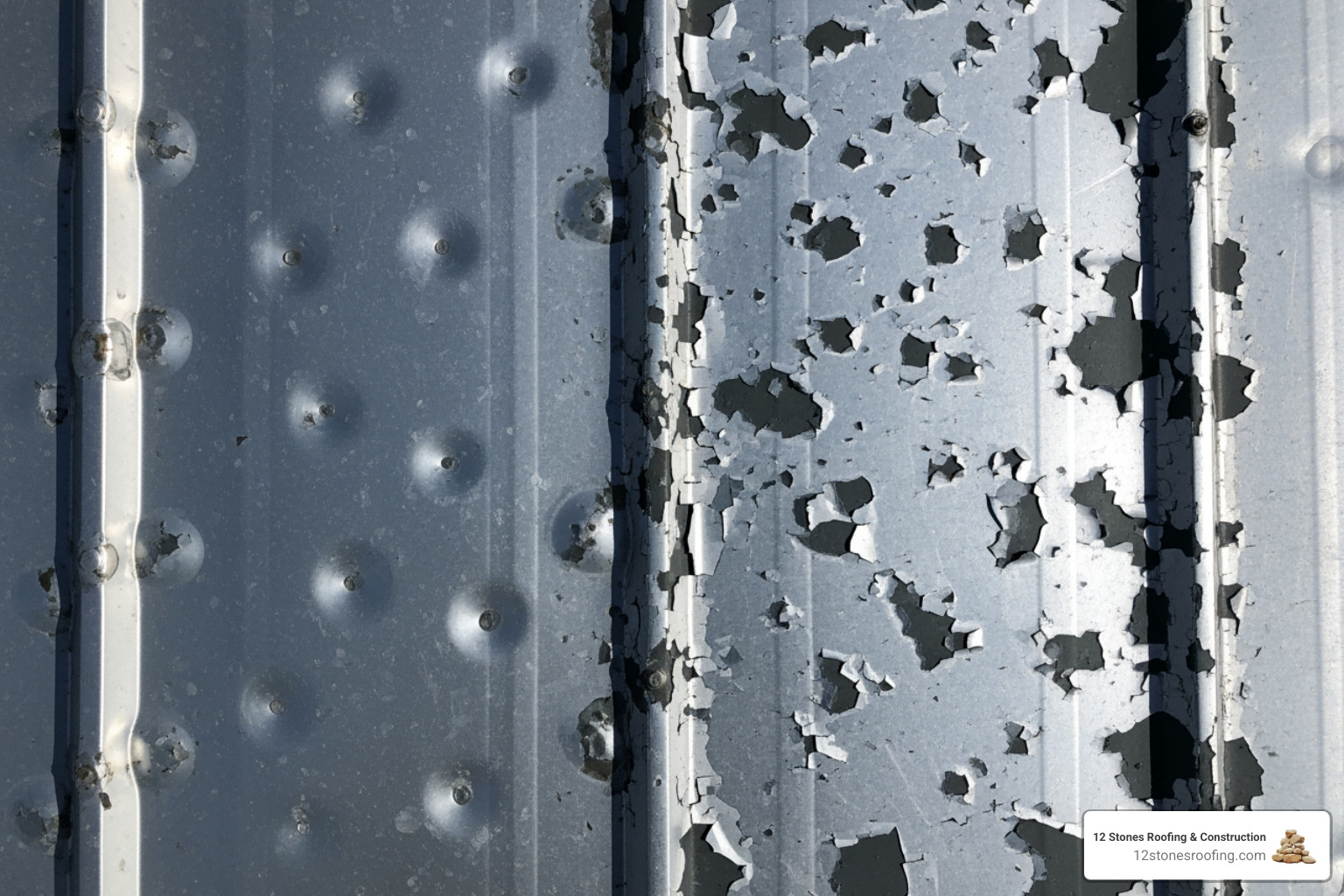
- Denting and dimpling: From subtle depressions to obvious dents; chalk can highlight faint impacts.
- Scratches and scuffs: Wind-driven hail can remove paint, exposing metal.
- Chipped or cracked coatings: Breaches in the finish create corrosion risks.
- Damaged seams or fasteners: Loosened or distorted connections invite water intrusion.
- Granule loss: On stone-coated metal roofs, granules may wash into gutters after impact.
- Damaged flashing: Bent or cracked flashing around penetrations is a common leak source.
Functional vs. Cosmetic Damage
- Cosmetic: Small dents that don’t breach coatings, disturb seams, or affect fasteners. Unsightly but not performance-reducing.
- Functional: Punctures, warped panels, failed seams/fasteners, or coating cracks that expose metal. These require immediate repair to prevent leaks.
Long-Term Risks of an Unrepaired Hail Damaged Metal Roof
- Corrosion and rust: Exposed steel corrodes quickly, especially in humid climates.
- Weakened panels: Dents create future failure points under wind uplift or new impacts.
- Leaks and interior damage: Water entry leads to soaked insulation, drywall damage, and mold. See our guide on Roof Damage from Rain.
- Reduced energy efficiency: Damaged insulation or warped panels can raise cooling costs.
- Potential warranty issues: Many warranties require prompt repairs.
Bottom line: a professional post-storm inspection prevents small problems from becoming expensive ones.
What Determines the Severity of Hail Damage?
Not all hailstorms—or metal roofs—are created equal. Several key factors determine whether a storm leaves behind a few minor dents or causes significant functional damage requiring immediate attention.
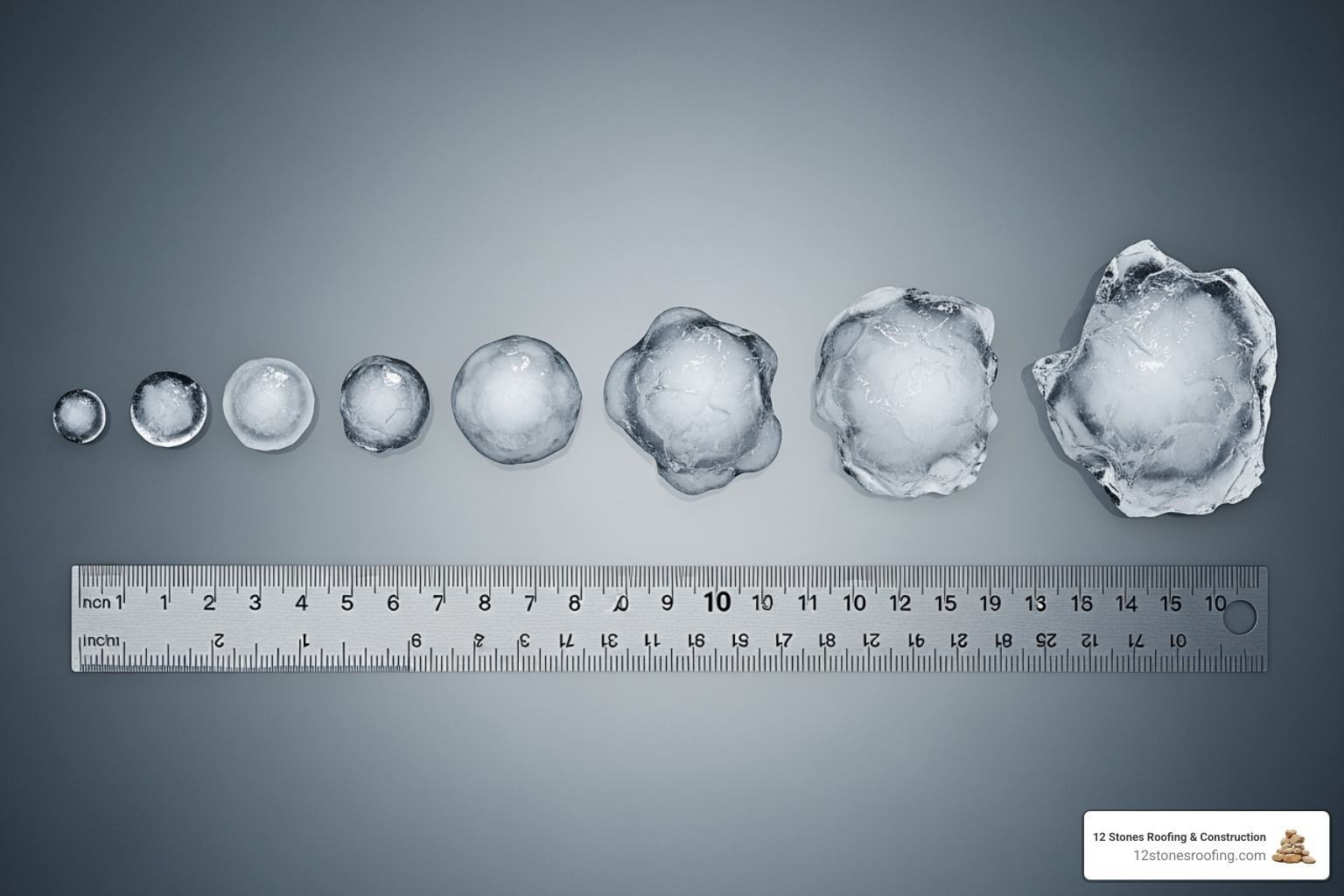
Hailstone Characteristics
The nature of the hail itself is the primary factor in damage severity. The destructive potential of hail is determined by a combination of four key characteristics:
- Size: Larger hailstones carry more kinetic energy and cause more significant damage. While most hail is under two inches, Texas storms can produce baseball-sized hail (2.75 inches) or larger, which can puncture steel panels.
- Density: A dense, solid hailstone will cause more damage than a lighter, less compact one of the same size. The formation process, detailed in NOAA research on hail formation, dictates its density.
- Shape: Jagged, irregularly shaped hailstones are more destructive than smooth, round ones because they concentrate impact force on a smaller point, leading to scratches and tears.
- Wind Speed: Wind-driven hail strikes a roof with much greater force than hail falling vertically. A 20 mph hailstone combined with 50 mph winds has a dramatically increased impact speed.
Roof and Panel Specifications
How a metal roof withstands these impacts depends entirely on its design and materials. The following specifications are most critical for hail resistance:
- Metal Thickness (Gauge): This is the single most important factor. Thicker metal, such as 24-gauge steel or .040-inch aluminum, is significantly more resistant to denting and puncturing than thinner materials like 29-gauge steel.
- Panel Profile: Flat panels show every dent. In contrast, panels with ribs, striations, or corrugations are structurally stronger, help distribute impact force, and naturally conceal minor cosmetic damage.
- Roof Slope (Pitch): A steeper roof pitch helps deflect hailstones, reducing the direct impact force. Flatter roofs absorb the full brunt of the impact, making them more susceptible to denting.
- Underlying Support: Metal panels installed over a solid, continuous roof deck are less likely to dent than panels with gaps in their support. The deck helps absorb and distribute the impact energy.
- Metal Type: Steel is more rigid and dent-resistant than softer metals like aluminum and copper. However, if the protective coating on steel is breached, it can rust, whereas aluminum and copper are naturally corrosion-resistant.
Are Some Metal Roofs Hail-Proof? Understanding Impact Ratings
No roof is completely hail-proof, but modern metal systems routinely outperform asphalt shingles in severe weather. The industry relies on a standardized impact test to benchmark durability.
The UL 2218 Impact Resistance Standard
The industry standard, UL 2218 drops steel balls of varying sizes from set heights to simulate hail strikes. Materials are rated Class 1 to 4 based on resistance to puncture or fracture.
- Class 1: Withstands a 1.25-inch steel ball.
- Class 2: Withstands a 1.5-inch steel ball.
- Class 3: Withstands a 1.75-inch steel ball.
- Class 4: Withstands a 2-inch steel ball.
Class 4 is the highest rating and evaluates functional performance (resisting punctures), not cosmetic denting. A Class 4 metal roof can show dents after extreme storms yet still protect against leaks.
Choosing a Hail-Resistant Metal Roof
- Prioritize UL 2218 Class 4 certification; many insurers discount premiums for Class 4 roofs.
- Select thicker metal (e.g., 24-gauge steel or .040-inch aluminum) for better dent resistance.
- Consider textured finishes and ribbed/striated profiles that distribute impacts and mask minor dings.
- Stone-coated steel adds an impact-absorbing granule layer.
Ready to compare durable options for Texas weather? Our team can help you find the right Metal Roofing services that balance performance and value.
Navigating Insurance for a Hail Damaged Metal Roof
Filing a claim for a hail damaged metal roof hinges on how your policy defines cosmetic versus functional damage. Knowing the difference improves outcomes and speeds approvals.
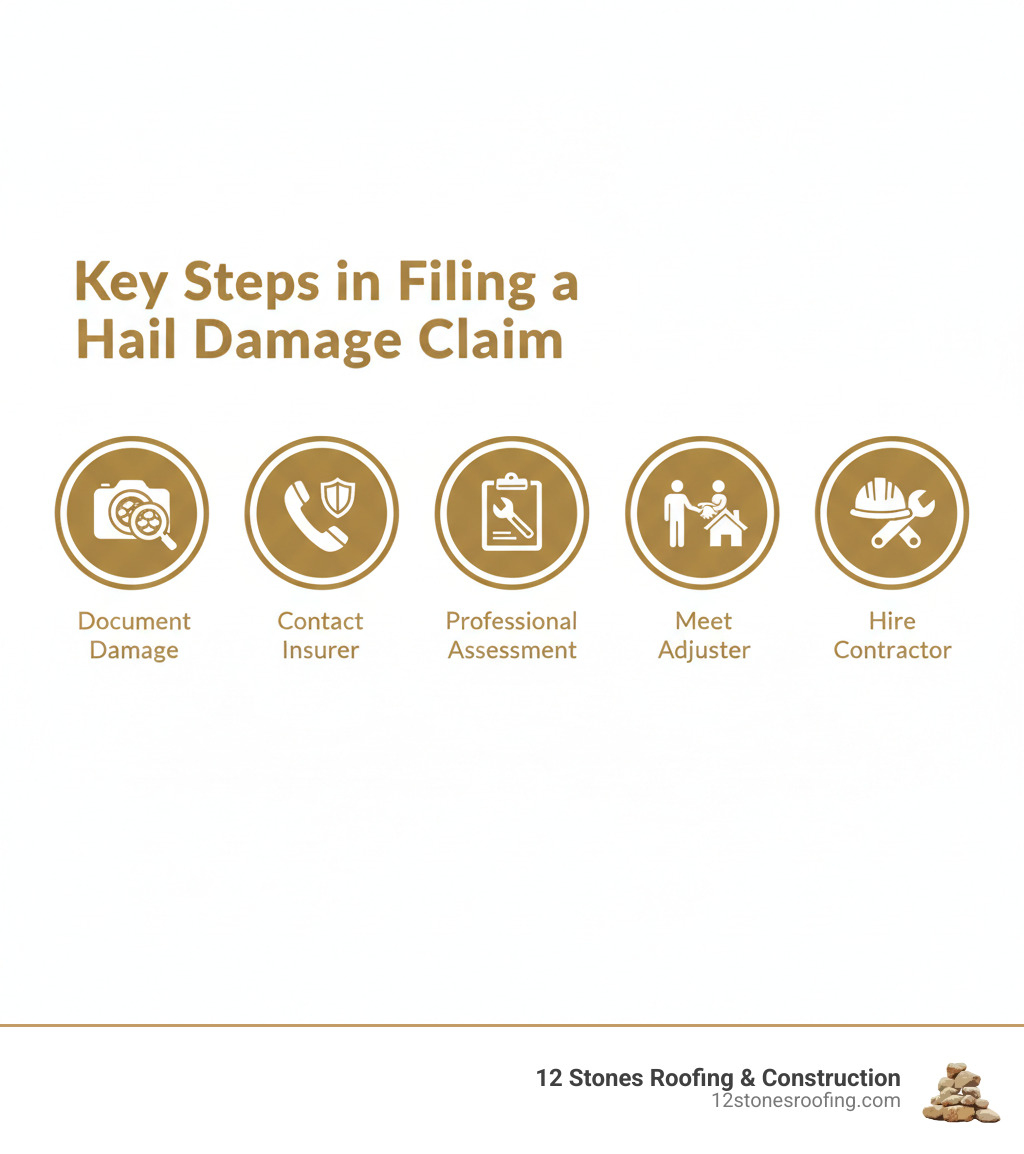
The Claims Process: ACV vs. RCV and Deductibles
- Document everything: Capture wide shots and close-ups of dents, coating damage, seams, fasteners, flashing, gutters, and siding.
- Contact your insurer promptly: Ask about procedures, timelines, and required documentation.
- Get an independent assessment: A detailed contractor report ensures hidden damage is recorded before the adjuster visit.
- Meet the adjuster with your contractor: Align on the full scope so materials, specs, and finish are matched correctly.
Your payout depends on whether you have Actual Cash Value (ACV) or Replacement Cost Value (RCV).
| Feature | Actual Cash Value (ACV) | Replacement Cost Value (RCV) |
|---|---|---|
| Definition | Pays current value minus depreciation | Pays full replacement cost (similar kind/quality) |
| Depreciation | Subtracted from payout | Typically reimbursed after work is completed |
| Example | $20,000 roof with 40% depreciation = $12,000 (minus deductible) | $20,000 (minus deductible), often paid in two installments |
Deductibles may be higher for wind/hail in Texas; check your policy for a separate percentage-based storm deductible.
The “Cosmetic Damage Waiver”: Should You Sign It?
A cosmetic damage waiver excludes coverage for dents that don’t affect performance. Premiums drop, but you assume the cost of aesthetic repairs and potential resale impacts. In hail-prone Pasadena, the out-of-pocket risk can outweigh savings. If you’re unsure whether recent damage is cosmetic or functional, call us at (832) 702-0202 for an expert opinion.
Why Understanding Hail Damage on Metal Roofs Matters for Texas Homeowners
Quick take: Dents are not always benign. If seams, fasteners, or coatings are compromised, leaks and corrosion follow. Texas consistently ranks among the most hail-impacted states, and national hail losses exceed $1 billion annually. After any major storm, inspect early, document thoroughly, and separate cosmetic blemishes from functional failures. Early action protects warranties, energy efficiency, and resale value.
How Hail Actually Damages a Metal Roof
Answer first: Functional damage—not visible dents—drives leaks and claim approvals. Look for coating breaches, warped panels, and compromised seams/fasteners. Even small defects can propagate under Texas heat and humidity.
Key signs include denting/dimpling, scratches and scuffs, cracked coatings, seam or fastener issues, granule loss on stone-coated metal, and bent flashing. Functional issues shorten service life and lift risk of water intrusion. For moisture control and leak prevention, see Roof Damage from Rain.
What Determines the Severity of Hail Damage?
Severity is dictated by hail characteristics and your roof’s specifications.
- Hailstone factors: Size, density, shape, and wind speed determine impact energy. Strong updrafts create dense, layered hail that strikes harder; see NOAA research on hail formation.
- Roof factors: Thicker metal (e.g., 24-gauge steel), ribbed/striated profiles, steeper slopes, continuous deck support, and metal type (steel vs. aluminum/copper) all influence resistance and visibility of dents.
Are Some Metal Roofs Hail-Proof? Understanding Impact Ratings
Bottom line: No system is truly hail-proof, but UL 2218 Class 4 metal roofs are engineered to resist puncture and preserve water-shedding performance. The UL test drops steel balls from calibrated heights to simulate repeated strikes and rates materials from Class 1–4. Class 4 indicates the strongest impact performance and addresses functional failure, not cosmetic denting. Pair Class 4 materials with thicker gauges, textured finishes, and ribbed profiles for the best real-world outcomes in Texas.
Protect Your Investment with Expert Hail Damage Assessment
A hailstorm in Texas is a matter of when, not if. While a Metal Roofing system is one of your best defenses, no roof is invincible. Understanding the signs of damage, the factors that influence it, and how to steer your insurance policy empowers you to act decisively. After a storm, a professional inspection is the most reliable way to assess the health of your roof and protect your home’s value.
The team at 12 Stones Roofing & Construction has the expertise to thoroughly inspect your roof, provide a detailed report for your insurance claim, and perform high-quality repairs. If you suspect your roof has been damaged by hail, contact us today for a comprehensive assessment.