
What You Need to Know About Metal Roof Replacement Costs
Metal roof replacement cost is a primary concern for homeowners considering this durable, long-term investment. Understanding the financial expectations and budget planning is the first step. For those in Texas seeking a lasting roofing solution for their property, a new metal roof is an excellent choice.
Quick Answer:
- Average cost range: $7,500 to $40,000 for a typical 1,500-2,500 sq ft home
- Cost per square foot: $7 to $30 installed
- National average: $14,039 for a 1,700 sq ft roof
- Cost factors: Material type (steel, aluminum, copper, zinc), roof size, complexity, labor, and removal of old roofing
| Metal Type | Cost per Sq Ft | Lifespan | Best For |
|---|---|---|---|
| Steel (Galvanized/Galvalume) | $5-$13 | 40-70 years | Budget-conscious, durability |
| Aluminum | $7-$15 | 40-60 years | Coastal areas, corrosion resistance |
| Copper | $15-$30+ | 70-100+ years | Premium aesthetics, longevity |
| Zinc | $10-$20 | 60-100 years | Self-healing, harsh climates |
In Pasadena, Texas, properties face severe thunderstorms, hail, and extreme temperatures. Metal roofing is popular because it withstands this weather, lasting 40 to 70 years or more. While the upfront cost is higher than traditional materials, you are investing in specialized materials, expert installation, and decades of protection. Understanding the cost drivers is essential. For homeowners in Pasadena, Deer Park, La Porte, and throughout the Houston area, knowing what a fair price looks like can save thousands.
I’m Jason Roberts, owner of 12 Stones Roofing & Construction. With over a decade of experience, I’ve helped homeowners steer metal roof replacement costs to secure the best value. This guide breaks down every factor, from materials to financing, so you can make an informed decision for your home and budget.
In this guide, we’ll break down every factor that influences metal roof replacement cost—from material choices and labor to long-term savings and financing options. By the end, you’ll have a clear understanding of what to expect and how to make the smartest decision for your home and budget.
Detailed Breakdown of Metal Roof Replacement Cost
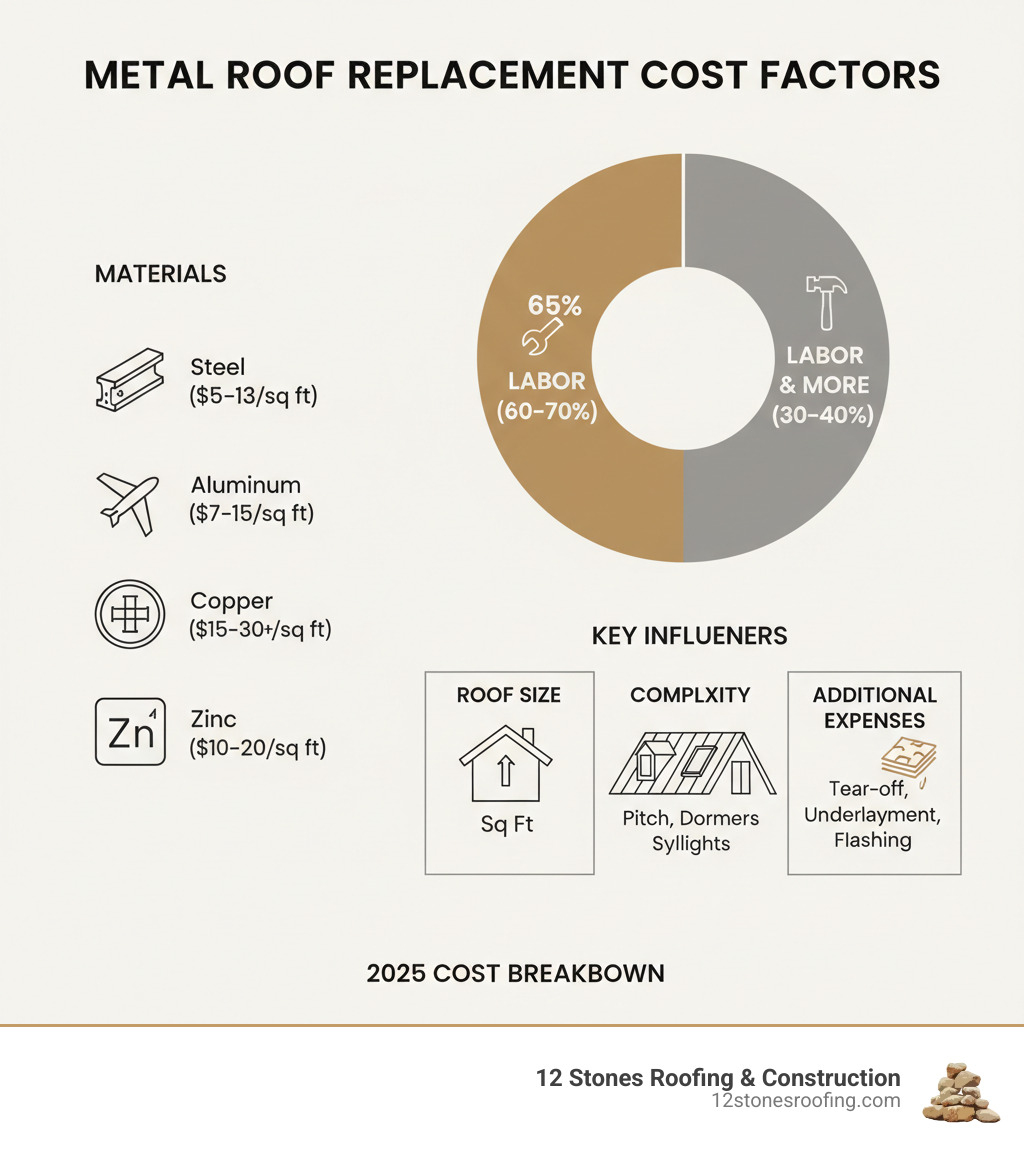
When planning a metal roof replacement, it’s crucial to understand where your money goes. The total metal roof replacement cost is a combination of materials, skilled labor, and project-specific factors. Materials typically account for 30-40% of the total investment, while specialized labor constitutes the larger share at 60-70%. This split emphasizes the importance of expert craftsmanship for a long-lasting installation.
Metal Roof Replacement Cost Per Square Foot
Contractors typically quote metal roof replacement cost per square foot. The expected range is $7 to $30 per square foot for a complete installation, with the variation reflecting material choice and project complexity.
- Standing seam metal roofs, known for their sleek look and concealed fasteners, typically cost $10 to $16 per square foot installed.
- Corrugated metal roofs, a budget-friendly option with exposed fasteners, usually fall between $7 to $12 per square foot. Exposed fastener panels can cost about half as much as concealed fastener systems.
In the roofing industry, a “roofing square” equals 100 square feet. A quote of $850-$1,600 per roofing square translates to $8.50-$16.00 per square foot. Understanding this term helps in accurately comparing quotes.
| Metal Type | Cost per Sq Ft (Installed) | Lifespan | Features & Best For |
|---|---|---|---|
| Steel (Galvanized/Galvalume) | $5 – $13 | 40 – 70 years | Most common choice, highly durable. Galvalume offers superior corrosion resistance, ideal for the Texas climate. |
| Aluminum | $7 – $15 | 40 – 60 years | Lightweight with excellent corrosion resistance. Ideal for coastal areas and often made from recycled content. |
| Copper | $15 – $30+ | 70 – 100+ years | Premium option with stunning aesthetics that develops a unique patina. Offers self-healing properties. |
| Zinc | $10 – $20 | 60 – 100 years | Exceptionally durable with a natural patina. Scratches can self-heal over time, making it great for harsh environments. |
Material and Style Choices That Impact Cost
Your choice of material and style is the biggest driver of your metal roof replacement cost.
- Steel: The workhorse of metal roofing, available as galvanized (zinc-coated) or Galvalume (aluminum-zinc coated). Galvalume is popular in Texas for its improved corrosion resistance, offering a great balance of affordability and performance.
- Aluminum: A lightweight, naturally rust-resistant option ideal for coastal environments like the Gulf Coast. It handles saltwater exposure exceptionally well and is often made from recycled content.
- Copper: The luxury choice. While the most expensive, copper roofs can last over 100 years and develop a distinctive green patina, adding unique character to a home.
- Zinc: Offers remarkable longevity and a unique matte finish. Zinc is “self-healing,” as minor scratches disappear when the metal oxidizes and reforms its protective layer.
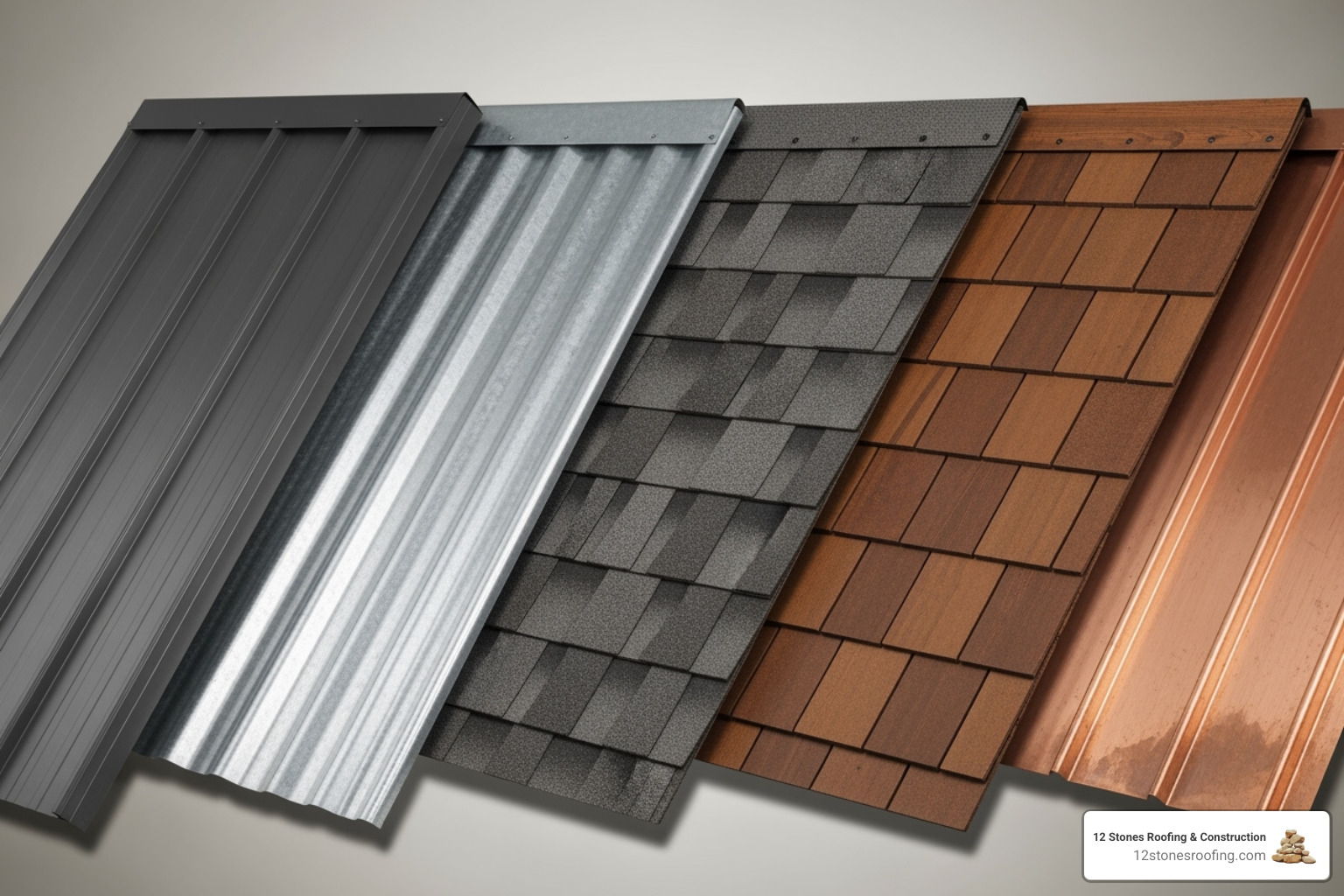
Panels vs. Shingles: Corrugated panels are the most affordable option. Standing seam panels cost more but provide superior water protection with raised seams and concealed fasteners. Metal shingles offer the durability of metal with the traditional look of asphalt or slate, typically costing between $10.50 and $14.00 per square foot installed.
Gauge (Thickness): In metal roofing, a lower gauge number means thicker, stronger metal. Most residential roofs use 26-gauge or 24-gauge steel. The thicker 24-gauge option can increase costs by 25-40% but offers better resistance to denting from hail.
Paint System: The paint finish protects against fading. SMP (Silicone Modified Polyester) is more affordable but fades faster. PVDF (Kynar 500®) is the premium option, offering superior color retention and longer warranties, though it can increase panel cost by 30-40%.
Labor, Roof Complexity, and Additional Expenses
Several other factors significantly impact the total metal roof replacement cost.
Labor: Representing 60-70% of the total project cost, metal roofing requires specialized skills and tools. Labor costs can range from $5 to $15 per square foot, depending on complexity and regional wages. An inexperienced contractor can cause costly long-term problems, especially with concealed fastener systems. Always work with a licensed, insured, and bonded contractor with proven metal roofing expertise.
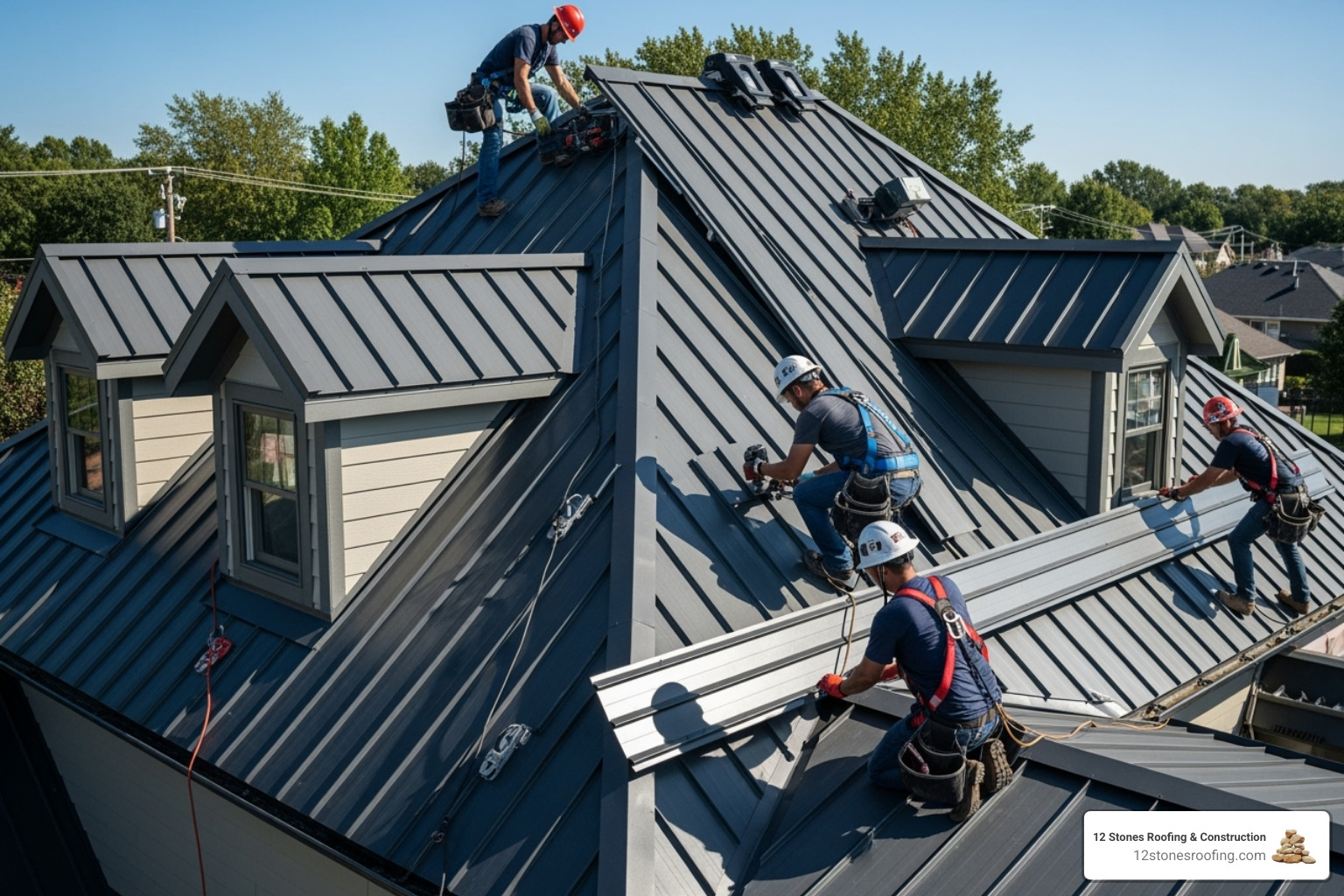
Roof Complexity: A simple, low-pitch roof is less expensive to work on than a complex roof with multiple valleys, dormers, skylights, and steep pitches (>6:12). These features require more time, intricate work, and additional safety equipment, increasing labor costs.
Old Roof Removal: Tearing off the old roof typically costs between $4 to $16 per square foot. This includes removing all old materials and disposing of the debris properly.
Underlayment: This is a critical moisture barrier between the roof deck and metal panels. High-performance synthetic underlayment is strongly recommended over traditional felt paper. While more expensive initially (e.g., $160-$180 per roll vs. 5-10 cents/sq ft for felt), it offers superior protection and longevity, preventing costly moisture issues.
Flashing and Trim: These components are essential for a leak-proof roof, directing water away from vulnerable areas like chimneys, vents, and valleys. Trim and custom features typically add 10-15% to the total cost. For example, standing seam trim can cost $5.50 to $8.00 per linear foot, compared to $2.50 to $4.00 for exposed fastener trim.
Long-Term Value: Metal Roofs vs. Asphalt Shingles
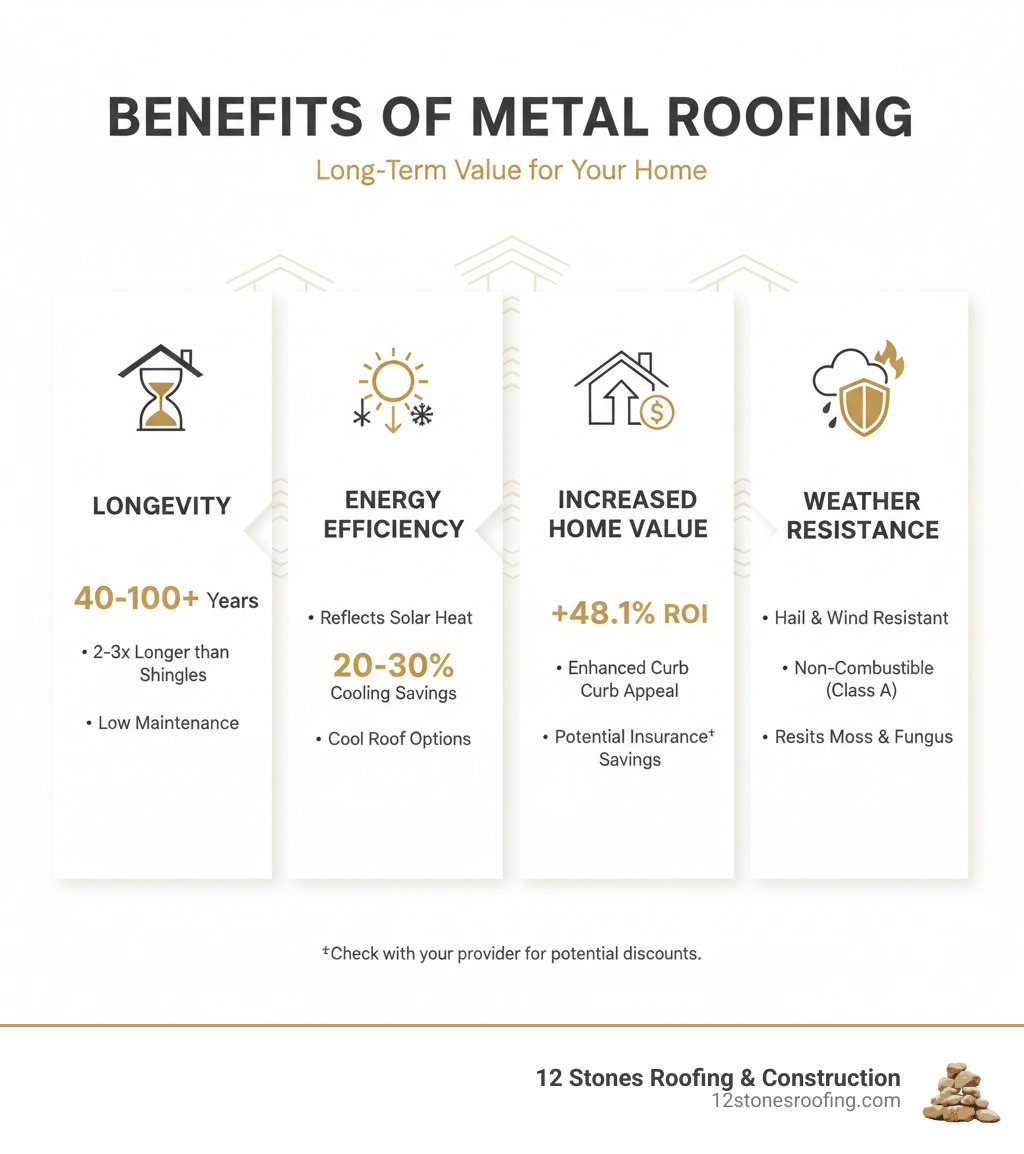
While the initial investment is higher, metal roofs offer a compelling long-term value proposition. They last two to three times longer than asphalt shingles (which require replacement every 20-30 years), resulting in a lower total cost of ownership due to superior durability and energy savings.
Lifespan and Durability Comparison
The longevity of a roof is a key factor in its overall value. This is where metal roofing excels.
- Metal Roof Lifespan: A properly installed metal roof can last 40 to 100+ years, depending on the material. Premium metals like copper and zinc often exceed 70 years.
- Asphalt Shingle Lifespan: In contrast, traditional asphalt shingles typically last only 20 to 30 years, especially in harsh Texas weather.
- Weather Resistance: Metal roofs are champions against the elements. They offer superior resistance to hail, high winds (with high uplift ratings), and fire (non-combustible). They also resist the fungus and moss growth that can plague other materials.
- Reduced Maintenance: Metal roofs are low-maintenance. Their smooth surface sheds debris easily, and they don’t typically grow mold or mildew. Regular inspections are usually all that’s needed.
We stand by the quality and longevity of our installations. You can learn more about the protection we offer by reviewing our Roofing Warranty.
Return on Investment (ROI) and Home Value
A metal roof is a powerful asset, especially if you plan to sell your home in the future.
- Increased Resale Value: According to Remodeling Magazine’s 2024 Cost vs. Value Report, a metal roof replacement has an average return on investment (ROI) of 48.1%.
- Improved Curb Appeal: The clean lines of standing seam or the traditional look of metal shingles add a modern and luxurious aesthetic to any home.
- Potential Insurance Discounts: Many insurance companies offer premium discounts of up to 25% for homes with durable, weather-resistant metal roofs.
- Energy Savings: Metal roofs reflect solar heat, which can reduce cooling costs by 20-30% in warm climates. “Cool roof” coatings can improve this efficiency. For more details, explore our information on energy efficient roofing.
How to Budget, Save, and Finance Your Metal Roof
Managing the financial side of a roof replacement is as important as choosing the right material. From understanding your quote to exploring financing, several strategies can make your investment more affordable.
Decoding Your Quote and Choosing a Qualified Contractor
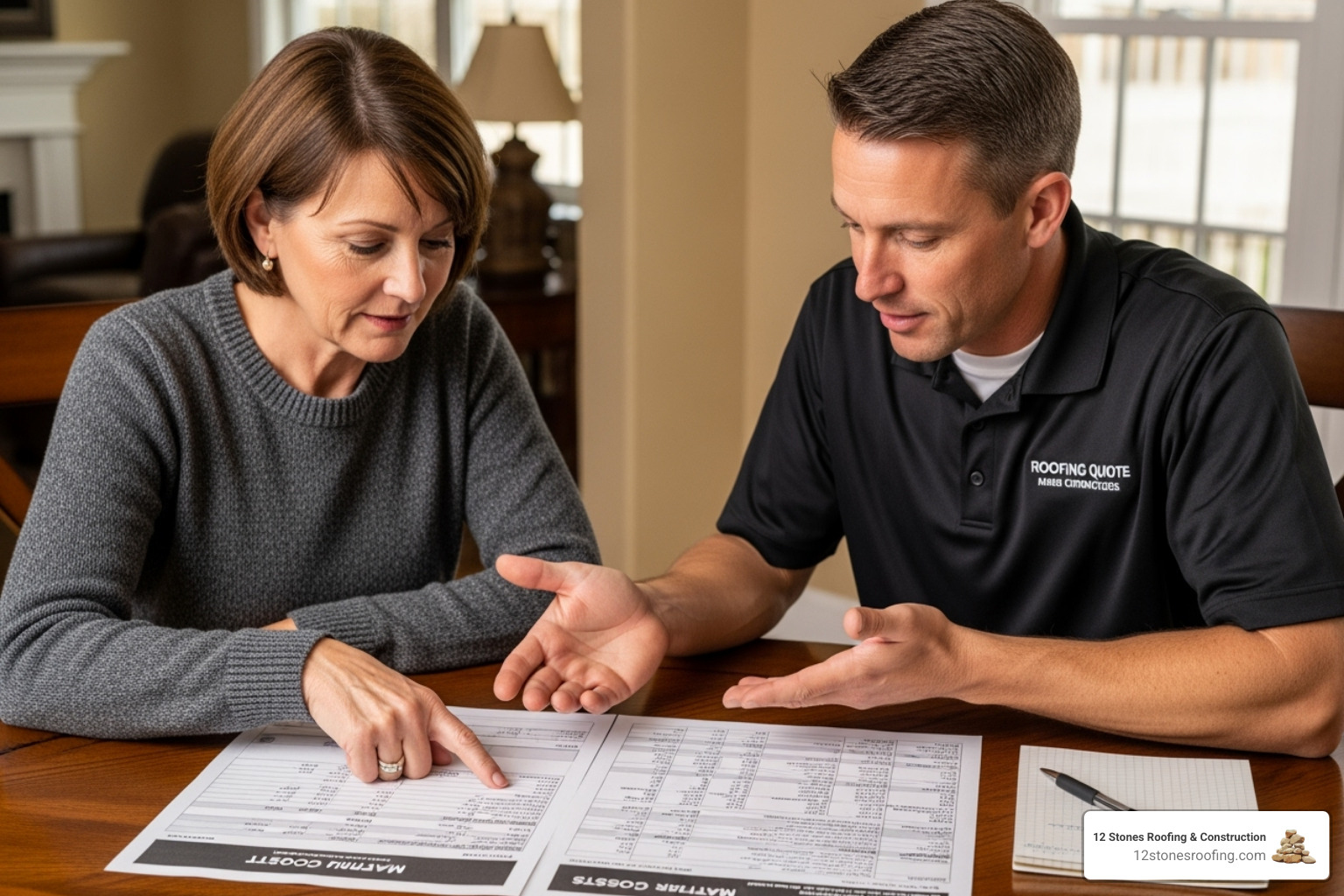
A detailed, transparent quote is the foundation for a successful project, helping you understand costs and avoid surprises. A comprehensive quote for metal roof replacement cost should clearly itemize:
- Materials: Specific metal type, gauge, and paint system.
- Labor: Costs for specialized installation.
- Tear-Off & Disposal: Fees for removing the old roof.
- Underlayment: Type and cost.
- Flashing & Trim: Pricing for all components.
- Permits: All necessary permit fees.
- Warranties: Coverage for both materials and labor.
Always get at least three itemized bids to compare apples to apples. Vague quotes with round numbers are a red flag.
Choosing the right contractor is crucial. Look for a professional who is a member of industry associations like the Metal Roofing Alliance and the National Roofing Contractors Association (NRCA). Ask for references, check online reviews, and verify that they are fully licensed, insured, and bonded to protect yourself. We believe in complete transparency and provide detailed estimates. If you’re ready to see what your project might cost, you can Get a Free Roof Replacement Estimate from us.
Ways to Save Money and Available Incentives
While a metal roof is a significant investment, there are smart ways to manage the metal roof replacement cost without sacrificing quality.
- Schedule in the Off-Season: Booking your installation during slower periods (like late winter or early spring) may lead to better pricing and faster project completion.
- Choose Cost-Effective Materials: Steel and aluminum are significantly more affordable than premium options like copper or zinc, while still offering excellent longevity. Corrugated panels are also less expensive than standing seam systems.
- Install Over Existing Shingles: If local building codes permit and your existing single-layer asphalt roof is structurally sound, installing a metal roof over it can save thousands by eliminating tear-off and disposal costs ($4 to $16 per square foot). A professional Roof Inspection is essential to confirm this is a safe option.
- Look for Federal Tax Credits: Installing an ENERGY STAR certified metal roof may qualify you for federal tax credits designed to encourage energy-efficient home improvements. Check with a tax professional for current eligibility.
- Explore Flexible Financing: We understand that a large upfront cost can be a hurdle. We offer financing solutions, including low monthly payments and $0 down options, to make your investment manageable. Learn more on our Roof Financing page.
Frequently Asked Questions about Metal Roof Costs
Here are answers to the most common questions we receive about metal roof replacement cost and metal roofing in general.
Are metal roofs noisy in the rain?
This is a common myth. Unlike an old barn roof, modern residential metal roofs are installed over a solid roof deck with a layer of underlayment. This construction provides significant sound insulation, making a properly installed metal roof no louder than an asphalt shingle roof during a rainstorm. Many homeowners find the sound to be gentle and soothing.
Can you install a metal roof over existing shingles?
Yes, in many cases, this is possible and is a great way to reduce your metal roof replacement cost. Most Texas building codes allow for up to two layers of roofing material. If you have a single, relatively flat layer of asphalt shingles, a metal roof can often be installed directly over it, saving you thousands in tear-off and disposal fees.
However, this is not a DIY decision. A professional Roof Inspection is mandatory to ensure your existing roof deck is structurally sound and free of rot or damage. Covering up hidden problems will lead to more expensive issues later. We will always provide an honest assessment.
How does a metal roof increase a home’s energy efficiency?
Metal roofs are highly energy-efficient, which is a major benefit in the Texas heat. They work by reflecting solar radiant heat away from your home, unlike dark asphalt shingles that absorb it. This reflective property can significantly reduce the heat load on your attic and living spaces.
Homeowners with metal roofs often report cooling cost reductions of 10-25%. Over the 40-70+ year lifespan of the roof, these savings add up, making the initial metal roof replacement cost a wise long-term investment. For even greater efficiency, “cool roof” coatings can be applied to maximize solar reflectance. You can learn more in our guide to energy efficient roofing. A metal roof not only protects your home but actively works to keep it cooler and lower your energy bills.
Secure Your Pasadena Home with a Lasting Investment
You now understand that while the metal roof replacement cost is a significant upfront investment, it is one that pays dividends for decades. You are not just buying a roof; you are investing in peace of mind and protecting your family from Texas’s unpredictable weather—from hail and scorching heat to hurricane-force winds.
The long-term value is clear: lower energy bills, minimal maintenance costs, and no need to budget for another replacement in 15-20 years. Plus, with an impressive potential ROI of 48.1% at resale, it’s a financially sound decision.
For homeowners in Pasadena, Deer Park, La Porte, and the surrounding Houston area, partnering with a trusted local expert is key. At 12 Stones Roofing & Construction, we’ve built our reputation on quality craftsmanship and transparent pricing. We understand the Gulf Coast climate and install metal roofs designed to withstand it.
We are here to educate you and help you make the right choice for your home and budget. Whether you’re dealing with storm damage or planning an upgrade, we can help.
Ready to take the next step? Explore our metal roofing services to see our work and learn more about your options. We’re here to help you invest in a roof that will protect your home for generations.