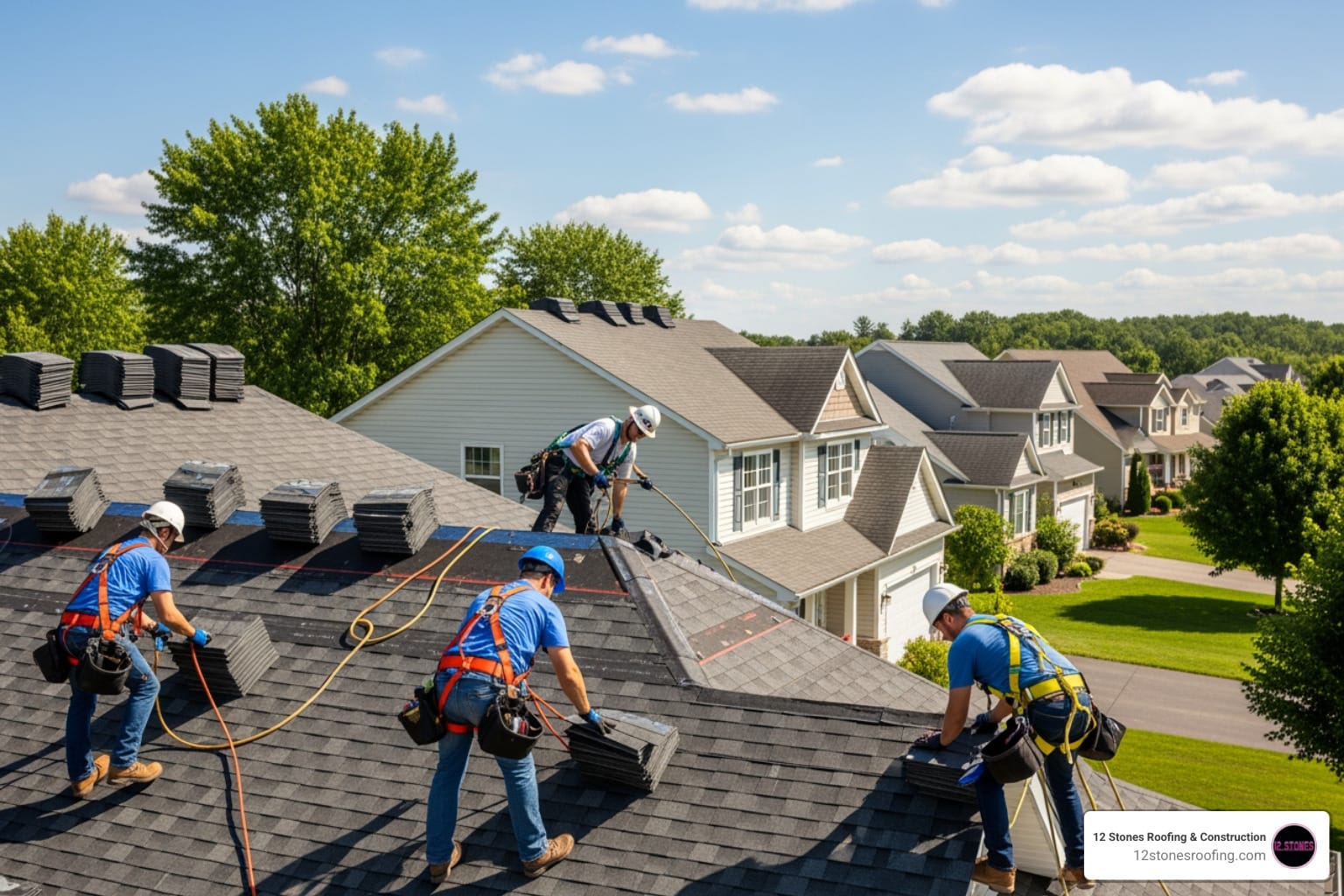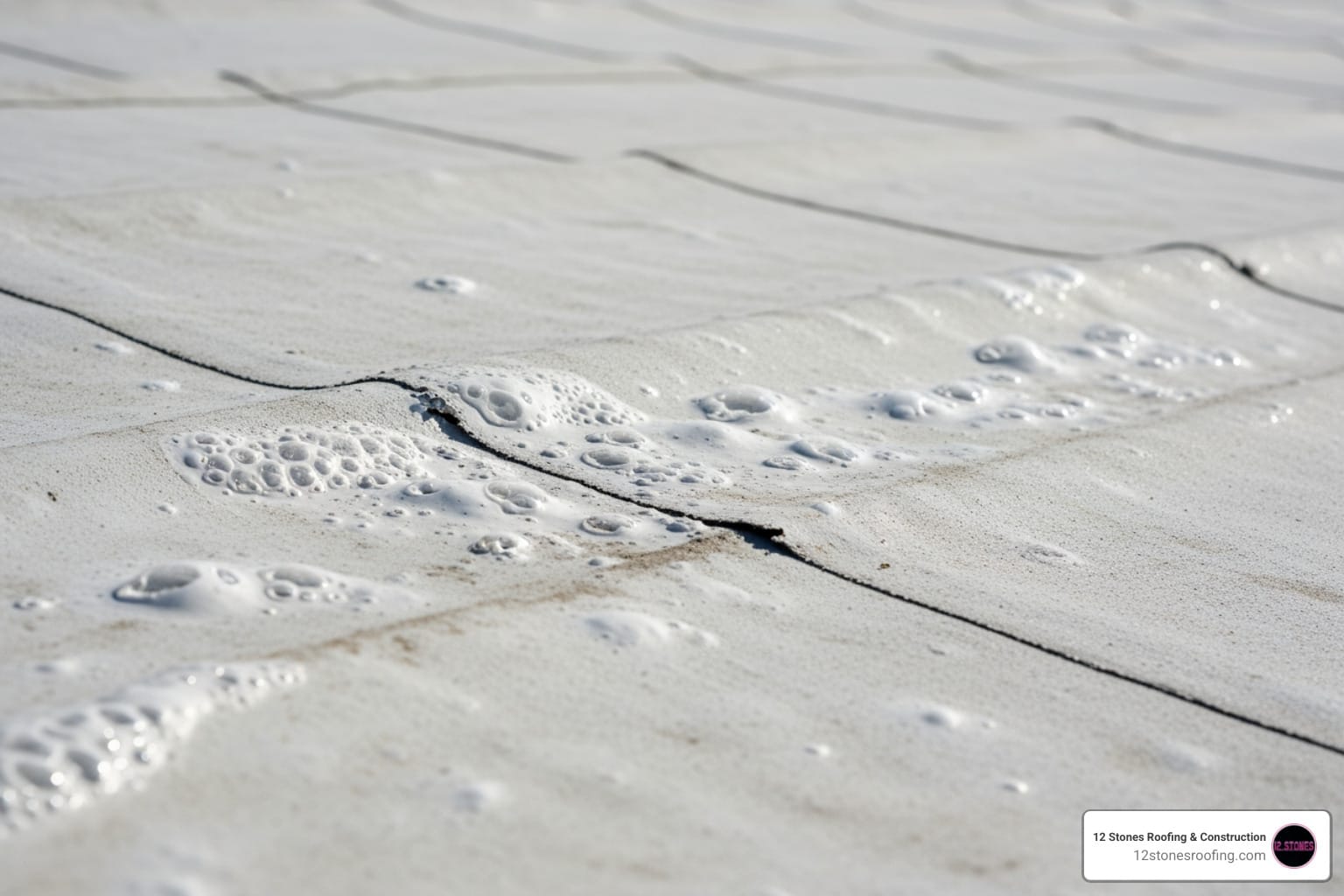

Why Metal Roof Leaks Demand Your Immediate Attention
A leaking metal roof is a problem that demands immediate attention. Left unaddressed, even a small drip can lead to significant structural damage, mold growth, and costly repairs. As Pasadena, Texas’s trusted roofing experts, we’ve seen how quickly minor issues escalate. This guide provides a definitive roadmap to identifying, repairing, and preventing leaks to protect your investment.
Quick Steps to Stop Metal Roof Leaks:
- Identify the source – Check fasteners, seams, flashing, and penetrations
- Choose the right fix – Use polyurethane or butyl-based sealants for small leaks
- Apply metal patches – For holes larger than a screw head, use matching metal material
- Seal and reinforce – Add fabric reinforcement at seams and apply roof coatings
- Call a professional – For widespread damage, safety concerns, or warranty protection
Metal roofs can last 50 years or more, but even the most durable systems develop leaks over time. The constant expansion and contraction from Texas heat cycles backs screws out by fractions of an inch. Rubber washers crack under UV exposure. Sealant around flashing dries out and pulls away from chimneys and vents.
Ignoring a small drip today means facing thousands in water damage tomorrow. Mold spreads through insulation. Wood rafters rot from the inside out. Electrical systems become hazards when moisture seeps into junction boxes.
The good news? Most metal roof leaks are preventable and repairable—if you catch them early and use the right methods.
I’m Jason Roberts, owner of 12 Stones Roofing & Construction, and I’ve spent over a decade helping Gulf Coast property owners protect their homes from storm damage and aging roof systems. My team and I have diagnosed and repaired hundreds of metal roof leaks, and we know exactly how to stop leaks on metal roof systems permanently, whether through targeted repairs or complete restoration with advanced coating systems.
The Usual Suspects: Top 5 Causes of Metal Roof Leaks
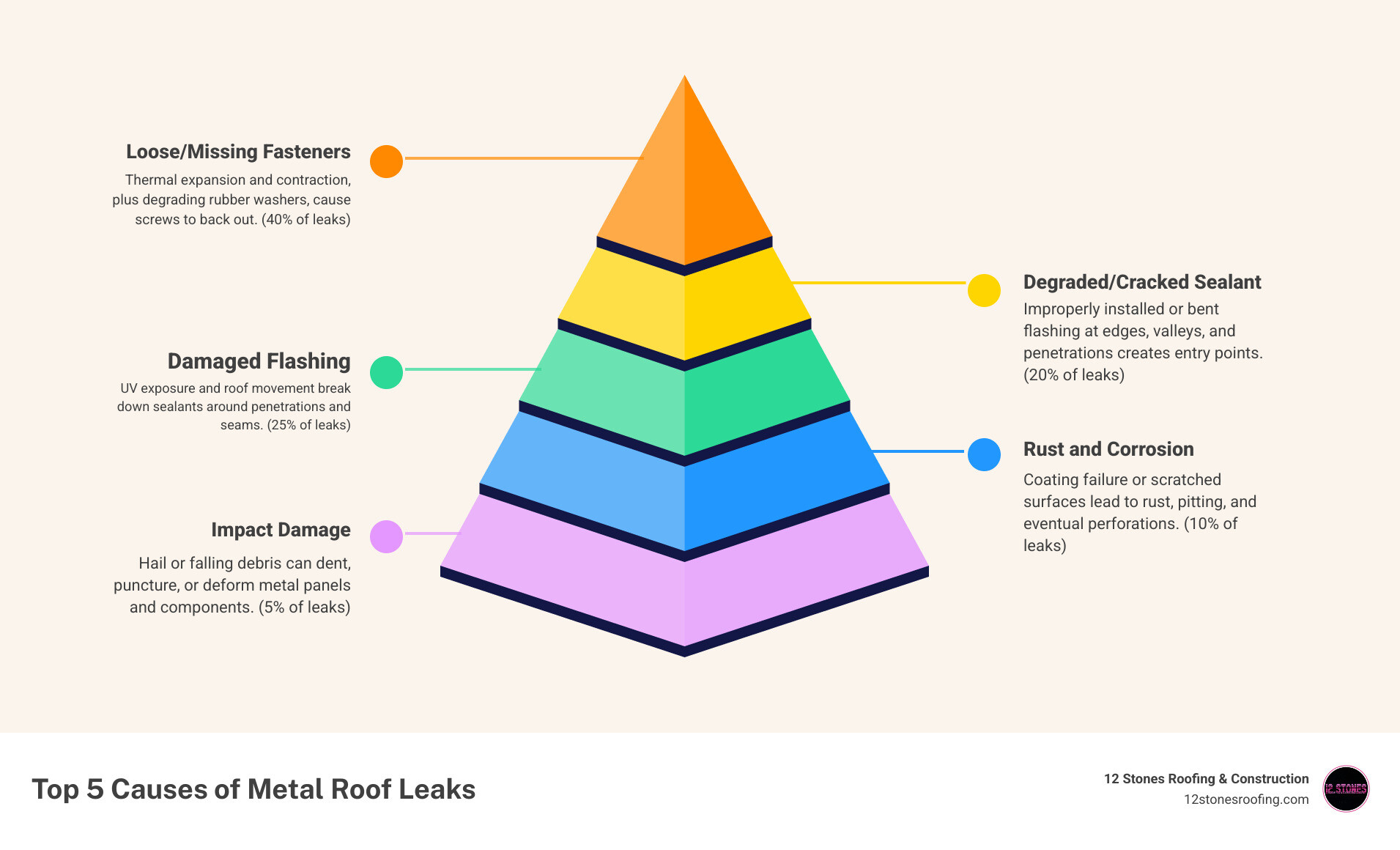
Leaks in metal roofs are almost always traced back to one of five common culprits, especially in a climate like Pasadena, TX, where extreme temperatures and severe weather are common. Metal expands and contracts with temperature swings, which can stress fasteners and seams, creating tiny openings for water. While metal roofs are known for their durability and longevity, capable of lasting 50 years or more, they are not immune to the forces of nature and time.
Here are the five most common sources of leaks we encounter:
- Loose or Missing Fasteners: This is often the number one culprit. Over time, the constant expansion and contraction of metal panels, coupled with vibrations from wind, can cause screws to loosen or even back out. The rubber washers beneath the screw heads, designed to create a watertight seal, degrade and crack under prolonged UV exposure from the intense Texas sun. Even a screw backed out by a tiny amount (like 0.01 inches) can create a pathway for water.
- Degraded or Cracked Sealant: Sealants and caulk are crucial around roof penetrations (vents, pipes, skylights) and at seams. However, standard sealants can dry out, crack, or pull away from the metal surface due to UV radiation, temperature fluctuations, and roof movement. This leaves gaps where water can easily infiltrate.
- Damaged or Improperly Installed Flashing: Flashing is the metal material used to weatherproof junctions and transitions on your roof, such as around chimneys, skylights, valleys, and wall abutments. If flashing is bent, corroded, torn, or was installed incorrectly initially, it creates a weak point. Water can then seep behind the flashing and into your building structure.
- Rust and Corrosion: While modern metal roofs are designed with protective coatings to resist rust, prolonged exposure to moisture, especially in humid environments like the Gulf Coast, can eventually lead to corrosion. Scratches, worn-out coatings, or areas where water pools can accelerate rust formation, weakening the metal and eventually creating holes.
- Impact Damage from Hail or Debris: Texas is no stranger to severe storms. Hail, falling branches, or other wind-borne debris can dent, puncture, or tear metal panels. Even seemingly minor impact damage can compromise the integrity of the roof, creating immediate leak points or weakening the material for future leaks. Related: A guide to hail-damaged metal roofs
Leak Detective: How to Inspect Your Metal Roof and Find the Source
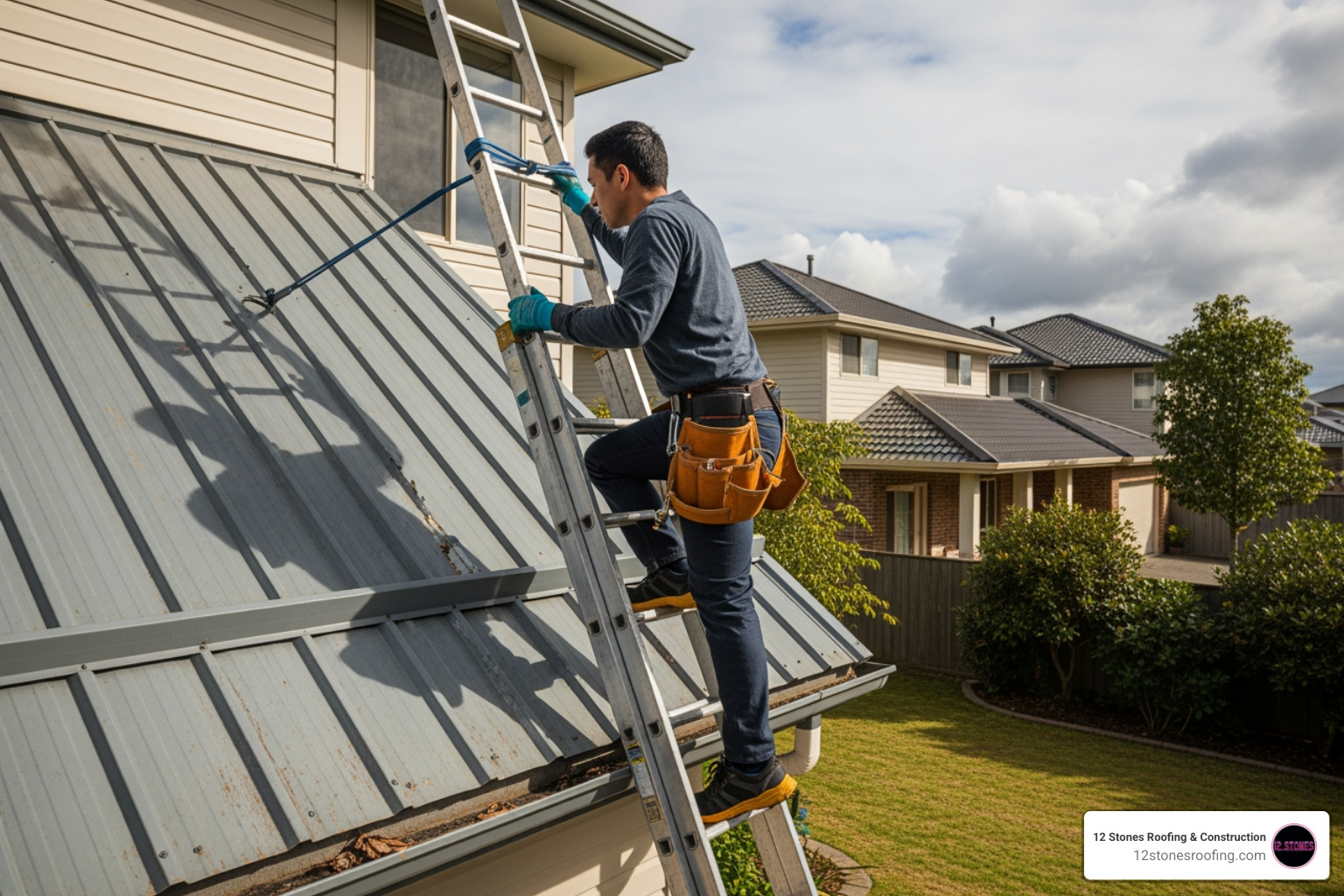
Pinpointing the exact entry point of a leak is essential for a lasting repair. Water can be tricky; it often travels along rafters, insulation, or structural elements before appearing inside, sometimes far from the actual breach. This means the drip you see in your kitchen might be originating from a completely different spot on your roof. Always prioritize safety: use proper safety gear, a sturdy, secured ladder, wear non-slip shoes, and never inspect a wet, icy, or steep roof without professional help. If you’re not comfortable with heights or don’t have the right equipment, it’s always best to call us for a professional roof inspection.
Interior and Exterior Inspection Checklist
Before you even think about repairs, you need to play detective. We recommend a thorough inspection, ideally twice a year (spring and fall) and after any significant storm.
Interior Inspection (Your Attic is Your First Clue):
- Water stains on ceilings or walls: Look for discoloration, peeling paint, or bulging drywall. Trace the path of these stains upwards if possible.
- Mold or mildew in attic spaces: Dark spots or a musty smell can indicate hidden moisture problems, even if you don’t see active drips.
- Daylight visible through roof panels: On a sunny day, head into your attic. If you can see pinpricks of light coming through the roof, you’ve found a leak, or at least a potential one.
- Damp insulation: Feel the insulation in your attic. Any dampness is a clear sign of water intrusion.
Exterior Inspection (Safely Scanning Your Roof’s Surface):
- Rusted or loose screws: Look closely at every fastener. Are any missing? Are the rubber washers cracked, deteriorated, or completely gone? Is there rust forming around the screw head?
- Cracked sealant around penetrations: Examine areas around vents, chimneys, pipes, and skylights. Is the sealant cracked, peeling, or pulling away from the metal?
- Gaps or damage in flashing: Check all flashing points. Is it bent, lifted, corroded, or missing? Are there any gaps where water could penetrate?
- Clogged gutters and downspouts: Full gutters can cause water to back up onto your roof, leading to pooling and leaks, especially at the roof’s edge. This is a common issue we see in Pasadena.
- Damaged or bent roof panels: Look for dents, punctures, tears, or panels that are warped or lifted. Pay close attention to areas that might have been hit by hail or falling debris.
- Seam problems: Check along the seams where metal panels join. Are they separating? Is old sealant cracking or missing?
The Hose Test: Pinpointing Hidden Leaks
If your interior inspection reveals a leak but the exterior shows no obvious damage, a hose test can be invaluable. This method helps simulate rain in a controlled manner.
- Isolate roof sections: Begin by wetting the lowest section of the roof, away from any penetrations.
- Start low, move upward: Gradually move your way up the roof, wetting different sections for several minutes each.
- Have a spotter inside to watch for drips: The person inside should be positioned where the leak was previously observed, ready to shout when water appears.
- Mark the entry point for repair: Once the spotter identifies the leak, you’ve found your culprit! Mark the exact location on the roof with chalk or a marker.
Patience is key with the hose test. Water can take time to travel and show itself.
Your Repair Toolkit: Proven Methods and Materials to Stop Metal Roof Leaks
Once the leak is located, choosing the right repair method is critical. The best approach depends on the extent of the damage, the type of leak, and your experience level. While some minor fixes can be attempted by a confident DIYer, many situations warrant professional expertise.
Permanent Solutions to Stop Leaks on a Metal Roof
When we approach a metal roof leak, our goal is always a permanent, durable solution that will stand up to the Texas weather. We don’t believe in temporary fixes that will only lead to recurring problems.
- High-quality polyurethane or butyl-based sealants: For small holes, hairline cracks, or around loose fasteners, these are our go-to. Unlike basic silicone, these elastomeric sealants remain flexible through the metal’s expansion and contraction cycles and offer superior UV resistance. They adhere exceptionally well to metal surfaces. We always ensure the area is thoroughly cleaned, free of rust, and dry before application. For more insights on choosing the right sealant, this guide on metal roof sealants can be helpful.
- Metal roof patches using matching materials: For larger holes, punctures from debris, or widespread corrosion, a simple sealant might not suffice. We cut a patch from a compatible metal roofing material (ensuring it extends at least 2 inches beyond the damage on all sides), apply a strong adhesive or sealant to the underside, and then secure it with screws that have durable rubber washers. All edges are then sealed to create a watertight barrier.
- Professional-grade roof coatings (elastomeric or silicone): For an aging metal roof with multiple small leaks, widespread rust, or degraded seams, a full roof coating system can be a highly effective and cost-efficient restorative option. These coatings create a seamless, waterproof membrane over the entire roof. The ballpark cost for a roof coating system is $3 – $7 per square foot, significantly less than a full replacement. We carefully clean and prepare the roof, replace any severely damaged metal, treat rust, reinforce seams, and then apply multiple coats. These systems can extend your roof’s life by 10-20 years and improve energy efficiency by reflecting sunlight. For technical specifications on liquid-applied roofing systems, resources like the GAF Liquid-Applied Roofing Manual provide in-depth information.
- Panel or fastener replacement as needed: If individual panels are severely damaged, warped, or corroded beyond repair, replacement is the only option. Similarly, if fasteners are consistently failing, replacing them with higher-quality, long-lasting screws with integrated washers is crucial. This can be labor-intensive, especially if it involves replacing thousands of fasteners, but it addresses the root cause of the problem.
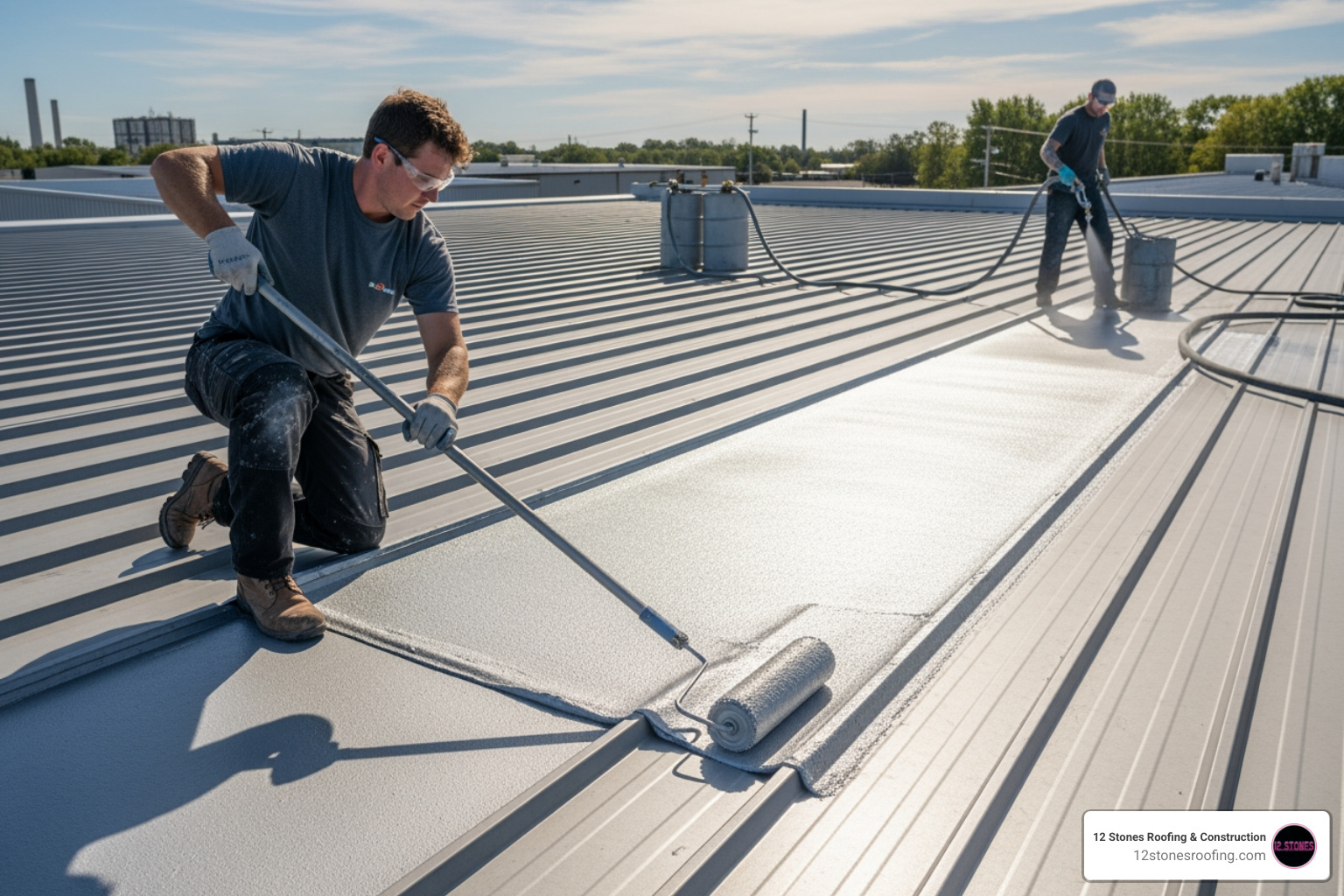
Note: At 12 Stones Roofing & Construction, we specialize in permanent repair solutions. We strongly advise against temporary DIY fixes like roofing tar or basic caulk, as these often fail within months and can lead to more severe, costly damage by trapping moisture or hiding the true source of the leak. A permanent repair addresses the root cause with professional techniques and materials designed to last for years, often backed by a warranty.
DIY vs. Professional Repair: Making the Right Choice
While metal roofs are known for their resilience, even they can develop leaks. When faced with a drip, many homeowners wonder if they can tackle the repair themselves. While minor repairs like tightening a loose screw or applying a small amount of sealant might seem manageable, most metal roof leaks require professional attention to ensure a lasting fix and protect your valuable roof warranty.
When to Call a Professional Roofer
Knowing when to call in the experts isn’t a sign of weakness; it’s a sign of wisdom. Here are the red flags that signal you need to bring in a professional like us:
- Widespread or Recurring Leaks: If you’re seeing multiple leaks, or the same leak keeps coming back despite your best efforts, it indicates a systemic problem that requires a comprehensive diagnosis and repair plan.
- Safety Concerns: Metal roofs can be slippery, steep, and high. Working on a roof carries inherent risks of falls, especially in hot Texas weather or if you lack proper safety equipment. If you’re not comfortable with heights or don’t have the right safety gear, please don’t risk it. We prioritize safety above all else.
- Complex Roof Systems or Multiple Penetrations: Standing seam metal roofs, roofs with numerous vents, skylights, chimneys, or intricate flashing details are complex. Repairing these areas correctly requires specialized knowledge and tools to maintain their watertight integrity.
- Warranty Protection Requirements: This is a big one! Many metal roof manufacturers’ warranties explicitly state that repairs must be performed by a certified professional to remain valid. Attempting a DIY repair could void your warranty, leaving you responsible for costly future repairs or even a full replacement. Always check your specific warranty documents before starting any work.
- Lack of Time, Tools, or Expertise: Let’s be honest, not everyone has the time, the specialized tools (like metal shears, specific crimpers, or professional-grade sealants), or the in-depth knowledge required for effective metal roof repair. We do! We can often complete repairs more efficiently and effectively.
For reliable and expert assistance with your metal roof, consider reaching out to a local specialist in Pasadena to ensure your roof is in capable hands.
Comparing the Costs of Metal Roof Repair
Understanding the costs associated with metal roof leak repair can help you make an informed decision. While DIY might seem cheaper upfront, it often comes with hidden costs, including potential warranty voidance and the need for subsequent professional repairs.
| Repair Method | DIY Material Cost (Estimated) | Professional Repair (Labor + Materials, Estimated) | Key Considerations -|
| Sealant Application | $20 – $50 | $250 – $750 | Professional repair includes proper surface prep and high-grade, long-lasting sealant. DIY may use lower-grade materials that fail quickly. -|
| Metal Patch Repair | $50 – $150 | $400 – $1,200 | A professional ensures a color-matched, properly sealed patch that integrates with the roof system. DIY patches can be unsightly and may not be fully watertight. -|
| Full Roof Coating | $1,000 – $3,000+ (materials only) | $6,000 – $14,000+ ($3-$7/sq. ft.) | This is a complex, multi-step process requiring specialized equipment and expertise for surface preparation and application. A professional job comes with a warranty and extends roof life by 10-20 years. -|
Proactive Protection: 7 Essential Tips to Prevent Future Leaks
Preventing leaks is always more cost-effective than repairing them. A regular maintenance routine can extend your roof’s lifespan by decades and save you from the headache and expense of water damage. Think of it as an investment in your peace of mind and the longevity of your property.
Here are our top tips for proactive protection:
- Schedule annual professional inspections: Even if you don’t suspect a leak, a trained eye can spot potential problems before they escalate. We can identify loose fasteners, degraded sealants, minor flashing issues, or early signs of rust that might be missed during a casual glance. This is particularly important after severe weather events common to Pasadena.
- Clean gutters and downspouts regularly: Clogged gutters cause water to back up, overflow, and pool on your roof, especially at the edges. This standing water can seep into seams, degrade sealants, and accelerate corrosion. Keeping them clear is a simple yet effective preventative measure.
- Trim overhanging branches to prevent impact damage: Trees are beautiful, but their branches can be a menace to your roof during high winds or storms. Trimming them back prevents scratches, dents, and punctures that can lead to leaks.
- Check and renew sealants annually: Pay close attention to sealant around all roof penetrations (vents, pipes, skylights, chimneys). If you notice any cracking, peeling, or separation, clean the area and reapply a high-quality, metal-compatible sealant.
- Inspect and tighten fasteners: During your annual inspection (or after any major storm), check all exposed fasteners. If any are loose, gently tighten them. If the rubber washer is degraded, consider replacing the screw entirely with a new one that has a fresh, durable washer.
- Ensure proper attic ventilation to reduce condensation: In humid climates like ours, poor attic ventilation can lead to moisture buildup and condensation. This internal moisture can cause rust and rot from the inside out, silently damaging your roof and structural elements. Proper ventilation ensures healthy airflow, keeping your attic dry.
- Address minor issues before they escalate: Don’t ignore a small rust spot or a slightly loose fastener. What starts as a minor issue can quickly become a significant leak, leading to much more extensive and costly repairs.
For a comprehensive approach to maintaining your roof, you can download our roof maintenance checklist.
Frequently Asked Questions about Stopping Leaks on a Metal Roof
What is the best sealant for a metal roof?
The most effective sealants for metal roofs are high-grade polyurethane or butyl-based elastomeric products. These sealants remain flexible, accommodate thermal movement, and offer superior UV resistance—critical for Texas roofs. They are designed to expand and contract with the metal, preventing them from cracking or pulling away over time. Avoid basic silicone sealants, which tend to become brittle and can lose adhesion to metal surfaces, leading to recurring leaks.
How long do metal roof repairs last?
The longevity of a metal roof repair depends heavily on the quality of materials used, the expertise of the application, and the original extent of the damage. A professionally applied repair using premium materials (like those we use at 12 Stones Roofing & Construction) can last 10-20 years, often backed by a warranty. DIY repairs, while potentially offering a temporary solution, may last only 5-10 years, depending on the quality of materials and workmanship. Regular maintenance, as outlined above, is crucial for extending the life of any repair.
Can a DIY repair void my metal roof warranty?
Yes. In many cases, a DIY repair can void your roof’s warranty. Most manufacturers require that all repairs and alterations to their metal roofing systems be performed by a certified professional. This ensures that the correct procedures and compatible materials are used, maintaining the integrity of the roof system. Undertaking a repair yourself could leave you without coverage if a larger issue arises later, turning a small saving into a significant expense. Always review your specific warranty documents before attempting any repairs.
Conclusion: Protect Your Pasadena Home with a Leak-Free Metal Roof
Stopping leaks on your metal roof is about more than a quick patch—it’s about safeguarding your home’s value and your family’s safety. By following a thorough inspection and repair process, and investing in regular maintenance, you can keep your roof watertight for decades. For complex repairs or peace of mind, trust the experts at 12 Stones Roofing & Construction. For a comprehensive evaluation or professional repair of your metal roofing system, contact us today for a professional assessment.