
When the Texas Sky Opens Up Over Your Home
Pasadena storm roof damage strikes fast and often without warning. When your ceiling starts dripping at 3 a.m. during a Texas downpour, you need immediate answers from a trusted Pasadena roofing contractor—not after reading a 5,000-word article.
If you’re facing storm roof damage right now:
- Move people and valuables away from the leak.
- Contain the water with buckets and towels.
- Document everything with photos and videos.
- Call a licensed roofer immediately—don’t wait for the storm to pass.
- Do NOT climb on your roof during a storm.
Pasadena receives most of its 20 inches of yearly rain in just a few winter months, with February typically bringing the most wet days. The Texas Gulf Coast is one of the most hurricane-prone regions in the United States, and our city sits right in the path. When storms hit, they can dump several inches of rain in hours, exposing every weak spot in your roof—from clogged gutters to sun-baked shingles to failed flashing around chimneys and skylights.
The stakes are high. That small drip you see on your ceiling is often the last stage of water intrusion. Water can travel along rafters and beams for feet before it finally appears on your ceiling. By the time you notice it, moisture may already be soaking your insulation, feeding mold growth, and rotting the wood structure of your home.
This guide provides Pasadena homeowners with a clear plan for tackling storm damage, from immediate crisis management to lasting repairs and insurance navigation. For urgent issues, professional emergency repair is your first line of defense.
I’m Jason Roberts, owner of 12 Stones Roofing & Construction, and over the past decade I’ve helped hundreds of Pasadena families recover from Pasadena storm roof damage—from emergency tarping during hurricanes to full replacements after hail events. Every project I oversee starts with a simple promise: we’ll protect your home with the same care we’d give our own.
Pasadena storm roof damage terms simplified:
The First 60 Minutes: What to Do When You Find a Roof Leak During a Storm
When the unexpected happens—the tell-tale drip, the spreading stain, the sudden gush—panic is a natural first reaction. But in those crucial first moments, immediate, decisive action can significantly minimize Pasadena storm roof damage and protect your home.
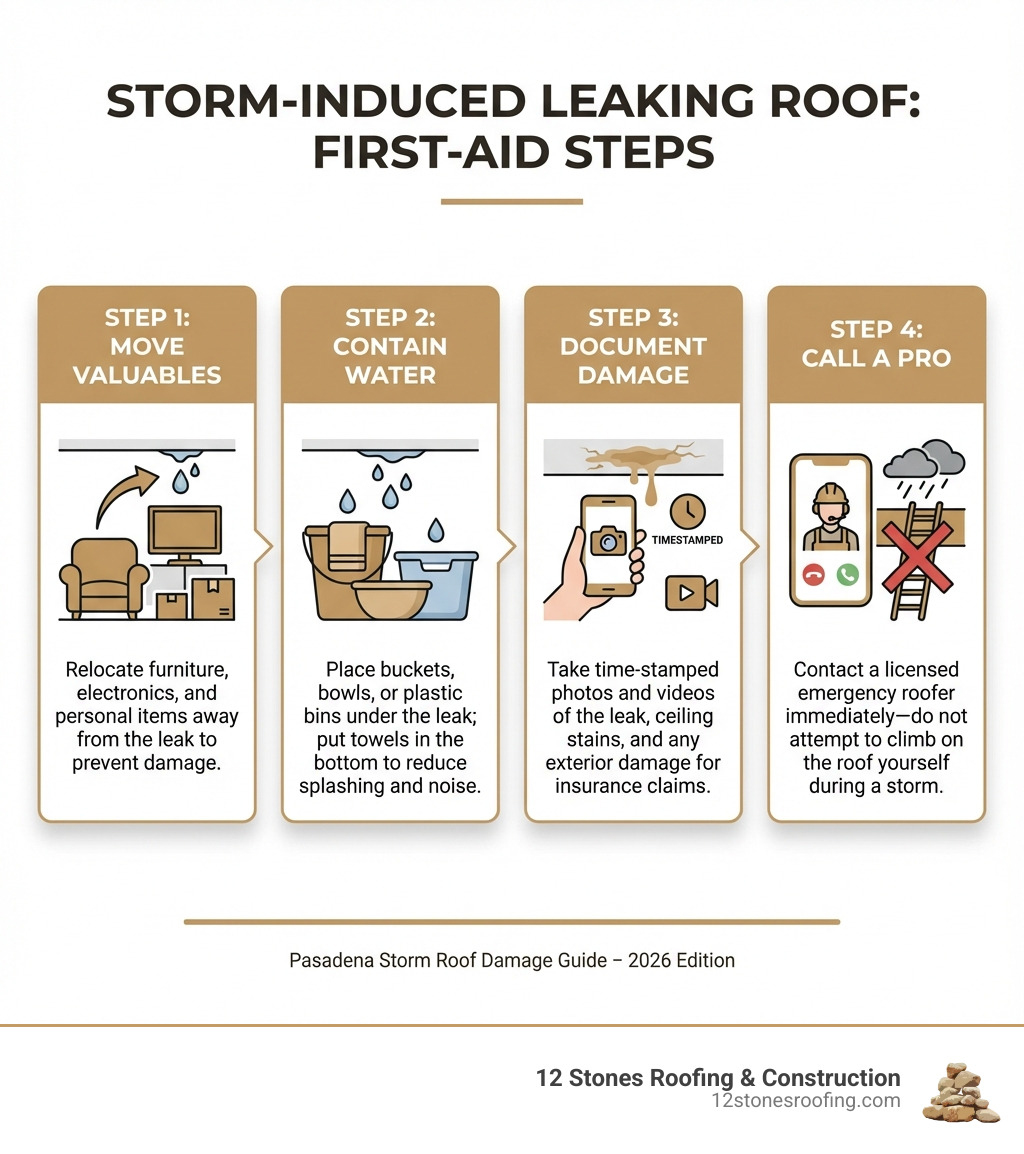
Here’s a step-by-step guide on what to do when you find a roof leak during a storm:
- Safety First: Protect People and Valuables: Your immediate priority should be the safety of everyone in your home. Move furniture, rugs, electronics, and any other valuables away from the leak area. If the leak is near electrical outlets or fixtures, unplug anything nearby if it’s safe to do so. Water and electricity are a dangerous combination.
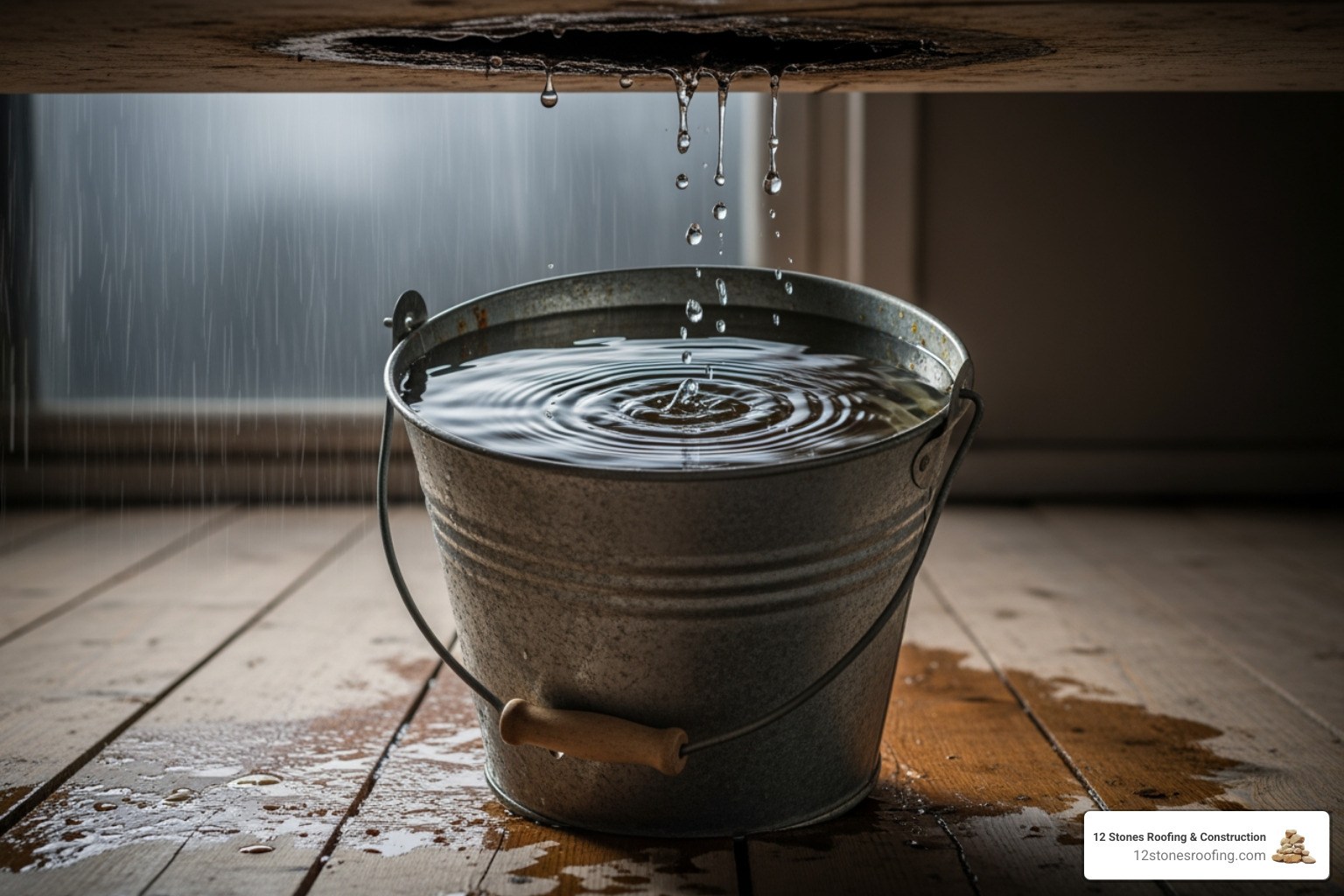
- Contain and Control the Water: Place buckets, bowls, or plastic bins directly under the leak. To reduce splashing and dampen the sound of dripping water, place an old towel in the bottom of the container. If you have multiple leaks, repeat this process. Remember to check and empty these containers regularly to prevent overflow.
- Relieve Ceiling Pressure (If Necessary): If you notice a bulge or “bubble” forming in your ceiling, it indicates water pooling. While it might feel counterintuitive, safely relieving this pressure can prevent a sudden, uncontrolled collapse. Place a large container underneath the lowest point of the bulge. Then, using a small nail or screwdriver, carefully poke a small hole in the center of the bubble. This allows the water to drain in a controlled manner.
- Document the Damage Thoroughly: As soon as it’s safe, and even while the storm is ongoing, take time-stamped photos and videos of the leak. Document the ceiling stain, the dripping water, any damaged belongings, and if possible, any visible exterior damage from a safe vantage point (e.g., from a window or ground level). This documentation is crucial for your insurance claim later.
- Call for Emergency Help Immediately: Do not wait for the storm to pass. Contact local roofers who specialize in emergency roof repair and storm damage. Provide them with details: where the leak is, how long it’s been happening, and if water is actively coming in. We offer prompt emergency roofing services to stabilize your home.
- Do NOT Climb on the Roof: This cannot be stressed enough. Climbing onto a wet, storm-damaged roof is extremely dangerous. You risk falling, exacerbating existing damage, or being struck by lightning or falling debris. Leave roof assessment and temporary fixes like roof tarping to trained professionals.
Understanding Pasadena Storm Roof Damage: Causes and Consequences
Pasadena, Texas, with its unique geographic location, experiences weather patterns that can be particularly harsh on residential and commercial roofs. We’re situated in one of the most hurricane-prone regions of the U.S., the Texas Gulf Coast, and this brings with it a specific set of challenges. Beyond hurricanes, Pasadena faces intense heat, high humidity, and frequent severe thunderstorms—all factors that accelerate roof deterioration.
During storm season, which can extend for several months, we often see heavy rainfall, high-velocity winds, and sometimes even hail and tornadoes. These events can inflict significant Pasadena storm roof damage. You can check the latest storm advisories from the National Hurricane Center to stay informed about potential threats. For local storm data, the NOAA Storm Events Database can provide valuable historical context.
Common Causes of Pasadena Storm Roof Damage
Our local climate means roofs in Pasadena are constantly battling the elements. Here are the most common culprits behind storm-related roof leaks:
- Wind-Lifted Shingles: Strong winds, common during thunderstorms and hurricanes, can lift, curl, or completely tear off shingles. Once the protective seal is broken, water can easily seep into the underlayment, leading to leaks. Learn more about wind damage roof replacement.
- Hail-Bruised Asphalt: Hailstones, even small ones, can cause significant damage. They can bruise asphalt shingles, dislodge granules (the protective coating), or even create cracks and punctures. This damage isn’t always immediately visible but compromises the roof’s integrity, making it vulnerable to leaks during subsequent rains. We specialize in hail damage roof repair.
- Damaged Flashing and Seals: Flashing, the metal or rubber strips installed around chimneys, skylights, vents, and roof valleys, is crucial for preventing water intrusion. Storms can bend, loosen, or crack flashing, creating direct entry points for water. Old caulking around penetrations can also crack and fail.
- Clogged Gutters and Downspouts: Heavy rain combines with leaves and debris to quickly clog gutters and downspouts. When water can’t drain properly, it backs up, overflows, and can seep under shingles or behind fascia boards, leading to leaks and fascia rot.
- Debris Punctures: Tree branches, gravel, or other wind-blown debris can impact the roof, causing punctures or significant gouges that expose the underlying layers to water.
- Age-Related Weakness: Over time, the intense Texas sun and humidity dry out roofing materials, causing shingles to curl and crack. An older, already deteriorating roof is far more susceptible to severe storm damage than a newer, well-maintained one.
Why Prompt Action is Crucial, Even for Minor Leaks
It’s tempting to think a “small drip” isn’t a big deal, especially if it seems to stop when the rain does. But this is a dangerous misconception. A visible leak is often the last stage of water intrusion. Water can travel unseen along rafters and beams, sometimes for feet, before it finally appears on your ceiling.
The moment water enters your home’s structure, a clock starts ticking. Neglecting even minor leaks has severe long-term consequences:
- Mold Growth: Wet wood and insulation are perfect breeding grounds for mold. Mold can spread rapidly, compromising indoor air quality and posing health risks.
- Structural Rot: Persistent moisture can cause wooden structural components of your roof, attic, and walls to rot, weakening your home’s integrity over time.
- Compromised Insulation: Wet insulation loses its effectiveness, leading to higher energy bills and reduced comfort inside your home.
- Higher Future Repair Costs: A small opening during one storm can become a much larger problem during the next. What might have been a minor repair can escalate into extensive water damage repair or even a full roof replacement, costing thousands. The cost of water damage to a roof can quickly add up.
- Reduced Property Value: Undetected and unaddressed water damage can significantly decrease your home’s value and make it difficult to sell.
Prompt action isn’t just about fixing a leak; it’s about preventing a cascade of costly and potentially dangerous problems.
From Tarp to Total Repair: The Restoration Journey
When your home sustains Pasadena storm roof damage, the path to recovery typically involves two distinct stages: immediate temporary measures to prevent further harm, followed by comprehensive permanent repairs. Understanding this process helps homeowners know what to expect and how to steer the restoration journey.
Stage 1: Emergency Temporary Repairs
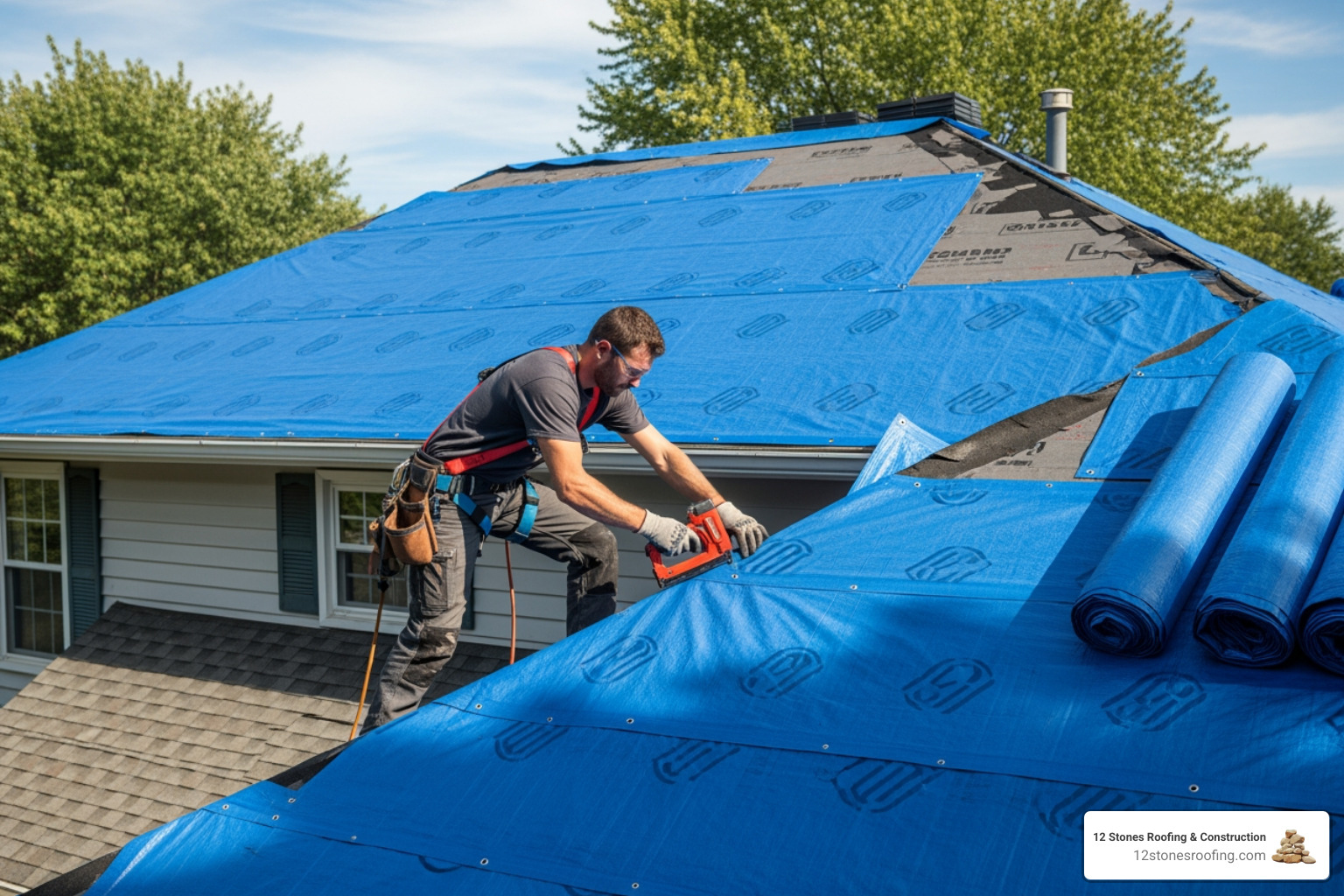
The primary goal of emergency temporary repairs is to stop immediate water entry and protect your home from further damage while permanent solutions are planned and executed. These are not long-term fixes but critical steps to stabilize your property.
Common temporary measures include:
- Roof Tarping: This involves securely placing heavy-duty tarps over damaged sections of the roof. Tarps act as a temporary waterproof barrier, diverting water away from vulnerable areas. It’s a specialized skill that requires proper anchoring to withstand wind and rain. Our team provides expert roof tarping services. For more details, refer to our complete guide to roof tarping.
- Sealing Small Openings: For minor punctures or cracks, temporary sealants or patches can be applied to prevent water intrusion.
- Clearing Debris: Removing fallen branches, leaves, and other debris from the roof and gutters can help prevent water from pooling and finding its way into your home.
These emergency services are vital for minimizing damage and buying time until permanent repairs can be scheduled.
Stage 2: Permanent Roof Repair Solutions
Once the immediate threat is contained, the focus shifts to comprehensive, lasting repairs. This stage involves a full damage assessment to identify all areas affected by the storm, including hidden damage that might not have been immediately apparent.
Permanent solutions often involve:
- Replacing Shingles or Tiles: Damaged, missing, or compromised roofing materials are replaced with new ones that match the existing roof.
- Repairing Underlayment: If the underlayment beneath the shingles or tiles is wet or damaged, it needs to be repaired or replaced to ensure a waterproof barrier.
- Fixing Flashing: Bent, cracked, or corroded flashing around roof penetrations is repaired or replaced to create a watertight seal.
- Structural Wood Replacement: In cases of severe water intrusion, wooden components like decking, rafters, or trusses may have rotted and require replacement to restore structural integrity.
The goal of permanent repairs is to ensure your roof is fully restored to its pre-loss condition, or even improved, providing a long-term, weather-tight solution against future Texas storms.
Here’s a comparison of temporary vs. permanent roof repairs:
| Feature | Emergency Temporary Repairs | Permanent Roof Repair Solutions |
|---|---|---|
| Goal | Stop immediate water entry, prevent further damage. | Fully restore roof integrity, provide long-term protection. |
| Materials | Tarps, plastic sheeting, temporary sealants, plywood. | New shingles, tiles, metal, underlayment, flashing, structural wood. |
| Lifespan | Short-term (days to weeks), until permanent repairs can begin. | Long-term (years to decades), depending on materials and maintenance. |
| Cost | Generally lower, but prevents much higher future costs. | Higher initial investment, but provides lasting value and protection. |
Navigating the Aftermath: Insurance Claims and Financing
Dealing with Pasadena storm roof damage can be overwhelming, but understanding the role of your homeowner’s insurance and available financing options can ease the burden.
Homeowner’s Insurance and Storm Damage
Your homeowner’s insurance policy is designed to protect you from unexpected events, including storm-related roof damage. Most standard policies in Texas cover damage from sudden and accidental events like wind, hail, and lightning. However, it’s crucial to understand what is covered and what isn’t.
- Covered Perils: Wind and hail damage are typically covered. For instance, if a hailstorm bruises your shingles or high winds tear them off, your policy should respond.
- Exclusions: Policies generally do not cover damage resulting from ongoing wear and tear, neglect, or poor maintenance. If your roof was already in a state of disrepair before the storm, your claim might be denied or reduced. This is why proactive maintenance is so important.
- The Claims Process: When you find damage, immediately document everything with photos and videos. Contact your insurance provider as soon as possible. They will send an adjuster to assess the damage. Having a reputable roofer present during this inspection can be incredibly beneficial, as we can point out subtle damage that an adjuster might miss. We offer comprehensive support for roofing insurance claims and can assist with the entire process, including insurance claim roof repair.
How to Identify a Reputable Emergency Roofer in Pasadena
Choosing the right emergency roofer is paramount. After a major storm, “storm chasers” often descend on affected areas, offering quick fixes that may not last. We’ve heard countless horror stories of contractors gouging customers, doing subpar jobs, or taking money and disappearing. Here’s how to identify a reputable professional:
- Local Presence: Choose a roofer with a long-standing local presence in Pasadena. We are proud to be a part of the Pasadena community, serving homeowners and businesses directly. You can find trusted roofers in Pasadena, TX who are invested in the community’s well-being.
- Proper Licensing and Insurance: Always verify that the contractor is licensed and insured. In Texas, you can check credentials with the Texas Department of Licensing and Regulation (TDLR). This protects you from liability if a worker is injured on your property.
- Positive Reviews and References: Look for companies with strong positive reviews on platforms like Google and the Better Business Bureau. Be wary of cold-callers or those who show up unannounced offering “free” inspections, as the Better Business Bureau has warned about scams after major storms. Ask for local references.
- Written Estimates and Contracts: Always get a detailed written estimate outlining the scope of work, materials, timeline, and cost. Avoid verbal agreements.
- Warranty Information: A reputable roofer will offer warranties on both labor and materials. Inquire about the specifics of these warranties.
- Experience with Insurance Claims: A good roofer will have extensive experience working with insurance companies, helping you steer the claims process and ensuring all damage is accounted for.
Financing Options for Unexpected Roof Repairs
Even with insurance, you might face a deductible or have repairs that aren’t fully covered. When unexpected Pasadena storm roof damage creates a financial strain, several financing options can help:
- 0% Promotional Financing: Many roofing companies, including ours, offer special financing plans with zero down payment and no interest for a promotional period. This can be a great way to manage costs without immediate out-of-pocket expenses.
- No-Payment Plans: Some plans allow you to defer payments for a certain period, giving you time to recover financially.
- Home Equity Loans/Lines of Credit: If you have equity in your home, you might qualify for a home equity loan or line of credit, often with favorable interest rates.
- Personal Loans: Banks and credit unions offer personal loans that can cover repair costs, though interest rates may vary.
We understand that a roof repair or replacement can be a significant investment. We offer flexible roof financing options to ensure your home gets the protection it needs without undue stress.
Frequently Asked Questions about Pasadena Storm Roof Damage
Homeowners often have similar questions when faced with storm-related roof damage. Here are some of the most common inquiries we receive:
How much does storm roof repair cost in Pasadena?
The cost of storm roof repair in Pasadena can vary significantly depending on several factors: the extent of the damage, the type of roofing material, the complexity of the repair, and the overall size of your roof. Minor repairs, such as replacing a few shingles or fixing a small section of flashing, might range from a few hundred to over a thousand dollars. However, extensive damage from a severe storm could necessitate a partial or full roof replacement, which can cost thousands. For example, asphalt roof installation can range from $140-$250 per 100 sq. ft., while metal roofs can be $650-$900 per 100 sq. ft.
The best way to get an accurate estimate for your specific situation is to schedule a professional roof inspection. We provide thorough inspections to assess the damage and offer transparent pricing.
Will filing a storm damage claim raise my insurance rates in Texas?
This is a common concern for homeowners, and the good news is that no, filing a storm damage claim will typically not raise your insurance rates in Texas. Texas law prohibits insurance companies from increasing your premiums for claims that result from natural causes, such as weather events like hail, windstorms, or hurricanes. These are considered “acts of God” and are generally excluded from rate hikes for individual policyholders. However, if there are widespread claims in a region, overall rates for everyone in that area might adjust over time, but not specifically due to your individual claim.
How can I prepare my roof for hurricane season?
Pasadena’s location on the Texas Gulf Coast means hurricane preparedness is essential. Here are key steps homeowners can take to prepare their roofs for the rainy and hurricane season:
- Schedule a Pre-Season Inspection: Before the heavy rains and hurricane season kick in, typically from late fall through spring, schedule a professional roof inspection. This allows us to identify and address any existing weaknesses, loose shingles, or damaged flashing that could fail under storm conditions.
- Clean Gutters and Downspouts: Clogged gutters are a primary cause of water backup and leaks. Ensure your gutters and downspouts are clear of leaves, debris, and blockages to allow for proper water drainage during heavy rainfall.
- Trim Overhanging Tree Branches: Branches rubbing against your roof can wear down shingles, and large branches overhanging your home pose a significant threat during high winds, potentially falling and causing severe structural damage.
- Secure or Remove Loose Objects: Any outdoor items that could become wind-borne projectiles (e.g., patio furniture, grills, trash cans) should be secured or brought inside.
- Review Your Insurance Policy: Understand your coverage, deductible, and the claims process before a storm hits. Knowing what to expect can save you valuable time and reduce stress if damage occurs.
Your Partner in Storm Recovery
Don’t let storm damage compromise your home’s safety and value. Understanding the causes, taking immediate action, and working with a trusted professional are key to a successful recovery. For Pasadena homeowners, addressing roof issues promptly prevents small problems from becoming costly disasters. The team at 12 Stones Roofing & Construction is ready to help you steer every step, from initial inspection to final repair. If you’re facing an urgent situation, contact us for reliable emergency roofing services.