
What to Do Right Now If Your Roof Is Leaking from the Inside
How to fix a leaking roof from the inside is a critical emergency skill every homeowner should master before a storm hits. If you are currently facing an active leak, your first priority is to mitigate damage and then contact a trusted roofing contractor in Pasadena to assess the structural impact. While interior patches are temporary, they serve as a vital first line of defense. For a permanent, watertight solution, you must eventually schedule professional roof repair with a local team like 12 Stones Roofing & Construction. If you need immediate emergency guidance, call us at 713-715-7663.
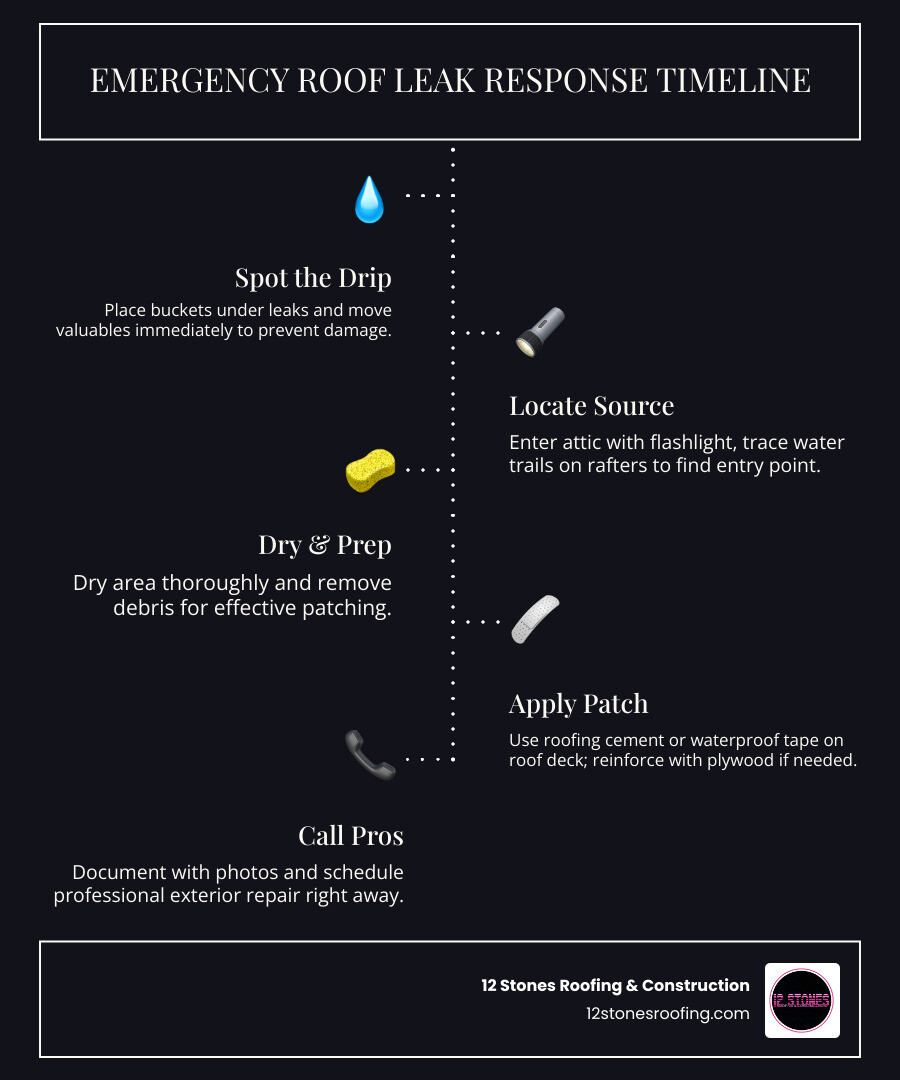
- Place buckets under any active drip points immediately
- Move valuables and furniture out of the water’s path
- Go into the attic with a flashlight and locate the source of the leak
- Dry the area around the leak as much as possible
- Apply roofing cement or waterproof tape over the leak on the roof deck
- Reinforce with plywood if the damaged area is large
- Document everything with photos for your insurance claim
- Call a professional roofer as soon as conditions allow — interior fixes are always temporary
Important: Interior patches only buy you time. A permanent fix always requires exterior work by a qualified roofer.
A roof leak is never just a drip. Left unchecked, water works its way into wood framing, insulation, and drywall — causing rot, structural damage, and mold. Mold moves fast: it can begin forming in as little as 24 to 48 hours after water exposure. For homeowners in the Gulf Coast region, where storms can be sudden and severe, knowing how to slow the damage from inside your home is a critical first line of defense. That said, an interior patch is only ever a stopgap — getting a qualified roof repair professional on-site is the only way to truly stop the leak at its source.
I’m Jason Roberts, owner of 12 Stones Roofing & Construction, a Service-Disabled Veteran-Owned firm based in Pasadena, Texas, with over a decade of hands-on experience helping Gulf Coast homeowners understand how to fix a leaking roof from the inside as an emergency measure — and when to call in the pros for a permanent solution. In this guide, I’ll walk you through exactly what to do, step by step, so you can protect your home right now and make smart decisions for the repair ahead.
Know your how to fix a leaking roof from the inside terms:
Emergency Measures: Can a Roof Leak Be Fixed from the Inside?

When a torrential Texas downpour hits Pasadena or La Porte, climbing onto a wet, slippery roof is the last thing you should do. At 12 Stones Roofing & Construction, we always emphasize that safety comes first. While you cannot “fix” the roof permanently from your attic, you can certainly perform temporary mitigation.
Interior fixes are designed to redirect water or slow the flow until the weather clears. These DIY solutions are emergency measures intended to protect your ceiling, flooring, and electronics. However, the structural integrity of your roof depends on the exterior shedding water. When you apply a patch from the inside, you are essentially creating a secondary barrier, but the water is still penetrating the outer layer of shingles or metal. For more detailed strategies, check out our guide on temporary roof leak fixes.
The Critical Limitations of Interior Patches: Why They’re Never Permanent
The primary reason an interior patch fails as a long-term solution is hydrostatic pressure. Water is heavy and persistent. When it enters through a damaged shingle, it fills the space between the roof deck and the underlayment. If you seal the leak from the inside, that water has nowhere to go. It will often sit against the wood, leading to rot, or use capillary action to travel sideways along a rafter until it finds a new way down. You haven’t stopped the leak; you’ve only moved it.
Beyond the Band-Aid: Understanding Why Interior Fixes are Strictly Temporary
Think of an interior repair like a Band-Aid on a wound that needs stitches. External factors like the intense Texas heat and humidity cause interior sealants to degrade quickly. Furthermore, because the exterior source remains open, moisture stays trapped within the roofing system. This “shingle bypass” ensures that even if the drip stops in your living room, the wood decking above is still being compromised. Professional intervention is a necessity to replace the damaged exterior materials and ensure a watertight seal.
Pinpointing the Problem: How to Locate a Roof Leak from Inside Your Attic
Finding the source of a leak is often the hardest part of the job. Water is sneaky. It rarely drips straight down from where it enters the roof. Instead, it follows the path of least resistance, often running down rafters or along the underside of the roof deck before finally falling onto your insulation. For a deeper dive into this process, see our comprehensive attic inspection tips.
Tracing the Path of Intrusion: Following the Water’s Journey
To find the entry point, grab a high-powered flashlight and head into the attic. Look for water trails—shiny streaks or damp lines on the wood. Follow these trails upward. Gravity flow dictates that the leak will always be at a higher point than the drip. Look for:
- Dark spots or stains on the plywood decking.
- Musty odors which indicate stagnant moisture.
- Damp insulation that feels heavy or clumped.
- Mold growth, which often looks like black or gray spotting on the rafters.
Marking the Leak for Future Repair: Precision for Professionals
Once you find the wet spot on the roof deck, don’t just walk away. Use a piece of chalk or a bright permanent marker to circle the area. To help us find the spot from the outside later, measure the distance from the leak to the ridge (the top peak) and the nearest gable (the side wall).
Another pro trick is to carefully push a thin wire through the hole (if there is one) so it pokes out through the shingles. This serves as a “flag” for us when we perform our roof inspections from the exterior.
Your Emergency Action Plan: A Step-by-Step Guide to Interior Roof Leak Fixes
Before you start patching, you need to prepare the surface. A patch won’t stick to a surface covered in wet sawdust or mold. Use a rag to dry the area around the leak as thoroughly as possible. If the leak is too severe to manage alone, call our emergency line at 713-715-7663 for immediate professional advice.
| Feature | Roofing Cement (Tar) | Waterproof Repair Tape |
|---|---|---|
| Best For | Small holes, cracks, and gaps | Long cracks or seams |
| Application | Applied with a putty knife | Peel-and-stick |
| Durability | High (in dry conditions) | Moderate |
| Mess Factor | High (Sticky/Black) | Low |
Essential Materials Needed for an Interior Roof Leak Fix
You don’t need a professional’s truck to manage an emergency. Most of these items are available at local hardware stores or can be found in a Home Depot guide to roof patching materials.
- Roofing cement (mastic or tar): The “glue” that stops the water.
- Putty knife: For spreading the tar.
- Plywood scraps or spare shingles: To provide structural backing for the patch.
- Waterproof tape (like Gorilla or Flex Tape): For quick, clean seals on small leaks.
- Caulking gun and exterior-grade silicone: For sealing around vents or pipes.
Applying the Temporary Patch: A Quick-Fix Strategy
- Clear the Area: Move insulation away from the leak so it doesn’t soak up more water.
- Apply the Tar: Use your putty knife to spread a thick layer of roofing cement directly over the leak on the underside of the roof deck. Extend the tar at least 6 inches beyond the leak in all directions.
- Reinforce: Press a piece of plywood or a spare shingle into the wet tar. This adds a layer of “shingle reinforcement” that the water has to fight through.
- Seal the Edges: Apply more roofing cement around the edges of the plywood to create a “pressure bond.”
Common Mistakes When Learning How to Fix a Leaking Roof from the Inside
We’ve seen many well-intentioned DIY fixes go wrong. The biggest mistake is trapping moisture. If you seal a large area that is already soaked, you are essentially gift-wrapping rot. Another common error is the misuse of “spray-on” sealants like Flex Seal; while popular, they often fail to bond properly to wet wood during an active leak. Lastly, never block your attic vents with patches—ignoring ventilation leads to heat buildup and further shingle damage.
Safety First: Essential Tools and Precautions for Attic Leak Repairs
Working in an attic during a storm is inherently risky. Between the dim lighting, cramped quarters, and the potential for a “step-through” (falling through the ceiling), you must be cautious. Always follow OSHA’s ladder safety guidelines—ensure the ladder is on stable ground and that you have a “spotter” if possible.
Navigating the Attic Safely: Avoiding Hazards
Never step directly onto the drywall “floor” of your attic; it will not hold your weight. Always walk on the wooden joists. To make things easier, lay down a few pieces of sturdy plywood to create a temporary walkway. Use a headlamp instead of a handheld flashlight so your hands remain free for balance and repair work. If you are dealing with old insulation, wear a dust mask to avoid breathing in fiberglass or dust.
Managing Electrical Risks: A Critical Safety Measure
This is the most dangerous part of how to fix a leaking roof from the inside. If water is dripping near a light fixture, ceiling fan, or junction box, shut off the power at the breaker immediately. Water conducts electricity, and a wet ceiling can become a live hazard. If you hear buzzing or see sparks, do not enter the attic. Call an electrician and a roofer immediately.
Beyond the Drip: Managing Water Damage and Preventing Mold Growth
Once the patch is in place, your job isn’t done. You must manage the water that already made it inside. Effective water containment can save you thousands in drywall repair costs. For more tips on this, read our Water Damaged Ceiling Repair Guide.
Containing the Active Drip: Minimizing Immediate Damage
- The Bucket Method: Place a large bucket under the drip.
- Splash Reduction: Put an old towel in the bottom of the bucket to stop the “ping” sound and prevent splashing.
- Puncturing Bulges: If your ceiling is sagging or bubbling, it is holding a pool of water. Use a screwdriver to poke a small hole in the center of the bulge. This creates a controlled drain into your bucket and prevents the entire ceiling from collapsing.
Drying and Sanitization: Halting Mold in Its Tracks
Mold is the “silent secondary disaster” of a roof leak. To stop it:
- Remove Wet Insulation: If it’s soaked, throw it away. It won’t dry effectively and will harbor mold.
- Increase Airflow: Use high-powered floor fans and a dehumidifier in the affected room and the attic.
- Sanitize: Once the area is dry, wipe down hard surfaces with a mild bleach solution to kill lingering spores.
Check out our guide for more info about tackling roof leakage.
The Tipping Point: When to Call a Professional for Permanent Roof Repair
While we encourage homeowners to take emergency steps, there comes a point where DIY is no longer safe or effective. If you have multiple leaks, a sagging roofline, or the leak persists after your patch, it’s time to call the experts. We can also help with choosing a repair company and documenting the damage for your insurance provider.
Comparing Repair Costs: DIY vs. Professional Investment
Investing in a professional repair now saves you from a full roof replacement later.
- DIY Emergency Patch: $10 – $120 (materials only)
- Professional Minor Repair: $360 – $1,550
- Emergency Call-Out Fee: Approximately $350 – $700
- Full Roof Renovation: $5,000 – $12,000+ (depending on size and material)
Signs You Need an Expert Immediately: Don’t Delay
Don’t wait for the next storm to see if your patch holds. Call 12 Stones Roofing & Construction immediately if you notice:
- Structural Cracking: Visible cracks in the rafters or support beams.
- Persistent Dampness: The area stays wet even after the rain stops (this could indicate a massive “reservoir” of water trapped in the roofing layers).
- Electrical Issues: Any water near wiring is a “Code Red” emergency.
Your Top Questions Answered: FAQs on Interior Roof Leak Fixes
How long will a temporary inside repair last?
A temporary patch is exactly that—temporary. Most will last anywhere from a few days to two weeks. Because the patch is on the “dry” side of the wood, it isn’t designed to handle the expansion and contraction caused by Texas humidity or the weight of new rain. Use this time to schedule a professional inspection.
Is a leaking roof covered by homeowners insurance?
In many cases, yes—especially in Pasadena and South Houston where wind and hail are common. If a “sudden peril” like a storm caused the damage, your policy likely covers the repair. However, if the leak is due to “wear and tear” or lack of maintenance (like old, rotting shingles), the claim may be denied. Always take photos of the damage before you start your DIY patch to provide as evidence.
Should I remove wet insulation after a leak?
Absolutely. Fiberglass and cellulose insulation act like a sponge. Once they are saturated, they lose their R-value (insulating power) and become a heavy, soggy mess that promotes mold growth. Removing it allows the wood joists to dry out, preventing rot.
Final Thoughts: Protecting Your Home After an Emergency Roof Leak
Knowing how to fix a leaking roof from the inside is a vital skill for protecting your home during a crisis, but it is only the first step. These patches are “first aid” for your house—they stop the bleeding, but they don’t heal the wound. For a permanent, watertight solution that stands up to the Texas elements, you need a professional team that understands local weather patterns and construction standards.
At 12 Stones Roofing & Construction, we take pride in being the trusted roofers for the Pasadena and La Porte communities. We provide transparent, reliable service and use high-quality materials to ensure your home stays dry for years to come.
For expert assistance and a permanent solution to your roofing needs, visit our Roof Repair page to schedule your free inspection today. Don’t let a small drip turn into a major disaster—let us help you protect what matters most.