
When Disaster Strikes: Understanding Your Next Steps
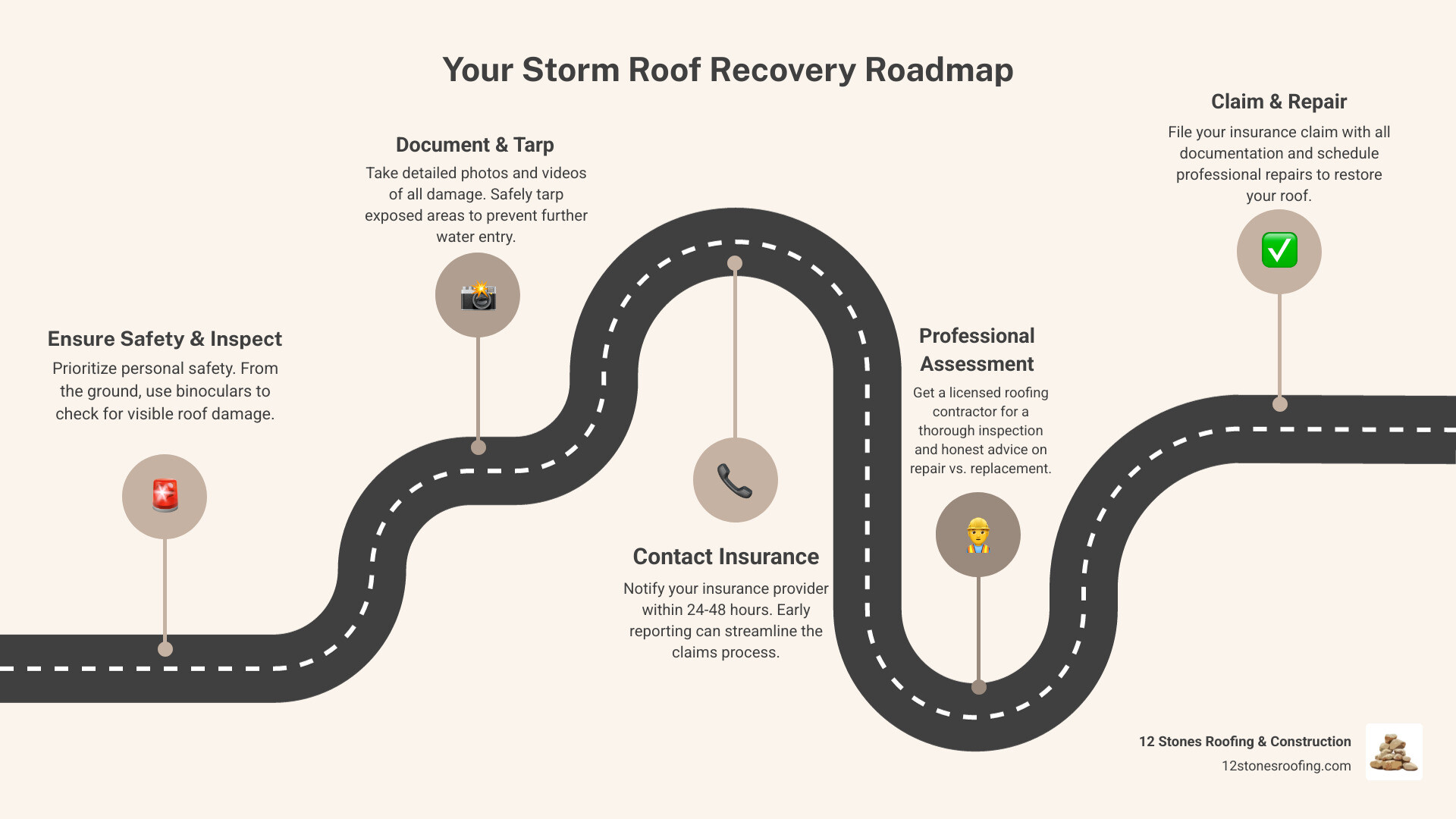
When a severe storm hits, your roof is the first line of defense. If it’s been compromised, quick and correct action is critical to protect your home from further damage. For homeowners in Pasadena, TX, understanding the process of roof repair after a storm can prevent costly mistakes and ensure a smooth recovery. As a leading Pasadena roofing contractor, we’ve seen how devastating weather can be. This guide outlines the immediate steps you should take:
- Ensure safety first – Stay away from downed power lines and unstable structures.
- Inspect from the ground – Use binoculars or a camera’s zoom lens to check for visible damage.
- Document everything – Take photos and videos of all damage from multiple angles.
- Make temporary repairs – Tarp exposed areas if it’s safe to do so.
- Contact your insurance – Report the damage as soon as possible.
- Hire a professional – Get a licensed contractor for a thorough inspection.
Texas sees more than its fair share of severe weather. In 2020 alone, the United States experienced 30 named hurricanes causing over $51 billion in damages. Here in the Gulf Coast region, homeowners face hurricane-force winds (74+ mph), destructive hail, and torrential rain that can turn a minor roof weakness into a major structural problem overnight.
The reality is simple: storm damage doesn’t heal itself. What looks like a few missing shingles today can become extensive water damage, mold growth, and compromised structural integrity tomorrow. Many homeowners delay action, not realizing that their insurance company typically requires claims within one year of the storm—and that hidden damage is often far worse than what’s visible from the ground.
I’m Jason Roberts, owner of 12 Stones Roofing & Construction, and I’ve guided countless Pasadena property owners through roof repair after storm events over the past decade, from minor wind damage to complete hurricane reconstruction. Whether you’re dealing with hail-damaged shingles or a tree through your living room, understanding the right steps can mean the difference between a smooth recovery and a financial nightmare.
First Response: Immediate Safety and Triage
After a storm, your first priority must always be safety. Before you even think about your roof, ensure that your home and family are out of harm’s way. This means checking for hazards like downed power lines, which can be extremely dangerous, and any signs of unstable structures. Powerful hurricane winds can cause broken power lines, and water damage can make roofs unstable. Never go up on a roof that is sagging or appears damaged.
Once the immediate danger has passed, we recommend performing a ground-level inspection. Grab a pair of binoculars or use your phone’s zoom lens to carefully scan your roof for visible damage. This helps you get an initial idea of the situation without putting yourself at risk. The National Roofing Contractors Association (NRCA) strongly encourages homeowners to assess roof damage from ground level and not attempt repairs on their own.
If you spot significant damage, such as large holes or missing sections of your roof, temporary repairs may be necessary to prevent further water intrusion. Tarping exposed areas with heavy-duty tarps and plywood can be a lifesaver, especially if another storm is on the horizon. This crucial step prevents additional water damage to your interior, ceilings, and insulation, which can quickly lead to mold and more costly repairs. For more detailed guidance on handling immediate issues, refer to our Emergency Roofing Services Complete Guide.
What are the immediate steps homeowners should take?
Here’s a list of immediate actions homeowners should take after a storm damages their roof:
- Prioritize personal safety: Stay indoors until the storm completely passes. Avoid downed power lines, gas leaks, and unstable parts of your home. If there’s any doubt about structural integrity, evacuate.
- Conduct a ground-level inspection: From a safe distance in your yard, use binoculars or a camera with a zoom lens to inspect your roof. Look for obvious signs of damage like missing shingles, large debris, or visible holes.

- Check for interior leaks: Walk through your home, especially the attic, looking for water stains on ceilings or walls, sagging areas, or drips. Even small leaks can indicate significant roof damage.
- Document the damage: Take detailed photos and videos from multiple angles. This documentation is crucial for your insurance claim. Include both wide shots of the overall roof and close-ups of specific damaged areas.
- Make temporary repairs (if safe): If there are large holes or exposed areas, and it is safe to do so, cover them with a tarp to prevent further water damage. Always prioritize safety over attempting a repair.
- Contact your insurance agent: Report the damage as soon as possible. Your agent can guide you through the initial steps of filing a claim.
- Call a professional roofer for an inspection: Even if damage seems minor, a professional inspection can uncover hidden issues. We offer free inspections for Pasadena residents to help you assess the full extent of the storm’s impact.
Assessing the Aftermath: Identifying Common Roof Damage
After a storm, it’s not always easy to tell if your roof has suffered damage, and what kind of damage it might be. While some issues are obvious, many can be subtle and go unnoticed by the untrained eye. Understanding the common types of storm damage is the first step in ensuring your roof gets the right kind of attention.
What are the common types of storm damage?
Storms in Pasadena and the greater Houston area can release a variety of forces that impact your roof. Here are the common types of damage we frequently encounter:
- Wind Damage: High winds, including hurricane-force winds classified by meteorologists as 74 mph or greater, or even gale-force winds (39-54 mph), can wreak havoc.
- Missing Shingles: The most obvious sign. High winds can rip shingles right off your roof, leaving the underlayment exposed.
- Curled or Lifted Shingles: Wind can get underneath shingles, causing them to lift, curl, or even crease. This breaks their watertight seal.
- Creased Shingles: Strong gusts can bend shingles back, creating a crease that weakens the shingle and makes it susceptible to further damage. This can also happen with metal panels.
- Wind Damage Roof Replacement
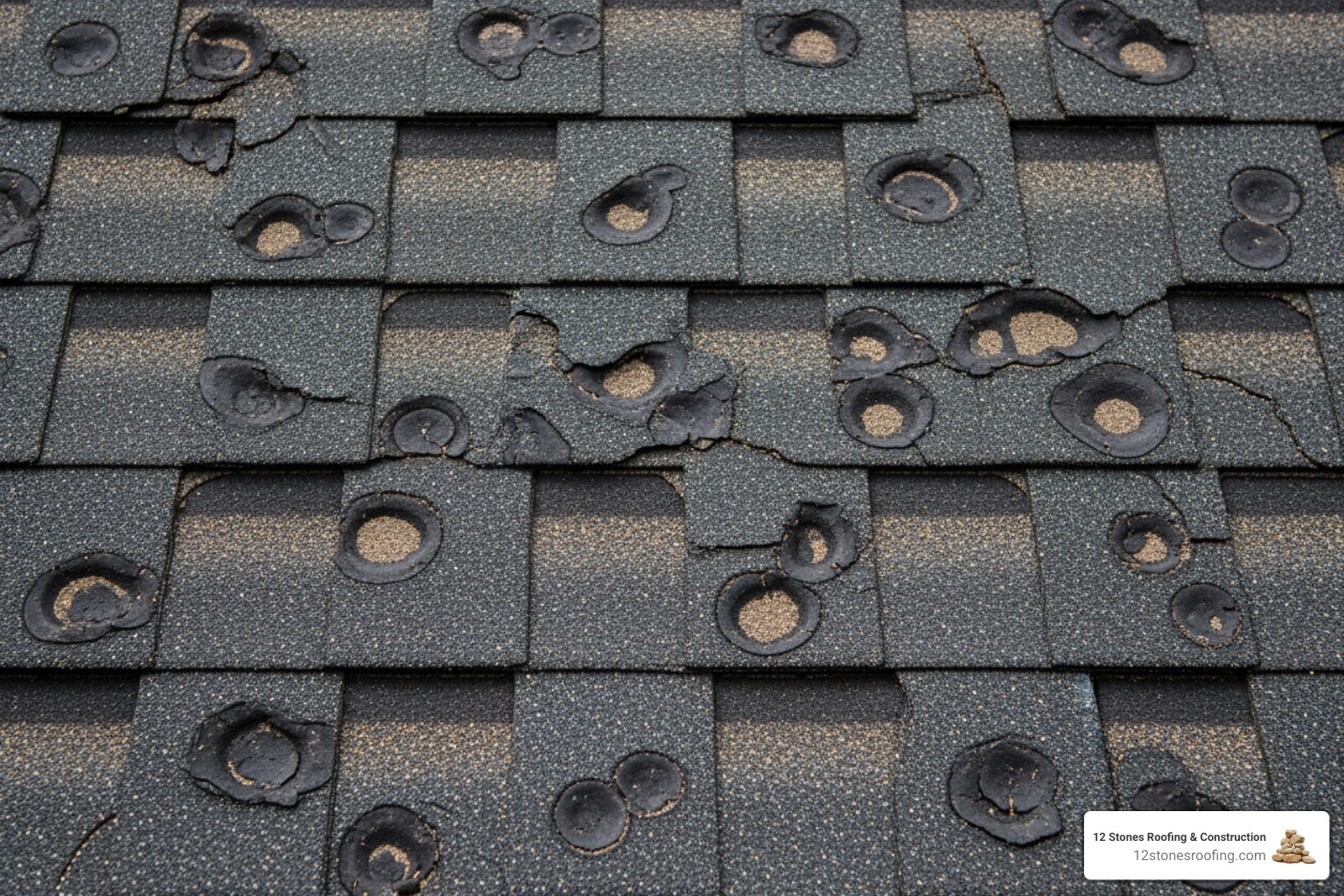
- Hail Damage: Hailstorms, though rarely lasting longer than 15 minutes, can cause significant damage.
- Dents on Vents and Flashing: Hail can leave visible dents on metal components like vents, gutters, and flashing.
- Granule Loss: For asphalt shingles, hail impacts dislodge the protective granules, exposing the asphalt layer to UV rays and accelerating aging. You might see these granules in your gutters.
- Bruised Shingles: Hail can create soft spots or “bruises” on shingles, weakening them even if they don’t look visibly damaged from the ground.
- Hail Damage Roof Repair
- Water Damage: Heavy rainfall, especially when coupled with wind, can lead to leaks.
- Ceiling Stains: Water spots on your interior ceilings or walls are a clear sign of a roof leak.
- Sagging Roof Deck: Prolonged water intrusion can weaken the roof deck, causing it to sag.
- Wet Insulation: In the attic, wet or matted insulation indicates a leak that has penetrated the roof.
- Roof Damage from Rain
- Debris Damage: Falling branches, tree limbs, or other wind-borne debris can cause direct impact damage.
- Punctures and Holes: Sharp debris can puncture the roofing material and even the roof deck.
- Scuffs and Gouges: Heavy debris dragging across the roof can leave scuffs or gouges that compromise the protective layers.
How to safely inspect your roof for damage
Safety is paramount when inspecting your roof after a storm. We strongly advise against climbing onto a damaged roof yourself, as it can be incredibly dangerous. Water damage can make a roof unstable, and you risk serious falls.
Our recommended safe inspection methods include:
- Ground-Level Inspection: As mentioned, this is your safest bet. Walk around your home’s perimeter, using binoculars or your camera’s zoom to get a closer look at the roof surface. Pay attention to gutters for shingle granules or debris, and look for any displaced or damaged components.
- Attic Inspection: This is a crucial step that many homeowners overlook. Go into your attic during daylight hours and look for:
- Daylight: Any streaks of light coming through the roof deck indicate holes or gaps.
- Water Stains: Look for discoloration on the underside of the roof sheathing or on the attic insulation.
- Wet Insulation: Touch the insulation to check for dampness or saturation.
- Professional Inspection: The most reliable way to assess storm damage is to hire a professional roofing contractor. We have the training, safety equipment, and experience to thoroughly inspect your roof, identify hidden damage, and provide an accurate assessment. This is especially important for insurance claims. For more details, see our guide on Roof Inspection for Insurance.
Repair vs. Replacement: Making the Call
Deciding whether to repair or replace your roof after storm damage is a critical decision that impacts your home’s protection and your wallet. It’s not always a straightforward choice, and several factors come into play.
Here’s a comparison to help you understand the nuances:
| Feature | Roof Repair -|
| Age of the Roof | An older roof, even with minor damage, might be a candidate for replacement. If your asphalt shingle roof is approaching or beyond its typical lifespan of 20-30 years, a full replacement is often a more cost-effective long-term solution. Metal roofs, on the other hand, are known for their durability and can last 40-70 years. -|
| Extent of Damage | Localized damage, like a few missing shingles or a small leak, can usually be repaired. However, if the damage is widespread (e.g., hail damage across a large section, multiple areas of wind uplift) or if there’s structural compromise, replacement becomes more viable. -|
| Cost-Effectiveness| Consider the long-term costs. The average cost for minor roof repairs (patching leaks, replacing shingles) ranges from $300 – $1,200, while moderate repairs can cost $1,500 – $4,000. If repair estimates are a significant percentage of a full replacement, or if you’re facing frequent repairs on an aging roof, replacement might save you money in the long run. A full roof replacement can range from $7,000 – $20,000+. -|
| Insurance Coverage| Your homeowner’s insurance policy plays a huge role. If the damage is extensive enough to warrant a replacement, your insurance might cover a significant portion of the cost. We can help you steer this process. -|
| Long-Term Value | A new roof can boost your home’s curb appeal, energy efficiency, and overall value. It also comes with a fresh warranty and peace of mind. -|
In some cases, a full roof replacement is the smarter long-term investment. For more information on when to consider a complete overhaul, a professional consultation can help you weigh the options based on your specific situation.
The Road to Recovery: Your Guide to Roof Repair After a Storm
Once you’ve assessed the damage and made initial safety checks, the next crucial step is to get your roof professionally repaired. While the urge to DIY might be strong, especially for seemingly minor issues, the risks far outweigh the potential savings.
What are the risks of attempting DIY roof repair after a storm?
We understand that you might want to save money, but attempting DIY roof repair after storm damage can lead to a host of problems:
- Safety Hazards: Roof work is inherently dangerous. Falls are common, even from a single-story home. A damaged roof can be unstable, making the risk even higher. Plus, you might encounter exposed electrical wires or other hidden dangers.
- Missing Hidden Damage: You might fix what you see, but storm damage often extends beyond the visible surface. Professionals are trained to spot subtle signs of underlying issues, like compromised decking or hidden leaks, that an untrained eye would miss.
- Improper Repairs: Without specialized knowledge and tools, DIY repairs can be ineffective or even cause more harm. Improperly installed shingles or flashing can lead to new leaks, worsen existing problems, and potentially void manufacturer warranties.
- Trapped Moisture: Botched repairs can trap moisture beneath the roofing material, leading to mold growth, wood rot, and structural damage that costs far more to fix down the line. Wood should have a moisture content below 20% and drywall/plaster below 2% before being covered.
- Complicating Insurance Claims: If you make repairs before an insurance adjuster inspects the roof, you could alter the evidence of damage. This might lead to a reduced payout or even a denied claim. Professionals provide thorough documentation and can work with adjusters.
The experts at This Old House also highlight these risks, emphasizing that a successful DIY patch is often only a temporary solution.
When to hire a professional for your storm-damaged roof
It’s almost always necessary to hire a professional roofing contractor for storm damage. Here’s when their expertise becomes absolutely essential:
- Widespread or Significant Damage: If you have multiple missing shingles, large holes, or visible structural issues, a professional is a must.
- Structural Concerns: Any sign of sagging, compromised support beams, or significant water intrusion requires immediate professional assessment to ensure your home’s structural integrity.
- Multiple Leaks or Interior Damage: If you’re seeing multiple water spots inside your home, it indicates extensive roof issues that need expert diagnosis and repair.
- Lack of Experience or Safety Concerns: If you’re not comfortable on a ladder, don’t have the right safety gear, or simply lack roofing experience, call the pros. Your safety is not worth the risk.
- Insurance Claim Assistance: A reputable contractor can help you document damage, prepare estimates, and even meet with your insurance adjuster to ensure your claim is processed smoothly.
For a comprehensive assessment and lasting solution, professional Roof Repair is essential. We ensure repairs are done correctly, adhere to local building codes, and stand behind our work with warranties.
Navigating the Paperwork: Insurance Claims for Storm Damage
Dealing with insurance after storm damage can feel like a labyrinth of paperwork and phone calls. However, understanding the process and knowing how to properly document your claim can significantly ease your burden and ensure you receive the coverage you deserve.
How to document storm damage for an insurance claim
Thorough documentation is your best friend when filing an insurance claim. Here’s how to do it effectively:
- Photo and Video Evidence: Take comprehensive photos and videos of all damage.
- Dated Photos: Use a camera or phone that automatically dates photos.
- Close-ups and Wide Shots: Get close-ups of specific damaged areas (missing shingles, dents, leaks) and wider shots that show the overall context of the damage to your home and property.
- Interior and Exterior: Document both exterior roof damage and any interior damage (ceiling stains, wet walls, damaged belongings).
- Drone Footage: If possible, some professionals can provide drone footage for a comprehensive view of roof damage.
- Detailed Notes: Keep a written log of everything: the date and time of the storm, what you observed, when you contacted your insurer, and names of people you speak with.
- Keep Receipts for Temporary Repairs: If you had to tarp your roof or make other emergency fixes, keep all receipts. Your insurance policy may cover these costs.
- Professional Assessment: Get a detailed report from your roofing contractor. This should include an estimate for repairs or replacement and clearly outline the cause and extent of the damage. This Old House emphasizes that professional documentation is key.
For more advice on this, the Insurance Information Institute offers detailed guidance, and our own Insurance Claim Roof Repair guide provides additional insights.
What is the role of homeowners insurance?
Homeowners insurance is designed to protect your most valuable asset from unexpected events, including storm damage. Here’s what you need to know about its role:
- Covered Perils: Most standard policies cover damage from wind, hail, and fallen trees. However, it’s crucial to review your specific policy to understand what’s covered and what isn’t (e.g., flood damage is typically separate).
- Deductible: This is the amount you pay out-of-pocket before your insurance coverage kicks in.
- Actual Cash Value (ACV) vs. Replacement Cost Value (RCV):
- ACV: Pays for the cost of repairing or replacing damaged property minus depreciation. This means an older roof might get a lower payout.
- RCV: Pays the cost to repair or replace your damaged property with new materials of similar quality, without deduction for depreciation. Many policies offer RCV for roofs, but it’s important to confirm.
- Working with Adjusters: After you file a claim, an insurance adjuster will inspect the damage to determine the extent of loss and the payout. It’s often beneficial to have your roofing contractor present during this inspection. The Federal Emergency Management Agency (FEMA) provides guidelines on what to do after a disaster, including steps for assessing and repairing storm damage. Read more on FEMA.
We specialize in Roofing Insurance Claims and can help you steer the process, from initial documentation to final settlement.
Proactive Protection: How to Prepare Your Roof for Storm Season
While we can’t control the weather, we can certainly prepare our roofs to minimize storm damage. Living in the Pasadena and Houston area, where severe weather is a regular occurrence, proactive maintenance is not just smart—it’s essential.
Here’s how you can prepare your roof for storm season:
- Regular Roof Inspections: Have your roof inspected by a professional at least once a year, and definitely before storm season. This helps identify and address minor issues like loose shingles or worn flashing before they become major problems in a storm.
- Gutter Cleaning: Clogged gutters can cause water to back up under your shingles, leading to leaks and fascia damage. Keep them clean and ensure downspouts are clear and directing water away from your foundation.
- Tree Trimming: Trim any tree branches that overhang your roof. High winds can turn these branches into projectiles, causing punctures or structural damage. This Old House emphasizes that overhanging branches are “projectiles waiting to happen.”
- Secure Loose Items: Before a storm hits, secure anything on your property that could become airborne, such as patio furniture, trash cans, or decorative items.
- Reinforcing the Roof: If you’re planning a roof replacement, consider upgrading to impact-resistant shingles or metal roofing. These materials are designed to withstand severe weather better than standard asphalt shingles. Metal roofs, for example, are excellent for storm resistance and longevity in Houston’s climate.
- Understand Your Warranty: Know what your roof’s warranty covers and ensure you have all the necessary paperwork in order. This helps if you need to make a claim later.
By taking these preventative measures, you’re not just preparing your roof; you’re investing in your peace of mind. For more comprehensive hurricane preparedness tips, we recommend visiting Ready.gov.
Frequently Asked Questions about Post-Storm Roof Repair
How long do I have to file an insurance claim after a storm?
Most insurance policies require homeowners to file a claim within one year of the storm event, but it is crucial to report the damage “promptly.” Waiting too long can complicate the process and risk denial, so you should contact your agent as soon as you find damage. In Texas, insurance companies will often review past weather patterns to determine claim eligibility, so a timely claim is always best.
Will my insurance premiums go up if I file a storm damage claim?
No, not necessarily. In Texas, state law prohibits insurance companies from raising your individual premium as a direct result of filing a claim for damage caused by natural events, such as weather (like hurricanes, hail, or wind). However, rates for an entire area or zip code may increase if that region experiences a high volume of claims, but this is not tied to your individual claim. We often tell our clients in Pasadena that filing a claim for storm damage in Texas is not something to fear.
What should I look for in a roofing contractor after a storm?
When selecting a roofing contractor after a storm, look for a local, licensed, and insured company with a strong reputation. They should have experience in storm damage repair and a proven track record with insurance claims. Check for positive online reviews, ask for references, and always get a detailed, written estimate. Be wary of “storm chasers” who appear immediately after a storm, often from out of state, with high-pressure tactics or deals that sound too good to be true. A trustworthy contractor will not rush you. For trusted roofers near you in Houston, look for local companies with strong community ties and transparent communication.
Your Partner in Storm Recovery
Navigating roof repair after storm damage can be overwhelming, but taking these structured steps ensures your home and family are protected. From immediate safety measures to professional repairs and insurance negotiations, a clear plan is your best defense. For homeowners in the Pasadena area, the team at 12 Stones Roofing & Construction provides the expertise and support needed to restore your roof and your peace of mind. If your home has been hit, don’t wait for small problems to become costly disasters. Contact us today for a comprehensive inspection and a free estimate.