
Why TPO Roofing is a Top Choice for Texas Property Owners
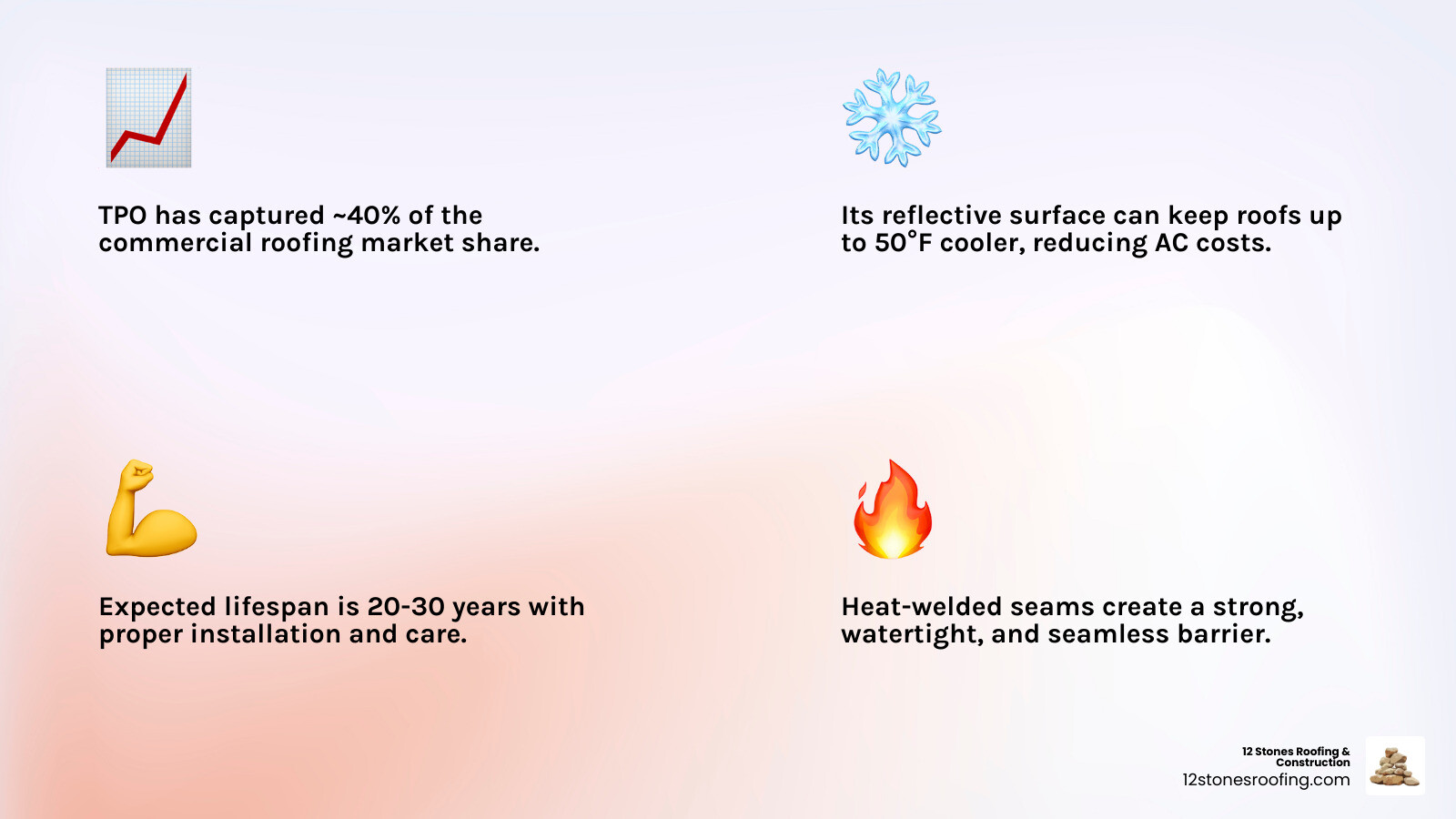
TPO roofing (thermoplastic polyolefin) is a single-ply white membrane engineered for flat and low-slope roofs, delivering an exceptional blend of energy efficiency, durability, and value. For property owners in Pasadena and Houston, a professional TPO roofing installation is one of the smartest investments to combat the Texas heat. This material’s reflective surface can lower roof temperatures by up to 50 degrees, significantly cutting air conditioning costs.
TPO has captured over 40% of the commercial roofing market by offering a reliable, long-term solution. Its key features include:
- Lifespan: 20 to 30 years with proper maintenance.
- Cost: $6.00 to $17.00 per square foot installed.
- Core Benefits: Superior energy savings, puncture resistance, and recyclability.
- Installation: Heat-welded seams form a seamless, watertight barrier.
My name is Jason Roberts, owner of 12 Stones Roofing & Construction. With hundreds of successful commercial and residential roofing projects across the Gulf Coast, my certified team specializes in TPO systems that provide lasting, energy-efficient protection. We are committed to delivering quality craftsmanship and integrity on every job.
What is TPO Roofing and How Does It Work?
TPO roofing is a single-ply membrane made from Thermoplastic Polyolefin, a blend of ethylene-propylene rubber and polypropylene. This composition gives it the weather resistance of rubber and the weldable seams of a thermoplastic. The membrane is typically built in three layers: a bottom polymer base, a central polyester-reinforced fabric (scrim), and a waterproof TPO top layer. This scrim reinforcement is vital, as it provides the strength to handle building movement without tearing or cracking.
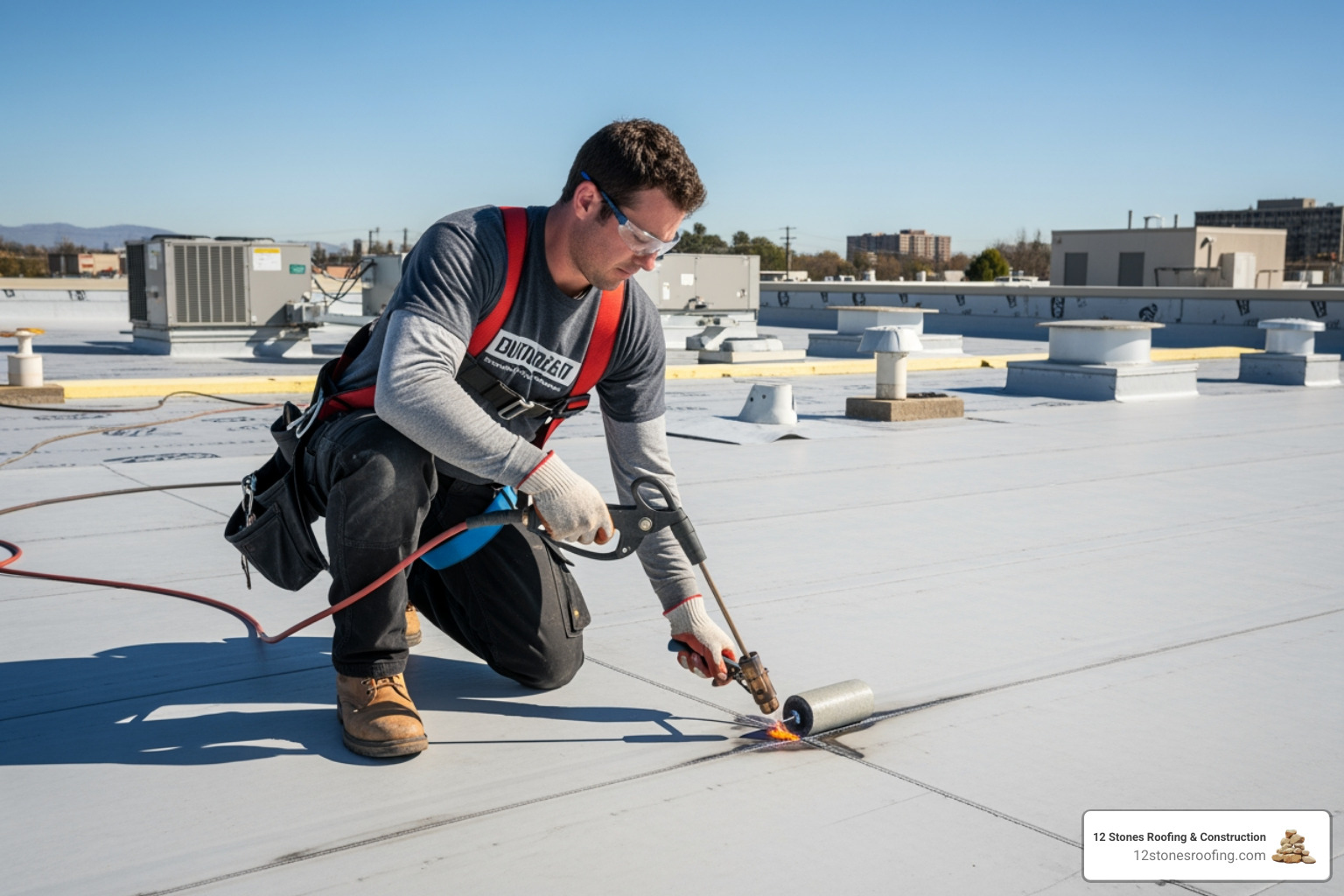
A defining feature of TPO is its heat-welded seams. Installers use hot-air welding tools to fuse adjacent sheets, creating a single, monolithic membrane across the entire roof. This process is superior to adhesive-based seams, which are common failure points in older systems, and ensures a durable, waterproof barrier. TPO is also engineered for resilience, offering excellent resistance to punctures, UV radiation, and fungus, making it ideal for the sun and humidity in Pasadena and Houston.
Key Performance Characteristics of TPO
TPO is packed with features designed to protect your property and reduce long-term costs.
- Durability and Impact Resistance: The reinforced membrane stands up to punctures, hail, and debris. Specialized systems can even offer protection against hail up to 4 inches in diameter.
- Fungi and Algae Resistance: TPO naturally resists biological growth, which helps maintain its structural integrity and reflective properties over time.
- Dimensional Stability: TPO is flexible and adapts to a building’s natural expansion and contraction without the need for plasticizers, preventing cracks and splits.
- Reflectivity and Cool Roof Technology: TPO’s standard white surface reflects solar heat, which can keep a building’s interior up to 50 degrees cooler. This “cool roof” technology lowers energy consumption and reduces air conditioning costs, a major benefit in Texas.
The Best Applications for TPO Roofing
TPO is a versatile solution that excels in specific applications for commercial and residential properties.
- Commercial and Industrial Buildings: It is a leading choice for warehouses, retail centers, and factories due to its cost-effectiveness, durability, and rapid installation that minimizes business disruption.
- Residential Flat Roofs: TPO is an excellent option for homes with flat roofs, covered patios, or low-slope dormers. Its reflective surface helps keep the rooms below cooler.
- Mandatory for Low-Slope Roofs: For roof pitches below 2:12 (a 2-inch rise over 12 inches), traditional shingles are ineffective. TPO is specifically designed for these low-slope conditions to prevent leaks and shed water effectively.
- New Construction and Re-Roofing: TPO can be installed on new buildings or, in many cases, placed over an existing roof (a “recover”), which can save on tear-off and disposal costs.
The Advantages and Disadvantages of TPO
Understanding the benefits and potential drawbacks of TPO roofing is key to making an informed decision. While its popularity is well-earned, a balanced view ensures you choose the right system for your Pasadena or Houston property.
5 Key Advantages of TPO Roofing
- Energy Efficiency: This is TPO’s signature benefit in Texas. The standard white membrane is a “cool roof” that reflects UV rays, dramatically lowering a building’s interior temperature. This reduces the strain on HVAC systems and leads to significant energy savings. Many TPO products are ENERGY STAR® qualified and contribute to LEED credits.
- Cost-Effectiveness: TPO is one of the most affordable single-ply roofing options. The material comes in wide, lightweight rolls, which speeds up installation and reduces labor costs, making it an economical choice both upfront and over the long term.
- Durability and Flexibility: TPO resists punctures, tears, and impacts while remaining flexible enough to handle building movement without cracking. It also stands up well to UV radiation, heat, and common chemical exposures.
- Ease of Installation: The large roll size means fewer seams are needed. These seams are then hot-air welded to create a strong, monolithic bond that is far more reliable than glued seams, streamlining the installation process.
- Eco-Friendly: TPO is a sustainable choice. It is manufactured without chlorine or plasticizers and is fully recyclable at the end of its service life. Its energy-saving properties also help reduce a building’s carbon footprint.
Potential Disadvantages and Considerations
- Installation Quality is Critical: The performance of a TPO roof is almost entirely dependent on the installer’s skill. Improperly welded seams are the number one cause of failure. Choosing a certified, experienced contractor like 12 Stones Roofing & Construction is non-negotiable.
- Seam Failure Risk (if installed incorrectly): While heat welds are strong, they require precise temperature, speed, and pressure. Any deviation can create a weak point that may fail over time.
- Evolving Formulations: TPO technology has improved dramatically since its introduction. While modern formulas are robust, the newest products have less long-term performance data compared to materials that have been around longer. Lifespan can vary based on product thickness and climate.
- Not for Heavy Foot Traffic: TPO is durable but not designed for constant foot traffic. If your roof requires frequent access for equipment servicing, designated walkway pads must be installed to protect the membrane.
- Slippery When Wet: Like most smooth roof surfaces, TPO can be hazardous when wet. Always use extreme caution when accessing the roof in damp conditions.
TPO Roofing vs. Other Single-Ply Membranes
When selecting a single-ply membrane, property owners often compare TPO roofing to its main competitors: EPDM and PVC. Understanding the key differences helps clarify why TPO is often the superior choice for the Texas climate.
TPO vs. EPDM (Rubber Roofing)
EPDM (Ethylene Propylene Diene Monomer), or “rubber roofing,” is a durable material known for its long lifespan. However, it has significant drawbacks compared to TPO, especially concerning energy efficiency.
| Feature | TPO Roofing | EPDM Roofing |
|---|---|---|
| Material | Thermoplastic polyolefin (white/light colors) | Ethylene propylene diene monomer (black) |
| Seam Strength | Heat-welded (monolithic bond) | Adhesives/tape (prone to failure) |
| Color/Reflectivity | Highly reflective (cool roof) | Dark, heat-absorbing |
| Energy Efficiency | Excellent (lowers cooling costs) | Poor (increases cooling costs) |
| Puncture Resistance | Good | Excellent |
| Lifespan | 20-30 years | 30-40 years |
| Cost | Generally comparable | Generally comparable |
For properties in hot climates, TPO’s reflective white surface is the clear winner over EPDM’s heat-absorbing black membrane. The energy savings from TPO often make it a more cost-effective choice over its lifespan.
TPO vs. PVC Roofing
PVC (Polyvinyl Chloride) is another strong, heat-weldable membrane. TPO was developed to offer similar performance with an improved environmental profile and at a lower cost.
- Cost: TPO is generally more affordable than PVC in both material and installation costs, making it a better value proposition for many projects.
- Environmental Impact: TPO is free of the plasticizers and chlorine found in PVC. This makes TPO a more environmentally friendly option, as it avoids the potential for plasticizer migration over time.
- Chemical Resistance: While both are resistant to chemicals, PVC has a slight edge in resisting oils and greases, making it a niche choice for some industrial facilities or restaurants.
- Durability: Both materials are highly durable. PVC can sometimes offer a slightly longer lifespan (35+ years), but modern TPO systems (20-30 years) provide excellent longevity and performance, especially with their superior UV resistance.
For most commercial and residential applications in Pasadena and Houston, TPO roofing provides the best overall balance of energy efficiency, durability, and cost.
TPO Roofing Installation, Cost, and Lifespan
Understanding a TPO roofing project depends on understanding the installation process, budget, and long-term performance expectations.
TPO Installation Methods and Components
A professional TPO installation is a precise process. The three primary methods are:
- Mechanically Attached: The most common method, where the membrane is secured to the roof deck with fasteners and plates before the seams are heat-welded.
- Fully Adhered: The membrane is glued directly to the substrate with a strong bonding adhesive, creating a smooth, seamless appearance ideal for complex roof shapes.
- Induction-Welded (e.g., RhinoBond): An advanced system that uses electromagnetic heat to weld the membrane to special plates without penetrating the TPO, offering superior wind uplift resistance.
A complete TPO system also requires essential components like insulation boards (Polyiso, EPS, XPS) for thermal performance, cover boards for protection, and custom TPO flashing to seal penetrations and edges.
How Much Does TPO Roofing Cost?
The installed cost of TPO roofing typically ranges from $6.00 to $17.00 per square foot. The final price depends on several key factors:
- Roof Size and Complexity: Larger, simpler roofs have a lower cost per square foot than smaller roofs with many penetrations.
- Installation Method: Fully adhered and induction-welded systems may cost more than mechanically attached ones.
- Insulation: The type and thickness (R-value) of the insulation boards directly impact the price.
- Tear-Off vs. Recover: Removing an old roof adds labor and disposal costs, whereas installing TPO over an existing roof (a “recover”) is more economical.
- Building Access and Location: Difficult site access and local labor rates will influence the final quote.
While considering the upfront investment, TPO’s energy efficiency provides significant long-term savings on cooling costs. For more details, see our guide on Commercial Roof Installation Cost.
Lifespan and Warranty Options
A professionally installed TPO roof can last 15 to 30 years, with many systems performing well beyond 25 years. Longevity is influenced by membrane thickness (45, 60, or 80 mil), climate, and maintenance frequency.
To protect your investment, TPO systems include robust warranties:
- Manufacturer Warranties: These cover material defects for 5 to 20 years or more, often guaranteeing the membrane remains watertight.
- Workmanship Warranties: Provided by the contractor, this warranty covers the quality of the installation itself. At 12 Stones Roofing & Construction, we stand behind our work with a comprehensive workmanship warranty, typically for 10 years.
Maintenance and Common Issues with TPO Roofing
Proactive maintenance is essential for a TPO roofing system to reach its full 25+ year lifespan, especially in the demanding Texas climate.
Recommended TPO Roof Maintenance
Consistent care protects your investment and ensures optimal performance.
- Regular Inspections: Inspect the roof twice a year (spring and fall) and after severe weather events to check for damage or debris.
- Keep it Clean: Remove leaves, branches, and dirt to prevent moisture traps and maintain the roof’s reflectivity.
- Clear Drainage: Ensure all gutters, scuppers, and drains are free of blockages to prevent ponding water, which stresses the membrane.
- Gentle Washing: An occasional wash with a low-pressure washer (under 2,000 PSI) and mild detergent will keep the surface reflective and efficient.
- Check Seams and Flashing: Pay close attention to seams and flashing around vents, walls, and edges for any signs of separation or cracking.
Our Roof Maintenance Checklist offers a comprehensive guide for keeping your roof in top condition.
Common Problems and How to Fix Them
Even durable roofs can develop issues. Here’s how to handle common TPO problems:
- Punctures and Tears: Caused by foot traffic or debris, small punctures can be repaired by a professional who cleans the area and heat-welds a TPO patch over the damage.
- Seam Separation: This is a critical issue, often from improper installation, that requires immediate professional re-welding to prevent major leaks.
- Flashing Failure: The seals around skylights, HVAC units, and walls are vulnerable points. Damaged flashing must be professionally repaired to restore a watertight seal.
- Ponding Water: Water that stands for more than 48 hours indicates a drainage problem that must be corrected to prevent accelerated membrane degradation.
When to Call a Professional:
While some property managers can handle cleaning, most repairs require specialized tools and expertise. For leaks, seam separation, or suspected water damage under the membrane, call a professional immediately. If an inspection reveals that more than 25% of the underlying insulation is saturated, a full roof replacement is typically necessary. If you see signs of a leak, consult our Leaky Flat Roof Repair Complete Guide.
Frequently Asked Questions about TPO Roofing
How thick should a TPO membrane be?
TPO membranes are available in 45, 60, and 80 mil thicknesses. While 45 mil is a standard minimum, 60 mil offers the best balance of durability and cost for most commercial applications. For roofs with high traffic or in harsh environments, 80 mil provides maximum puncture resistance and longevity.
Can you walk on a TPO roof?
Yes, a TPO roof can be walked on for inspection and maintenance. However, it is not designed for heavy, regular foot traffic and can be slippery when wet. For roofs requiring frequent access, installing designated walkway pads is essential to protect the membrane.
Is TPO roofing a good choice for homes in Texas?
Absolutely. TPO’s high solar reflectivity makes it an ideal “cool roof” for Texas, capable of significantly reducing cooling costs during hot summers. Its durability and UV resistance are perfectly suited for the intense sun in areas like Pasadena and Houston. For homeowners seeking an energy-efficient investment, a professionally installed TPO roof is a top choice. If you’re looking for local experts, consider roofers near you.
Protect Your Investment with Professional TPO Installation
TPO roofing delivers an unbeatable combination of performance, energy efficiency, and value for flat and low-slope roofs. Its heat-welded seams create a waterproof barrier against harsh weather, while its reflective surface lowers energy bills. However, the 25+ year potential of a TPO roof depends entirely on the quality of the installation.
For a durable, leak-free roof that protects your property for decades, trust the certified experts at 12 Stones Roofing & Construction. We provide meticulous installation and transparent service. To discuss your project and get a free estimate, call us today at (832) 706-9046 or learn more about our specialized TPO roofing services.