
Why Texas Roof Ventilation Is One of the Most Important Home Decisions You’ll Make
Roof ventilation installation Texas homeowners need is not a luxury — it’s a critical layer of protection against one of the most punishing climates in the country.
Here’s a quick snapshot of what you need to know:
| Question | Quick Answer |
|---|---|
| Why does it matter? | Unventilated attics reach 150°F+, driving up energy bills and destroying shingles |
| How much can you save? | Up to 30% on cooling costs with proper ventilation |
| What’s the main system type? | Balanced intake (soffit) + exhaust (ridge/solar) vents |
| How much ventilation do you need? | 1 sq ft of ventilation per 150 sq ft of attic space (Houston code) |
| What does it cost? | Typically $300–$800 per vent installed professionally |
| How long does installation take? | Most jobs are completed in a single day |
When Texas summer heat hits, your attic becomes the front line. Without proper airflow, temperatures inside that space can climb past 150°F — and that superheated air doesn’t stay up there. It radiates down into your living spaces, forces your air conditioner to work overtime, and silently degrades your shingles from the inside out. Houston’s average summer temperature hovers around 94°F with 75% humidity, which means moisture compounds the problem just as much as the heat does.
The result? Higher energy bills, premature roof failure, mold risks, and a home that’s simply uncomfortable to live in. These aren’t minor inconveniences — they’re costly problems that proper roof ventilation installation can prevent before they start.
I’m Jason Roberts, owner of 12 Stones Roofing & Construction, a Service-Disabled Veteran-Owned firm based in Pasadena, Texas, with over a decade of hands-on experience helping Gulf Coast homeowners tackle roof ventilation installation Texas conditions demand. In this guide, I’ll walk you through exactly how to identify ventilation problems, choose the right system, and protect your home for the long term.
Roof ventilation installation Texas vocab to learn:
The Unseen Battle: Why Texas Roof Ventilation is Non-Negotiable
In regions like Pasadena and La Porte, the attic isn’t just a storage space; it’s a thermal pressure cooker. Attic temperatures in Texas can soar to 150°F or higher, creating a hostile environment that compromises your entire home. This isn’t just an estimate-unventilated attics frequently reach these staggering numbers on a typical July afternoon.
When we perform a roof inspection, we often find that the “unseen battle” is being lost because of three primary impacts:
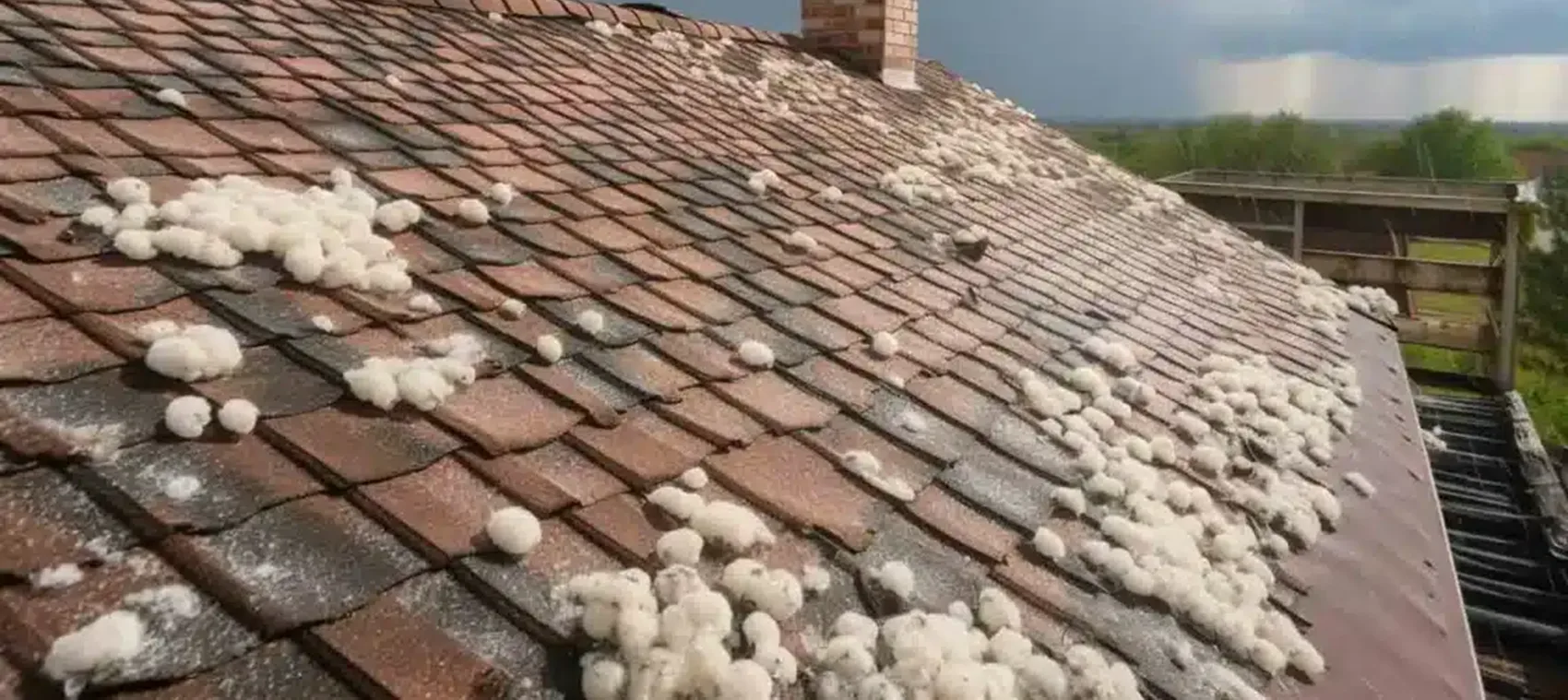
- Accelerated Shingle Degradation: Extreme heat causes shingles to bake from both sides. This leads to premature aging, blistering, and cracking.
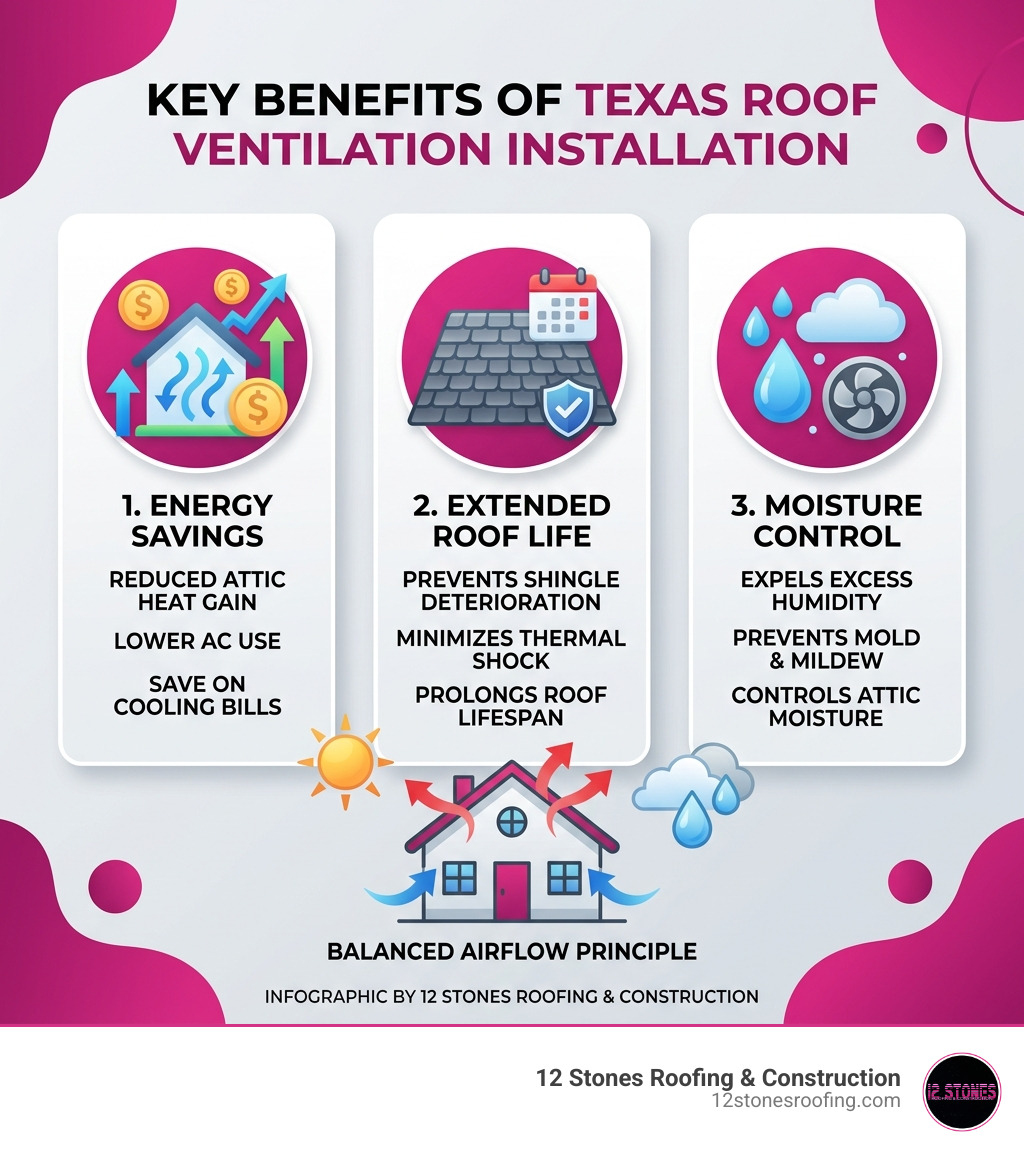
- Increased AC Strain & Energy Bills: A superheated attic acts like a giant radiator. That heat bleeds through your ceiling, forcing your HVAC system to work overtime. Proper ventilation can reduce energy bills by 10-15%, and in some cases, cut cooling costs by as much as 30%.
- Moisture Accumulation & Structural Damage: It’s not just the heat; it’s the humidity. Trapped moisture leads to condensation, which rots roof decking and encourages mold growth.
To fight back, you need more than just a few holes in your roof; you need a strategic system. You can discover more about energy-efficient roofing solutions for Houston homes to see how modern materials work alongside ventilation to keep your home cool. For homeowners who want to understand the building-science side of attic airflow, the U.S. Department of Energy’s guide to ventilation offers helpful background on how ventilation supports home efficiency.
Protecting Your Investment: The Impact of Extreme Heat on Roofing Materials
Your roof is a significant financial investment. Without adequate ventilation, shingles can experience “thermal shock,” leading to blistering and a reduced lifespan of 5-10 years. When heat is trapped, the chemicals in asphalt shingles evaporate faster, making them brittle.
The good news is that proper attic ventilation can extend roof lifespan by 5 to 10 years. By keeping the roof deck cooler, you prevent the shingles from “cooking” and ensure they stay flexible enough to handle Texas wind and rain. You should ensure your roof’s longevity with our essential roof maintenance checklist to keep track of your system’s health.
Combating Humidity: Preventing Moisture and Mold in Humid Climates
Texas’s average humidity often exceeds 75%, making attics prime breeding grounds for condensation, which can lead to wood rot and mildew. In areas like La Porte, the coastal air is thick with moisture. When warm, moist air gets trapped in a poorly ventilated attic, it hits the cooler underside of the roof deck and turns into water droplets.
This condensation drips into your insulation (lowering its R-value) and creates the perfect environment for mold. Effective roof ventilation installation Texas experts recommend actively removes this humid air before it can settle, protecting your family’s health and your home’s structural integrity.
Tailored Solutions: Top Ventilation Systems for the Gulf Coast Climate
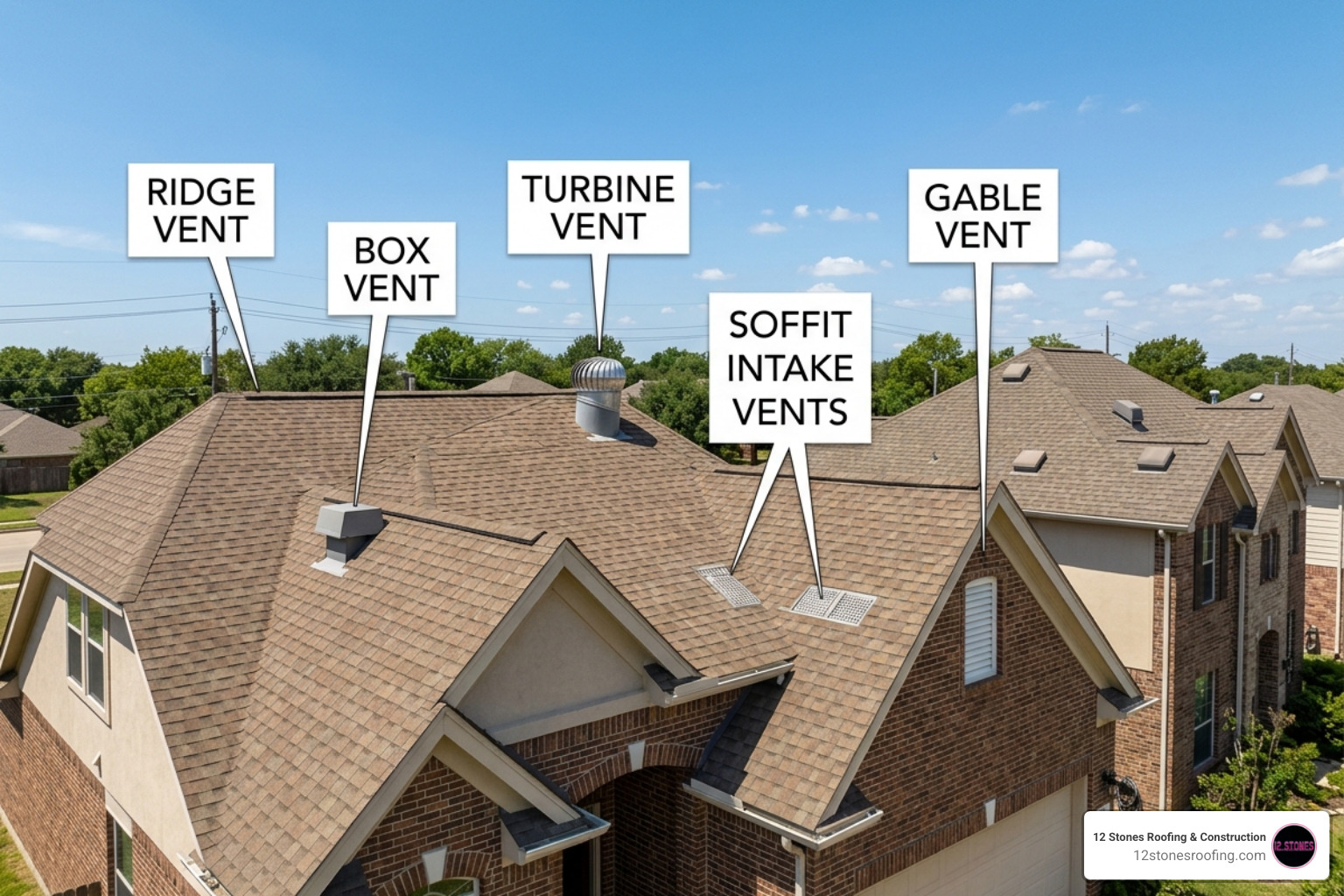
Choosing the right vent is about more than just aesthetics; it’s about physics. A balanced ventilation system, incorporating both intake and exhaust, is crucial for optimal performance in Texas’s climate. We generally categorize these into two types:
- Passive Systems: These rely on natural convection (heat rising) and wind to move air.
- Active Systems: These use mechanical power, like electricity or solar energy, to force air exchange.
| Vent Type | Best For | Benefit |
|---|---|---|
| Ridge Vents | Most residential roofs | Discrete, continuous exhaust at the peak |
| Soffit Vents | All homes | Essential intake at the eaves |
| Turbine Vents | High-wind areas | Moves air without electricity |
| Solar Fans | Large attics | High-volume air movement via sun power |
Harnessing Nature: Passive Airflow with Ridge and Soffit Vents
This is the “gold standard” for most homes in Pasadena and La Porte. The mechanism is simple but effective: Soffit vents allow cool air intake, while ridge vents provide continuous exhaust along the roof’s peak.
Because heat naturally rises, it flows out of the ridge vent, creating a vacuum that pulls fresh air in through the soffits. A well-designed passive system can achieve continuous airflow, moving approximately 50 CFM (Cubic Feet per Minute) per linear foot of ridge vent. This system is low-maintenance, has no moving parts to break, and integrates beautifully with your roofline.
Powering Up: Advanced Solar and Powered Fan Ventilation
For larger homes or complex roof designs where passive airflow isn’t enough, we recommend active systems. Solar-powered or electric attic fans actively pull hot air out, significantly increasing air exchange.
High-efficiency solar models can move up to 1,600 CFM, potentially dropping attic temperatures by 10-20 degrees Fahrenheit. One of the best perks? Solar fans pay for themselves in 3-7 years through energy savings and may even qualify for federal tax credits. They are particularly effective in Houston’s climate because they work hardest when the sun is brightest—exactly when your attic needs the most help.
The Science of Airflow: Calculating Net Free Area and the 1/300 Rule
Ventilation isn’t a guessing game. Proper ventilation relies on precise calculations of Net Free Area (NFA) to ensure adequate airflow. NFA is the actual open space in a vent that allows air to pass through (excluding the grates and louvers).
While the 1/150 rule (1 sq ft of NFA per 150 sq ft of attic floor) is a general guideline, the 1/300 rule (1 sq ft of NFA per 300 sq ft of attic floor with balanced intake/exhaust) is often sufficient and preferred in Texas. For example, Houston building codes typically require one square foot of ventilation for every 150 square feet of attic space. If you have a 1,500 sq. ft. attic, you need at least 10 sq. ft. of total NFA.
Achieving Equilibrium: Determining Intake vs. Exhaust Balance
The most common mistake we see is an “unbalanced” system. An ideal ventilation system maintains a 50/50 ratio of intake to exhaust NFA.
- Intake: This happens at the lowest point of the roof, usually through soffit vents.
- Exhaust: This happens at the highest point, through ridge vents or turbines.
If you have plenty of exhaust but no intake, your vents will actually try to pull air from your house (through light fixtures or plumbing stacks), which wastes your AC. Conversely, if soffit vents are blocked by insulation, your exhaust vents will sit idle. We ensure that your roof ventilation installation Texas project includes “baffles” to keep insulation away from the intake vents.
Precision & Expertise: The Professional Roof Ventilation Installation Process
When you hire us for a roof installation, ventilation is a core part of the blueprint. Our process includes:
- Comprehensive Attic Assessment: We check your current insulation levels and look for “hot spots.”
- NFA Calculation & System Design: We determine exactly how many vents your specific square footage requires.
- Precision Cutting & Installation: We use specialized tools to cut into your roof deck without compromising the structure.
- Weatherproofing: We seal every vent with high-grade flashing to ensure no water gets in during a Gulf Coast downpour.
You can explore our full range of residential roofing services to see how we integrate these steps into every job.
Warning Signs: Is Your Current Ventilation Failing You?
Ignoring the signs of poor attic ventilation can lead to significant structural damage and escalating energy costs. You don’t always have to climb into the attic to know there’s a problem. Keep an eye out for these common indicators:
- High Utility Bills: If your electric bill is skyrocketing despite a newer AC unit, your attic is likely fighting against you.
- Uncomfortable Indoor Temperatures: If the second floor is significantly hotter than the first, or if your ceilings feel warm to the touch, you have trapped heat.
- Musty Odors: This is a red flag for moisture and potential mold growth.
- Peeling Exterior Paint: In extreme cases, moisture trapped in the attic can migrate through the wood, causing paint on your trim or siding to bubble and peel.
Visual Cues: Physical Damage and Roof Indicators
Sometimes the roof itself will tell you it’s suffocating. Visual cues like curled, buckled, or blistering shingles are often direct consequences of prolonged heat exposure. You might also see rusted nails in the attic or “dark spots” on your roof deck, which indicate mold. If your roof deck is sagging between the rafters, moisture has likely weakened the wood.
If you see these signs, it’s time for a professional roof repair or a ventilation upgrade before the damage spreads.
Comfort & Cost: Indoor Comfort and Energy Savings
Poor ventilation causes your AC to cycle more frequently, reducing its lifespan and increasing energy consumption. Think of your AC like a marathon runner; if it has to run in 150-degree heat (your attic), it’s going to burn out much faster.
Upgrading ventilation can lead to up to 30% savings on cooling costs during peak Texas summers. That’s money back in your pocket every month. To maximize these savings, you can learn how an energy-efficient roof replacement can further enhance your home’s performance.
Your Questions Answered: FAQs About Texas Roof Ventilation
Understanding common concerns about roof ventilation helps homeowners make informed decisions. Here are the questions we hear most often at 12 Stones Roofing & Construction.
Investment & ROI: How much does roof ventilation installation cost in Texas?
Installation costs typically range from $300-$800 per vent, depending on the type and complexity. A simple static box vent is on the lower end, while a high-quality solar attic fan is on the higher end.
However, the Return on Investment (ROI) is often realized within 3-7 years thanks to lower utility bills and the fact that you won’t have to replace your roof 5 years early. Factors that influence cost include your roof pitch (steep roofs require more safety gear) and the accessibility of your attic.
Upgrading Existing Systems: Can I add vents to an existing roof?
Yes, absolutely. Retrofit options are available for most existing roofs. You don’t have to wait for a full roof replacement to fix your ventilation. We can install ridge vents, turbines, or solar fans on an existing shingle roof.
The key is ensuring that the new exhaust vents don’t conflict with your existing ones. For example, mixing turbine vents with ridge vents can sometimes cause a “short circuit” where air just loops between the two vents rather than pulling fresh air from the soffits. It’s also helpful to understand how different roof slope types impact ventilation options before starting a retrofit.
Winter Benefits: Does ventilation help during Texas winters?
Yes, absolutely. While we don’t get much snow in Pasadena, we do get humidity and the occasional “Big Freeze.”
- Moisture Control: In winter, warm air from your shower or kitchen rises into the attic. If the attic is cold and unventilated, that air turns into frost or condensation, leading to rot.
- Ice Dam Prevention: During unusual freezes (like the 2021 event), proper ventilation keeps the roof surface at a consistent temperature. This prevents snow from melting and refreezing at the gutters, which creates “ice dams” that force water under your shingles.
Conclusion: Secure Your Home’s Future with Expert Texas Roof Ventilation
Investing in professional roof ventilation installation Texas homes require is a proactive step toward a more energy-efficient, comfortable, and durable home. From mitigating the brutal 150°F attic heat to preventing moisture-driven mold, superior ventilation protects your most valuable asset.
At 12 Stones Roofing & Construction, we don’t just “install vents”—we design airflow systems tailored to the specific needs of Pasadena and La Porte homeowners. Whether you are looking for a commercial roofing solution or a residential upgrade, we have the local expertise to get it done right.
Trust 12 Stones Roofing & Construction for local expertise and proven solutions that stand up to the Texas climate.
Schedule your professional roof ventilation consultation today and experience the 12 Stones difference. Click the link to visit our residential roofing page and get started.