
Essential Modified Bitumen Roof Patch Materials
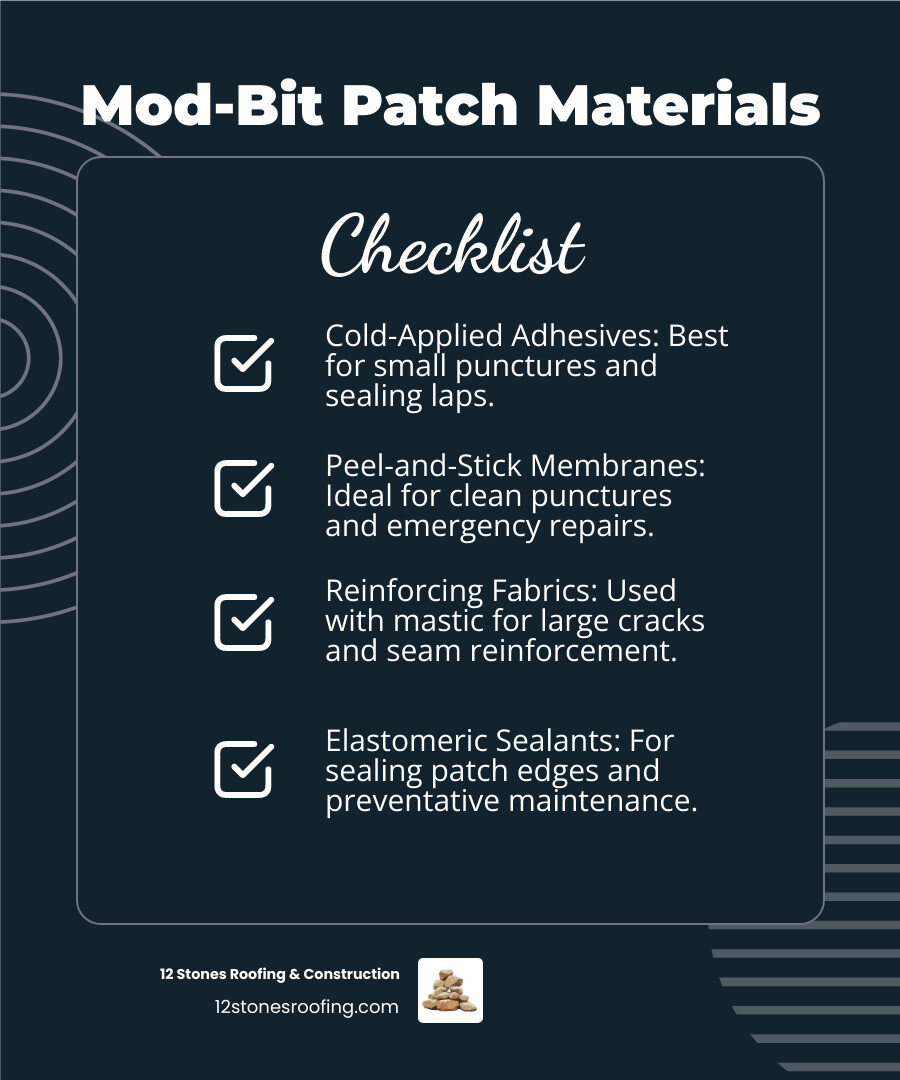
When you need a modified bitumen roof patch, selecting the right material is crucial for a durable repair. The most effective options for fixing common damage on modified bitumen roofs include cold-applied adhesives, peel-and-stick membranes, reinforcing fabrics, and elastomeric sealants. Each type offers specific benefits depending on the damage and application.
Here’s a quick guide to common modified bitumen patch materials:
| Patch Material | Key Use | Application Method |
|---|---|---|
| Cold-Applied Adhesives | Small punctures, sealing laps | Brush, trowel, caulk gun |
| Peel-and-Stick Membranes | Clean punctures, emergency repairs | Self-adhered |
| Reinforcing Fabrics | Large cracks, seam reinforcement | Used with mastic/cement, two-part system |
| Elastomeric Sealants | Sealing patch edges, preventative | Brush, spray, trowel |
Modified bitumen roofing is known for its durability on low-slope roofs, but even these robust systems can face wear and tear. Prompt and effective patching can extend your roof’s lifespan and prevent costly water damage.
I’m Jason Roberts, owner of 12 Stones Roofing & Construction. With over a decade of leadership in both residential and commercial roofing, including specialized systems like modified bitumen, I’ve learned the critical importance of selecting the right modified bitumen roof patch for lasting repairs. Our team at 12 Stones Roofing & Construction offers reliable roofing and general contracting services for property owners in Pasadena, TX, and beyond.
Understanding Damage: When Your Mod-Bit Roof Needs a Patch
Your modified bitumen roof is built tough, but even the most durable systems have limits, especially for a commercial property owner in Pasadena, TX. Our Texas weather—scorching heat, downpours, and hail—tests any roof’s resilience. The good news is most issues can be fixed with the right modified bitumen roof patch if caught early.
Common damage includes punctures, blisters, ridges, splitting seams, and deteriorating flashing. Weather is a major factor; for more on this, see our guide on roof damage from rain.
Identifying Common Issues
Spotting damage early allows for a simple modified bitumen roof patch instead of a full replacement. Here’s what to look for:
Punctures and tears are holes or rips in the membrane, often from falling branches, dropped tools, or storm debris. Even a small puncture requires immediate attention to prevent water from seeping into the insulation and decking.
Blisters and ridges indicate trapped substances. Blisters form when trapped moisture or air expands in the heat, creating bubbles. While small, firm blisters may not be urgent, large or soft ones signal trapped moisture that needs to be addressed. Ridges are linear bumps from thermal expansion and are usually cosmetic unless they crack or are in high-traffic areas.
Open seams and flashing failure are subtle but serious. Seams between membrane rolls can separate, creating gaps (“fish mouths”) that let water in. Flashing, which seals roof penetrations like vents, can also degrade from UV exposure and thermal stress, providing a direct path for leaks. High humidity and temperature swings accelerate this deterioration.
Recognizing these issues protects your investment. The sooner you identify damage, the simpler and more affordable the repair.
The Ultimate Modified Bitumen Roof Patch Material Roundup
Selecting the right material for your modified bitumen roof patch can make the difference between a repair that lasts for years and one that fails within months. Each patching material brings its own strengths, and understanding them ensures you’re using the most effective solution. For a broader perspective on roofing materials, take a look at different flat roof material types.
The four main categories—cold-applied adhesives, peel-and-stick membranes, reinforcing fabrics, and elastomeric sealants—each excel in different scenarios.
| Patch Material | Ease of Use | Durability | Cost | Best Use Case |
|---|---|---|---|---|
| Cold-Applied Adhesives | Easy | Good | $ | Small punctures, sealing laps |
| Peel-and-Stick Membranes | Very Easy | Moderate | $$ | Emergency repairs, clean punctures |
| Reinforcing Fabrics | Moderate | Excellent | $$ | Large cracks, seam reinforcement |
| Elastomeric Sealants | Easy | Excellent | $$$ | Patch edges, preventative maintenance |
Let’s explore what makes each material effective.
Cold-Applied Adhesives & Cements for a Quick Modified Bitumen Roof Patch
Cold-applied adhesives and cements are a go-to for many modified bitumen roof patch projects, offering a safe, effective repair without torch work. These bituminous-based sealants are applied with a trowel, brush, or caulk gun. The biggest advantage? No torch required. This eliminates fire hazards, making them safer for DIY use and ideal for areas with strict fire codes. These adhesives are versatile for sealing laps, repairing small punctures, and addressing minor cracks. Most formulations comply with VOC regulations (typically under 250 g/L), as shown in this Technical Data Sheet for a typical adhesive. However, they require patience to cure fully (up to 30 days) and must be applied within a specific temperature range (usually 40°F to 120°F) for proper adhesion. Always ensure good ventilation during application.
Peel-and-Stick Patch Membranes
When you need a quick fix, peel-and-stick patch membranes are hard to beat. These self-adhered sheets of modified bitumen feature a simple application: clean the surface, peel the backing, and stick it down. This simplicity makes them excellent for emergency repairs when you need to stop a leak immediately, as we often recommend in our guide to temporary roof leak fixes. They provide uniform thickness across the repair. The catch? Success hinges on critical surface preparation. The roof must be absolutely clean, dry, and often primed for proper adhesion. While they can last for years when applied correctly, they’re generally best for emergency repairs or clean punctures, not complex damage.
Reinforcing Fabrics for a Durable Modified Bitumen Roof Patch
When you’re dealing with serious damage—large cracks, extensive splitting seams, or areas needing structural reinforcement—reinforcing fabrics create the most robust modified bitumen roof patch. This is a two-part system where polyester or fiberglass fabric is embedded in roof cement or mastic, creating a repair with exceptional tensile strength. The fabric acts as a structural bridge, preventing cracks from spreading and adding integrity. This makes it the gold standard for seam reinforcement. The tradeoff is a more complex application that requires skill. Material compatibility is also essential. You’ll find various product options for roof repair fabrics suitable for these repairs.
Elastomeric Sealants & Coatings
Elastomeric sealants and coatings represent the final layer of defense in modified bitumen repairs. These highly flexible, acrylic or silicone-based materials adapt to your roof’s movement, making them perfect for sealing patch edges and providing preventative maintenance. What sets them apart is their high flexibility and excellent UV stability, which prevents cracking under constant sun exposure. A bonus is that many are paintable or coatable, allowing for seamless integration with the rest of the roof. The energy-saving potential is impressive; reflective elastomeric coatings can reduce roof surface temperatures and cut cooling costs by 15-30%, a substantial saving in Texas. We use elastomeric sealants to seal patch edges and recommend a full coating every 5-7 years to add significant life to your roof.
Your Step-by-Step Guide to Applying a Patch
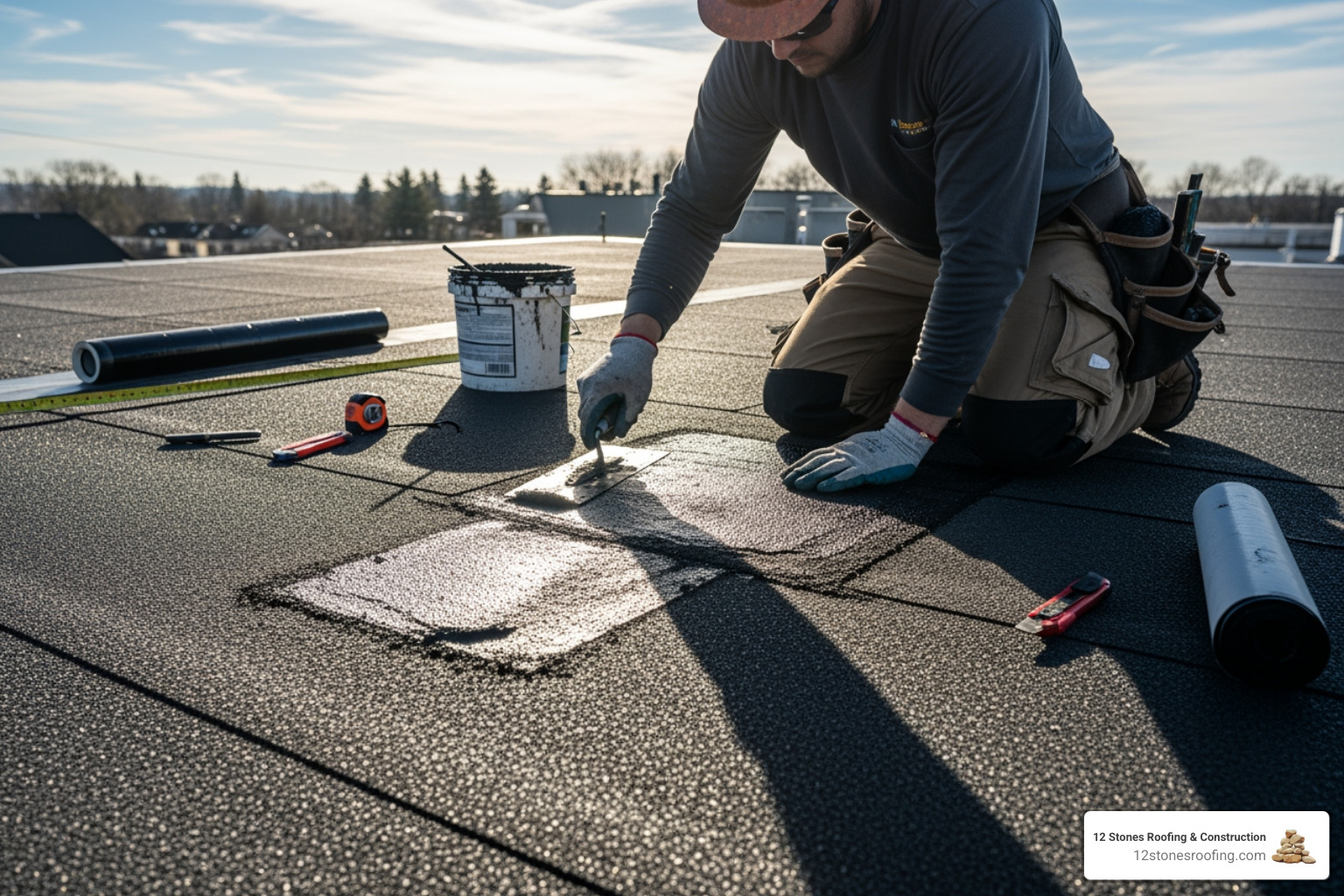
Applying a modified bitumen roof patch requires a careful process to ensure a strong, long-lasting repair. While some small fixes may seem DIY-friendly, proper methods and safety are crucial. For a complete overview, check out a complete guide to leaky flat roof repair. For larger or more complex modified bitumen issues, our team at 12 Stones Roofing & Construction offers specialized Modified Bitumen Roofing services to handle it all.
Essential Tools & Safety First
Before starting any modified bitumen roof patch, safety is the top priority. You’ll need a roofing knife, wire brush, trowel, caulking gun, and a push broom. Depending on the material, a compatible cleaner and primer may also be necessary.
Safety gear is a must: always wear heat-resistant gloves, safety glasses, long sleeves, and sturdy footwear. For work at height, fall protection is critical—never work alone. Keep a fire extinguisher nearby. Proper ventilation is also important, as some roofing materials release fumes, such as torch-applied modified bitumen. We recommend working during cooler, dry parts of the day.
The 5-Step Patching Process
With safety measures in place and tools ready, you can begin the modified bitumen roof patch process. Follow each step carefully for the best results.
Step 1: Clean the Area
Thoroughly clean the damaged spot. Use a push broom to sweep away all loose dirt, debris, and granules. Use a specialized cleaner for any stubborn grime or oil. Clean an area at least six inches wider than the planned patch on all sides.
Step 2: Prepare the Surface
The area must be completely dry before applying any patch material, as moisture prevents proper adhesion. If the manufacturer recommends it, apply a compatible primer to the clean, dry surface and let it become tacky.
Step 3: Apply the Patch
Cut your chosen patch material to extend at least six inches beyond the damage on all sides. Rounding the corners helps prevent future lifting. Apply the patch firmly, smoothing it out to remove any trapped air bubbles. For blisters, carefully cut an ‘X’ over the bubble, dry the area underneath, apply adhesive, press the flaps down, and then cover with the larger patch.
Step 4: Seal the Edges
With the patch in place, trowel a generous layer of roofing cement or elastomeric sealant around all edges. This creates a seamless, waterproof barrier that prevents water from getting under the patch and ensures a long-lasting repair.
Step 5: Inspect Your Work
Finally, inspect the patch closely for any gaps or unbonded areas that could allow water entry. Apply additional sealant to any weak points to ensure the repair is completely watertight and durable.
When to DIY vs. When to Call a Professional for Roof Repair

Deciding whether to DIY a modified bitumen roof patch or call a professional is a critical question for property owners. A quick fix might seem to save money, but a patch done wrong can lead to more extensive and costly damage later. Our guide on the cost of emergency roof repairs can provide more context on potential expenses.
DIY Repair Scenarios
A DIY modified bitumen roof patch can be appropriate for small, straightforward fixes. This includes situations with a small, simple puncture (under 1 square foot) in an easily and safely accessible area.
Crucially, there should be no signs of underlying moisture damage, like soft spots. You should also feel comfortable with the tools and materials needed to achieve a proper seal.
Even in these cases, be cautious. On commercial properties, DIY repairs can sometimes void your roof’s warranty, potentially leaving you responsible for the full cost of future, larger problems.
When to Call a Professional
For anything beyond minor fixes, calling a professional roofer is essential. Protecting a valuable asset like your commercial roof means letting experts handle damage that goes beyond a simple modified bitumen roof patch.
You should definitely call a professional if:
- Damage exceeds 10 square feet
- You find multiple leak sources
- Your roof has extensive blistering or seam separation
- Your roof is still under warranty (to keep it valid)
- You notice soft spots, indicating wet insulation
Safety is also paramount. If the repair involves steep slopes, heavy equipment, or electrical hazards, leave it to the professionals. To ensure repairs meet industry benchmarks, we consult top guides like the NRCA Repair Manual for Low-slope Membrane Roof Systems, which sets the standard for lasting repairs.
Frequently Asked Questions about Modified Bitumen Repairs
Over the years, we’ve answered countless questions about modified bitumen roof patch repairs from property owners throughout Pasadena and the greater Houston area. Here are the most common concerns we hear, with straightforward answers based on our experience.
How long does a modified bitumen roof patch last?
A professionally applied modified bitumen roof patch using high-quality materials can last for many years, often matching the remaining service life of the roof section. With a typical modified bitumen roof lifespan of 20 years, a well-executed patch can easily hold for a decade or more.
The longevity of a DIY patch depends almost entirely on surface preparation and application technique. We’ve seen DIY patches fail within a year due to improper cleaning, but we’ve also seen careful work that has held up beautifully. The difference is in the details.
Can I patch my roof in any weather?
No, weather conditions are critical for a successful modified bitumen roof patch. Most cold-applied adhesives and sealants require an application temperature between 40°F and 120°F. Applying them outside this range can cause a weak bond. When it’s too hot, materials can become too fluid to work with.
The non-negotiable rule is that the roof surface must be completely dry. Even a small amount of moisture will prevent the patch from bonding. In our Texas climate, we recommend scheduling repairs for cooler morning hours and ensuring at least 24-48 hours of dry weather ahead.
How can I extend the life of my modified bitumen roof?
A modified bitumen roof’s 20-year average lifespan can be significantly extended with proactive care. Without it, a roof can fail in as little as 10-12 years. Here’s how to maximize its life:
- Regular Inspections: Inspect your roof semi-annually (spring and fall) and after major storms to catch minor issues early. Look for wear, damage, and trouble spots at seams and flashing.
- Maintain Drainage: Keep drains and gutters clear to prevent ponding water, which stresses seams and accelerates deterioration. Trim overhanging tree branches to prevent punctures.
- Apply Protective Coatings: A reflective elastomeric coating every 5-7 years is a smart investment. It protects against UV degradation, reduces roof temperature, and can lower cooling costs by 15-30%.
- Prompt Repairs: Address small cracks or blisters immediately. A quick modified bitumen roof patch today prevents a costly major repair tomorrow.
Following a comprehensive roof maintenance checklist is the best way to stay on top of these essential tasks.
Protect Your Investment with Professional Roofing Services
Your commercial roof is a vital shield for your business. A proper modified bitumen roof patch isn’t just about fixing a hole; it’s about protecting your assets, avoiding costly water damage, and extending your roof’s lifespan. A shoddy repair, however, can lead to bigger problems like hidden leaks, mold, and structural damage. While DIY is tempting for minor issues, a valuable commercial roof deserves a professional’s touch.
This is where 12 Stones Roofing & Construction comes in. Our expertise ensures your modified bitumen roof patch is handled correctly. A certified roofer uses the right materials, inspects the underlying structure, and guarantees a lasting repair. We are committed to reliable service and the highest safety standards to protect your property from Texas weather.
For business owners in Pasadena, TX, our team provides expert assessments and durable repairs to keep your operations running smoothly. Don’t risk turning a small leak into a major headache.
Ready to protect your investment with a professional repair? Explore our dedicated Modified Bitumen Roofing services to learn more and request a free estimate. We’re here to help.