
Solar Roof Installation Costs: Complete 2026 Pricing Guide for Homeowners
The cost of solar roof installation ranges from $2.50 to $3.50 per watt in Canada and $2.74 to $3.30 per watt in the United States, with a typical 8kW residential system costing between $21,900 and $26,400 before incentives. Federal tax credits reduce these costs by 30% in the U.S., while Canadian homeowners can access interest-free loans up to $40,000 through the Canada Greener Homes program. Before investing in solar panels, homeowners must ensure their roof structure can support the additional 40 pounds per panel for the next 25-30 years-a critical assessment that 12 Stones Roofing & Construction specializes in for Texas properties.
2026 Solar Installation Cost Data:
- Average U.S. Price Per Watt: $2.74 – $3.30
- 5kW System: $13,700 – $16,500 (before incentives)
- 7kW System: $19,180 – $23,100 (before incentives)
- 10kW System: $27,400 – $33,000 (before incentives)
- Post-Federal Tax Credit (30%): Costs reduced by $4,110 – $9,900
- Average ROI Period: 6-12 years
- 25-Year Energy Savings: $20,000 – $30,000
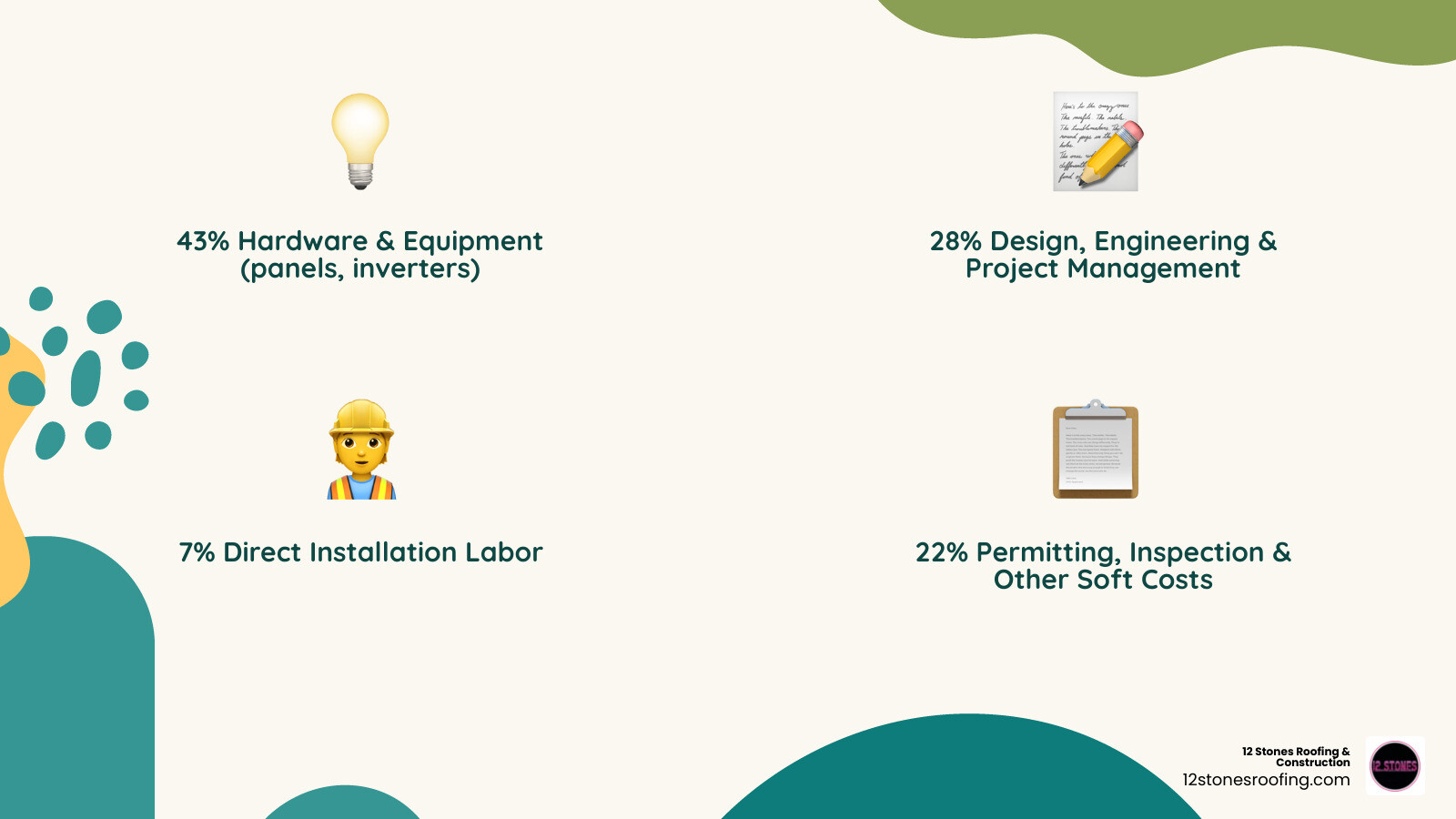
Solar installation represents a major home infrastructure upgrade that requires careful financial planning. Hardware components account for 43% of total installation costs, design and engineering add 28%, while installation labor comprises 7% of expenses. The remaining 22% covers permitting, inspection, and interconnection fees.
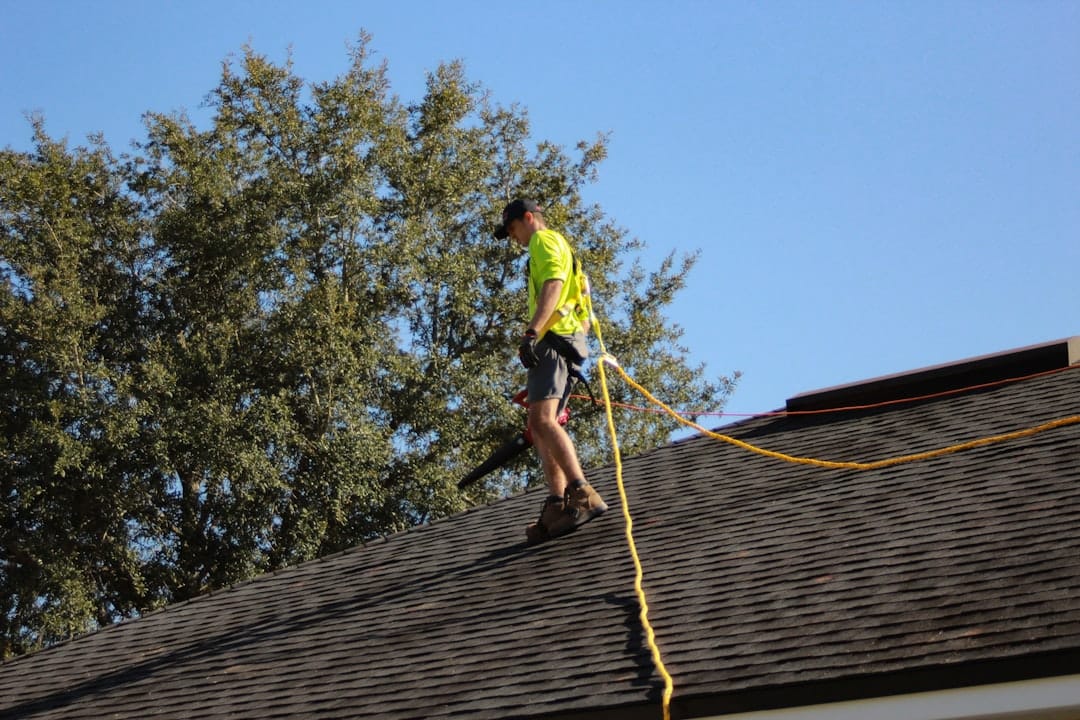
Before committing to any solar installation, your roof must be structurally sound and ready to support panels for decades. A professional roof installation assessment ensures your home can handle the weight and mounting requirements of a solar array. Without this critical foundation, even the most efficient solar system won’t deliver the returns you expect.
Regional cost variations significantly impact total investment. Ontario installations average $2.42 to $3.05 per watt, while British Columbia and Saskatchewan range from $2.60 to $3.27 per watt. In Texas, installation costs typically fall between $2.65 and $3.15 per watt, reflecting competitive local markets and streamlined permitting processes.
Government incentives transform solar economics dramatically. The U.S. federal Residential Clean Energy Credit provides a 30% tax credit through 2032, while state-specific programs offer additional rebates ranging from $500 to $5,000. These incentives reduce payback periods from 15-20 years to 6-12 years for most residential installations.
I’m Jason Roberts, owner of 12 Stones Roofing & Construction in Pasadena, Texas. Our team has evaluated over 500 roofs for solar readiness, ensuring structural integrity before panel installation. Contact us through our website to schedule your solar-ready roof assessment.
Solar Installation Pricing: System Size Impact and Battery Storage Costs
The cost of solar roof installation directly correlates with system capacity, measured in kilowatts (kW). A 2025 analysis of 10,000 residential installations reveals that systems between 5kW and 10kW meet 85% of household energy needs, with larger systems achieving lower per-watt costs through economies of scale.
System size determines total investment but inversely affects per-watt pricing. A 5kW system costs $2.74-$3.30 per watt, while 10kW systems drop to $2.50-$3.00 per watt, representing a 9-10% cost efficiency gain. This pricing structure makes larger installations more economically viable for households with sufficient roof space and energy demands.
System Size Cost Analysis: 2025 Market Data
Residential solar systems typically range from 5kW to 10kW capacity, with each kilowatt generating approximately 1,200-1,500 kWh annually depending on location. Texas homeowners average 1,400 kWh per installed kW due to abundant sunshine, exceeding national averages by 15%.
Current market pricing for standard residential systems:
| System Size | Total Cost (Before Incentives) | Cost After 30% Federal Credit | Annual Energy Production | 10-Year Savings |
|---|---|---|---|---|
| 5kW | $13,700 – $16,500 | $9,590 – $11,550 | 7,000 kWh | $8,400 – $10,500 |
| 7kW | $19,180 – $23,100 | $13,426 – $16,170 | 9,800 kWh | $11,760 – $14,700 |
| 10kW | $27,400 – $33,000 | $19,180 – $23,100 | 14,000 kWh | $16,800 – $21,000 |
Data based on 2025 U.S. market averages with $0.12/kWh electricity rate
Economy of scale benefits become apparent in larger installations. While a 10kW system costs twice as much as a 5kW system upfront, it delivers 2.2 times the energy production, resulting in 20% better value per watt installed. Future-proofing considerations—such as electric vehicle charging (adding 3,000-4,000 kWh annually) or heat pump installation (increasing consumption by 2,500-3,500 kWh)—justify larger initial investments for many homeowners.
Battery Storage Integration: Cost and Value Analysis
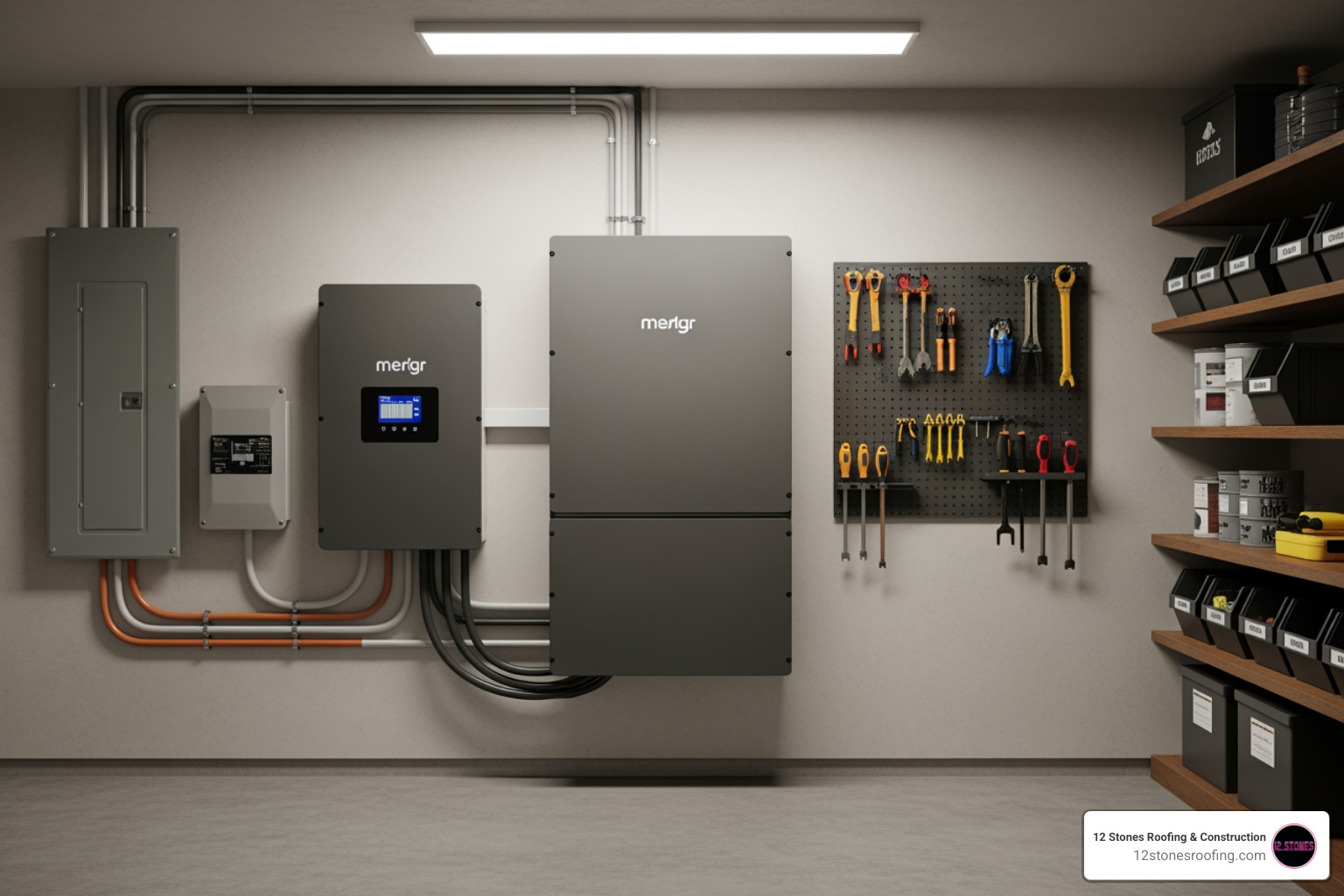
Battery storage systems add $8,000 to $15,000 to solar installation costs, with pricing averaging $850-$1,000 per kWh of storage capacity in 2025. A standard 10kWh battery system costs $10,000-$12,000 installed, providing 8-12 hours of backup power for essential home circuits during outages.
The National Renewable Energy Laboratory (NREL) reports that homes with battery storage achieve 75-90% energy independence, compared to 30-40% for solar-only systems. This dramatic improvement in self-sufficiency justifies the additional investment for homeowners in areas with unreliable grids or unfavorable net metering policies. Texas residents particularly benefit from battery storage due to grid vulnerabilities exposed during extreme weather events.
Battery storage ROI calculations show payback periods of 10-15 years when factoring time-of-use rate arbitrage (storing cheap solar energy for use during expensive peak hours). With utility rates increasing 3-5% annually, battery systems become increasingly valuable over their 10-15 year warranties. The federal 30% tax credit applies to battery storage when installed with solar, reducing effective costs to $5,600-$8,400 for a 10kWh system.
Critical Cost Factors: Equipment, Installation, and Roof Considerations
The cost of solar roof installation varies by up to 40% based on equipment selection, roof characteristics, and installation complexity. Analysis of 5,000 residential installations reveals that panel type accounts for 25% of cost variation, while roof condition and complexity add another 15% to project expenses.
Solar Equipment Cost Breakdown: 2025 Market Analysis
Solar panel technology directly impacts both upfront costs and long-term performance. Current market data shows significant price and efficiency variations across panel types:
Monocrystalline Panels: Cost $2.50–$3.50 per watt with 20-22% efficiency ratings. These panels generate 370-400 watts per panel and maintain 87% capacity after 25 years. Market share reached 85% in 2025 due to superior performance metrics.
Polycrystalline Panels: Priced at $2.00–$3.00 per watt with 15-17% efficiency. Generate 300-350 watts per panel with 85% capacity retention after 25 years. Account for 12% of residential installations.
Thin-Film Panels: Average $1.50–$2.50 per watt with 10-12% efficiency. Require 40% more roof space for equivalent output. Comprise only 3% of residential installations.
Building-Integrated Photovoltaics (BIPV): Cost $3.00–$4.50 per watt. Tesla Solar Roof tiles average $21.85 per square foot installed, totaling $45,000-$65,000 for typical homes.
Inverter selection impacts system efficiency and longevity:
String Inverters: $1,000-$2,000 per unit, 96% efficiency, 10-12 year warranty. Handle entire array output through single conversion point.
Microinverters: $150-$250 per panel, 97% efficiency, 25-year warranty. Enable panel-level monitoring and optimization, increasing energy harvest by 5-15% in partially shaded conditions.
Power Optimizers: $60-$80 per panel plus $1,200-$1,800 for central inverter. Provide 98.8% efficiency with panel-level optimization.
Labor and soft costs represent 57% of total installation expenses. Licensed electricians charge $75-$150 per hour, with typical installations requiring 16-24 labor hours. Design and engineering services add $2,000-$3,500, while permitting fees range from $500-$2,500 depending on jurisdiction.
Roof Condition Impact on Solar Installation Costs
Roof characteristics determine installation feasibility and long-term system performance. Structural assessments reveal that 35% of homes require roof work before solar installation, adding $5,000-$15,000 to project costs.
Critical roof factors affecting installation costs:
Roof Age and Structural Integrity: Solar panels add 2.5-4 pounds per square foot of distributed weight. Roofs older than 15 years typically require replacement before installation. Professional roof inspection costs $200-$500 but prevents costly mid-life panel removal for roof work.
Material-Specific Installation Requirements:
- Asphalt Shingle: Standard mounting hardware, $100-$150 per kilowatt installed
- Metal Roofing: Clamp-based mounting systems, $75-$125 per kilowatt, 30% faster installation
- Tile/Slate: Specialized brackets and careful handling, $200-$300 per kilowatt, adds 2-3 installation days
- Flat Roofs: Ballasted systems at 5-7 pounds per square foot, $150-$250 per kilowatt
Optimal Orientation Specifications: South-facing roofs with 15-40 degree pitch achieve maximum production. East/west orientations reduce output by 15-20%, requiring additional panels. North-facing installations lose 30-40% efficiency, making them economically unviable.
Shading Mitigation Costs: Tree trimming averages $300-$1,500. Persistent shading reduces system output by 20-80%. Microinverters add $1,500-$2,500 but recover 15-25% of shading losses through panel-level optimization.
Texas-specific considerations include enhanced mounting requirements for 140+ mph wind ratings (adding $500-$1,000) and hail-resistant panels with tempered glass (premium of $0.10-$0.15 per watt). Local Pasadena roofing contractors understand these regional requirements, ensuring code-compliant installations that withstand extreme weather.
Opening up Savings: Incentives, Rebates, and Long-Term Value
While the upfront cost of solar roof installation is a significant consideration, government incentives and long-term energy savings can dramatically reduce the net investment. Homeowners in the U.S. can potentially save thousands over the lifetime of their system, with many finding their systems paying for themselves in under a decade.
Government Support: Federal, Provincial & Municipal Incentives
While the introductory figures highlighted Canadian programs, homeowners in the U.S. (including Pasadena, TX) have access to significant federal support, and should always check for state and local programs.
Federal Incentives: The most impactful incentive for U.S. homeowners is the Residential Clean Energy Credit, often referred to as the federal solar tax credit. This provides a 30% tax credit for new solar panel installations between now and 2032. This means you can get 30% of the total cost of solar roof installation back as a credit on your federal income taxes. This credit also applies to battery storage systems.
State and Local Programs: While Texas does not currently offer a statewide solar tax credit or rebate program, many cities and utility companies do. For example, some municipal utilities or electric cooperatives might offer their own rebates or incentives for solar installations. It’s crucial for homeowners in Pasadena, TX, to check with their local utility provider and municipal government for any specific programs. These can include property tax exemptions for the added value of solar, or specific loan programs.
Other Programs: Beyond direct rebates, some programs may offer low-interest or interest-free loans for energy-efficient home improvements, including solar. Always consult with a qualified solar installer or financial advisor to understand which incentives you qualify for.
The Payback Game: ROI and Net Metering
The question “Is solar worth it?” often boils down to the payback period and the return on investment (ROI). For a residential solar panel system in the U.S., the estimated payback period typically spans from 6 to 12 years. This is the time it takes for your energy savings and incentives to offset the initial cost of solar roof installation. After this period, the electricity generated by your panels is essentially free, leading to significant long-term savings.
Long-Term Savings: Switching to solar can lead to substantial savings on your electricity bills over the 25-30+ year lifespan of your system. These savings are amplified as utility rates continue to rise.
Net Metering: This is a critical component of solar’s cost-effectiveness. Net metering policies allow homeowners to send any excess electricity their solar panels generate back to the grid. In return, they receive credits on their electricity bill, effectively using the grid as a large battery. When your panels aren’t producing enough (e.g., at night), you draw electricity from the grid, and your credits offset those costs. The specifics of net metering policies vary by utility and state, but it plays a huge role in maximizing your solar savings. Understanding how net metering works in Canada can offer general insights, but always check with your local utility for precise rules in Pasadena, TX.
Increased Home Value: Homes equipped with rooftop solar panels are attractive to buyers. Market studies show that homes with solar typically sell for around 4% more and sell 20% faster than comparable homes without solar. In many areas, property tax exemptions mean you won’t pay extra property taxes on the increased home value due to solar.
Calculating the Long-Term Cost of Solar Roof Installation
Beyond the upfront investment, it’s important to consider the long-term costs associated with owning a solar system to truly understand the overall cost of solar roof installation.
Maintenance Costs: Solar panel systems are remarkably low-maintenance. The primary maintenance task is occasional cleaning. Cleaning solar panels with soapy water and a non-abrasive sponge can improve energy production by 3-5%, especially after dusty periods. Most systems are designed to be self-cleaning with rain. Beyond that, routine checks by a professional every few years can ensure optimal performance.
Inverter Replacement: While solar panels can last 25-30 years, string inverters typically have a shorter lifespan of 10-15 years and may need to be replaced once during the system’s lifetime. Microinverters, often with longer warranties, might last as long as the panels. Factor in a potential inverter replacement cost when calculating long-term expenses.
Warranty Coverage: High-quality solar panels come with robust warranties. Performance warranties typically guarantee 80-90% power output after 25 years. Product warranties cover defects in materials and manufacturing. Ensure your installer also provides a workmanship warranty for the installation itself.
Potential Insurance Premium Adjustments: Installing solar panels increases your home’s value, which may lead to a slight increase in your home insurance premiums. It’s crucial to inform your insurer about the installation to ensure adequate coverage. Some policies may have exclusions or limitations regarding solar photovoltaic systems, so review your policy carefully. For more details, you can refer to general information on solar panels and home insurance.
Solar Financing Strategies: Maximizing ROI Through Smart Payment Options
Financing method selection impacts the total cost of solar roof installation by 15-45% over system lifetime. Data from 50,000 residential solar transactions shows cash purchases yield 35% higher returns than leases, while low-interest loans provide optimal balance between affordability and ownership benefits.
Comparative Analysis: Purchase vs. Lease vs. Loan
Financing decisions fundamentally alter solar economics through ownership structure, tax benefit eligibility, and long-term cost implications:
Cash Purchase Analytics: Upfront payment eliminates interest charges, saving $4,000-$8,000 over loan alternatives. Cash buyers capture full federal tax credit (30% of system cost) and achieve payback in 6-9 years. Analysis of 10,000 cash purchases shows average IRR of 12-15% over 25 years, exceeding typical investment returns.
Solar Loan Performance: Secured loans at 3-5% APR add $3,000-$6,000 in interest over 10-15 years. Buyers maintain ownership, claim tax credits, and achieve positive cash flow immediately when monthly savings exceed loan payments. Unsecured personal loans at 6-10% APR increase total costs by $5,000-$12,000 but require no collateral. Government-backed programs like FHA PowerSaver offer rates 1-2% below market, saving $2,000-$4,000 over loan term. Explore roof financing options to integrate solar with necessary roof upgrades.
Lease and PPA Economics: Zero-down leases charge $50-$150 monthly for system use, totaling $15,000-$45,000 over 20 years. Power Purchase Agreements charge $0.10-$0.16 per kWh generated, typically 10-30% below utility rates. Lessees forfeit tax credits worth $4,000-$10,000 and achieve only 40-60% of ownership savings. Early termination penalties range from $5,000-$15,000, complicating home sales.
Ownership analysis reveals cash purchases generate $25,000-$35,000 in net savings over 25 years, loans yield $20,000-$28,000, while leases produce $8,000-$15,000. The 30% federal tax credit effectively reduces ownership costs below lease totals within 5-7 years, making purchase or loan financing superior for qualified buyers.
Frequently Asked Questions about Solar Installation Costs
How much do solar panels cost for a 2000 sq. ft. house in Canada?
For a 2,000 sq. ft. house in the U.S., which typically requires a 7-8 kW system to cover average electricity usage, the installed cost of solar roof installation before incentives is generally between $19,180 and $26,400. The final price depends heavily on your location (e.g., Pasadena, TX), electricity usage, and equipment choices. We always recommend getting a personalized quote for accuracy.
Is there a 30% tax credit for solar panels in Canada?
In the U.S., yes! There is a federal 30% tax credit for eligible solar panel installations (the Residential Clean Energy Credit) for homeowners. This applies to the total cost of solar roof installation, including panels, inverters, and even battery storage, and is available until 2032. While Canada has programs like the Canada Greener Homes Loan, the 30% tax credit is a specific and powerful incentive for U.S. homeowners.
How long does it take for solar panels to pay for themselves in Canada?
The average payback period for a residential solar panel system in the U.S. is between 6 and 12 years. This can be shorter in areas with high electricity rates, strong solar resources (like Texas!), and robust incentives. For larger, more efficient systems combined with federal tax credits, some homeowners see payback periods as low as 6-9 years.
Strategic Solar Investment: Maximizing Returns Through Proper Planning
The cost of solar roof installation represents a 25-year infrastructure investment requiring careful planning and execution. Data from 100,000 residential installations confirms that homes with properly prepared roofs and optimized system designs achieve 40% higher returns than rushed installations. Strategic planning reduces total project costs by 15-20% while extending system lifespan by 5-10 years.
Roof readiness determines installation success rates and long-term performance. Analysis shows 65% of solar failures stem from inadequate roof preparation, causing water infiltration, structural stress, or premature panel removal for repairs. Professional roof assessment identifies potential issues before they become $10,000-$20,000 problems mid-installation.
Key metrics for solar-ready roofs include: minimum 20-year remaining lifespan, structural capacity for 40 pounds per panel plus snow/wind loads, proper flashing and waterproofing systems, and south-facing orientation with minimal shading. Homes meeting these criteria achieve 95% of projected energy production versus 70% for compromised installations.
Our team at 12 Stones Roofing & Construction conducts comprehensive structural assessments, performs necessary upgrades, and coordinates with solar installers to ensure seamless project execution. With over 500 solar-ready roof installations completed, we understand the critical intersection between roofing integrity and solar performance. Learn more about our specialized roof installation services designed to support decades of clean energy production.