
Installing TPO Roofing on Your RV: The Definitive Leak-Free Guide
Installing TPO roofing on RV roofs is the fastest, most durable way to stop leaks and reduce heat gain. The answer is simple: bond a white, single-ply TPO membrane to a clean wood substrate and fully seal every penetration. Done correctly, a TPO roof routinely lasts 20 years and can cut roof surface temperatures by up to 50°F versus dark membranes, improving interior comfort and A/C efficiency. For those in the Pasadena area needing professional help, exploring options for expert roofing services is a great first step. This guide will walk you through a successful DIY TPO roof installation.
Quick Installation Overview:
- Remove old roofing material and fixtures.
- Prepare the wood substrate until it is clean, dry, and smooth.
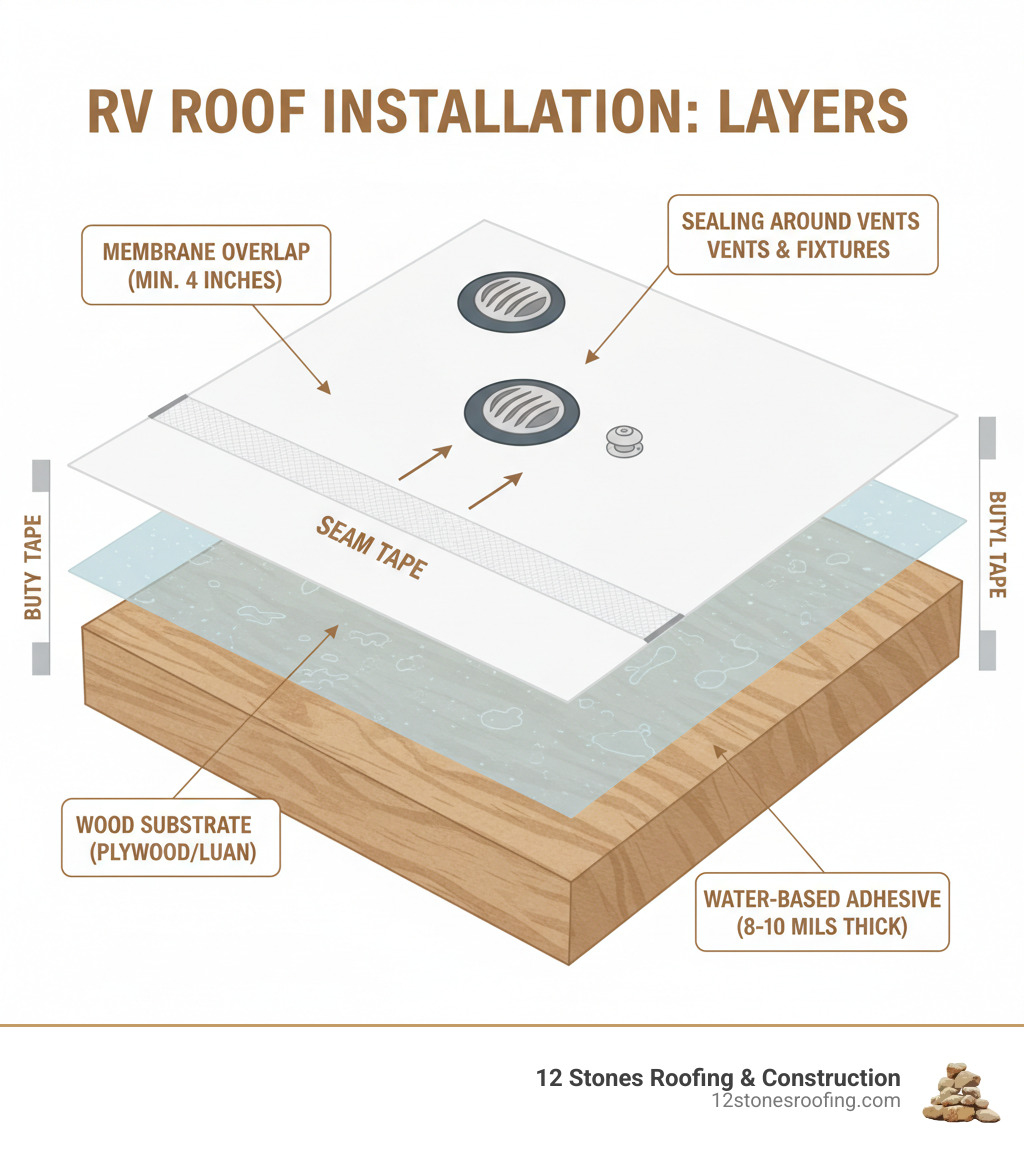
- Apply water-based adhesive to the substrate and TPO membrane.
- Roll the membrane onto the adhesive, removing air bubbles.
- Seal all edges and penetrations with butyl tape and lap sealant.
- Cure for 48-72 hours before use.
Key Benefits: TPO costs $5-$16 per square meter, lasts 20+ years, reflects heat to keep your RV cooler, and is the easiest material for DIY installation.
I’m Jason Roberts, owner of 12 Stones Roofing & Construction. While my team specializes in residential and commercial roofing, we’ve applied the same TPO adhesion and sealing principles to countless projects across the Gulf Coast, and I know what it takes to achieve a watertight seal on an RV.
Why TPO Is the #1 RV Roof Material (Cost, Lifespan, Cooling Data)
Answer: TPO offers the best combination of price, longevity, and heat rejection for RV roofs. White TPO commonly reflects 70-80% of solar energy and can lower roof surface temperatures by as much as 50°F, reducing cooling demand in hot climates by 10-15% (U.S. Department of Energy: https://www.energy.gov/energysaver/cool-roofs).
Choosing the right roofing material is critical to preventing water damage. That’s why we’re passionate about TPO (Thermoplastic Polyolefin) roofing for RVs. Since the early 1990s, TPO’s single-ply, white membrane construction has delivered an unbeatable combination of durability, affordability, and performance that keeps your home-on-wheels protected.
TPO vs. The Rest: A Material Showdown
When you’re installing TPO roofing on RV surfaces, understanding how it compares to alternatives helps you make a confident decision.
- TPO leads the pack as a single-ply membrane that’s more puncture-resistant and less prone to chalking than EPDM. Its white surface reflects solar heat, and the material’s ability to expand and contract creates a strong seal that moves with your RV.
- EPDM rubber is sturdy, but its black surface acts like a solar collector, turning your RV into an oven. It’s identifiable by its black backing and rubbery feel.
- Fiberglass is a luxury option, lasting 30 to 50 years. However, that premium lifespan comes with a high price tag and complex installation.
- PVC offers good durability and weather resistance but requires specific, compatible sealants to prevent chemical damage, adding complexity to maintenance.
- Aluminum roofs on older RVs lack heat resistance and modern appeal, making them a poor choice for comfort in sunny climates.
Here’s how these materials stack up side by side:
| Material | Cost (per sq meter) | Lifespan (Avg.) | Installation Difficulty | Maintenance Frequency | UV Resistance | Puncture Resistance |
|---|---|---|---|---|---|---|
| TPO | $5 – $16 | 20 years | Least Laborious | Moderate (Year 20) | Excellent | Good |
| Fiberglass | $90 – $110 | 30 – 50 years | High | Low | Good | Good |
| EPDM | Moderate | 15 – 25 years | Moderate | Moderate | Moderate | Moderate |
| PVC | Moderate | 20 – 30 years | Moderate | Moderate | Good | Good |
The Real Cost and Lifespan of a TPO RV Roof
Your RV roof should make financial sense. TPO material costs range from $5 to $16 per square meter, while fiberglass can exceed $90 per square meter. That’s a massive difference, especially when covering a large motorhome.
TPO roofs have a typical lifespan of around 20 years with proper care. While fiberglass might last longer, the significant cost savings with TPO mean you could replace your roof multiple times and still come out ahead. Maintenance is straightforward: regular inspections and prompt repairs of any cracks or separation will keep your roof performing at its best and can easily extend its 20-year lifespan. For a comprehensive approach, see our Roof Maintenance Checklist.
The Energy Efficiency Advantage of TPO
Here’s where TPO really shines, especially in scorching Texas summers. The brilliant white surface isn’t just for looks; its UV-resistant properties reflect solar heat, keeping the RV interior cooler and reducing the strain on your air conditioning system.
Less heat absorption means your A/C works less, lowering energy costs and keeping you comfortable in full sun. Many RV owners report an immediate drop in interior temperature after switching from dark EPDM to reflective TPO. This advantage is invaluable during extended stays in sunny locations, making installing TPO roofing on RV surfaces a smart investment for long-term comfort and savings.
Tools and Materials: The Complete TPO RV Roof Kit
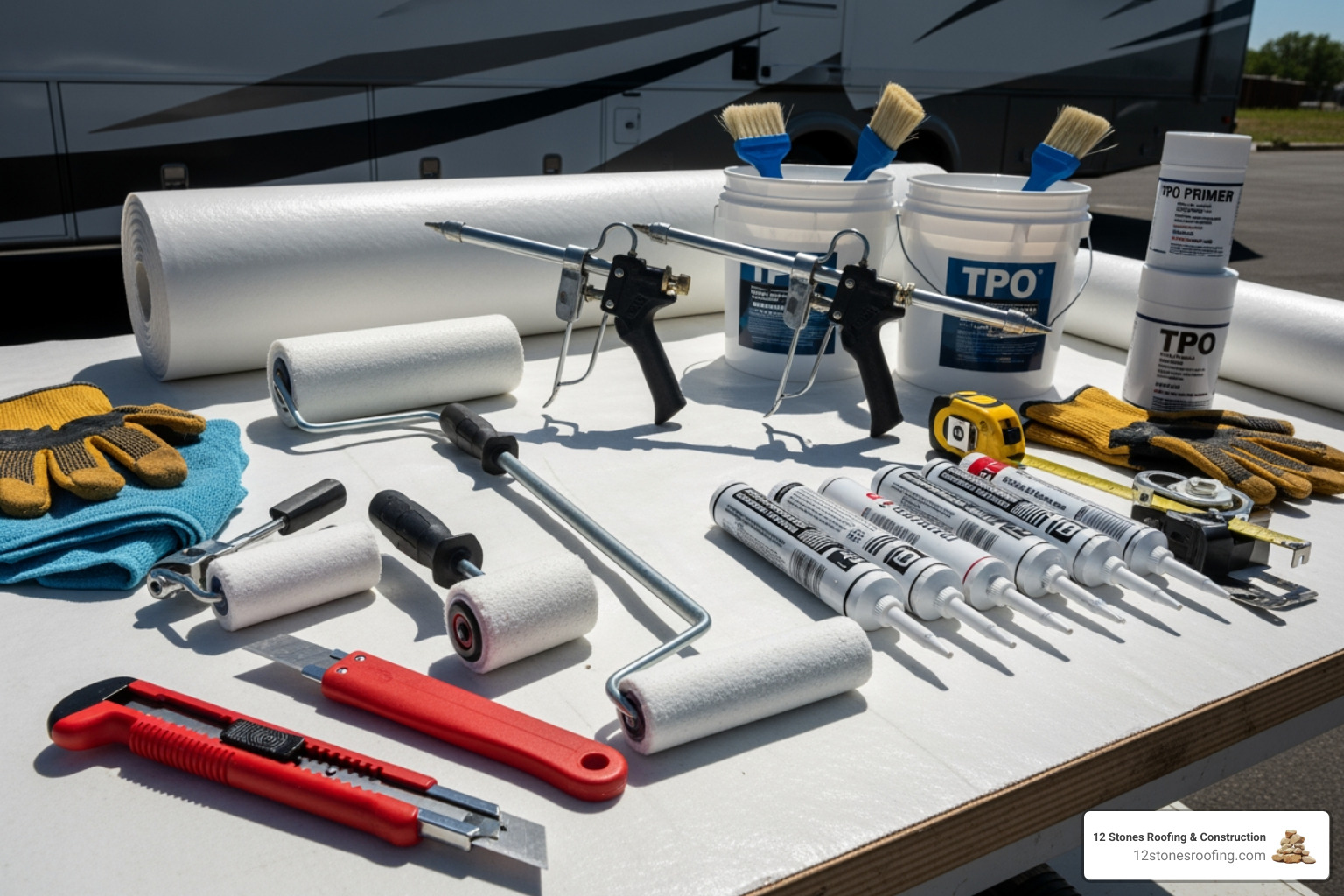
Before you start installing TPO roofing on RV surfaces, gathering your supplies is essential. Proper preparation prevents frustrating mid-project trips to the store. Most of what you need is available at RV supply stores, specialty roofing distributors, and major online retailers.
Your Essential TPO Installation Toolkit
- Utility Knife: For precise cuts on old and new materials. Keep extra blades handy.
- Scrapers: To remove old adhesive, sealants, and debris from the roof deck.
- Caulk Gun: For smooth, even application of sealants.
- Short-Napped Paint Rollers: To apply adhesive at the correct thickness (8-10 mils wet film).
- Squeegee or Linoleum Roller: Essential for pressing the membrane and removing air bubbles.
- Cordless Drill: For removing and re-installing fixtures and trim.
- Measuring Tape & Chalk Line: To ensure straight lines and proper alignment.
- Safety Gear: Always use safety glasses and gloves to protect against debris and chemicals.
- Cleaning Tools: An air hose or broom for thoroughly cleaning the roof deck.
Sourcing the Right Supplies
Now for the materials that will become your new roof. Always confirm products are compatible with TPO membranes to avoid compromising your installation.
- TPO Membrane Roll: Order a length that is longer and wider than your RV’s roof to allow for curves and trimming. The standard 0.90 mm thickness offers excellent durability without excessive weight.
- Water-Based Adhesive: This bonds the TPO to the wood decking. It typically covers 160-200 square feet per gallon and must be applied in temperatures above 50 0F (10 0C) for proper bonding.
- Self-Leveling Lap Sealant: Use a TPO-compatible formula around vents, skylights, and screw penetrations for a waterproof seal.
- Butyl Tape (BT-1834 or similar): This non-hardening tape provides the primary waterproof seal under trim and fixtures. It must be compressed 30-40% to be effective.
- Seam Tape: A minimum 2″ width tape prevents edge splits and reinforces seams.
- Termination Bars/Moldings: To secure the membrane edges for a clean, professional finish.
- Acetone: Useful for cleaning seams and edges before applying sealant to ensure maximum adhesion.
Step-by-Step: How to Install TPO Roofing on an RV (Pro Method)
Now for the main event: installing TPO roofing on RV surfaces. This multi-step process requires patience and attention to detail, but thousands of RV owners have successfully tackled this project, and you can too. We’ll walk you through each phase to create a perfectly sealed, leak-free roof.
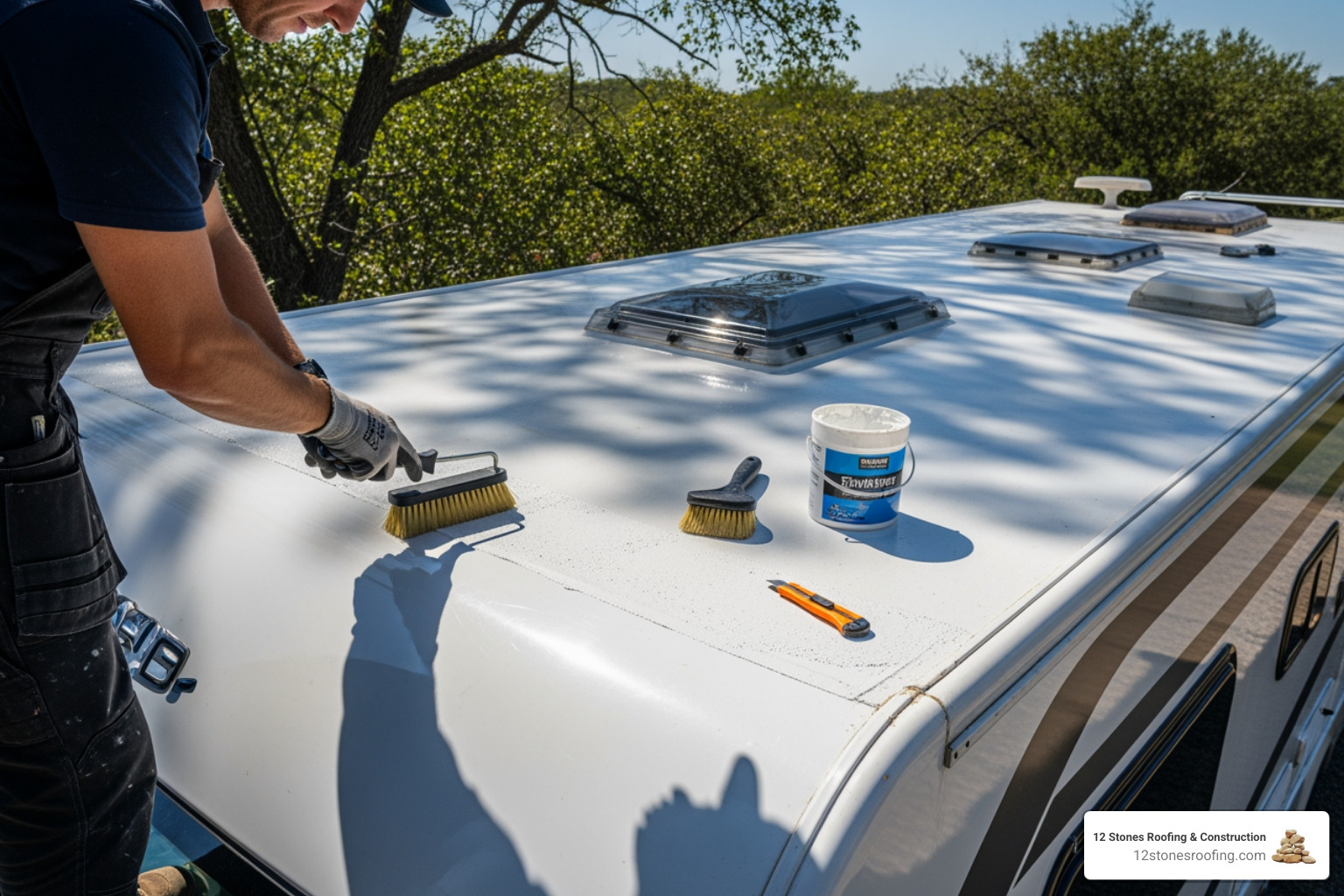
Step 1: Prep Work is Key – Stripping the Old Roof
Proper preparation is the cornerstone of a successful installation. Rushing this step is the most common cause of DIY project failure.
- Remove Fixtures: Take off every air conditioner, vent, skylight, and antenna. Labeling screws and parts will simplify reassembly.
- Peel Old Membrane: Start at a corner and peel off the old membrane. It should come off in large sections.
- Clean the Substrate: This is critical. Scrape away all old adhesive and debris. The wood substrate must be perfectly clean and smooth. Use a sander on vent openings, seams, and edges.
- Inspect for Damage: Thoroughly inspect the wood substrate for water damage, rot, or soft spots. Any damage must be repaired before proceeding. Ensure all surfaces are smooth to prevent punctures. Do not install a new membrane over an old one.
Step 2: A Guide to Installing TPO Roofing on RVs
With a clean roof deck, you’re ready to lay the new membrane.
- Dry Fit the Membrane: Unroll and center the TPO membrane, ensuring at least 6 inches of overlap on all sides to account for curves. Adjusting the fit is much easier before applying adhesive.
- Fold and Apply Adhesive: Fold back half of the membrane. Using a short-napped roller, apply water-based adhesive evenly to the exposed roof deck (8-10 mils wet film thickness). Some manufacturers recommend applying adhesive to both the substrate and the membrane; follow your product’s instructions.
- Roll the Membrane: Carefully unroll the folded membrane back over the fresh adhesive, aligning it as you go.
- Remove Air Bubbles: Immediately use a squeegee or linoleum roller to firmly press the membrane onto the adhesive. Work from the center outwards, pushing all trapped air bubbles to the edges for a smooth, fully bonded surface.
- Repeat: Repeat the process for the other half of the roof.
Step 3: Finishing Touches for a Watertight Seal
These final steps create an impenetrable barrier against water.
- Trim Excess Membrane: Use a utility knife to carefully trim the excess membrane around the perimeter, leaving enough to wrap around the edges under the trim.
- Install Trim with Butyl Tape: Apply a continuous bead of butyl tape to the back of all roof-edge and termination moldings. Position the trim, pull the membrane taut (do not stretch), and drive screws through the molding and membrane into the framing. The butyl tape must be compressed 30-40% for an effective seal.
- Cut Openings: For vents and skylights, make an “X” cut from corner to corner. Carefully round off the corners to prevent tears. Secure surplus membrane inside the openings.
- Re-install Fixtures: Apply butyl tape to the underside of all fixtures before securing them with screws.
- Apply Lap Sealant: This is your secondary defense. Apply a generous bead (3/8-inch minimum) of self-leveling lap sealant around the base of all fixtures, along trim edges, and over all visible screw heads. The sealant will level itself to create a seamless, watertight finish.
TPO Roof Care, Identification, and Solar Add-Ons
While TPO is incredibly durable, ongoing care will ensure its longevity and performance. Before performing any maintenance, it’s crucial to correctly identify your roof material, as the wrong sealant can cause damage.
TPO vs. EPDM: How to Tell the Difference
- EPDM (Rubber): Typically has a black backing and feels distinctly rubbery. The surface can become chalky over time.
- TPO (Thermoplastic Polyolefin): Is a solid color throughout (usually white or gray) with a more plastic-like, smooth, or slightly textured feel.
How to Identify: The easiest method is to remove the trim from an interior vent opening and examine the membrane’s underside. If it’s black, it’s likely EPDM. If it’s the same color as the top or has a fleece backing, it’s TPO.
Best Practices for Cleaning and Maintaining Your TPO Roof
Regular cleaning and inspection are key to extending your TPO roof’s life.
- Regular Cleaning: Clean the roof 2-4 times a year with a soft-bristle brush, mild soap (like dish soap), and water.
- Avoid Harsh Chemicals: Never use abrasive cleaners, petroleum-based solvents, or products with ammonia or bleach, as they can damage the membrane.
- Inspect Sealants: Twice a year, inspect all lap sealants around vents and edges for cracks or peeling. Promptly repair any issues with a TPO-compatible self-leveling lap sealant. TPO roofs often require sealant maintenance around year 20.
- Check for Damage: Periodically check the membrane for punctures or tears and repair them with TPO patch kits.
A Guide to Installing Solar Panels on Your New TPO Roof
Adding solar panels is a great upgrade, but installing TPO roofing on RV surfaces with solar requires careful planning to maintain the waterproof seal. Every penetration is a potential leak point.
Best Practices for Installation:
- Use Appropriate Brackets: Z-type brackets are a popular choice. For curved roofs, use taller brackets on the edges to accommodate the crown.
- Pre-Drill and Seal: Drill undersized holes for fasteners. Before inserting screws, fill the holes generously with TPO-compatible lap sealant.
- Use Quality Fasteners: Use stainless steel screws for corrosion resistance and bonded sealing washers under the screw heads for an extra layer of protection.
- Seal Generously: Apply sealant under each bracket before fastening it down. Once secured, apply another thick bead over the entire bracket base and all screw heads, ensuring full encapsulation.
- Ensure Solid Underlayment: Your RV roof must have a solid plywood underlayment to provide adequate grip for the screws.
TPO RV Roofing FAQs: Clear, Direct Answers
We get many questions from RV owners about installing TPO roofing on RV surfaces. Here are straightforward answers to the most common ones.
Which side of the TPO membrane goes up?
Either side of a single-ply TPO membrane can face up. The material is the same color and composition all the way through. Some owners prefer the textured side up for better traction, while others choose the smooth side for easier cleaning. The choice is purely preferential; both orientations offer the same protection.
Why are there wrinkles around my vents after sealing?
Wrinkles around freshly sealed vents are normal and temporary. Solvents in the self-leveling sealant cause the TPO membrane to swell slightly. As the sealant cures and the solvents evaporate, the wrinkles will flatten out on their own. This typically takes 3-5 days in warm weather and 5-9 days in cooler conditions. Patience is key; your roof will smooth out.
Can I install a new TPO roof over the old one?
No, we strongly recommend against installing a new TPO roof directly over an old one. A leak-free roof requires a perfect foundation. For proper adhesion and longevity, the old membrane and all residual adhesive must be completely removed. The underlying wood substrate must be clean, dry, smooth, and structurally sound. Bumps or debris from the old roof will telegraph through the new membrane, leading to premature wear and potential leaks. Starting with a clean slate is the only way to ensure a durable, worry-free RV roof.
Wrap-Up: A Cooler, Leak-Free RV—Backed by Pro TPO Expertise
Completing a DIY TPO roof installation is a major accomplishment. By installing TPO roofing on RV surfaces yourself, you’ve chosen a material that is budget-friendly, durable, and energy-efficient, ensuring your vehicle is protected for years of adventure. There’s a real sense of pride that comes with protecting your investment with your own two hands.
However, we understand that not everyone has the time, tools, or desire for such a large project. Perhaps you’ve uncovered complex damage, or the idea of the repair feels overwhelming. That’s perfectly fine.
For our fellow RV owners in the Pasadena, TX area, if you’d rather leave it to the pros, 12 Stones Roofing & Construction is here to help. We apply the same rigorous standards we use for commercial and residential installations to ensure your RV’s roof is watertight and ready for the road. Don’t hesitate to call us at (919) 404-2080 or explore our professional TPO Roofing services. We’re committed to making sure your RV is as reliable as your next destination!