
Your Concrete Roof Is Not Waterproof — Here’s What to Do About It
Concrete roof leakage is one of the most misunderstood problems in home maintenance. Many homeowners assume a thick concrete slab means a watertight roof. It doesn’t. As a premier roofing contractor in Pasadena, TX, 12 Stones Roofing & Construction understands that concrete is naturally porous, absorbing water like a sponge through tiny capillary pores. Without a proper waterproofing barrier, even a structurally sound roof will let water in. In fact, research shows that 60-70% of roof leaks are caused by incorrect installation or application, not the material itself.
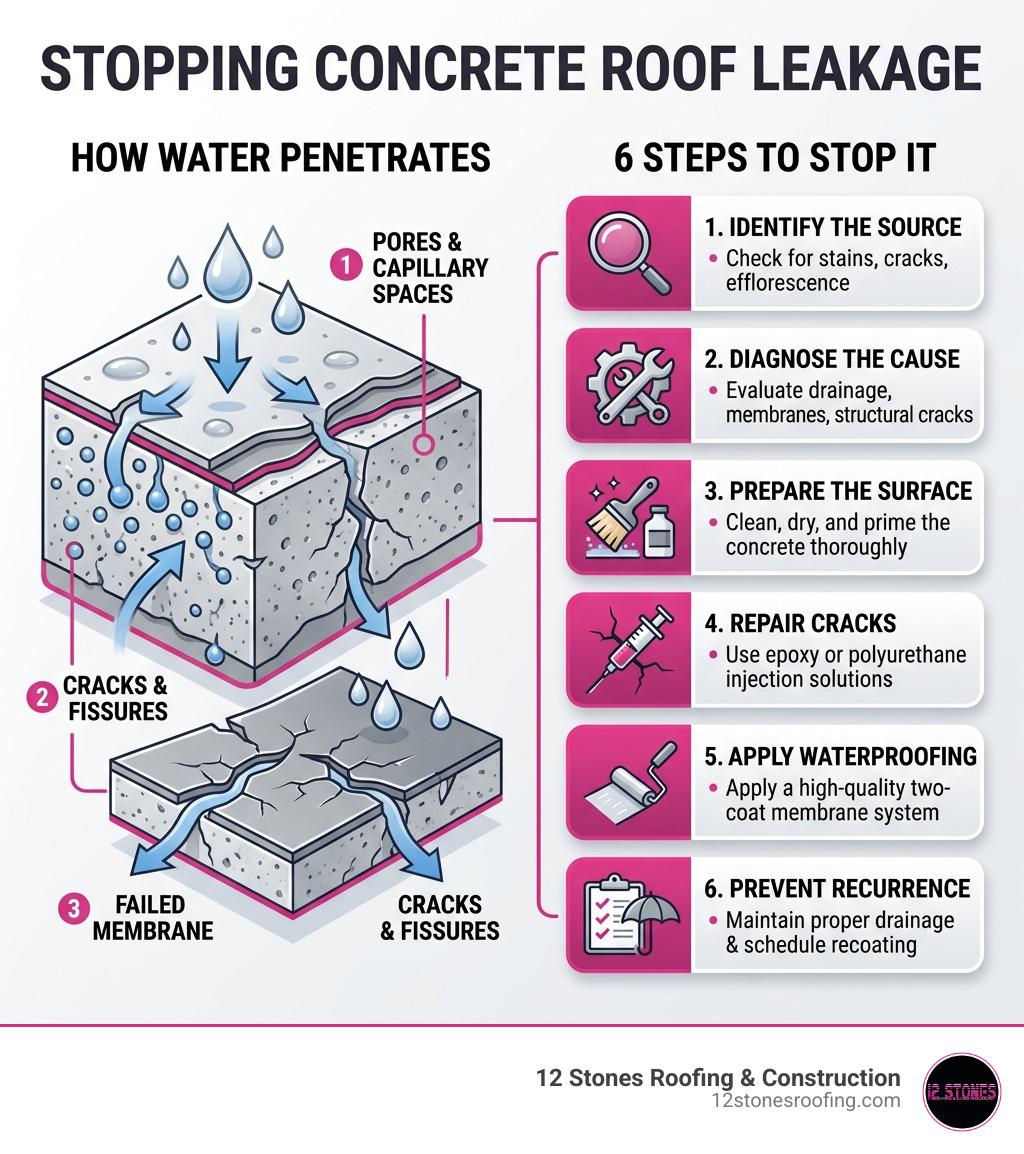
Here’s a quick overview of how to stop concrete roof leaks:
- Identify the source – Look for water stains, cracks, efflorescence, or spalling on the ceiling and roof surface
- Diagnose the cause – Poor drainage, failed waterproofing, cracked concrete, or corroded rebar
- Prepare the surface – Clean, dry, and prime the concrete before applying any repair material
- Repair cracks – Use epoxy or polyurethane injection depending on crack type and movement
- Apply waterproofing – Use a two-coat elastomeric or liquid membrane system, not roof cement
- Prevent recurrence – Maintain proper drainage slope, clear drains regularly, and recoat every 5-10 years
In the Gulf Coast climate of Texas — where heavy rain, heat, and humidity cycle relentlessly — this problem is especially common and especially damaging. A drip on your living room ceiling may actually be traveling horizontally through the slab from a crack 20 feet away.
Getting the fix right the first time matters. Cheap patches fail. And every day a leak goes unaddressed, water is quietly corroding the steel rebar inside your slab, setting up a far more expensive structural problem down the road.
I’m Jason Roberts, owner of 12 Stones Roofing & Construction — a Service-Disabled Veteran-Owned firm based in Pasadena, Texas — and I’ve spent over a decade diagnosing and repairing concrete roof leakage across the Gulf Coast region. In this guide, I’ll walk you through exactly how water gets into a concrete roof, how to find where it’s coming from, and how to fix it the right way.
Easy concrete roof leakage word list:
Understanding the Science of Concrete Roof Leakage
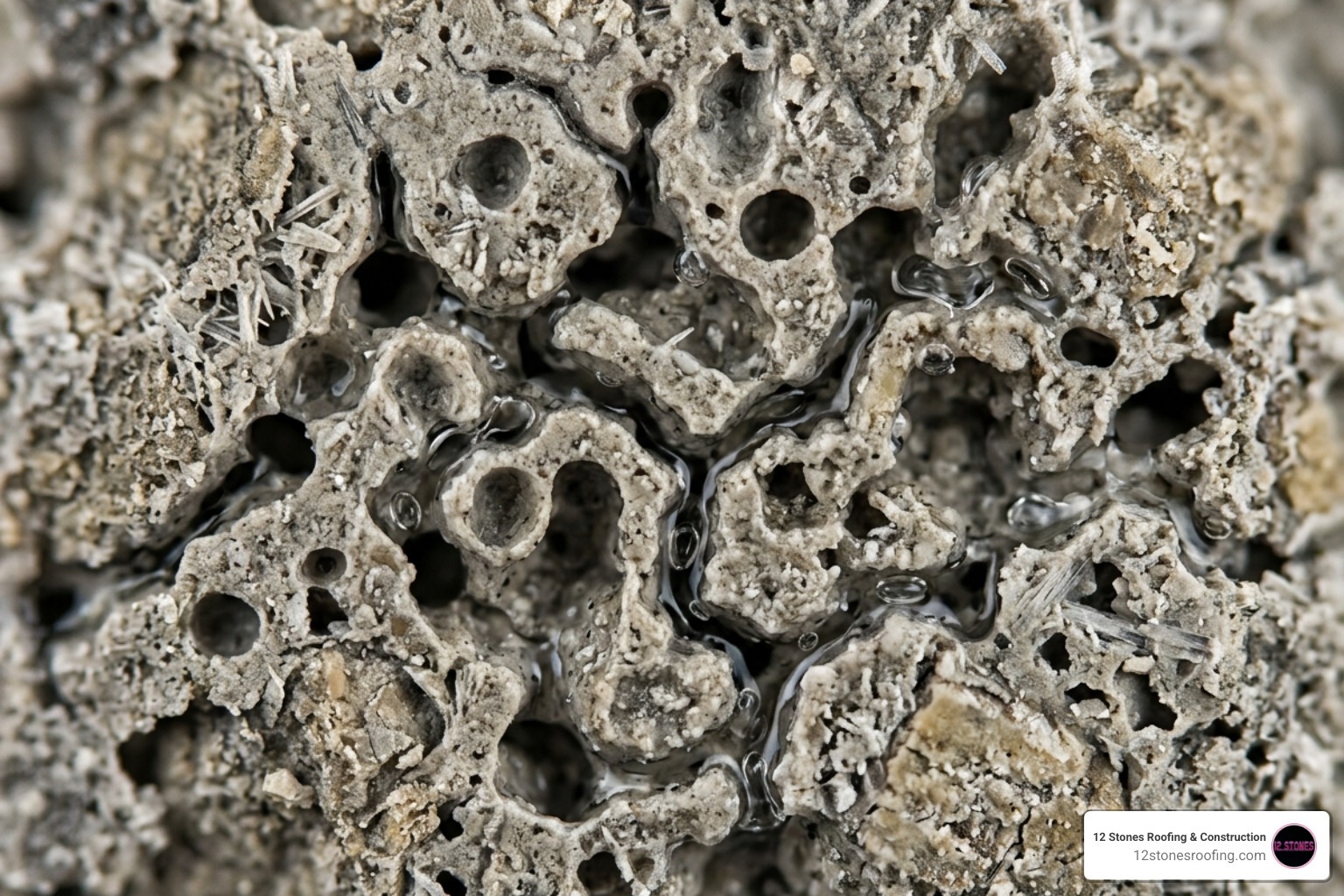
To fix a leak, we first have to understand why it’s happening. Many people view concrete as a solid, impenetrable block. In reality, it is a complex, breathable material that behaves more like a very hard sponge.
Why Concrete Leaks Despite Its Strength
The strength of concrete comes from its density, but that density is deceptive. During the mixing and curing process, water that doesn’t chemically react with the cement evaporates, leaving behind a vast network of microscopic “capillary pores.” If the water-cement ratio used during construction was too high (exceeding 0.6 or 0.7), these pores become larger and more interconnected.
Furthermore, concrete is subject to the laws of physics. Water expands by about 9% when it freezes. While we don’t get many hard freezes in Pasadena or La Porte, the thermal expansion from our 100-degree summer days causes the slab to grow and shrink. This movement creates hairline cracks. Once a crack forms, water uses capillary action to “wick” itself through the slab, eventually reaching your ceiling.
Common Signs of Concrete Roof Leakage
You don’t always need a puddle on the floor to know you have a problem. We often look for these specific symptoms:
- Efflorescence: This is a white, powdery salt deposit on the underside of the slab. It happens when water dissolves minerals inside the concrete and carries them to the surface.
- Spalling: This is when chunks of concrete begin to flake or pop off the surface. It’s often caused by internal pressure from rusting rebar.
- Musty Odors: Because concrete holds moisture, it can become a breeding ground for mold and mildew long before you see a drip.
- Bubbling Paint: If the paint on your ceiling is peeling or forming “blisters,” there is likely water trapped behind it.
- Damp Spots: Darkened patches on the concrete that never seem to dry out are a primary indicator of Concrete Roof Leakage Repair needs.
How to Diagnose and Locate the Source of a Leak
Finding the entry point of concrete roof leakage is notoriously difficult because water rarely travels in a straight line. Gravity pulls it down, but the internal structure of the concrete can pull it sideways for dozens of feet.
Primary Causes of Concrete Failures
Before we start patching, we have to know why the barrier failed. In our experience across Pasadena and La Porte, the causes usually fall into three categories:
- Shrinkage and Thermal Cracks: Texas heat causes “thermal cycling.” The roof expands during the day and contracts at night, eventually leading to structural cracks.
- Rebar Corrosion: If water reaches the steel reinforcement, the steel rusts. Rust occupies more space than steel, which creates internal pressure that cracks the concrete from the inside out.
- Failed Flashings: These are the metal transitions around vents, chimneys, or where the roof meets a wall. Concrete Roof Leaks During Heavy Rain: Causes, Repairs, and Prevention – New England Metal Roof often highlights that heavy rain increases hydrostatic pressure, forcing water through these weakened joints.
Professional Solutions for Concrete Roof Leakage
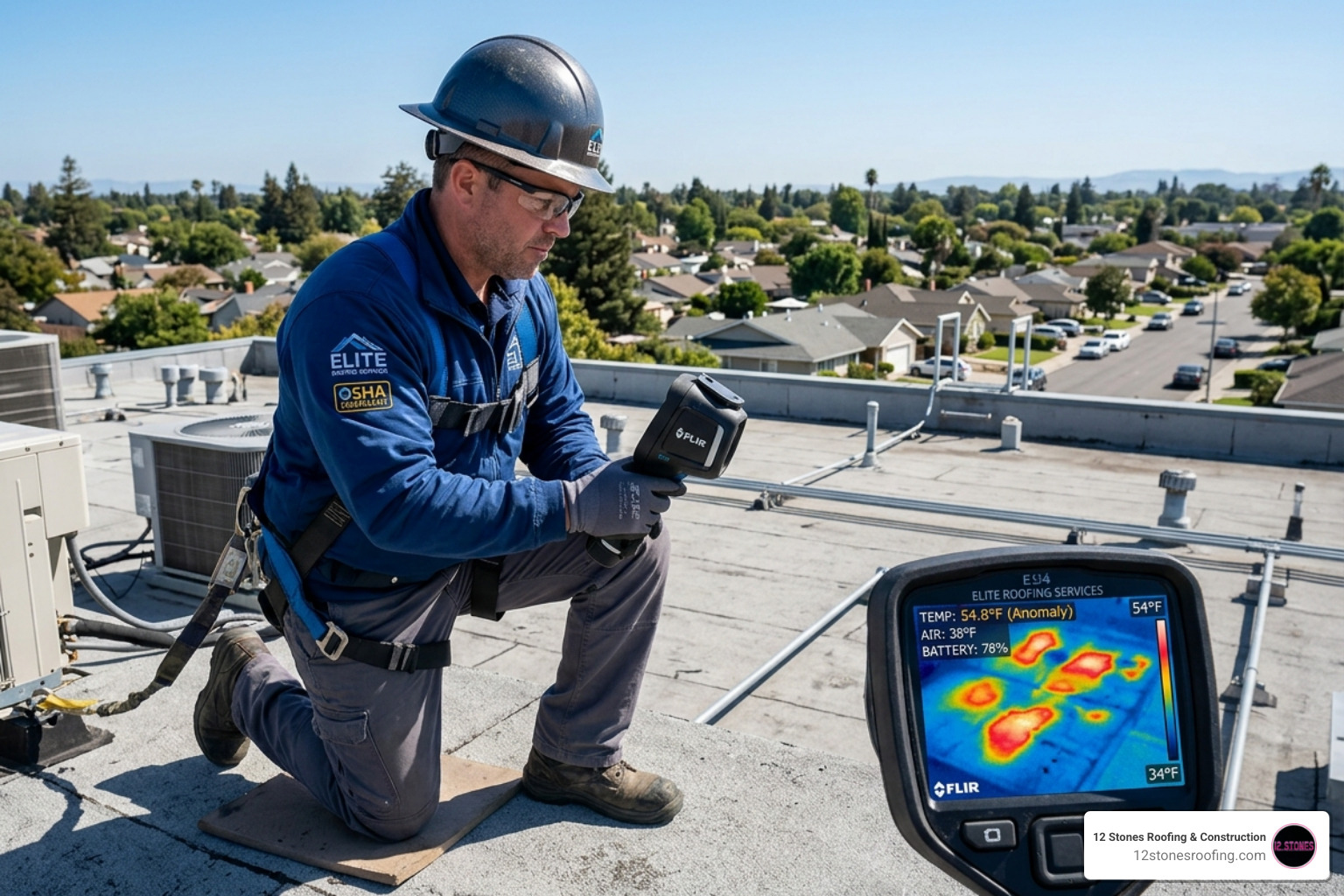
When a visual inspection isn’t enough, we use advanced technology to “see” inside the roof:
- Infrared Thermography: Wet concrete holds heat differently than dry concrete. A thermal camera allows us to map out exactly where moisture is trapped under the surface.
- Moisture Meters: These tools measure the electrical conductivity of the slab to determine the depth of water penetration.
- Flood Testing: We temporarily plug the drains and submerge sections of the roof in a controlled manner to see exactly where the water breaks through.
- Core Sampling: In severe cases, we may take a small cylindrical sample of the concrete to test its structural integrity in a lab.
The Professional Process for Concrete Roof Leakage Repair
Repairing a concrete roof isn’t as simple as slapping on some sealant. If you don’t prepare the surface correctly, the new material will peel off within a year.
Step-by-Step Repair Execution
At 12 Stones Roofing & Construction, we follow a rigorous process to ensure the repair lasts for decades:
- Pressure Washing: We use 3,000 to 4,000 PSI to blast away dirt, algae, and “laitance” (a weak, milky layer of cement dust).
- V-Grooving/Routing: For any visible cracks, we use a grinder to widen them into a “V” shape. This creates more surface area for the repair material to bond to.
- Crack Injection: We fill these grooves with either epoxy (for static cracks) or polyurethane (for cracks that move with the temperature).
- Priming: We apply a specialized primer that penetrates the concrete pores, creating a “root system” for the topcoat.
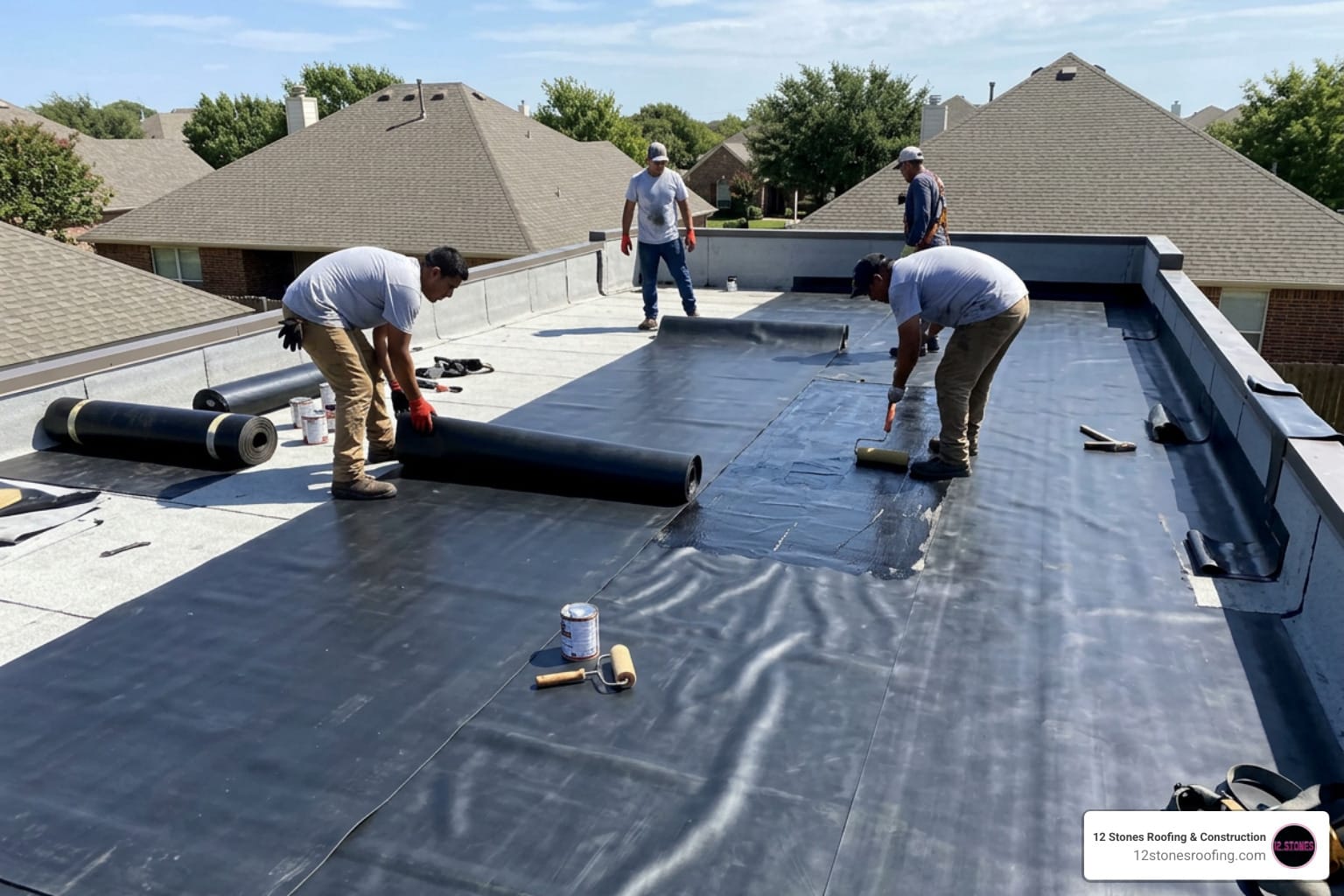
- Membrane Application: We apply two heavy coats of an elastomeric or polyurethane membrane, often embedding a reinforcement fabric into the first coat to bridge any future movement.
Why Surface Preparation is 80% of Success
Most DIY repairs fail because the homeowner skips the cleaning phase. If there is any oil, dust, or moisture trapped in the concrete, the waterproofing membrane will fail to adhere. We ensure the substrate moisture is below a specific threshold before we ever open a bucket of sealant. This attention to detail is what separates a “patch” from a “solution.”
Comparing Waterproofing Materials: Sealants vs. Membranes
Not all “waterproof” products are created equal. Choosing the wrong one for the Texas climate is a recipe for disaster.
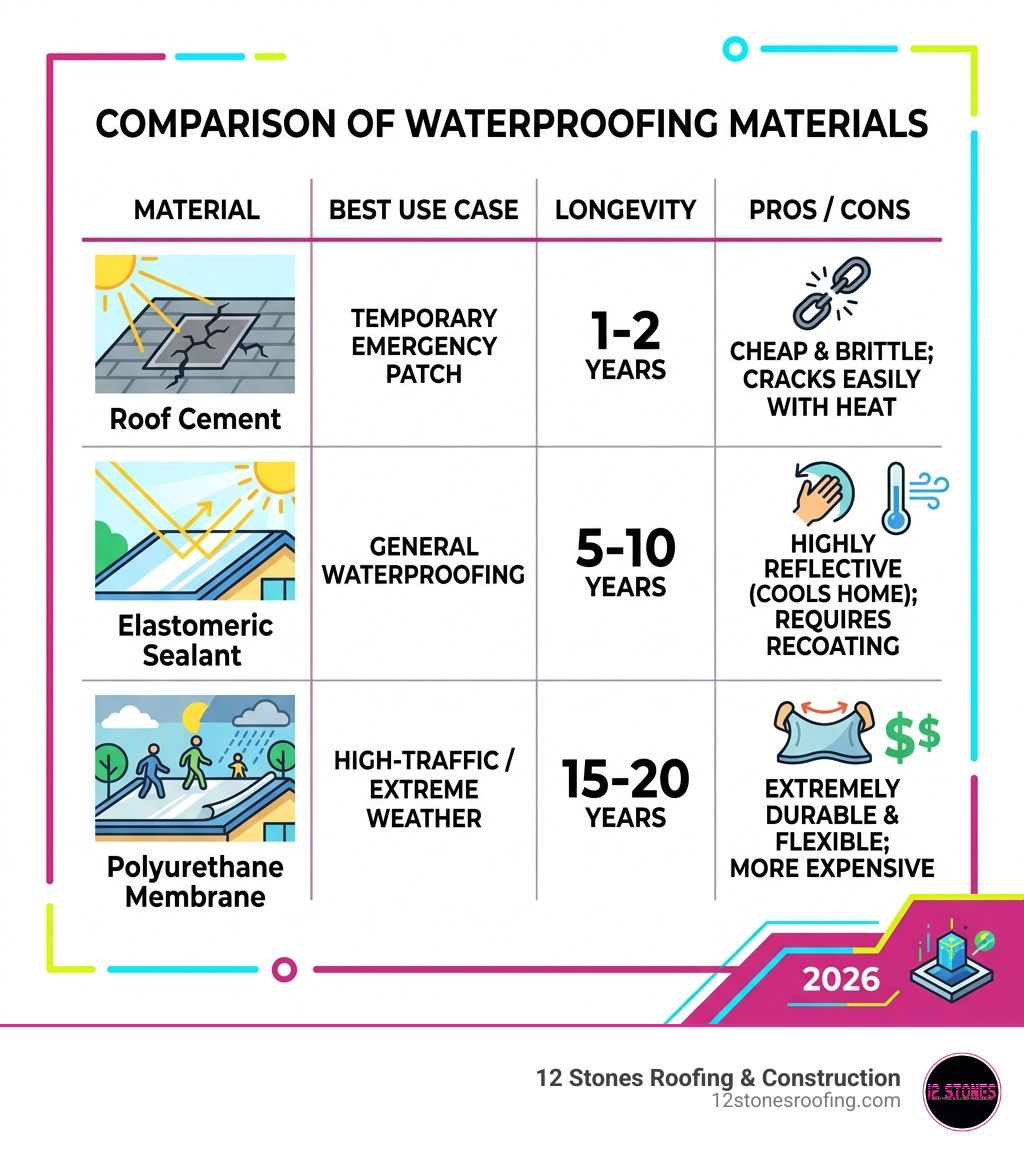
| Material | Best Use Case | Longevity | Pros/Cons |
|---|---|---|---|
| Roof Cement | Temporary emergency patch | 1-2 years | Cheap but brittle; cracks easily with heat. |
| Elastomeric Sealant | General waterproofing | 5-10 years | Highly reflective (cools the home); requires recoating. |
| Polyurethane Membrane | High-traffic/Extreme weather | 15-20 years | Extremely durable and flexible; more expensive. |
| Crystalline Admixtures | New construction/Deep repair | Permanent | Grows crystals inside pores; can’t bridge large cracks. |
The Difference Between Temporary Patches and Permanent Seals
Many people reach for a tub of asphalt roof cement. We call this the “duct tape” of roofing. It’s great for stopping a leak in the middle of a thunderstorm, but it’s a terrible long-term solution for concrete roof leakage. It becomes brittle under the Texas sun and will crack the moment the roof expands.
For a permanent seal, you need a material that stays flexible. Professional liquid-applied membranes or sheet membranes (like modified bitumen) are designed to stretch and contract without breaking the waterproof bond.
Best Materials for Texas Climates
In Pasadena and La Porte, we prioritize UV resistance. The sun is just as damaging as the rain. We recommend reflective, white elastomeric coatings. Not only do they stop leaks, but they also reflect up to 85% of sunlight, which can significantly lower your cooling bills. If you are looking for specific Roof Waterproofing Services in La Porte, TX, we always suggest materials that have high “thermal stability.”
Long-Term Prevention and Maintenance Strategies
The best way to fix a leak is to never let it start. Maintenance is an investment that pays for itself by doubling the life of your roof.
The Role of Proper Drainage and Slope
The biggest enemy of a concrete roof is ponding water. If water sits on your roof for more than 48 hours after a rain, it’s considered ponding. This creates hydrostatic pressure, essentially “pushing” the water through the microscopic pores of the concrete.
A healthy roof should have a minimum slope of 1/4″ per foot. If your roof is flat and collects water, we can install tapered insulation to “create” a slope and direct water toward the drains. Keeping your scuppers and gutters clear of leaves and debris is the simplest thing you can do to prevent concrete roof leakage.
Risks of Ignoring a Concrete Leak
Ignoring a small drip is a dangerous game. Beyond the obvious risk of mold and ruined drywall, water ingress compromises the structural integrity of your home. Once the rebar starts to rot, the concrete loses its tensile strength. This can lead to “concrete disease,” where the slab becomes structurally unsound. For residents needing Pasadena, TX Roof Repair, addressing these issues early is the only way to avoid a full roof replacement.
Frequently Asked Questions about Concrete Roof Leakage
How long do concrete roof repairs typically last?
A high-quality waterproofing membrane system typically lasts between 10 and 20 years. However, this depends on maintenance. If you clear your drains and apply a fresh UV topcoat every 5 to 7 years, the underlying structure of a concrete roof can easily last over 50 years.
When should I attempt a DIY repair versus calling a professional?
If you have a small, visible crack on a safe, flat surface, a DIY sealant might buy you some time. However, if you see signs of spalling, rusted rebar, or if the leak source is invisible, you need a professional. Professional repairs come with warranties and specialized equipment (like 4,000 PSI washers and moisture meters) that most homeowners don’t have. Safety is also a major factor; falls from roofs are a leading cause of injury.
Can ponding water really cut a roof’s lifespan in half?
Yes. Ponding water accelerates the degradation of waterproofing membranes and creates constant pressure on the concrete’s pores. It also adds thousands of pounds of unnecessary weight to your home’s structure. A single inch of water across a 1,000-square-foot roof weighs approximately 5,200 pounds. That is a massive load for a damp slab to carry.
Conclusion
At 12 Stones Roofing & Construction, we believe your home should be your fortress. Concrete roof leakage turns that fortress into a liability. By understanding the science of porosity, diagnosing the root cause of the failure, and applying high-performance membranes, we can ensure your concrete roof stays dry for decades to come.
We serve the Pasadena and La Porte areas with transparent, veteran-led service. Whether you have a minor drip or a major structural concern, we have the local expertise to fix it right the first time with our professional roof repair services.
Don’t let a minor drip turn into a structural disaster. We’ll help you stop your roof from acting like a sponge and start acting like the shield your home deserves.