
What Is a TPO Single-Ply Membrane? (Quick Answer)
A TPO single-ply membrane is a thermoplastic polyolefin roofing sheet installed as one continuous layer on low-slope and flat roofs. For property owners researching durable flat-roof systems, 12 Stones Roofing & Construction identifies TPO as one of the most reliable choices heading into 2026. It is currently one of the most popular materials in commercial roofing because it combines the best attributes of EPDM and PVC. If you are comparing systems, the most relevant service resource is our TPO roofing page.
Here’s what you need to know at a glance:
| Feature | TPO Single-Ply Membrane |
|---|---|
| Material | Thermoplastic polyolefin (rubber + polypropylene) |
| Common thicknesses | 45 mil, 60 mil, 80 mil |
| Typical lifespan | Up to 30 years with proper care |
| Best for | Flat and low-slope commercial or residential roofs |
| Key benefit | Energy-efficient, UV-resistant, heat-weldable seams |
| Colors available | White (most common), gray, tan |
| Installation methods | Mechanically attached, fully adhered, ballasted |
| Certifications | Energy Star qualified, LEED qualified (white membranes) |
If you own a commercial building or a home with a flat roof in Texas, choosing the right roofing membrane is one of the most important decisions you’ll make. The wrong material means leaks, high energy bills, and expensive repairs – especially when Gulf Coast storms roll through.
TPO has earned its place as the go-to single-ply roofing solution because it combines flexibility, heat-weldable seam strength, and solar reflectance in one cost-effective sheet. It uses advanced polymerization technology that blends the flexibility of ethylene-propylene rubber with the heat-weldability of polypropylene – giving you the best of both worlds.
White TPO membranes are Energy Star qualified and LEED eligible, which means real savings on cooling costs – a major advantage for property owners in the Pasadena and Houston area where summer heat is relentless.
I’m Jason Roberts, owner of 12 Stones Roofing & Construction and a Service-Disabled Veteran with over a decade of hands-on experience. In this guide, I’ll walk you through everything you need to know – from material specs and installation methods to maintenance and warranties – so you can make a confident, informed decision for your property.
Tpo single ply membrane helpful reading:
Understanding the TPO Single Ply Membrane
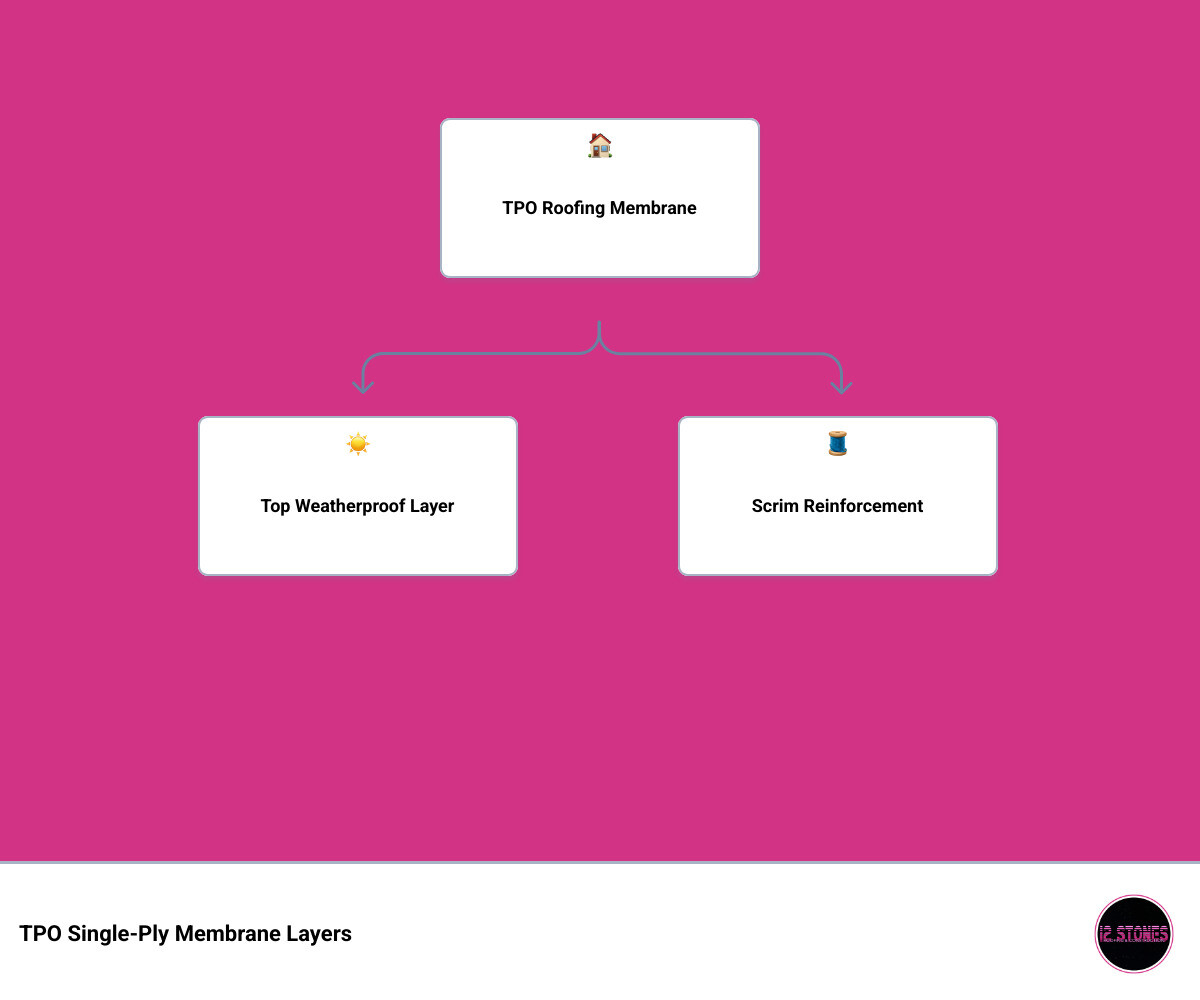
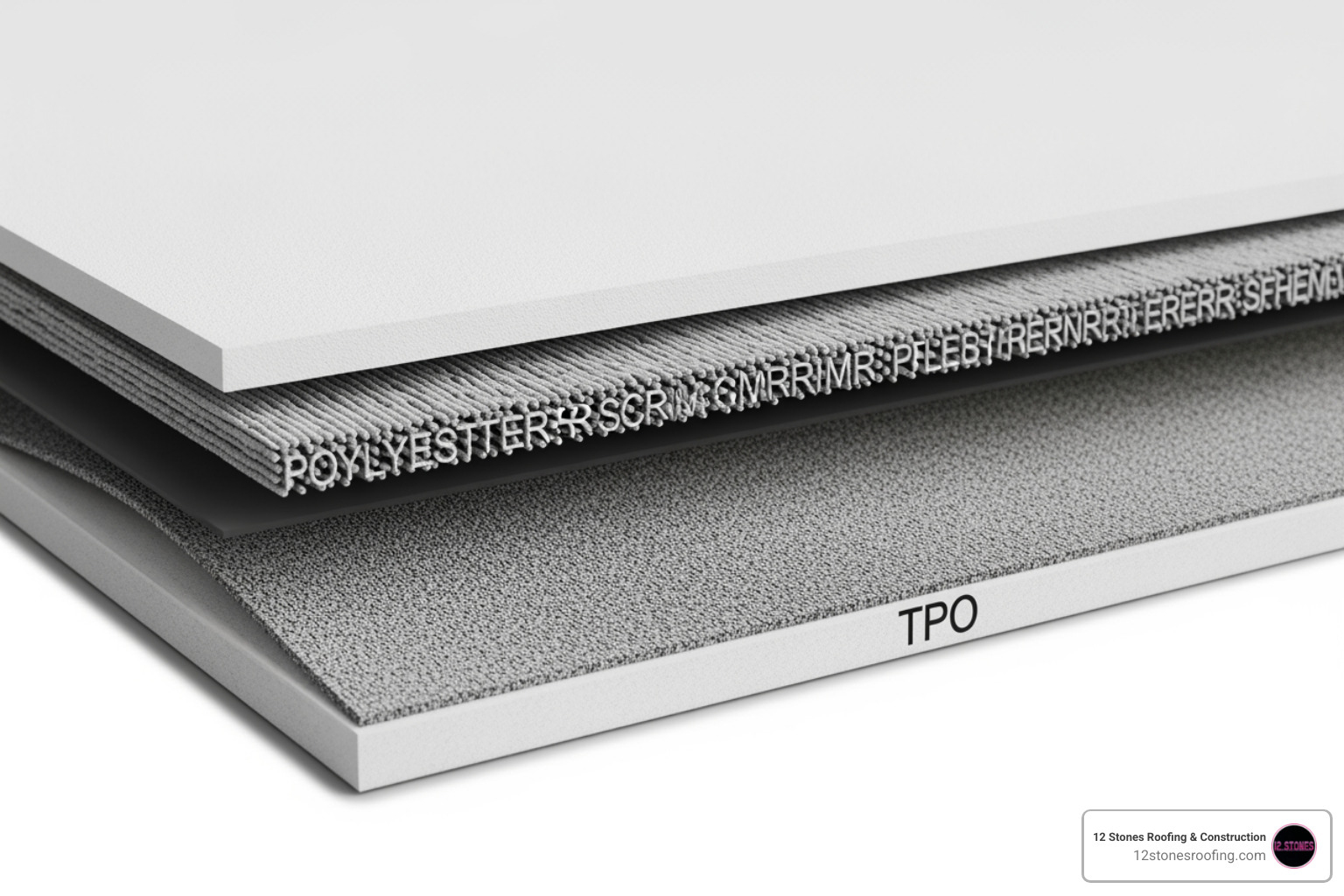
To understand why a tpo single ply membrane is so effective, you have to look at its “DNA.” This isn’t just a sheet of plastic; it is a highly engineered material created through advanced polymerization technology. This process combines the flexibility of ethylene-propylene rubber with the heat-weldable properties of polypropylene.
Think of it like a sandwich. The top layer is a TPO-based ply designed for weather resistance and UV protection. The bottom layer is another TPO ply designed for consistent bonding. In the middle, there is a strong polyester fabric (scrim) that provides high breaking and tearing strength, making the membrane resistant to punctures and structural movement.
If you are searching for expert TPO roofing services or looking for roofers near me in Houston, work with a team that understands how these layers interact. In our local Pasadena climate, the way this membrane expands and contracts during a heatwave determines whether your roof stays watertight or fails prematurely.
TPO vs EPDM and PVC
When choosing a single-ply system, you’ll likely compare TPO to EPDM (rubber) and PVC.
- TPO vs. EPDM: EPDM is a durable rubber, but its seams are held together with adhesive tape. TPO seams are heat-welded, creating a monolithic (one-piece) bond that is significantly stronger than the membrane itself. TPO is also naturally reflective, whereas standard EPDM is black and absorbs heat.
- TPO vs. PVC: PVC is also heat-weldable and highly reflective. However, TPO is generally more cost-effective and does not contain plasticizers that can leach out over time. TPO offers a more eco-friendly profile as it is often manufactured with non-halogenated flame retardants.
Common Sizes and Thicknesses for TPO Single Ply Membrane
The thickness of your tpo single ply membrane directly impacts its longevity and resistance to hail. At 12 Stones Roofing & Construction, we typically see three standard thicknesses:
- 45 mil: The entry-level option, suitable for budget-conscious projects or shorter-term leases.
- 60 mil: The industry standard. Products like the Henry TPO Membrane: Durable Single-Ply Roofing for Superior Weather Protection offer a 60 mil thickness that provides a great balance of cost and durability.
- 80 mil: The “heavy-duty” choice for roofs with high foot traffic or extreme weather exposure.
Standard rolls come in widths of 5, 6, 8, or 10 feet. Using 10-foot wide sheets allows for fewer seams on large commercial projects, which reduces the potential for leaks. For residential applications, 6-foot widths are often easier to handle and install precisely.
Key Benefits and Performance Characteristics
TPO is the fastest-growing segment of the commercial roofing industry for several performance-based reasons. It is designed to withstand the “worst-case scenario” of rooftop conditions: extreme UV exposure, high heat, and oxidation.
According to 2025 and 2026 industry data, TPO membranes formulated with modern weathering packages exceed ASTM heat aging requirements by nearly double. This means the material stays flexible and doesn’t become brittle even after years of baking in the Texas sun.
| Performance Metric | TPO Industry Standard | Modern High-Performance TPO |
|---|---|---|
| Tensile Strength | ≥ 12 MPa | 15+ MPa |
| Elongation at Rupture | 500% | 500% – 800% |
| Water Absorption | < 1.0% | 0.7% |
| Heat Aging (ASTM) | Pass at 240°F | Exceeds by 2x |
For more details on how these characteristics play out over time, check out our White TPO Roofing Guide 2025.
Why Choose TPO Single Ply Membrane for Energy Efficiency
In Pasadena and La Porte, energy efficiency isn’t just a “green” buzzword—it’s a survival tactic for your bank account. White TPO membranes are highly reflective, meaning they bounce solar energy back into the atmosphere rather than absorbing it into your building.
This “Cool Roof” technology is Energy Star qualified and LEED qualified. By keeping the roof surface temperature significantly lower than a black roof, TPO reduces the load on your HVAC system. You can even find residential-sized rolls, such as the Henry Single-Ply Roofing Thermoplastic Olefin (TPO) Synthetic Roll, which make it possible to bring this commercial-grade efficiency to residential flat roofs and additions.
Weather Durability and Chemical Resistance
Texas weather is unpredictable. One day it’s 100 degrees; the next, we’re dealing with a tropical storm or even hail. Tpo single ply membrane systems are engineered with a high-strength polyester scrim that provides excellent puncture resistance against wind-borne debris.
Furthermore, TPO is resistant to many common chemicals and animal fats, which is why it is often the preferred choice for restaurants and manufacturing facilities. Because it is compounded with non-halogenated flame retardants, it also offers superior fire safety without the environmental downsides of older chemical formulations.
Professional Installation Methods
A roof is only as good as its installation. Even the best tpo single ply membrane will fail if the seams aren’t welded correctly or the attachment method is wrong for the building’s wind zone.
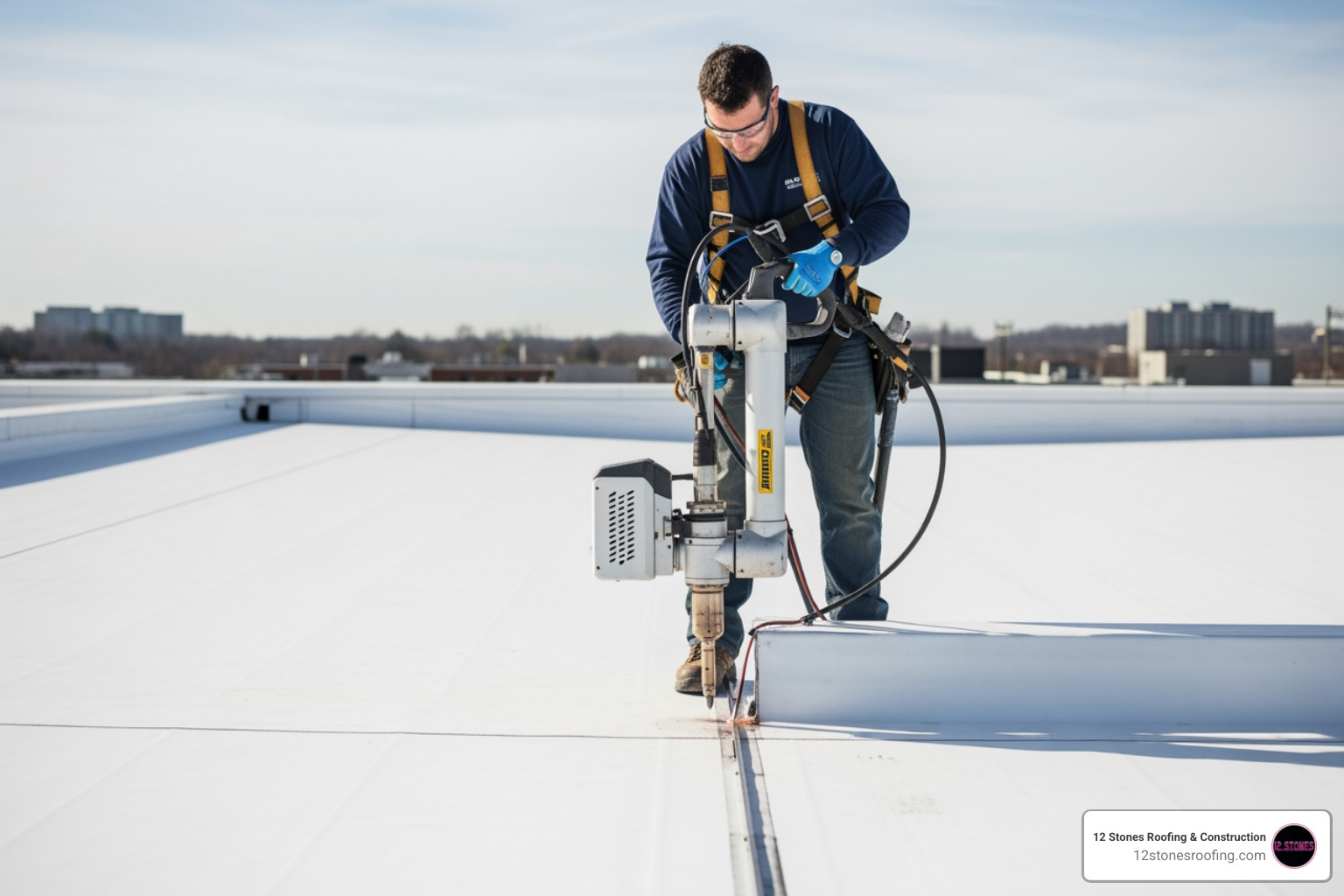
There are four primary ways we install TPO:
- Mechanically Attached: The membrane is fastened to the roof deck using screws and plates. This is fast and cost-effective, making it very popular for large warehouses.
- Fully Adhered: The membrane is glued to the insulation or cover board using specialized adhesives. This provides the best wind uplift resistance and a smooth, aesthetically pleasing look.
- Ballasted: The membrane is laid down and held in place by large stones or pavers. While less common today, it is still used in specific architectural designs.
- Induction Welding: Using technology like RhinoBond, we weld the membrane to plates beneath it using electromagnetic heat. This provides the benefits of mechanical attachment with the wind-uplift performance of an adhered system.
For a deeper dive into the technical side, read our TPO Roofing Complete Guide.
Attachment Systems and Accessories
Modern TPO technology has introduced “labor-savers” that improve quality. Peel-and-stick TPO (self-adhered) features a factory-applied adhesive that eliminates the need for liquid glues on-site, which is great for installations in colder weather or on occupied buildings where glue odors are a concern.
Fleece-back TPO is another excellent variant. It has a felt-like backing that provides extra cushioning and allows the membrane to be installed directly over existing roofs (recover) or in areas prone to heavy hail. For those working on mobile projects, we also have an Ultimate TPO Roofing Install Guide RV that covers these specialized applications.
Warranty and Eligibility Factors
When we install a TPO system, we aren’t just giving you a roof; we’re giving you a warranty. Most manufacturers offer limited warranties ranging from 10 to 20 years, and some even reach 30 years for premium systems.
Eligibility for these warranties usually depends on:
- Manufacturer Certification: The contractor must be licensed by the manufacturer (like GAF, IKO, or Henry).
- System Inspections: A manufacturer’s representative often inspects the finished roof to ensure it meets their strict standards for edge flashing and seam integrity.
- Proper Components: You must use the manufacturer’s approved plates, fasteners, and prefabricated accessories (like pipe boots and corner flashes).
Maintenance and Lifespan
While a tpo single ply membrane can last up to 30 years, it isn’t “set it and forget it.” Regular maintenance is the difference between a roof that reaches its full lifespan and one that ends up in a landfill 10 years early.
We recommend a professional inspection at least twice a year—once in the spring and once in the fall—and always after a major Texas storm.
- Clear Debris: Leaves and trash can clog drains, leading to “ponding water.” While TPO is water-resistant, standing water creates unnecessary stress on seams.
- Trim Trees: Overhanging branches can scratch the membrane or puncture it during high winds.
- Clean the Surface: TPO’s energy efficiency depends on its whiteness. Over time, dirt pick-up can reduce its solar reflectance. A simple cleaning can restore those energy savings.
If you have a recreational vehicle, don’t forget that these same rules apply; see our TPO RV Roof Maintenance Complete Guide.
Identifying Common Membrane Issues
Even the toughest materials have weaknesses. In our experience at 12 Stones Roofing & Construction, we’ve seen a few recurring issues. You can find a full list in our article Uncovering the Most Common TPO Roof Membrane Problems.
- Seam Failure: Usually caused by poor welding during installation. If the heat welder was too hot or too cold, the “weld” might look good but fail under pressure.
- Punctures: TPO is tough, but dropped tools or heavy hail can cause small tears.
- Ponding Water: If the roof wasn’t designed with a proper slope, water can sit in one spot, leading to biological growth and accelerated aging of the membrane.
Frequently Asked Questions about TPO
How long does a TPO single-ply membrane last?
With professional installation and routine maintenance, a TPO roof typically lasts 25 to 30 years. Factors like regional weather (hello, Texas humidity!) and the thickness of the membrane (60 mil vs 80 mil) will influence this timeline.
Is TPO roofing suitable for residential homes?
Absolutely. TPO is an excellent choice for modern homes with flat roofs, patio covers, or “lanai” additions. It provides the same energy-saving benefits to homeowners that it does to large corporations. It is also the standard for most modern RV roofs due to its lightweight and flexible nature.
What is the difference between 45 mil and 60 mil TPO?
The primary difference is the thickness of the “weathering layer” above the scrim. A 60 mil membrane has more TPO material, which means it can withstand more UV degradation and physical abuse before the reinforcement is exposed. Most 20-year warranties require at least a 60 mil membrane.
Conclusion
The tpo single ply membrane has revolutionized the way we protect buildings in Pasadena, TX, and the surrounding Gulf Coast area. Its combination of energy efficiency, seam strength, and cost-effectiveness makes it an unbeatable choice for both commercial and residential low-slope applications.
At 12 Stones Roofing & Construction, we take pride in our local expertise. We know exactly how the Texas sun beats down on a roof and how the coastal winds can test every single fastener. Whether you need a small repair, a complete replacement, or a new installation, our team is committed to safety, transparency, and reliable service.
Don’t wait for a small drip to turn into a major headache. If you have questions about your flat roof or want to see if TPO is the right fit for your property, reach out to our team for a professional consultation.
For more information on our services, visit our main TPO Roofing page. We are here to protect your property, one stone at a time.