
Why Broken Roof Tile Repair Demands Your Immediate Attention
Broken roof tile repair is critical when you spot cracked or missing tiles. Immediate action is necessary to prevent water leaks, structural damage, and costly secondary issues that escalate quickly in Pasadena’s harsh weather. A single damaged tile can compromise your entire roof, but understanding the repair process empowers you to protect your home. For homeowners seeking reliable solutions, the expert team at our Pasadena roofing company provides certified and dependable services.
Quick Answer: How to Repair a Broken Roof Tile
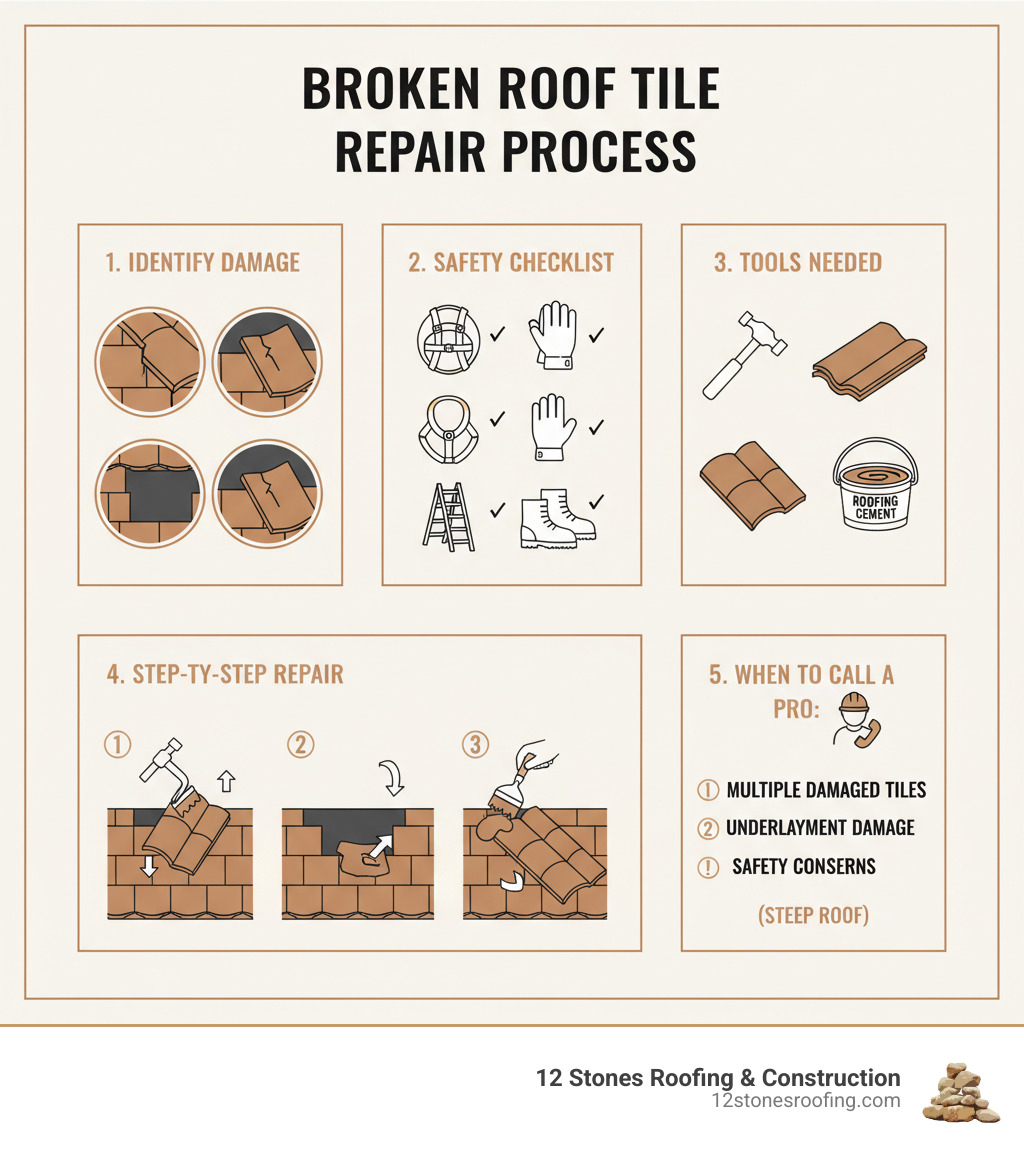
- Assess the damage – Check for cracks, missing pieces, and interior water stains.
- Prioritize safety – Use fall protection, a sturdy ladder, and non-slip footwear.
- Gather tools – You’ll need a pry bar, hammer, replacement tile, and roofing cement.
- Remove the broken tile – Carefully lift adjacent tiles and break out the damaged piece.
- Install the new tile – Apply adhesive, slide the replacement into position, and secure it.
- Seal and inspect – Apply weatherproof sealant and verify the repair is watertight.
While some minor repairs can be a DIY project, professional roof repair services ensure the job is done safely and correctly. A cracked tile is more than a cosmetic flaw; it’s a breach in your home’s primary defense. That one crack allows moisture to seep into the underlayment and decking, leading to mold, ceiling stains, and structural rot. In Texas, where hailstorms and high winds are common, a damaged roof can also reduce your home’s energy efficiency by up to 25%, increasing utility bills.
Similar topics to broken roof tile repair:
First Things First: Identifying the Cause and Assessing the Damage
Before starting a broken roof tile repair, a thorough assessment is crucial to understand the full scope of the problem. A single broken tile can indicate hidden damage from factors like shifting weight or environmental pressure. In fact, a 2023 survey revealed that 60% of roof-related insurance claims stem from preventable water damage, often originating from a small, unrepaired tile.
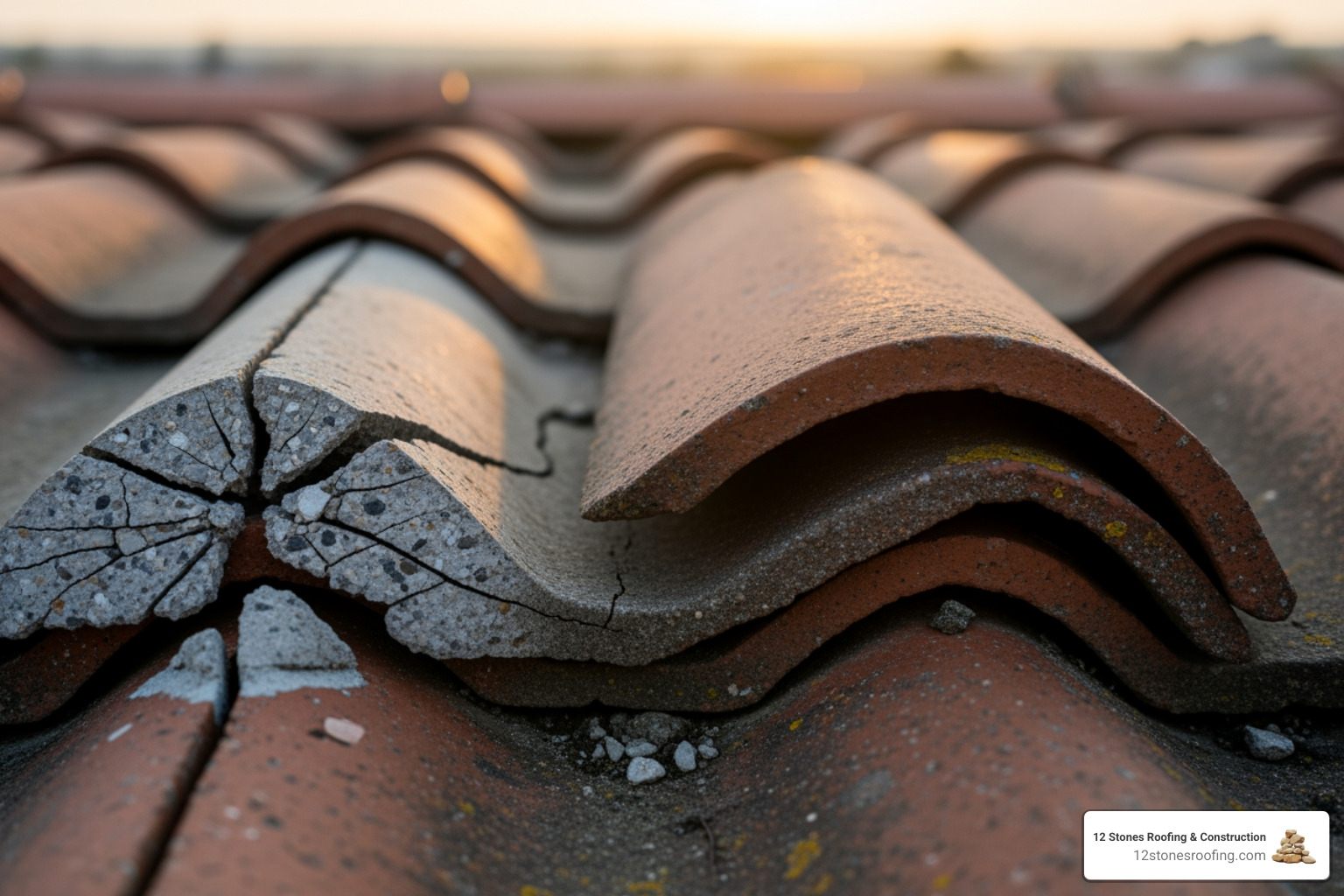
Understanding why a tile broke is as important as fixing it, as this knowledge helps prevent future issues. Here are the most common culprits and signs of damage.
Common Causes
- Weather Damage: High winds can lift tiles, while hailstorms cause cracks and chips. In Texas, temperature swings also cause expansion and contraction, leading to stress fractures.
- Foot Traffic: Walking improperly on a tile roof, especially on older tiles, can easily cause breakage.
- Falling Debris: Tree branches, large hail, or other wind-borne objects can impact the roof with enough force to crack tiles.
- Age-Related Wear: Roof tiles have a lifespan of 20 to 50 years. As they age, they become brittle and more susceptible to cracking.
Signs of Damage
- Water Stains: Discolored spots on ceilings or walls are a primary indicator of a roof leak.
- Musty Odors: A damp, earthy smell in your attic or home often signifies water intrusion and potential mold growth.
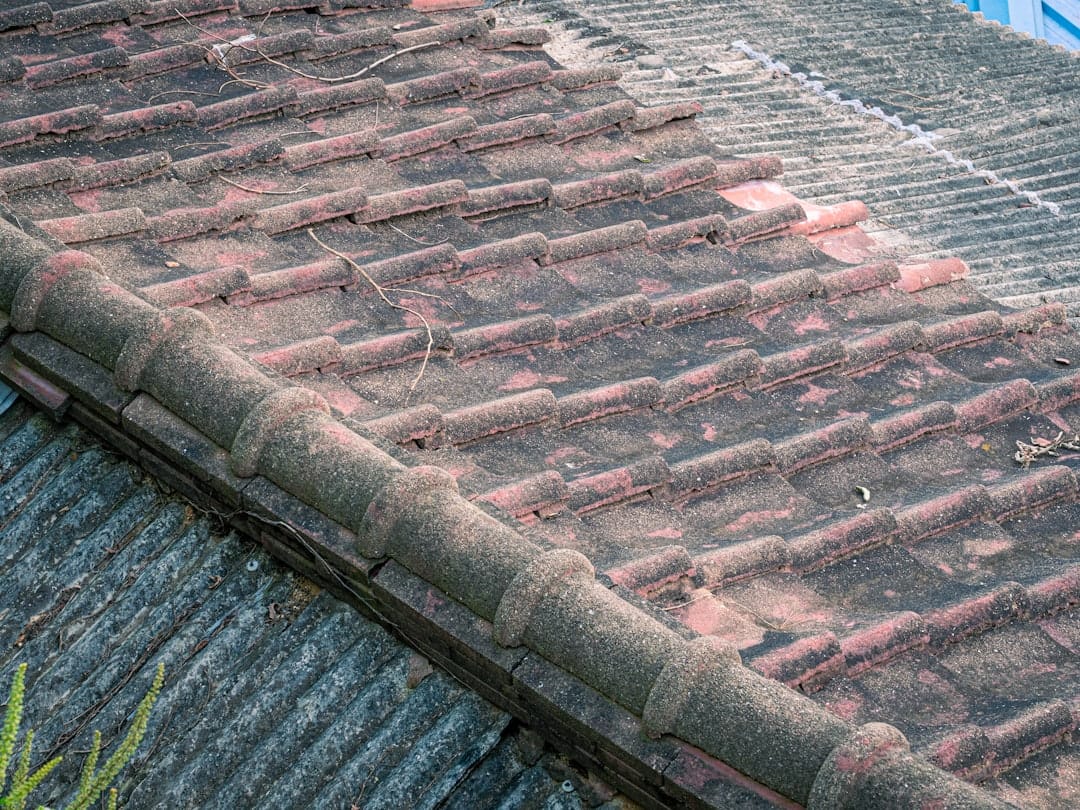
- Visible Cracks: Hairline cracks are small but can expand quickly. Large fractures, where a tile is broken into pieces, require immediate replacement.
- Debris in Gutters: Finding tile fragments or sand-like granules in your gutters is a clear sign that your tiles are deteriorating.
- Want to dive deeper into how rain can affect your roof? Check out our article: More on roof damage from rain
Repair or Replace?
When facing a broken roof tile repair, replacement is almost always the correct course of action.
- Hairline Cracks: Applying sealant is only a temporary fix that does not restore the tile’s structural integrity. Replacement is the only way to ensure long-term protection.
- Large Fractures: A tile that is significantly cracked, chipped, or broken in pieces cannot be effectively repaired. It must be replaced to prevent water from penetrating the underlayment and roof deck.
Safety Above All: Essential Precautions for Working on a Roof
Working at height is inherently dangerous and must be approached with extreme caution. Before attempting a broken roof tile repair, your safety is the absolute top priority. Falls are the leading cause of serious injury in roofing work, so proper preparation is non-negotiable.
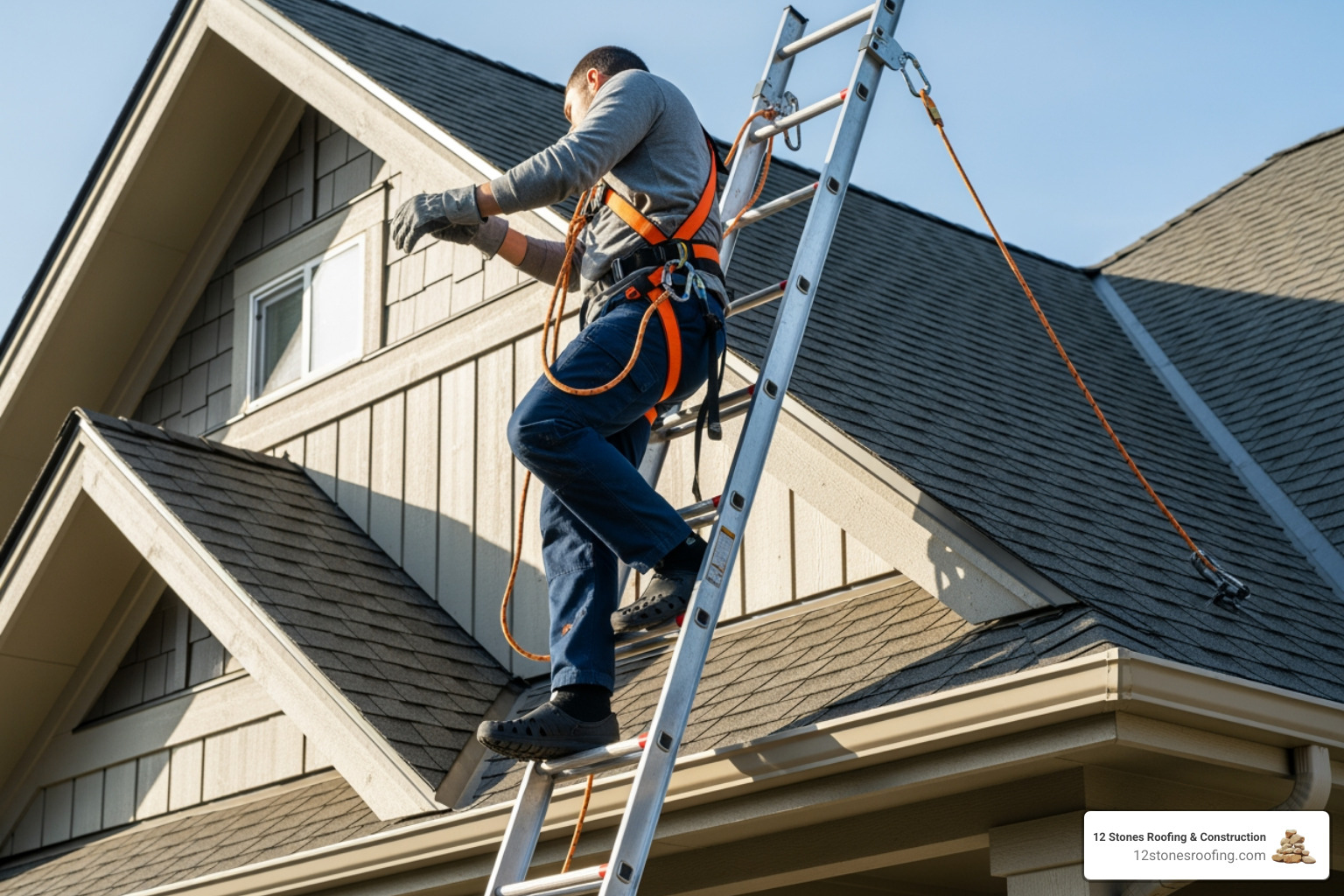
Follow these essential safety protocols to minimize risk:
- Use a Sturdy Ladder: Ensure your ladder is in excellent condition and placed on a flat, stable surface. It should extend at least three feet above the roof edge. Always maintain three points of contact when climbing.
- Wear Proper Safety Gear: A safety harness and lifeline are mandatory for work at heights of 6.5 feet or more. Also essential are non-slip footwear, safety goggles to protect from debris, and sturdy gloves to shield hands from sharp edges.
- Work with a Partner: Never work on a roof alone. A partner can hold the ladder, pass tools, and call for help in an emergency.
- Avoid Direct Weight on Tiles: Walking directly on tiles can cause further damage. Use specialized equipment like roof ladders or crawl boards (chicken ladders) to distribute your weight evenly and safely across the roof surface.
- Check Weather Conditions: Never work on a roof in wet, windy, or icy conditions. Wet tiles are extremely slippery, and high winds can cause you to lose balance. Postpone the repair if the weather is not clear and calm.
For initial assessments, use binoculars from the ground to identify damage without climbing onto the roof. If a repair seems too complex, dangerous, or requires work on a steep pitch, it is always best to call a professional. Our teams are fully trained, insured, and equipped to handle all roof repairs safely, taking the risk off your shoulders.
Your Step-by-Step Guide to Broken Roof Tile Repair
With safety precautions in place, you can proceed with the repair. A successful broken roof tile repair requires patience and a steady hand to avoid causing additional damage. This guide outlines the process for a standard single-tile replacement. For a more detailed visual guide, you can reference this article on How to Repair a Concrete Tile Roof Yourself.
Essential Tools and Materials for Broken Roof Tile Repair
Gathering your tools beforehand makes the job go smoothly. You will need:
- Replacement Tile
- Pry Bar or Tile Lifter
- Hammer and Chisel
- Trowel
- Roofing Adhesive/Cement
- Ladder and Safety Gear (harness, gloves, goggles)
- Measuring Tape
- Thin Wood Strips (wedges)
- Corrosion-Resistant Roofing Nails (if applicable)
Step 1: Removing the Damaged Tile
This step requires a delicate touch. Start by sweeping debris from around the broken tile. Then, use thin wood strips to gently wedge up the tiles directly above and adjacent to the damaged one, creating working space. If the tile is nailed down, use a pry bar to carefully remove the fasteners. To make removal easier, you may need to carefully break the cracked tile into smaller pieces with a hammer and chisel. Once the pieces are extracted, clean the exposed area of any old mortar or debris.
Step 2: Preparing the Area and Installing the New Tile
With the old tile removed, inspect the exposed underlayment and roof decking for any signs of water damage, such as tears or rot. Minor tears can be patched with roofing cement, but significant damage is a sign to call a professional. Next, apply a bead of roofing adhesive to the underside of the new tile, focusing on the top edge. Carefully slide the new tile into position, ensuring it tucks under the tile above and sits flush with its neighbors. If the original tiles were nailed, secure the new one with a corrosion-resistant nail, being careful not to overtighten and crack it. Finally, remove the wood wedges to allow the surrounding tiles to settle back into place.
Step 3: Ensuring a Perfect Match and Finish for your broken roof tile repair
The final step is to ensure a seamless and weatherproof finish. Sourcing a matching tile is key. Take a piece of the broken tile or a clear photo with precise measurements to a roofing supply store. For older or discontinued tiles, a professional roofer can often find a match through specialized suppliers.
While color is important for aesthetics, the shape and profile of the tile must be an exact match to ensure a proper fit and correct water drainage. Once the tile is installed, apply a thin bead of weatherproof roofing sealant around the edges for an extra layer of protection. Conduct a final inspection from the ground to ensure the new tile is flush and there are no visible gaps.
DIY vs. Hiring a Professional: Making the Right Call
While replacing a single tile may seem like a manageable DIY project, it’s crucial to recognize when to call a professional for your broken roof tile repair. An improper repair can lead to persistent leaks and far more expensive damage down the road.
The Real Cost Comparison
A DIY repair may seem cheaper initially, as you only pay for materials. However, this doesn’t account for your time, the risk of mistakes, or the cost of specialized tools. Professional repair has a higher upfront cost but includes expert diagnosis, certified installation, and warranties, often providing better long-term value and preventing costly secondary damage.
Time, Safety, and Peace of Mind
DIY roof repair can consume an entire weekend or longer, from sourcing materials to performing the work. Professional crews can often complete the job in a few hours. More importantly, roofing is a dangerous task. Our teams are trained, insured, and use professional-grade safety equipment like harnesses and roof ladders. If you are not comfortable with heights or lack the proper gear, hiring a professional is the responsible choice.
The Expertise Advantage
A professional roofer can identify hidden damage that a DIYer might miss. A visible broken tile could be a sign of compromised underlayment or water damage to the roof deck. We inspect for these issues to provide a comprehensive solution, not just a surface-level patch. Professionals also have the right tools for the job, ensuring the repair is done correctly without damaging surrounding tiles.
Warranty and Insurance Support
Professional repairs come with warranties on both workmanship and materials, giving you a safety net if anything goes wrong. A DIY repair has no such protection. Furthermore, if the damage is storm-related, navigating insurance claims can be difficult. We regularly work with insurance companies and can help document damage to ensure you receive fair compensation. This service alone often justifies hiring an expert.
When to Call the Professionals
We recommend calling for professional help if:
- You are uncomfortable working at heights or lack safety equipment.
- There are multiple broken or missing tiles.
- You suspect damage to the underlayment or roof deck.
- Your roof has a steep pitch.
- Your tiles are old, brittle, or difficult to match.
For anything beyond a simple, single-tile replacement on a low-slope roof, a professional is the wiser investment. You’re not just paying for a repair; you’re investing in your home’s long-term health and safety. If you need an expert opinion, you can always find expert roofers in Pasadena who understand local conditions. Give us a call at (832) 648-4375 for a free, honest assessment.
Frequently Asked Questions about Broken Roof Tile Repair
Homeowners in Pasadena often have questions about broken roof tile repair. Here are straightforward answers to some of the most common inquiries we receive.
Can a cracked roof tile be repaired instead of replaced?
No, a cracked roof tile should always be replaced, not repaired. While applying sealant to a hairline crack may seem like a quick fix, it is only a temporary measure. The sealant does not restore the tile’s structural integrity, and exposure to weather and temperature changes will cause the crack to expand, leading to leaks. Replacement is the only permanent solution to ensure your roof remains watertight and secure.
How do I find a replacement tile that matches my roof?
To find a matching tile, take a clear photo and precise measurements (length, width, thickness, and profile) of an intact tile. You can also bring a piece of the broken tile to a local roofing supply store. For older or discontinued tiles, finding a match can be challenging. A professional roofer has access to a wider network of suppliers and salvage yards and can often source hard-to-find tiles to ensure a seamless repair.
What are the biggest risks of delaying a roof tile repair?
The single biggest risk of delaying a broken roof tile repair is water intrusion. A broken tile creates a direct path for water to enter your roofing system, leading to a cascade of expensive problems:
- Structural Damage: Water can rot the underlying roof decking and wooden framework of your home.
- Mold and Mildew: Moisture trapped in the attic and walls creates a breeding ground for mold, which can pose health risks.
- Interior Damage: Leaks cause stains on ceilings and walls, peeling paint, and damaged drywall.
- Reduced Energy Efficiency: Wet insulation loses its effectiveness, forcing your HVAC system to work harder and increasing your utility bills.
Promptly fixing a broken tile is a small investment that prevents these major issues.
Protect Your Investment: The Long-Term Value of a Well-Maintained Roof
Repairing a broken roof tile is more than a quick fix—it’s a crucial investment in your home’s safety, value, and efficiency. Your roof acts as a shield, and even a small breach can leave your entire property vulnerable to Texas’s unpredictable weather.
A timely broken roof tile repair prevents water from seeping into your underlayment, rotting the decking, and causing expensive structural issues. We recommend roof inspections at least once a year and after major storms to catch problems early. Addressing a single cracked tile today can save you thousands in future repairs.
A well-maintained roof directly increases your home’s property value. It is one of the first things potential buyers notice, and a roof in good condition signals that a home has been cared for, often leading to a faster sale at a better price.
Proper roof maintenance also impacts your home’s energy efficiency. Missing or cracked tiles compromise your home’s thermal envelope, forcing your HVAC system to work harder and driving up utility bills. By ensuring your roof is intact, you keep conditioned air in and energy costs down.
The most critical benefit is protecting your home’s structural integrity and gaining peace of mind. Knowing your roof is sound allows you to rest easy during the next storm, confident that your family and property are protected.
For complex repairs or if you’re unsure about the process, the expert team at 12 Stones Roofing & Construction is ready to help. We are invested in protecting your home. Contact us today at (832) 648-4375 for a professional assessment and let’s ensure your roof is ready for whatever comes its way.