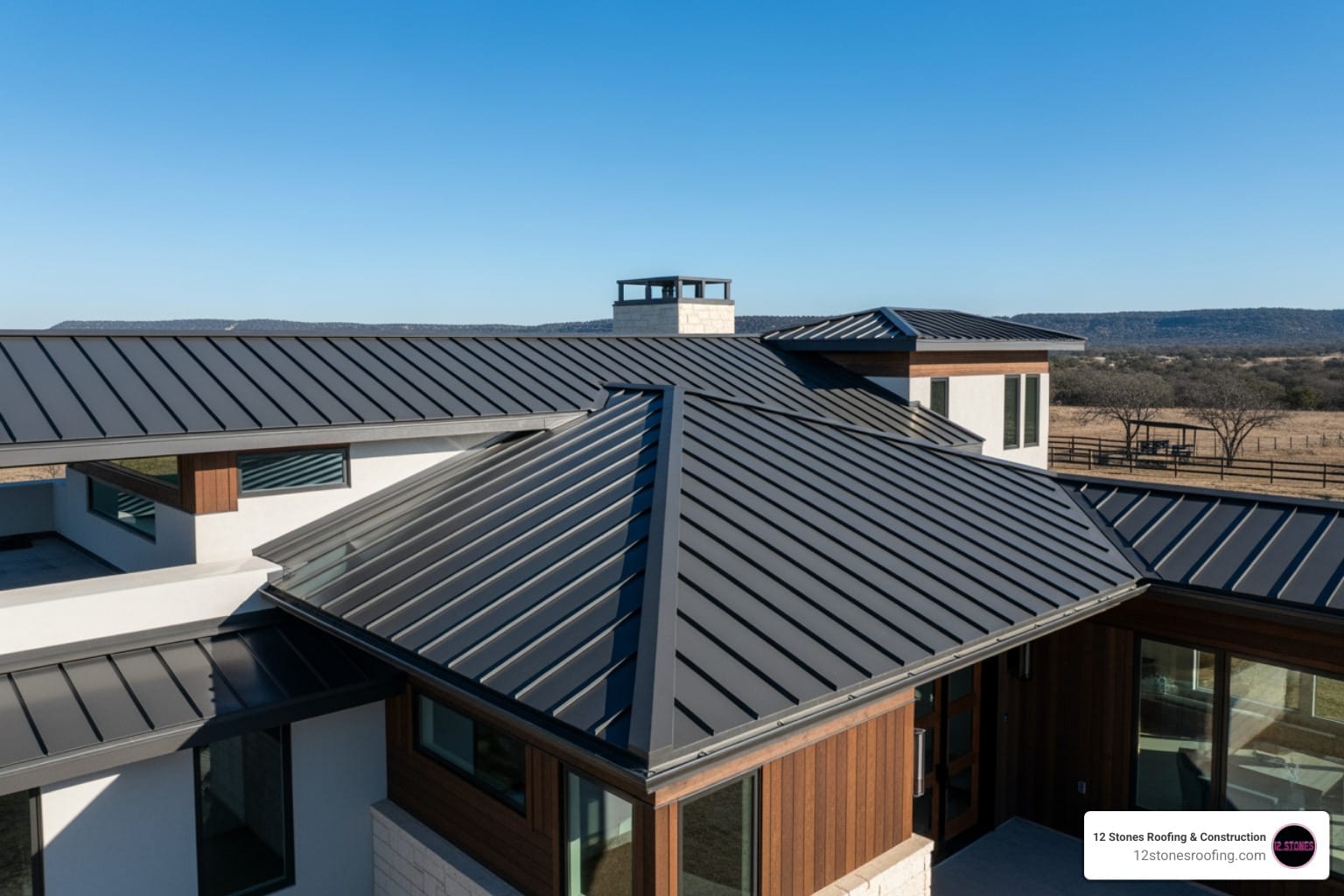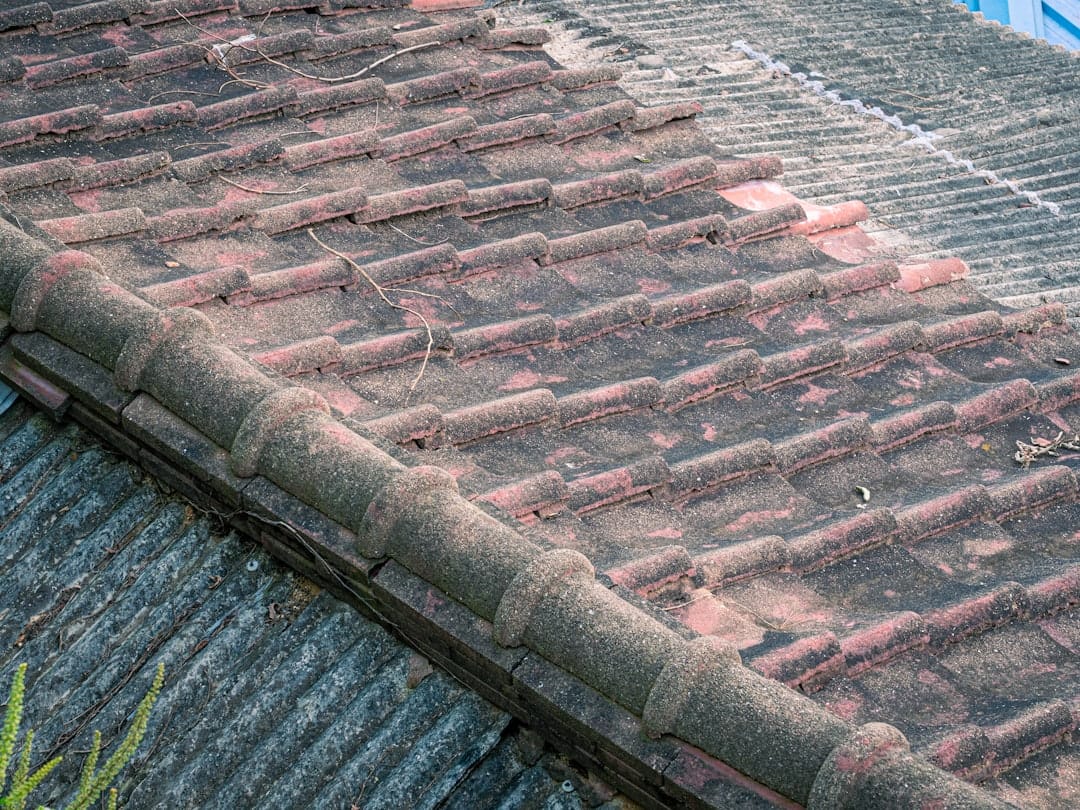

Why Commercial Roof Replacement Texas Demands Your Attention Now
A commercial roof replacement Texas is a critical investment that protects your business from the state’s extreme weather. For property owners, understanding when and how to replace a failing roof is essential for long-term operational efficiency. As a leading Pasadena, TX roofing contractor, we know that when a commercial roof shows persistent leaks, visible storm damage, or has surpassed 20 years of age, replacement becomes necessary.
Quick Guide to Finding the Right Commercial Roof Replacement Services in Texas:
- Verify contractor licensing and insurance – Confirm they’re authorized to work in your county and carry adequate liability coverage.
- Check manufacturer certifications – Look for GAF Master Elite, Owens Corning Platinum, or similar credentials.
- Request detailed proposals – Get breakdowns of materials, labor, timeline, and warranty coverage.
- Confirm local experience – Choose contractors familiar with Texas building codes and weather challenges.
- Review past projects – Ask for references from similar commercial properties in your area.
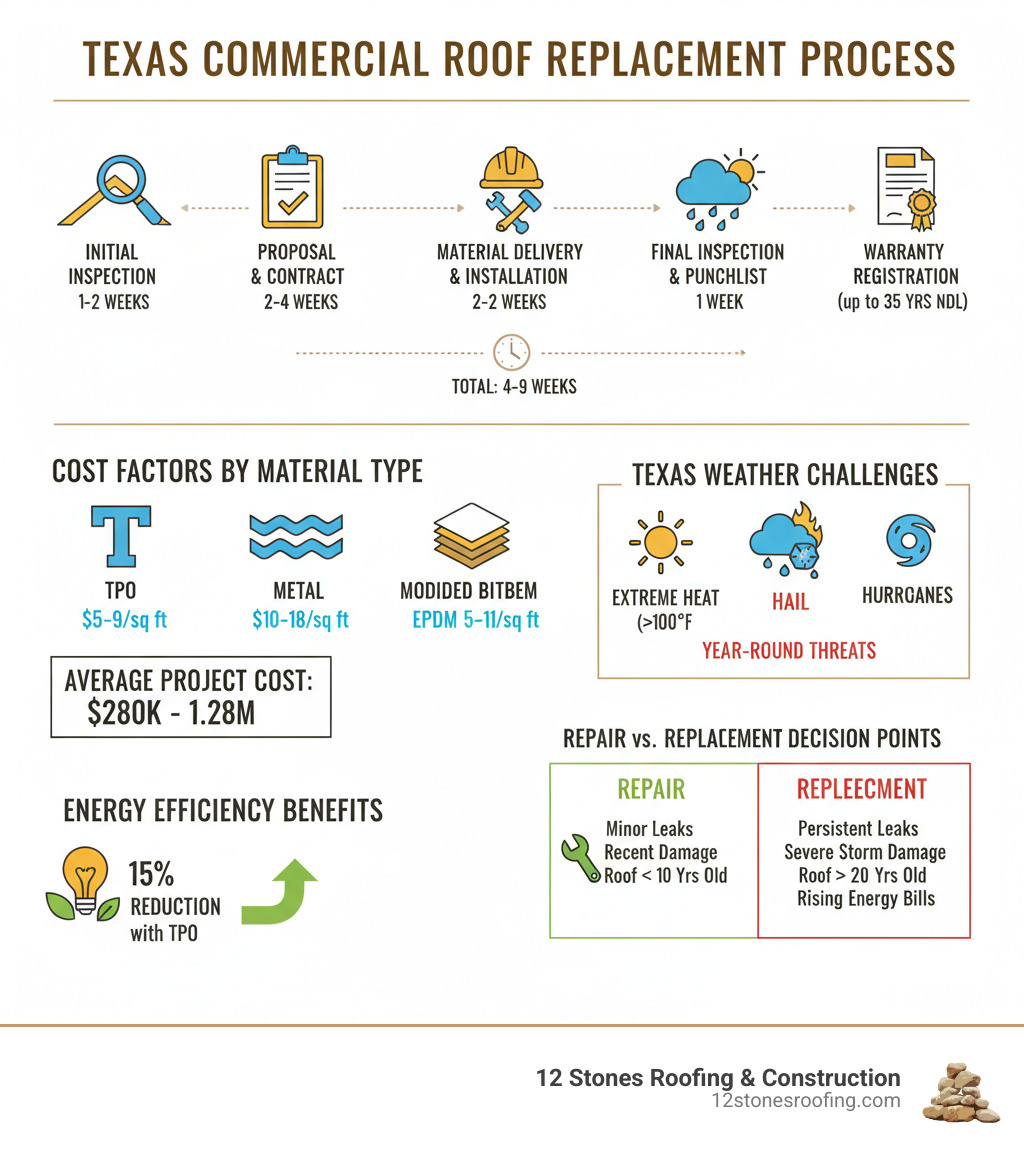
Average commercial roof replacement costs in Texas range from $280,000 to $1,280,000 for full projects, depending on size, materials, and complexity. TPO and metal roofing systems are most popular for their durability, with reflective TPO capable of reducing energy use by up to 15%.
Texas commercial roofs endure some of the harshest conditions in the country, from scorching 100°F+ summers to hurricane-force winds and hail. A small leak can quickly escalate into structural damage, mold, and costly business interruptions. A planned roof replacement transforms these vulnerabilities into long-term advantages, including improved energy efficiency, higher property value, and reliable protection for decades.
As a Service-Disabled Veteran-owned business, 12 Stones Roofing & Construction has led commercial roof replacement Texas projects for over a decade. We specialize in TPO, EPDM, and modified bitumen systems designed for Texas weather, ensuring every project meets the highest standards.
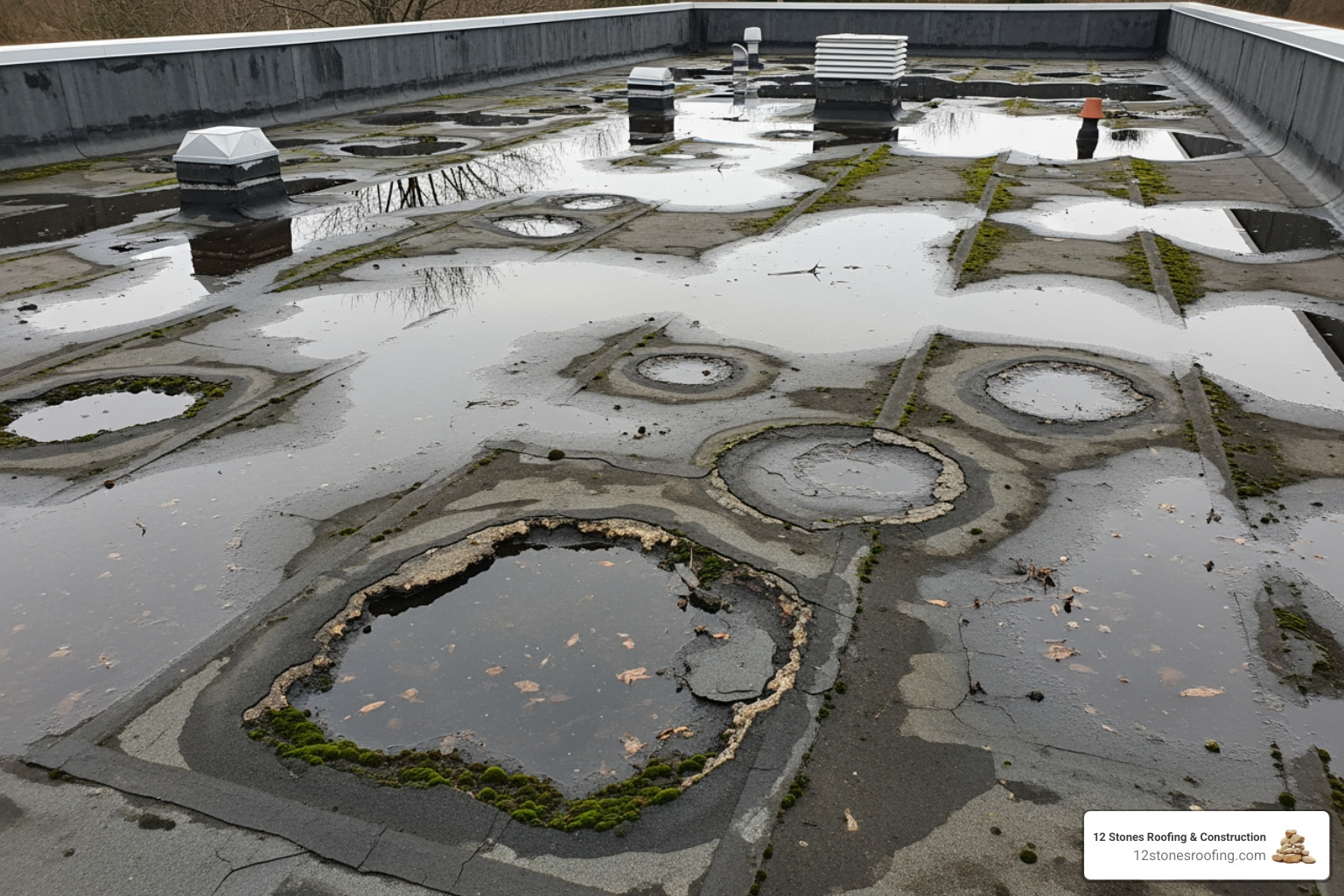
Is It Time for a Replacement? Key Warning Signs for Texas Commercial Roofs
Recognizing warning signs early is about protecting your business, employees, and bottom line. In Texas, where weather swings from scorching heat to violent hail, a minor issue today can become a major crisis tomorrow.
Key red flags include:
- Persistent Leaks & Water Stains: The most obvious signs. If you’re constantly patching leaks or see stains on ceiling tiles, the entire system is likely compromised.
- Blistering or Sagging: On flat roofs, bubbles (blisters) signal trapped moisture, while sagging indicates a compromised structure or waterlogged insulation.
- Ponding Water: Puddles that remain for 48 hours or more accelerate deterioration and add immense weight to your roof structure.
- Visible Storm & Hail Damage: Torn membranes, displaced materials, or dents from hail weaken your roof’s protective layers and create future leak points.
- Cracked Flashing: Deteriorated seals around HVAC units, vents, and skylights are common failure points for water intrusion.
- Rising Energy Bills: A sudden spike in cooling costs often means your roof’s insulation has lost its effectiveness, forcing your HVAC system to work overtime.
- Roof Age Over 20 Years: Most commercial roofing systems have a finite lifespan. Past 20 years, replacement is often more cost-effective than continuous repairs.
When to Repair vs. When to Replace Your Commercial Roof in Texas
Deciding between repair and replacement is a critical financial decision.
Repairs make sense for isolated, containable issues on a relatively new roof, such as a single puncture or a localized leak. If the surrounding roof system is in good condition, a quality repair can extend its life. For more on this, see our info about roof repair solutions.
Replacement is necessary when you face widespread damage, frequent repairs, or an outdated system. If you’re calling a roofer every few months, the cumulative cost of repairs can quickly approach or exceed the price of a new roof. A commercial roof replacement Texas project also allows you to upgrade to modern, energy-efficient materials that comply with current building codes.
The High Cost of Delaying a Necessary Replacement
Delaying a roof replacement is a costly mistake that can lead to a cascade of problems:
- Structural Damage: Water seeps into decking and corrodes metal supports, leading to repairs that are exponentially more expensive than the roof itself.
- Mold Growth: Leaks create damp, dark spaces perfect for mold, posing health risks and requiring costly professional remediation.
- Inventory & Asset Loss: A single major leak can destroy products, equipment, and materials, causing significant financial harm and business interruption.
- Safety Hazards: Water on floors creates slip-and-fall risks, while moisture near electrical systems can cause shorts or fires.
- Decreased Property Value: A compromised roof is a major red flag for potential buyers or tenants, immediately lowering your property’s market value.
- Higher Future Costs: A delayed project often becomes more complex, involving structural repairs, mold remediation, and interior restoration, inflating the final bill.
Planning Your Commercial Roof Replacement in Texas
A full commercial roof replacement in the Houston area can range from $280,000 to over $1,280,000. Careful planning transforms this significant expense into a strategic business advantage. By breaking down the process—from material selection to budgeting—you can make a calculated decision that pays dividends in energy savings and property protection. This structured approach is key to any successful commercial roofing project.
Common Roofing Materials for the Texas Climate
Choosing the right material depends on your budget, energy goals, and building type. Each option offers a different balance of cost, longevity, and performance in Texas’s demanding climate.
- TPO (Thermoplastic Polyolefin): The workhorse of Texas roofing. Costs $4.50-$8.50/sqft with a 20-30 year lifespan. Its reflective white surface can cut cooling costs by up to 15%.
- Metal Roofing: A premium choice for longevity. Costs $8-$14/sqft but lasts 40-50+ years. It offers superior resistance to hail and high winds.
- Modified Bitumen: A durable, multi-layer system ideal for roofs with foot traffic. Costs $5-$9/sqft and lasts 20-25 years. Its granulated surface provides excellent puncture resistance.
- EPDM (Ethylene Propylene Diene Monomer): A budget-conscious rubber roofing option. Costs $4-$8/sqft with a 20-25 year lifespan. It excels at withstanding UV exposure but absorbs more heat.
- PVC (Polyvinyl Chloride): A top-tier membrane with superior chemical resistance, ideal for restaurants or industrial facilities. Costs $7-$12/sqft and lasts 25-35 years.
The Step-by-Step Replacement Process from Start to Finish
Our refined process ensures efficiency and quality with minimal business disruption.
- Initial Inspection: A thorough assessment using drone imagery and moisture detection to find all visible and hidden damage.
- Detailed Proposal: A transparent quote outlining the recommended system, scope of work, materials, timeline, and complete cost breakdown.
- Material Selection: We help you choose the ideal system (TPO, metal, etc.) that balances your budget, energy goals, and building needs.
- Old Roof Tear-Off: Safe and efficient removal of the old system, exposing the underlying deck for inspection.
- Substrate Preparation: We repair or replace any damaged decking and upgrade insulation to meet modern energy codes.
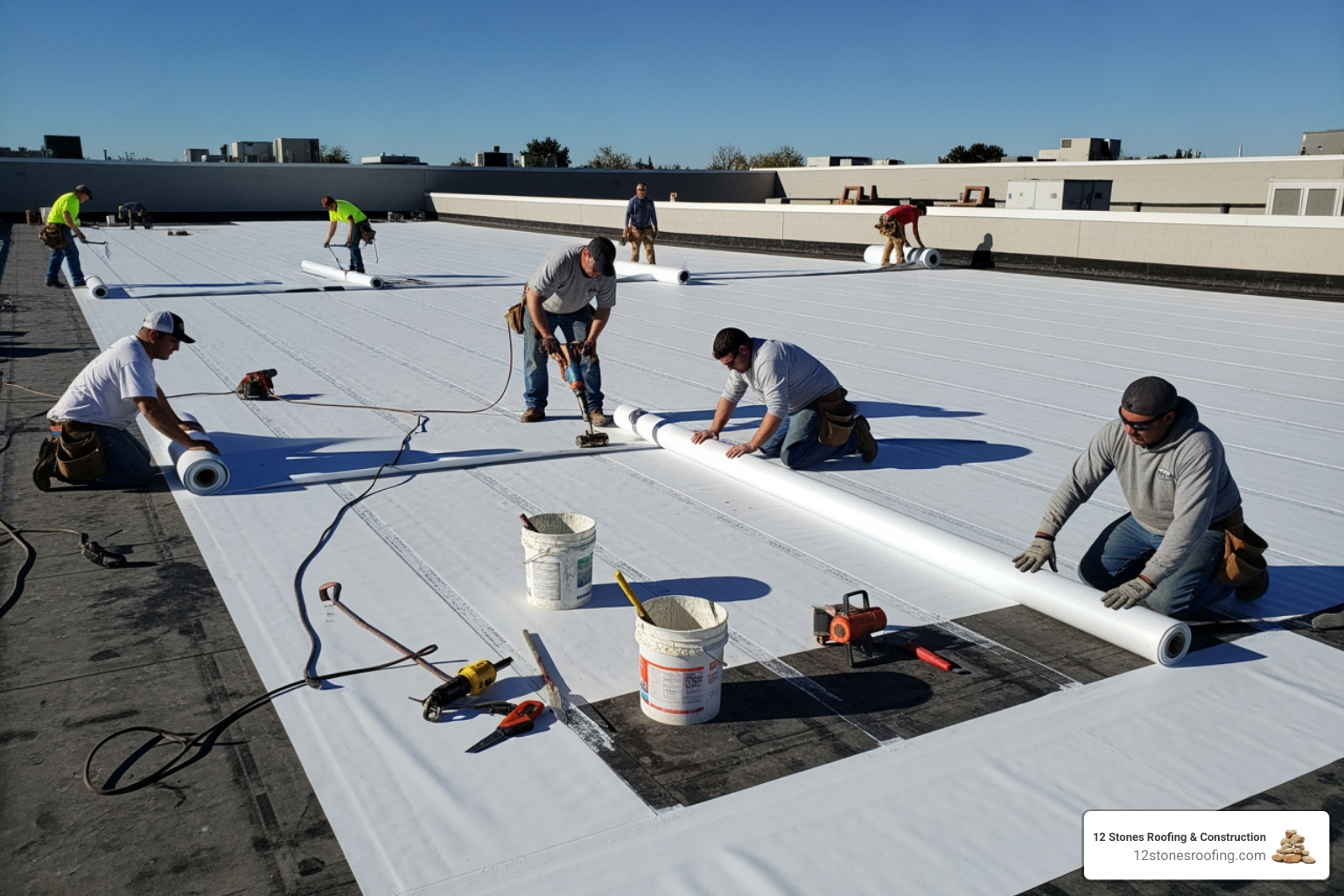
- New System Installation: Our certified crews install the new roof according to strict manufacturer specifications, including heat-welding seams for a watertight finish.
- Flashing and Detail Work: Meticulous sealing around all penetrations (HVAC units, pipes, vents) to prevent leaks at the most vulnerable points.
- Final Inspection: A comprehensive quality review to ensure code compliance and your complete satisfaction.
- Site Cleanup: We leave your property cleaner than we found it, removing all debris and running magnetic sweepers to collect stray fasteners.
Budgeting for Your Project: What Does a Commercial Roof Replacement Cost in Texas?
Understanding the costs is key to planning your commercial roof replacement Texas.
- Cost Per Square Foot: This is your primary metric, driven by material choice. TPO ranges from $4.50-$8.50, while metal can be $8-$14 or more.
- Roof Size & Complexity: Larger roofs cost more overall, but complex designs with many penetrations or angles increase labor costs.
- Labor Costs: Reflects the skill of certified installers. Quality installation prevents premature failure and is a worthwhile investment.
- Permit Fees & Debris Disposal: Necessary costs for code compliance and site cleanup. These can add $10,000-$30,000+ to large projects.
- Warranty Costs: Extended No Dollar Limit (NDL) warranties offer comprehensive, long-term protection and are a valuable part of the investment.
To understand the specific costs for your property, it’s best to get a free roof replacement estimate.
Texas-Specific Challenges & Solutions
The Lone Star State’s climate and regulations present unique problems for commercial roofing. A successful project requires a deep understanding of these local challenges to ensure your new roof is durable, compliant, and insurable.
How Texas Weather Impacts Your Roof’s Lifespan
Texas weather is a relentless force that shortens the lifespan of improperly chosen or installed roofing systems. The combination of factors is what makes our climate so punishing.
- Extreme Heat & UV Degradation: The constant cycle of expansion and contraction from 100°F+ days and cooler nights causes thermal stress, leading to cracks and warping. The intense sun also bombards materials with UV radiation, making them brittle.
- Hurricane-Force Winds & Hail: Along the Gulf Coast, high winds can peel back membranes. Across “Hail Alley” in Central and North Texas, hailstorms can puncture membranes and dent metal panels, causing immediate or future leaks.
- Heavy Rainfall & Humidity: Sudden downpours can overwhelm drainage systems, leading to ponding water that accelerates rot. High humidity, especially in East Texas, fosters mold and mildew growth.
These factors demand resilient materials like TPO and metal, which are engineered to resist thermal shock, UV damage, and physical impacts. Addressing storm damage promptly is critical; learn more from our guide to hail damage roof repair.

Navigating Local Building Codes and Insurance Requirements
A commercial roof replacement Texas project must steer a complex web of local codes and insurance rules. Compliance is non-negotiable.
- Permitting Process: Municipalities like Houston and Pasadena require permits to ensure projects meet safety and quality regulations. A professional contractor handles this process to prevent delays and fines.
- Wind Uplift Standards: Texas building codes mandate specific installation methods and fastening patterns to ensure your roof can withstand hurricane-force winds.
- Energy & Drainage Codes: State codes dictate minimum insulation values (R-values) and proper drainage design to improve energy efficiency and prevent ponding water.
- Insurance Claim Process: If your replacement is due to storm damage, the claim process can be daunting. We have extensive experience working with insurance adjusters, providing the detailed documentation needed to facilitate a smooth claim. Our team acts as your advocate to ensure all damage is identified and covered. For more details, see our page on roofing insurance claims.
Maximizing Your Investment: Long-Term Value and Efficiency
A roof replacement is an opportunity to upgrade a critical business asset. A modern roofing system can reduce operational costs, improve building performance, and increase your property’s market value for decades.
Cool Roofs & Energy Efficiency: Lowering Costs in the Texas Heat
In Texas, a “cool roof” is one of the smartest investments you can make during a commercial roof replacement Texas project. These systems use highly reflective surfaces to bounce sunlight away from your building, delivering significant benefits.
- Drastic Temperature Reduction: A cool roof can be 50-60°F cooler than a traditional dark roof on a hot day.
- Proven Energy Savings: White TPO systems can cut a building’s energy consumption by up to 15%, translating to thousands of dollars in annual savings on cooling costs.
- Lower HVAC Strain: By reducing the heat load on your building, cool roofs decrease the workload on your HVAC equipment, extending its lifespan and reducing maintenance needs.
- Potential Tax Credits: Investing in energy-efficient roofing may qualify your business for local, state, or federal incentives, further improving your ROI.
To learn more about these systems, explore our Energy efficient roofing options. You can also verify material performance through the Cool Roof Rating Council (CRRC), an independent rating organization.
Understanding Commercial Roofing Warranties
A strong warranty is your safety net, protecting your investment for years. However, not all warranties are equal.
- Manufacturer NDL Warranties: The gold standard. A No Dollar Limit (NDL) warranty covers 100% of material and labor costs for failures due to manufacturing or installation errors, with terms up to 35 years. This provides complete, non-prorated protection.
- Workmanship Warranties: Provided by the contractor, this warranty covers any issues arising from the installation itself, typically for one to ten years.
- Key Coverages: For Texas, ensure your warranty includes coverage for wind damage. Puncture coverage is also important for roofs with regular foot traffic.
Understanding the difference between a non-prorated NDL warranty and a pro-rated one (which decreases in value over time) is crucial. We provide transparent documentation for all our protection plans. See Our roofing warranty information for details.
Post-Replacement Maintenance for Longevity
Proactive maintenance is the key to ensuring your new roof reaches its maximum lifespan. A simple plan can prevent costly problems down the road.
- Routine Inspections: Schedule professional inspections twice a year and after any severe weather event to catch small issues early.
- Debris Removal: Regularly clear leaves, branches, and trash that can trap moisture and block drainage.
- Gutter and Drain Cleaning: Keep drainage systems clear to prevent ponding water, a leading cause of premature roof failure.
- Seam and Flashing Checks: Periodically inspect these vulnerable areas for any signs of separation or deterioration.
- Maintain a Logbook: Keep detailed records of all inspections and repairs for warranty and insurance purposes.
For a simple guide, Download our roof maintenance checklist to keep your investment protected.
Frequently Asked Questions about Commercial Roof Replacement in Texas
Facing a commercial roof replacement Texas project brings up many questions. Here are clear, direct answers to the most common inquiries we receive from business owners.
How long does a commercial roof replacement take?
Most commercial roof replacements in Texas take from a few days to several weeks. The exact timeline depends on the roof’s size, complexity, and weather. A small, simple roof might take 3-5 days, while a large, complex facility could take 2-4 weeks. A professional contractor will provide a detailed schedule upfront and communicate clearly about any weather-related delays to minimize disruption.
Can my business remain open during the replacement?
Yes, in almost all cases, your business can operate normally. We understand that closing is not an option. A professional contractor implements a comprehensive safety and logistics plan. This includes sectioning off work areas with clear signage, managing debris continuously, scheduling noisy work during off-hours when possible, and maintaining safe access for your employees and customers at all times.
What is the difference between a roof restoration and a replacement?
A roof restoration extends the life of your current roof, while a replacement gives you a brand new one.
-
Restoration is the application of a liquid coating system over your existing roof. It’s a cost-effective solution (often 40-60% less than replacement) that can add 10-15 years of life to a roof that is structurally sound but showing surface wear. It seals minor leaks and improves reflectivity.
-
Replacement is necessary when the underlying system is failing. This includes a rotted deck, saturated insulation, or widespread membrane failure. Coating over a failing system only hides the problem. A full replacement is the only viable long-term solution for a roof that has reached the end of its functional life.
Secure Your Business with a Trusted Texas Partner
Your commercial roof replacement Texas project demands a partner who understands the stakes. The contractor you choose determines whether your investment protects your business for decades or becomes a source of constant problems. A qualified, local expert brings invaluable experience with Texas weather, materials, and building codes.
When evaluating contractors, look for a strong local reputation backed by verifiable credentials. Proper licensing, insurance, and manufacturer certifications (from brands like GAF or Owens Corning) are non-negotiable. You can verify a contractor’s standing through organizations like the National Roofing Contractors Association (NRCA).
As a local Pasadena-based contractor, 12 Stones Roofing & Construction has built our reputation on quality work that stands up to everything Texas throws at it. We are your neighbors, and we’ll be here long after the job is done. If you’re looking for experienced roofers in the Pasadena area who treat your property like their own, we are ready to help.
Your business depends on a roof that performs. For a detailed assessment of your commercial roof and a clear path forward, contact us for your commercial roofing project today. We’ll walk you through every step and deliver a solution that earns your trust.