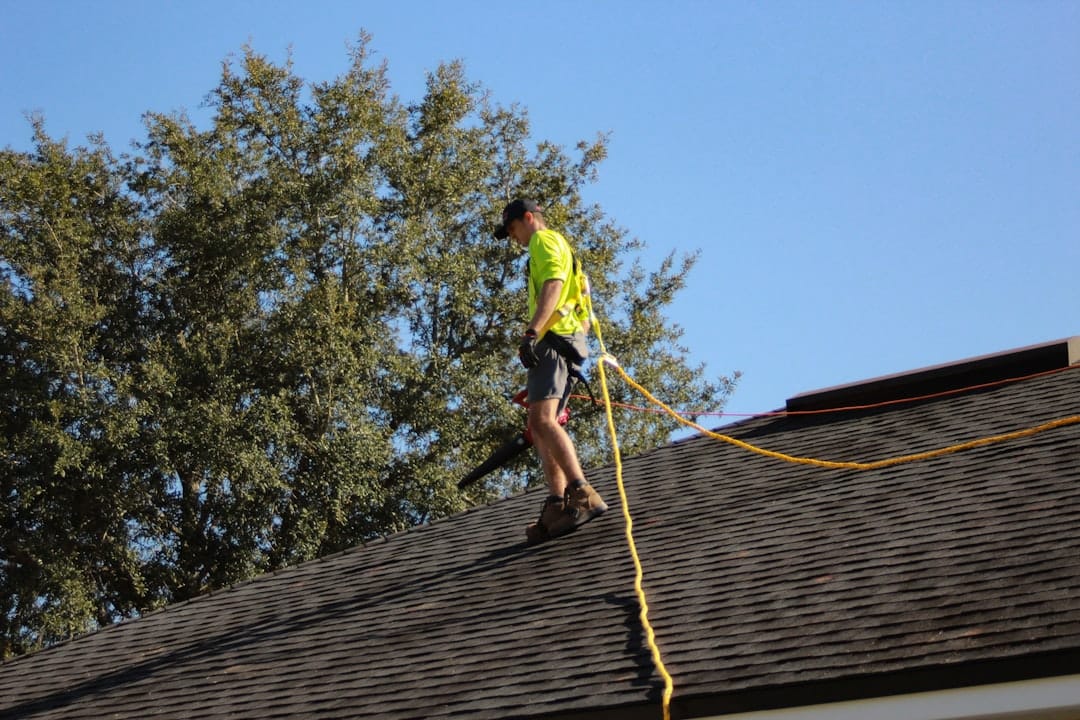

Why EPDM Rubber Roofing Contractors Are the First Call You Should Make
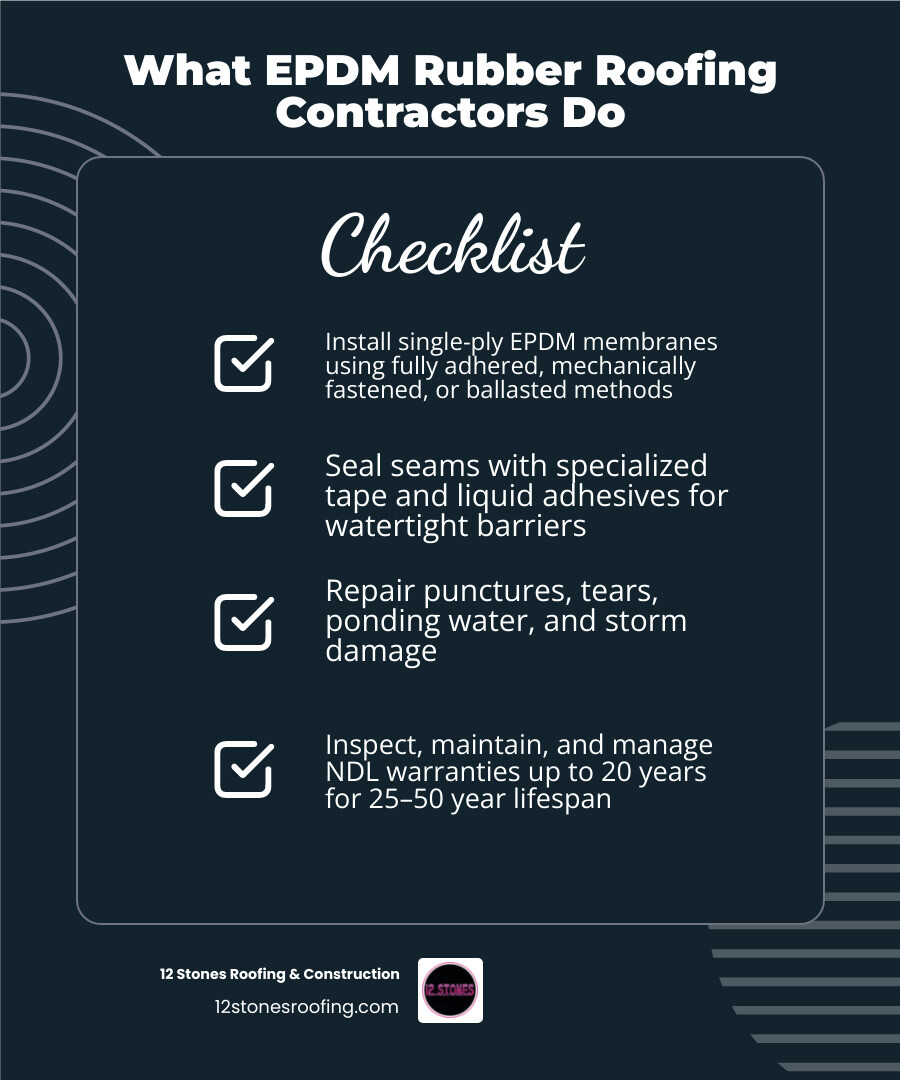
EPDM rubber roofing contractors are licensed professionals who install, repair, and maintain synthetic rubber membrane roofing systems on flat and low-slope buildings. Here is what they do and why it matters:
- Install single-ply EPDM membranes using fully adhered, mechanically fastened, or ballasted methods
- Seal seams with specialized tape and liquid adhesives to create a watertight barrier
- Repair damage from punctures, tears, ponding water, and storm impact
- Manage warranties — including No Dollar Limit (NDL) coverage up to 20 years
- Inspect and maintain roofs to extend service life to 25–50 years
If your Pasadena commercial property took a hit from Texas storms, or your flat roof is showing its age, the right contractor is the difference between a quick fix and a decades-long solution. Our EPDM roofing services are built for exactly that situation.
EPDM — short for Ethylene Propylene Diene Monomer — has been a trusted commercial roofing material since the early 1960s. Lab testing and field data from the EPDM Roofing Association confirm that properly installed membranes last 38 years or more. That is not marketing language. That is measured performance.
But the membrane is only part of the equation. As one industry expert put it: workmanship matters more than materials. A poorly installed EPDM roof can fail within a decade — from insufficient fasteners, low-grade adhesives, or membrane punctures during installation. The right contractor prevents all of that.
I’m Jason Roberts, owner of 12 Stones Roofing & Construction, a Service-Disabled Veteran-Owned firm based in Pasadena, Texas, with over a decade of hands-on experience working with EPDM rubber roofing contractors and commercial flat roofing systems across the Gulf Coast. In this guide, I’ll walk you through everything you need to know — from how EPDM works to what separates a great contractor from a costly mistake.
EPDM rubber roofing contractors basics:
Understanding the Critical Role of EPDM Rubber Roofing Contractors
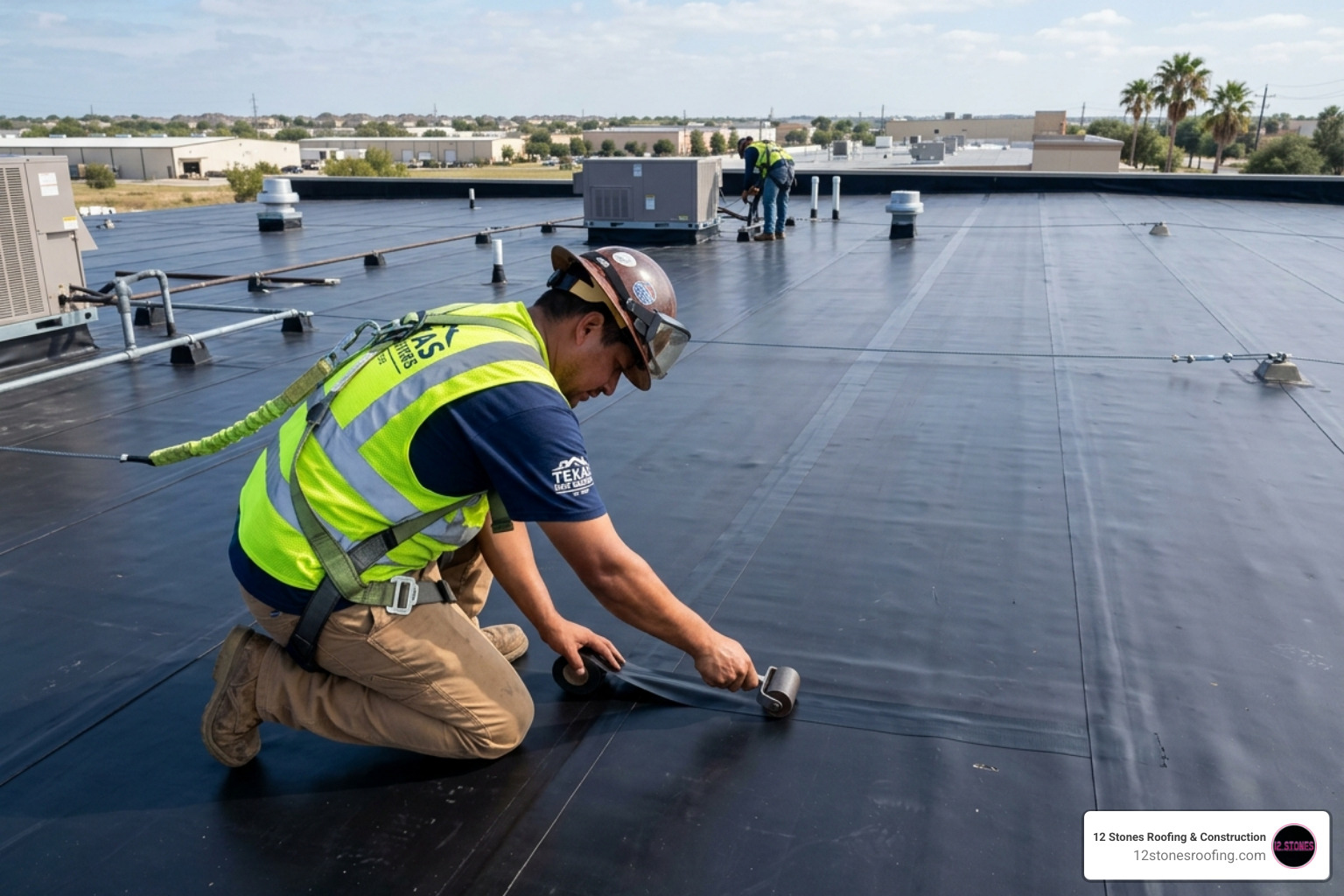
When it comes to flat roofs, the margin for error is razor-thin. Unlike sloped roofs where gravity does most of the heavy lifting, flat roofs rely entirely on the integrity of the membrane and the precision of the seal. This is where professional EPDM rubber roofing contractors become your most valuable asset.
The role of a contractor extends far beyond just rolling out rubber. We start with meticulous surface preparation. If the substrate is damp, uneven, or contaminated with old adhesive, the new membrane won’t bond. We then navigate the complexities of “flashing”—the process of sealing the membrane around HVAC units, pipes, and skylights. These are the most common leak points, and getting them right requires a level of detail that only comes with years of experience.
Furthermore, certified contractors provide access to No Dollar Limit (NDL) warranties. These are the “gold standard” in the industry, often covering both materials and labor for up to 20 years without a cap on the repair cost. To offer these, a contractor must be vetted and approved by the manufacturer, ensuring that your roof is installed to strict specifications. For a deeper dive into the technical side, consult our EPDM Roofing Complete Guide.
Why Professional EPDM Rubber Roofing Contractors Are Indispensable
You might be tempted to hire a general handyman for a quick patch, but EPDM is a specialized material. Professional EPDM rubber roofing contractors utilize advanced tools—like silicone rollers for seam pressure and heavy-duty heat welders for specific reinforced membranes—that the average contractor simply doesn’t carry.
Precise adhesive application is another deal-breaker. Apply too much, and you get “gas-off” bubbles; apply too little, and the wind will peel your roof back like a banana skin. Manufacturer certification guarantees that our team at 12 Stones Roofing & Construction follows the exact chemical requirements for the primers and glues used. This professional approach delivers a significant long-term return on investment (ROI) by minimizing future repair costs and extending the roof’s service life. Learn more about professional EPDM roof installation and how it protects your bottom line.
Selecting the Best EPDM Rubber Roofing Contractors for Your Project
In the Pasadena and La Porte area, you need a contractor who understands the Texas sun. When selecting a partner, look for:
- Local Reputation: Do they have a physical office in the area? (We are located right here in Pasadena, TX).
- Insurance Coverage: Never settle for a contractor without both general liability and workers’ compensation.
- Portfolio: Ask to see local commercial projects. EPDM behaves differently on a small residential flat roof than it does on a 50,000-square-foot warehouse.
For businesses seeking local EPDM roofing contractors in Pasadena, TX, verifying local references is the best way to ensure you aren’t hiring a “storm chaser.” Discover more about the material’s fascinating history in The EPDM Story: Everything You Need to Know About This Versatile Material.
Installation Methods and Cost Factors for EPDM Rubber Roofs
The way your roof is attached to the building changes the price and the performance. Here is a breakdown of how EPDM rubber roofing contractors typically approach these projects:
| Method | Advantages | Disadvantages | Best For |
|---|---|---|---|
| Fully Adhered | Lightweight, smooth look, high wind resistance | Most labor-intensive, higher cost | Any roof size, high-wind areas |
| Mechanically Fastened | Fast installation, works in most weather | Fasteners can pull over time | Large warehouses, non-concrete decks |
| Ballasted | Least expensive, excellent fire rating | Very heavy, hard to find leaks under rock | Buildings that can handle the weight |
Material thickness also plays a massive role. While 45-mil is the entry-level standard, we often recommend 60-mil or even 90-mil for properties that see a lot of foot traffic or hail. Material costs typically range from $2 to $8 per square foot, influenced by thickness and whether you choose reinforced or non-reinforced membranes. Total project averages for commercial installations generally fall between $8,000 and $25,000, though this varies based on the “prep work” required—such as removing old layers of asphalt or installing new insulation boards. Explore various EPDM Rubber Roofing Materials to see which fits your budget.
Primary Installation Techniques Employed by EPDM Rubber Roofing Contractors
In our local climate, the fully adhered method is often the winner. We bond the EPDM membrane directly to the insulation using a high-strength liquid adhesive. This creates a “monolithic” layer that doesn’t flutter in high winds.
For larger industrial spaces, mechanical attachment uses heavy-duty screws and plates to pin the rubber down. It’s faster, but it creates more “points of failure” if a fastener isn’t driven correctly. Ballasted systems are the old-school choice; we lay the rubber down and cover it with several tons of river rock. The weight of the rock holds the roof in place. While cheap, it’s a nightmare to find a leak when you have to shovel three inches of stone out of the way first! For insights into precise membrane application, see our blog on EPDM Membrane Installation Made Easy.
Unmatched Longevity and Performance in Extreme Climates
EPDM is essentially the “Turtles” of the roofing world—it just keeps going. While many roofing materials start to get “crunchy” and brittle after a decade of Texas UV exposure, EPDM remains flexible.
- UV Resistance: Carbon black is a primary ingredient in black EPDM, which acts as a natural sunblock, preventing the chemical breakdown that plagues other plastics.
- Thermal Shock: In Pasadena, we can go from a 100°F afternoon to a 60°F thunderstorm in twenty minutes. EPDM can expand and contract without cracking, handling temperatures from -40°F to 300°F.
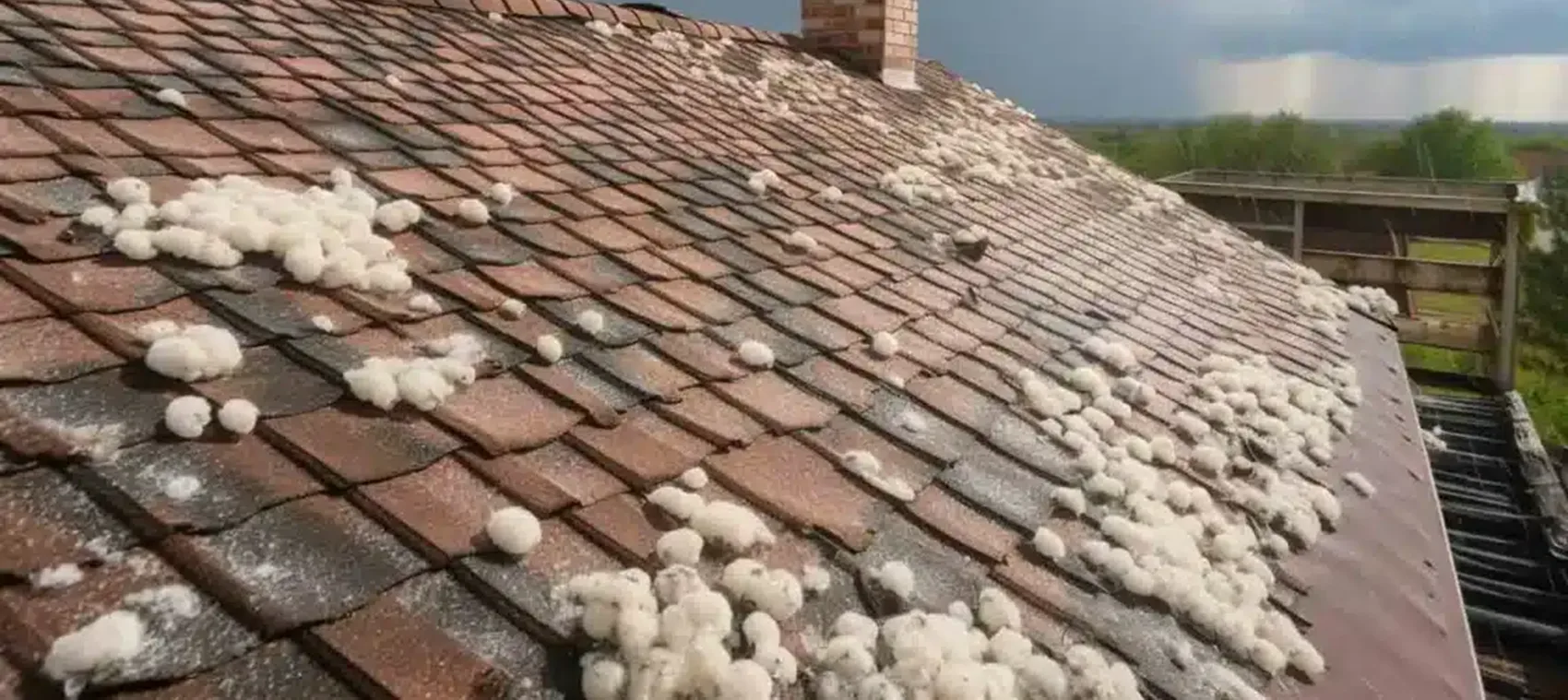
- Hail Resistance: Because it is rubber, it has a natural “bounce.” While a large hailstone might crack a shingle or dent a metal roof, it often just bounces off a 60-mil EPDM membrane.
- Ozone Protection: EPDM is chemically designed to resist atmospheric pollutants, meaning it won’t rot or degrade even in industrial zones near the Houston Ship Channel.
Comparing EPDM to TPO and Other Commercial Systems
When you talk to EPDM rubber roofing contractors, the conversation usually turns to TPO. TPO is white and reflective, which is great for energy bills in the summer. However, EPDM has a much longer track record. We have seen EPDM roofs that are 40 years old and still watertight; TPO is a newer technology that hasn’t quite reached that “grandparent” status yet.
Compared to Modified Bitumen (the “torch-down” asphalt roofs), EPDM is much lighter and requires no open flames on your roof during installation—a huge plus for insurance premiums. While EPDM isn’t as easily recyclable as some newer thermoplastics, its sheer longevity makes it eco-friendly. If you only have to replace your roof once every 40 years instead of every 15, you are keeping a massive amount of waste out of Texas landfills. Understanding the nuances of EPDM Roofing helps in making an informed decision for your specific building. However, always keep an eye on The Not-So-Sunny Side: Common Problems with EPDM Roofing to stay ahead of maintenance.
Proactive Maintenance and Repair: Extending Your Roof’s Lifespan
You wouldn’t buy a truck and never change the oil. Your roof is the same. Proactive maintenance is the secret to getting that 50-year lifespan. We recommend bi-annual inspections—once in the spring and once in the fall—to check the following:
- Seam Integrity: Heat and age can eventually cause seam tape to “creep.” Catching a loose seam early costs a few hundred dollars; waiting until it leaks can cost thousands in interior damage.
- Drainage: If leaves or debris clog your scuppers, you get “ponding water.” EPDM is waterproof, but the weight of standing water can stress the building’s structure.
- Puncture Checks: HVAC technicians or satellite installers often drop tools or screws. A tiny puncture in a rubber roof can act like a straw, sucking water into your insulation.
If your roof is starting to look “chalky” or is reaching the 20-year mark, we can often apply a silicone roof coating. This creates a new, seamless UV barrier that can add another 10-15 years to the system’s life for a fraction of the cost of a full replacement. Learn more about our specialized Rubber Roof Repair in Pasadena, TX.
Frequently Asked Questions about EPDM Contractors
How long does an EPDM roof last?
An EPDM roof, when professionally installed and properly maintained, typically lasts between 25 to 50 years. Lab tests on 30-year-old samples show that the rubber often retains nearly all of its original physical properties.
What is the average cost per square foot for EPDM?
The average material cost for EPDM ranges from $2 to $8 per square foot. When you add in professional labor, insulation, and old roof removal, the total installed cost generally falls between $8 to $15 per square foot.
Is EPDM better than TPO for flat roofs?
“Better” depends on your goal. If you want the absolute longest lifespan and the best resistance to hail and thermal shock, EPDM wins. If your primary goal is reducing your AC bill through “cool roof” reflectivity, TPO might be the better fit. In Texas, we often recommend EPDM for industrial buildings and TPO for retail or office spaces where cooling costs are the highest priority.
Conclusion
EPDM rubber roofing contractors are more than just installers; they are the guardians of your commercial investment. At 12 Stones Roofing & Construction, we bring local expertise, military-grade discipline, and a deep understanding of the Pasadena and La Porte climate to every project. Whether you need a minor repair to stop a persistent leak or a full-scale commercial installation, we provide the transparent, reliable service you deserve.
Don’t wait for the next Gulf Coast storm to test your roof’s limits. Protect your assets with a solution that is proven to last for decades.
Ready to secure your property? Call us today at 832-648-4375 for a free inspection or visit our site to Protect your assets with professional EPDM roofing. We’ll make sure your roof is the last thing you have to worry about.