
Why EPDM Has Become Construction’s Most Trusted Waterproofing Solution
EPDM in construction refers to the use of Ethylene Propylene Diene Monomer, a synthetic rubber membrane widely employed for waterproofing and sealing applications. As a leading Pasadena, TX roofing contractor, we’ve seen how this material protects commercial and residential buildings. Here’s what you need to know:
- What it is: A durable, flexible synthetic rubber membrane made from ethylene, propylene, and diene monomer.
- Primary use: Low-slope and flat roofing systems, though also used for waterproofing, sealing, and facade protection.
- Key benefit: Exceptional longevity of 30+ years with minimal maintenance.
- Available formats: Black or white membranes in 45, 60, or 90 mil thicknesses.
- Installation methods: Fully adhered, mechanically attached, or ballasted systems.
If you’re a property owner facing decisions about roof replacement or repair, understanding EPDM can help you make an informed choice that protects your investment for decades.
EPDM has quietly revolutionized the roofing industry since 1963, when the first EPDM roof was installed at Chicago’s O’Hare Airport—a roof that’s still performing today, more than 60 years later. This remarkable durability isn’t an accident. EPDM’s molecular structure, created through a process called vulcanization, gives it exceptional resistance to UV radiation, ozone, extreme temperatures, and weathering. It remains flexible from -40°C to 160°C, meaning it won’t crack under Texas’s scorching summers or split during rare cold snaps.
The versatility of this material extends far beyond roofing. While most people know EPDM as a flat roofing solution, it’s also used for basement waterproofing, window and door seals, expansion joints, green roof systems, and even pond liners. Its non-toxic, fish-safe properties and complete recyclability at end-of-life make it an environmentally responsible choice that aligns with modern sustainability standards.
For commercial building owners and facility managers in the Gulf Coast region, EPDM offers a compelling combination of long-term value, proven performance, and reduced maintenance costs. The material’s resistance to ponding water makes it particularly well-suited for the flat roofs common in Texas commercial construction, while its flame-free installation eliminates the fire hazards and noxious fumes associated with traditional built-up roofing systems.
As Jason Roberts, owner of 12 Stones Roofing & Construction, I’ve overseen countless EPDM in construction projects across residential and commercial properties, witnessing how this versatile material consistently outperforms alternatives in the demanding Texas climate. Our team’s expertise with EPDM systems—from initial installation to long-term maintenance—has made us a trusted partner for property owners seeking durable, cost-effective roofing solutions.
Epdm in construction word roundup:
What is EPDM? A Deep Dive into the Synthetic Rubber Revolution
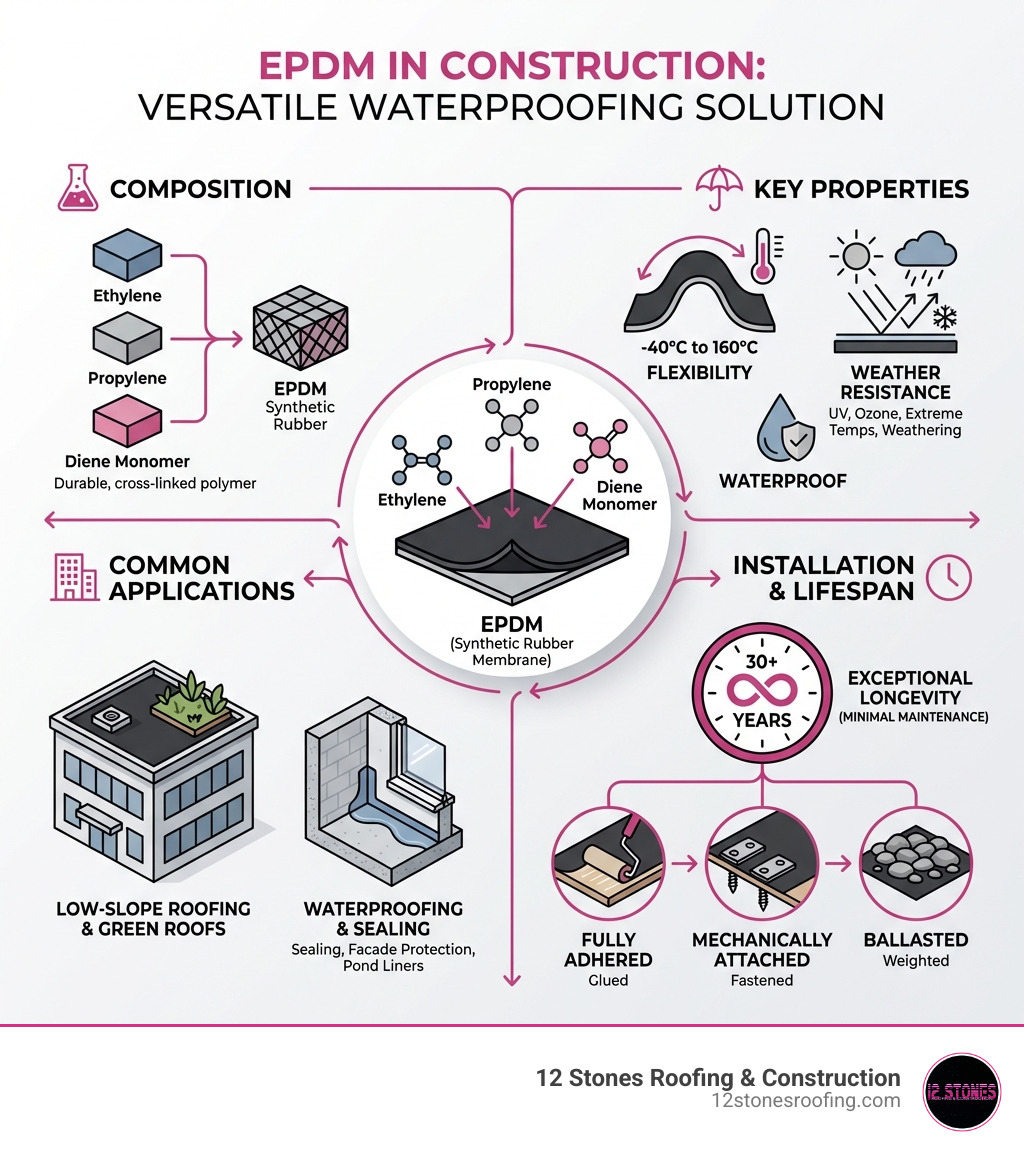
EPDM is an extremely durable synthetic rubber membrane, technically known as an ethylene propylene diene terpolymer. Its primary ingredients, ethylene and propylene, are derived from oil and natural gas. During manufacturing, these components are combined with a small amount of diene, creating a cross-linked thermoset material with exceptional elasticity, strength, and durability. This process, called vulcanization, sets the material irreversibly, giving it the stable, resilient properties that make it a cornerstone of modern construction.
Understanding EPDM’s Composition and Key Properties
EPDM’s molecular structure is the key to its success. The cross-linked polymer chains allow it to stretch and return to its original shape, preventing it from becoming brittle in extreme temperatures. It remains flexible in temperatures as low as -40°C and can withstand significant heat, UV radiation, and ozone exposure without degrading. This inherent stability is why it performs so well as a long-term waterproofing solution.
What exactly makes EPDM so special? It’s a thermoset material, meaning that once it’s cured (vulcanized), its molecular structure is permanently set. This prevents it from melting or becoming soft under high heat, unlike thermoplastic materials. This property is crucial for a roofing material exposed to the relentless Texas sun. The incorporation of a diene monomer into the ethylene and propylene backbone is what allows for this cross-linking, enhancing its rubber-like elasticity and making it incredibly resistant to tearing and fatigue.
Its exceptional weather resistance is a defining characteristic. EPDM is virtually unaffected by UV rays, ozone, and extreme temperatures, factors that can rapidly degrade other materials. This makes it an ideal choice for the demanding environmental conditions we often experience in Pasadena, TX. The material’s low compression set also means it maintains its shape and sealing capabilities even under constant pressure, which is vital for long-lasting seals and gaskets. You can learn more about its core attributes on the EPDM Roofs website.
EPDM Product Variations: Thickness, Color, and Size
Not all EPDM is the same. It is available in a variety of formats to suit different project needs and building codes. The most common thicknesses are 45 mils, 60 mils, and 90 mils (a mil is a thousandth of an inch), with thicker membranes offering greater durability. It typically comes in black or white, with black EPDM using carbon black for UV protection and white EPDM using titanium dioxide to reflect sunlight and improve energy efficiency. These membranes are produced in large sheets, some up to 50 feet wide, which helps minimize the number of seams on a roof.
The choice of thickness often depends on the specific application and expected foot traffic. For instance, a 90-mil membrane would offer superior puncture resistance in areas with higher maintenance activity. Furthermore, EPDM membranes can be either non-reinforced (NR Systems) or reinforced (R Systems). Reinforced EPDM is manufactured with a polyester mat embedded within the rubber, significantly increasing its tensile strength and resistance to tearing. This is particularly beneficial in high-wind zones or for applications where the membrane might experience greater stress.
Manufacturers like JM offer a wide array of EPDM accessories and system components to ensure a complete and watertight installation. These include:
- Flashings: Pre-formed corners, pipe boots, and peel-and-stick flashing for sealing around penetrations and edges.
- Adhesives and Sealants: Specialized bonding adhesives, seam tapes, primers, and pourable sealers designed for optimal adhesion and watertight seams.
- Insulation and Cover Boards: Compatible insulation and cover boards to improve thermal performance and provide a smooth substrate.
- Fasteners and Plates: Various fasteners and plates specifically engineered for mechanically attached EPDM systems, ensuring secure attachment to the roof deck.
- Liquid Applied Products: Liquid flashing resins and primers for creating seamless, self-terminating details around complex roof features.
These variations allow us to customize an EPDM system precisely to your building’s needs, whether it’s a commercial warehouse or a residential flat roof. For a deeper dive into the types of EPDM rubber roofing materials and their specifications, check out our blog on EPDM Rubber Roofing Materials.
The Best Advantages of Using EPDM in Construction
For decades, EPDM has proven its value with an unparalleled combination of longevity, performance, and cost-effectiveness. Its track record is remarkable; the first EPDM roof, installed on the Chicago O’Hare airport in 1963, is still performing today. This testament to its durability is why it remains a top choice for building owners who prioritize long-term value and peace of mind.
Superior Longevity and Weather Resistance
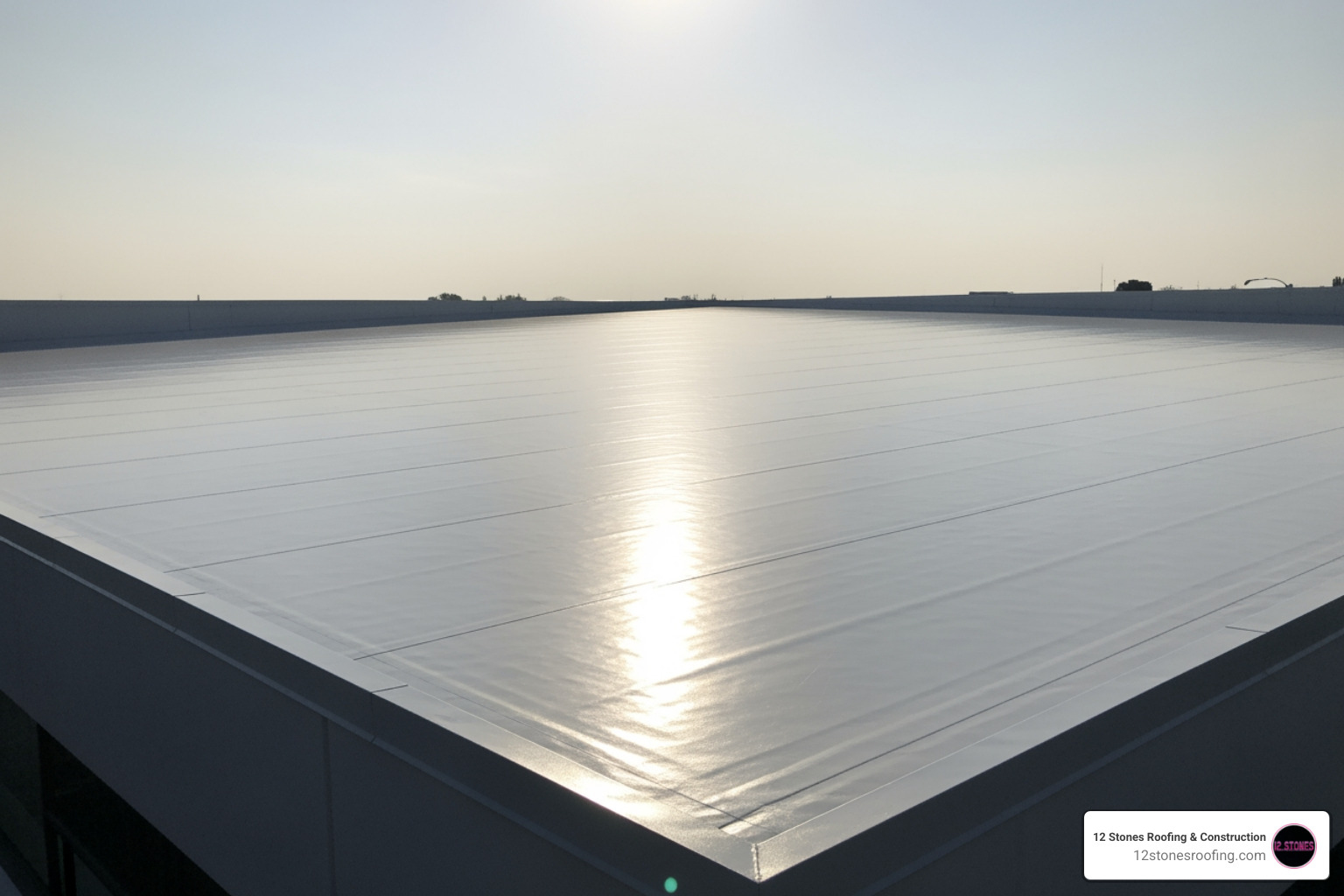
An EPDM roof system, when properly installed, can have a service life exceeding 30 years, with many lasting up to 50. Its chemical composition makes it highly resistant to weathering, hail, and thermal shock, meaning it won’t crack or split under drastic temperature changes. This resilience makes it an ideal material for protecting buildings in any climate, from harsh winters to the intense sun of a Texas summer.
The statistics speak for themselves: quality EPDM roofing systems typically last 30 years or more with proper installation and minimal maintenance. Some installations have exceeded 60 years, proving the material’s exceptional endurance. This long lifespan translates directly into long-term value, as it significantly reduces the frequency and cost of roof replacements over the building’s lifetime. When we compare this to traditional asphalt or modified bitumen systems, which often require more frequent repairs and replacements, EPDM clearly stands out as a superior investment.
Its performance characteristics align perfectly with rigorous building standards. EPDM boasts excellent resistance to UV radiation, ozone, and extreme temperatures, which are critical factors for roofs in our Pasadena climate. It remains flexible even at -40°C and can handle temperatures up to 160°C without degradation, ensuring consistent performance year-round. This durability also means it holds up well against common weather events, including hail, which can be a significant concern for property owners in Texas. We often discuss these benefits when advising on Flat Roof Material Types.
Environmental and Energy-Saving Benefits
EPDM is also a strong choice for sustainable building projects. At the end of its long life, the material is 100% recyclable. The installation process is safer and more environmentally friendly than traditional methods, as it is flame-free and doesn’t require hot asphalt. Furthermore, white EPDM membranes are highly reflective, which can significantly reduce a building’s cooling costs by reflecting solar heat, mitigating the “heat island” effect in urban areas and contributing to energy-efficient commercial roofing goals.
The environmental credentials of EPDM are impressive. Its extended service life drastically reduces material waste over the decades, making it a more sustainable option than materials with shorter lifespans. Additionally, the flame-free installation methods eliminate carbon emissions associated with torch-on applications, contributing to a smaller carbon footprint during construction.
For buildings in sunny Pasadena, the energy-saving benefits of white EPDM are particularly compelling. While traditional black EPDM absorbs UV rays and converts them to heat, white EPDM uses titanium dioxide to reflect up to 80% of sunlight. This reduces the heat absorbed by the roof, which in turn lowers the building’s indoor temperature and decreases reliance on air conditioning. This can lead to substantial energy cost savings, making it a smart choice for both your wallet and the planet. EPDM’s non-toxic composition and recyclability also contribute to LEED certification goals, further enhancing its appeal for environmentally conscious projects.
Common Applications: Where EPDM Shines in the Building Industry
While EPDM is most famous as a roofing material, its versatility extends to numerous other critical applications in construction. Its exceptional waterproofing and air-sealing capabilities make it a valuable component in creating a tight, protected building envelope.
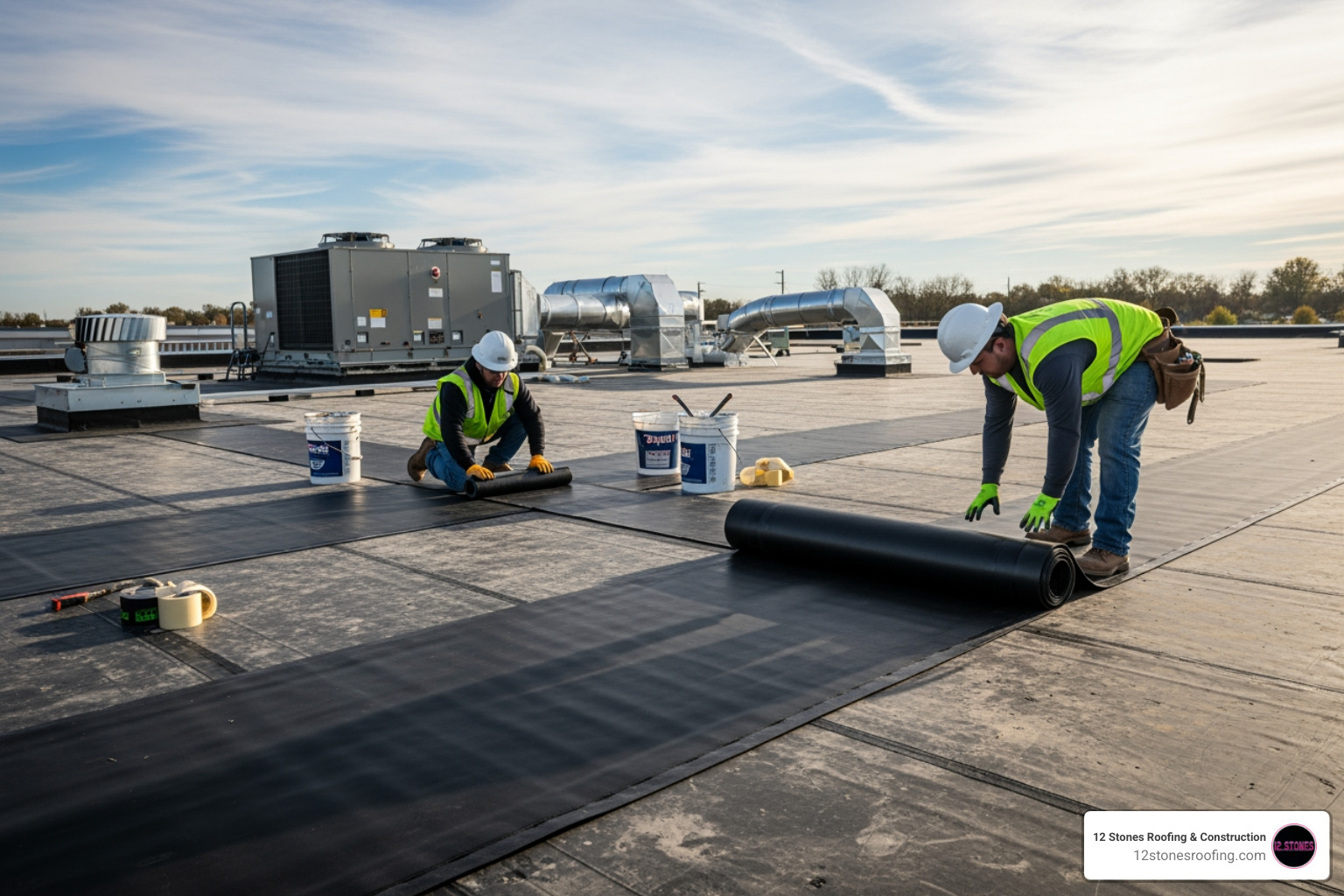
EPDM for Commercial and Residential Roofing
The primary application for EPDM is on low-slope and flat roofing systems for commercial, industrial, and even residential buildings. Its lightweight nature and availability in large sheets make it efficient to install on large roof surfaces. It’s also an excellent choice for green or “living” roofs, as it acts as a durable, root-resistant waterproofing layer beneath the soil and vegetation.
EPDM has become the go-to membrane for low-slope roofs in North America and worldwide. Its ability to be manufactured in large sheets (up to 50 feet wide) minimizes the number of seams, which are traditionally the weakest points in any roofing system. This makes for a more robust and leak-resistant roof. For our commercial clients in Pasadena, EPDM offers a durable, low-maintenance solution that stands up to the elements.
Beyond conventional flat roofs, EPDM’s flexibility and chemical inertness make it ideal for specialized roofing applications. For instance, in green roof systems, EPDM acts as both a waterproofing layer and a root barrier, protecting the structural integrity of the roof while supporting vegetation. It’s also frequently used on balconies and terraces, providing a reliable, long-lasting surface that can withstand foot traffic and weather exposure. If you’re managing a commercial property in the Houston area, you might find our Commercial Roofing Houston TX Guide particularly useful.
Beyond the Roof: Other Key Uses for EPDM in construction
EPDM’s flexibility and weather-sealing properties make it perfect for a range of other uses. It is frequently used as a weather-resistant barrier in facade systems, as seals and gaskets for windows and doors, and as liners for gutters, ponds, and expansion joints. In below-grade applications, it serves as a reliable waterproofing membrane for basements and foundations, protecting structures from groundwater intrusion.
Its versatility stems from its inherent properties: excellent resistance to water, UV, ozone, and extreme temperatures, coupled with its elastic nature. This makes it invaluable in creating a truly watertight and airtight building envelope. For example, in façade systems, EPDM membranes are installed behind exterior cladding to prevent moisture penetration, acting as a secondary line of defense against the elements.
In residential construction, EPDM is often found in less visible but equally critical roles. Its use in window and door seals ensures energy efficiency and prevents water infiltration, a common source of water damage repair. We also see it used for pond liners, where its non-toxic nature makes it safe for aquatic life, and its flexibility allows it to conform to irregular shapes without cracking. Even in expansion joints in concrete structures, EPDM’s elasticity allows it to accommodate structural movement, preventing cracking and maintaining a weather-tight seal.
EPDM Installation: Methods, Safety, and Best Practices
A successful EPDM system relies heavily on proper installation by trained professionals. The integrity of the seams and flashing details is critical to ensuring a watertight seal that will last for decades. Fortunately, modern EPDM systems are designed for safe and efficient installation.
The Three Main EPDM Installation Methods
There are three primary ways to install an EPDM membrane, each suited to different building structures and budgets:
Fully Adhered: The membrane is glued directly to the substrate using a special bonding adhesive. This creates a smooth, sleek appearance and offers the highest wind uplift resistance. This method is often preferred for its aesthetic appeal and superior performance in high-wind areas, making it a strong contender for buildings in coastal regions of Texas.
- Pros: Excellent wind uplift resistance, smooth appearance, good for irregular shapes.
- Cons: Higher material and labor cost due to adhesive application, substrate must be clean and dry.
Mechanically Attached: The membrane is secured to the deck using plates and fasteners placed in the seams. This method is often faster and more economical. This system is popular for its speed of installation and cost-effectiveness, especially for large, open roof areas.
- Pros: Faster installation, lower material cost than fully adhered, good for various deck types.
- Cons: Fasteners penetrate the membrane (though sealed), can create a “billowing” effect in high winds if not properly designed.
Ballasted: The membrane is laid loosely over the insulation and held in place with a layer of smooth river rock or concrete pavers. This is often the most cost-effective method for structures that can support the weight. This is a very economical option for large, robust structures that can handle the additional load.
- Pros: Lowest material cost, easy installation, natural fire resistance from ballast, good thermal mass.
- Cons: Requires structural capacity for ballast weight (10-12 lbs per sq ft), harder to inspect for leaks, not suitable for high-slope or windy roofs.
Regardless of the method chosen, proper surface preparation is paramount. This includes ensuring the substrate is clean, dry, and free of debris. The seams, where individual sheets of EPDM are joined, are crucial. They are typically sealed with liquid adhesives or specially formulated tape, requiring meticulous application to prevent future leaks.
Safety First: Why EPDM Installation is a Safer Choice
Compared to traditional roofing methods like built-up roofing (BUR), which requires kettles of hot asphalt, EPDM installation is significantly safer. The process is flame-free, eliminating fire hazards and the release of noxious fumes. The materials are also lightweight, reducing physical strain on roofing crews and the structural load on the building. Following proper safety protocols is a key part of any professional roof installation.
The safety advantages of EPDM installation are a major benefit for both our crews and your property. Traditional torch-applied systems carry inherent risks of fire and present health concerns from smoke and fumes. With EPDM, these risks are virtually eliminated. The installation can often be performed in temperatures as low as -10°C, though adhesives may require special cold-weather formulations, making it a viable option year-round.
Our teams at 12 Stones Roofing & Construction are trained to adhere to all OSHA guidelines, ensuring a safe work environment for every project. The lightweight nature of EPDM membranes also simplifies handling and reduces strain, contributing to overall job site safety and efficiency. This focus on safety, combined with the material’s durability, ensures a high-quality installation process from start to finish.
EPDM vs. Other Roofing Materials: A Quick Comparison
When considering a new roof, especially for low-slope applications, EPDM often comes into comparison with other popular materials like TPO (Thermoplastic Polyolefin) and traditional asphalt-based systems. Let’s stack them up:
EPDM vs. TPO: Both are single-ply membranes popular for flat roofs. EPDM is known for its exceptional longevity, flexibility, and resistance to UV and ozone, often outlasting TPO. TPO, generally available in white, is highly reflective and heat-weldable at seams, offering a seamless appearance. While TPO can be more resistant to some chemicals, EPDM typically boasts a longer proven track record and superior cold-weather flexibility. For hot climates like Pasadena, both white EPDM and TPO are excellent for energy efficiency. We offer both, and can help you determine the best fit for your project.
EPDM vs. Traditional Asphalt (BUR/Modified Bitumen): EPDM is a single-ply system, making it lighter and often quicker to install than multi-ply built-up roofs (BUR) or modified bitumen (MBR). EPDM’s flame-free installation is a significant safety advantage over hot asphalt or torch-applied modified bitumen. While asphalt systems have a long history, EPDM generally offers superior flexibility, UV resistance, and a longer lifespan with less maintenance, particularly in extreme temperature fluctuations. EPDM also does not become brittle like asphalt over time.
Quality Considerations and Long-Term Value
Choosing the right EPDM product and supplier is crucial for maximizing its benefits. We always recommend working with reputable manufacturers who provide comprehensive technical support, matched system components, and robust warranties. Look for suppliers with ISO quality management certifications, which indicate a commitment to consistent product quality.
The long-term value of EPDM is undeniable. While initial installation costs might be comparable to or slightly higher than some alternatives, EPDM’s superior lifespan (30-50 years) and minimal maintenance requirements result in significantly lower lifecycle costs. Fewer repairs, fewer replacements, and potential energy savings from white EPDM all contribute to a remarkable return on investment over decades. This makes EPDM an economically sound choice for any property owner.
Frequently Asked Questions about EPDM
How long does an EPDM roof really last?
With professional installation and routine maintenance, an EPDM roof can easily last 30 to 50 years. Its longevity is proven by real-world examples, such as the first EPDM roof installed in 1963, which is still in service. This exceptional durability means you can expect decades of reliable performance, minimizing the need for costly replacements.
Can you repair an EPDM roof?
Yes, EPDM is relatively easy to repair. Minor punctures or tears can be fixed by cleaning the area and applying a patch with specialized primers and adhesives. Even older EPDM roofs can often be refurbished and repaired, extending their life further. For professional assistance with any issues, it’s best to contact a specialist in rubber roof repair in Pasadena, TX. Regular bi-annual inspections are recommended to identify and address any potential issues early, such as debris accumulation or compromised seams.
Is EPDM a good choice for the Texas climate?
Absolutely. EPDM’s excellent resistance to UV radiation and extreme heat makes it a fantastic choice for the Texas climate. While traditional black EPDM handles heat well, a white EPDM membrane is particularly effective, as its reflective surface can lower roof temperatures and reduce cooling costs during hot summers. Its flexibility also ensures it won’t crack or become brittle during sudden temperature drops, providing consistent protection year-round.
Conclusion: Why EPDM Remains a Top Choice for Modern Construction
From its proven 60-year track record to its versatility across dozens of applications, EPDM has earned its place as a cornerstone of modern construction. Its unique combination of extreme durability, flexibility, and long-term value makes it a smart investment for any building owner. Whether you are constructing a new commercial facility or need a reliable solution for a residential flat roof, EPDM delivers performance you can count on for decades.
At 12 Stones Roofing & Construction, we have extensive experience with all types of commercial and residential roofing systems. If you have questions about whether EPDM is the right choice for your project, our team is here to help. We pride ourselves on delivering transparent, reliable service to protect your property against the unique challenges of Texas weather.
For expert advice and professional EPDM roofing services in the Pasadena area, contact us today. We’re ready to help you build a roof that lasts!