
When Texas Weather Strikes: What You Need to Know About Emergency Roof Repair
Emergency roof repair Texas homeowners need most often comes down to acting fast – here’s what to do right now:
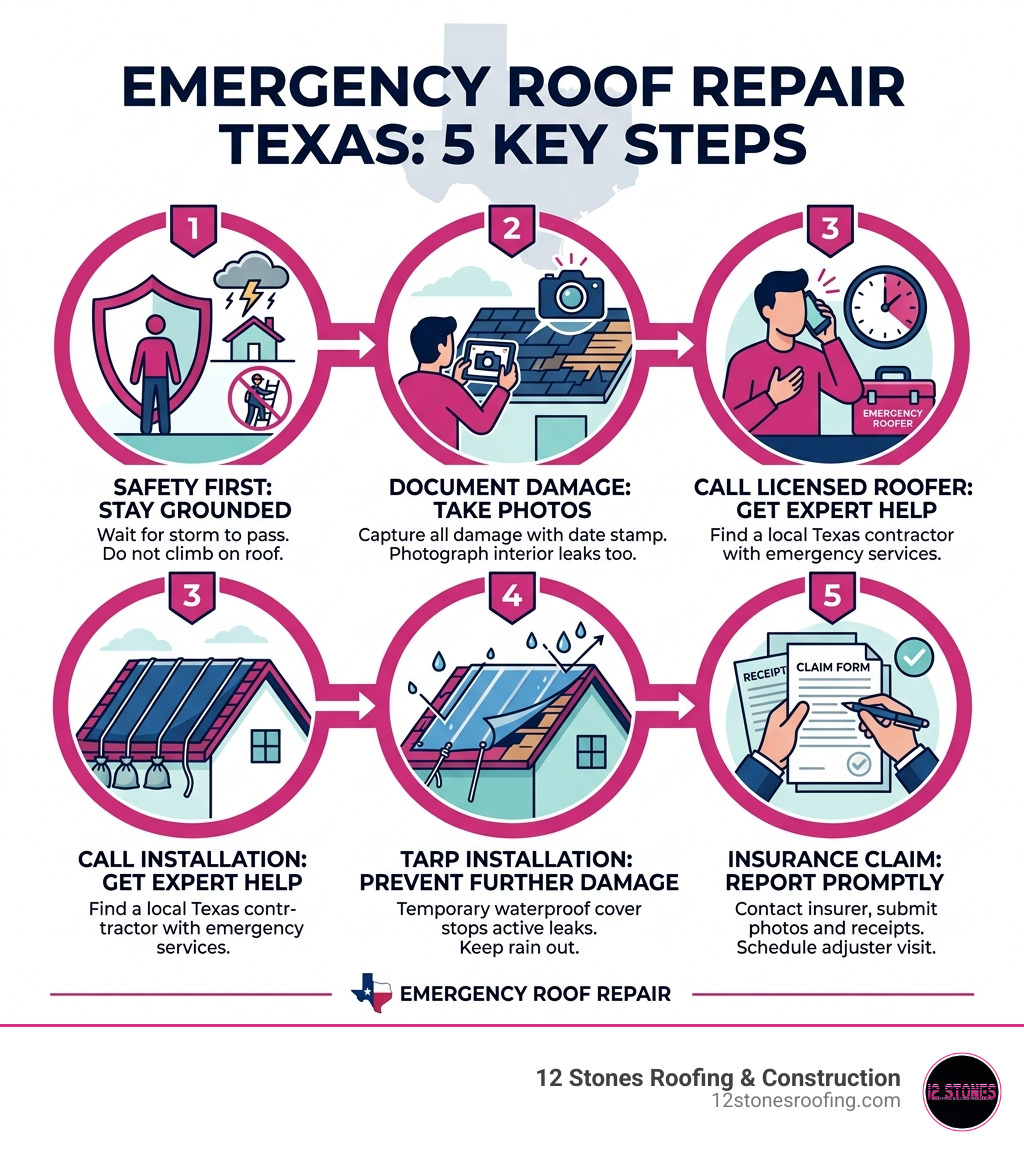
Quick Action Checklist:
- Stay safe – do not climb on your roof
- Stop interior damage – place buckets under leaks, move valuables, cover furniture
- Document everything – photograph all damage from ground level
- Call a licensed emergency roofer – response times average 2-4 hours across Texas
- Contact your insurer – report damage and keep all receipts for temporary repairs
Texas is one of the most storm-battered states in the country. The National Weather Service confirms that Central Texas alone regularly faces severe thunderstorms, high winds, and hail events – and that’s before tornado season peaks. One bad storm can tear off shingles, puncture your roof deck, or leave your home fully exposed to the elements within minutes.
The stakes are high. A roof leak left untreated for just 24 to 48 hours can trigger mold growth, structural rot, ceiling collapse, and even electrical hazards. What starts as a few missing shingles can quickly become a five-figure repair bill.
That’s why knowing exactly what to do – and who to call – before disaster hits matters so much.
For trusted emergency roofing services in the Greater Houston area, having a reliable contractor’s number saved in your phone could save your home.
I’m Jason Roberts, owner of 12 Stones Roofing & Construction, a Service-Disabled Veteran-Owned firm based in Pasadena, Texas, with over a decade of hands-on experience handling emergency roof repair Texas situations across the Gulf Coast region. In this guide, I’ll walk you through everything – from the moment the storm passes to the final repair.
Identifying a True Emergency Roof Repair Texas Situation
Not every missing shingle is an immediate crisis, but in the humid climate of the Texas Gulf Coast, “minor” issues don’t stay minor for long. A true roofing emergency is any situation that compromises the safety of the occupants or the structural integrity of the building.
We categorize a situation as a legitimate emergency roof repair Texas event if you notice any of the following:
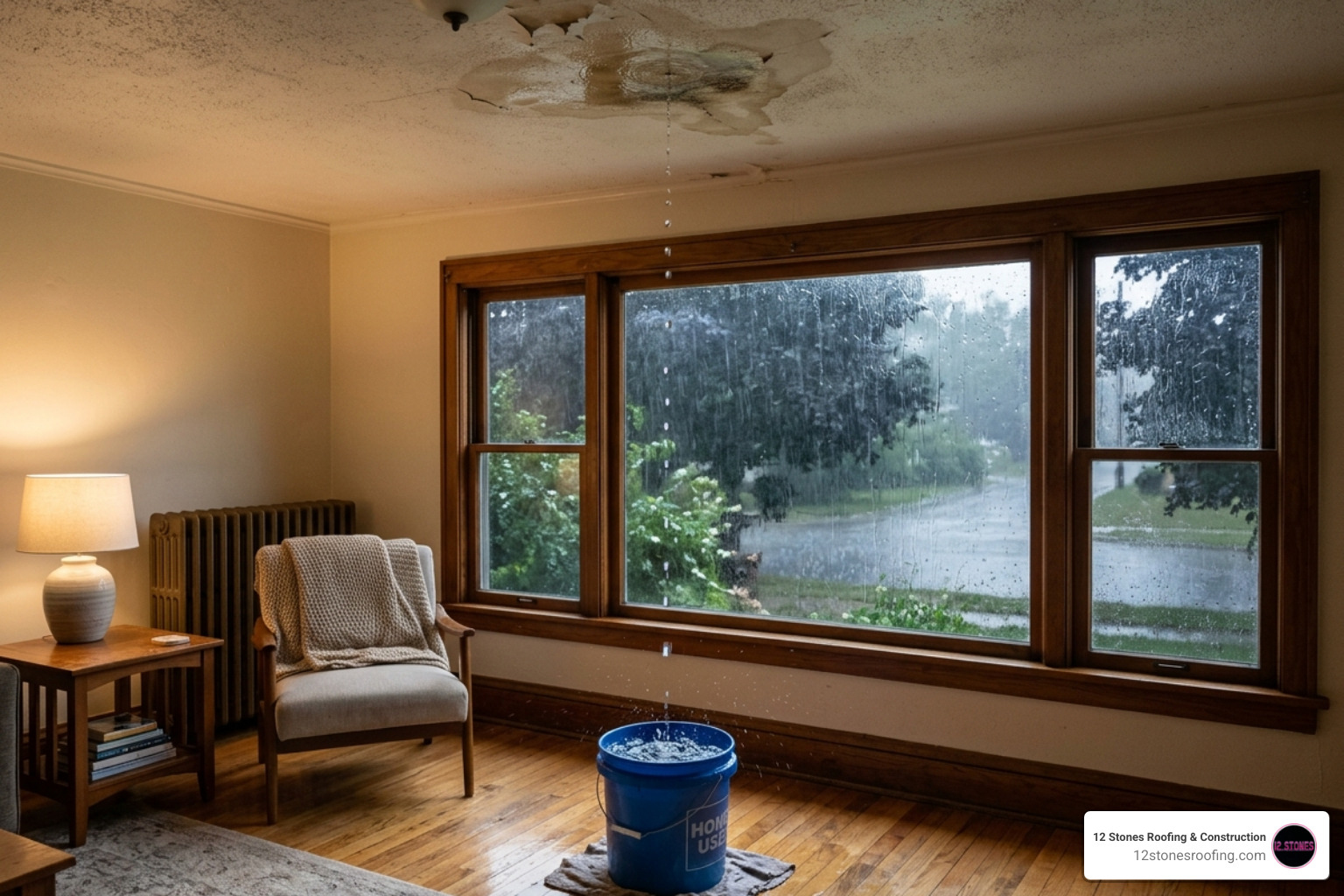
- Active Interior Leaks: If water is actively dripping or gushing into your living space, it’s an emergency. This indicates the primary barrier of your home has failed.
- Structural Sagging: If you look at your ceiling or roofline and see visible dipping, bowing, or sagging, the structure may be saturated with water and at risk of collapse.
- Impact Damage: Texas storms often drop tree limbs or heavy debris onto roofs. Even if you don’t see a hole, the impact can crack the underlying decking.
- Exposed Decking: If high winds have stripped away large sections of shingles or underlayment, leaving the wood “deck” visible, your home is essentially wide open to the next rain cloud.
- Missing Shingle Sections: When more than 25-30% of a roof slope is damaged or missing, the risk of widespread failure is imminent.
For a deeper dive into what classifies as an urgent situation, consult our Emergency Roofing Services Complete Guide.
Common Causes Requiring Emergency Roof Repair Texas
Texas weather is a heavyweight champion of property damage. In areas like Pasadena and La Porte, we see several recurring culprits:
- Hail Damage: Hail is the “silent killer” of Texas roofs. It bruises shingles, knocks off protective granules, and creates micro-cracks that lead to leaks weeks or months later.
- High Winds and Tornadoes: Straight-line winds and tornadoes can exceed 100 mph, easily lifting asphalt shingles (which typically last 15-25 years but weaken with age) right off the nails.
- Wind-Borne Debris: During a tornado, everyday objects become projectiles. We’ve seen everything from patio furniture to fence boards punctured through roof systems.
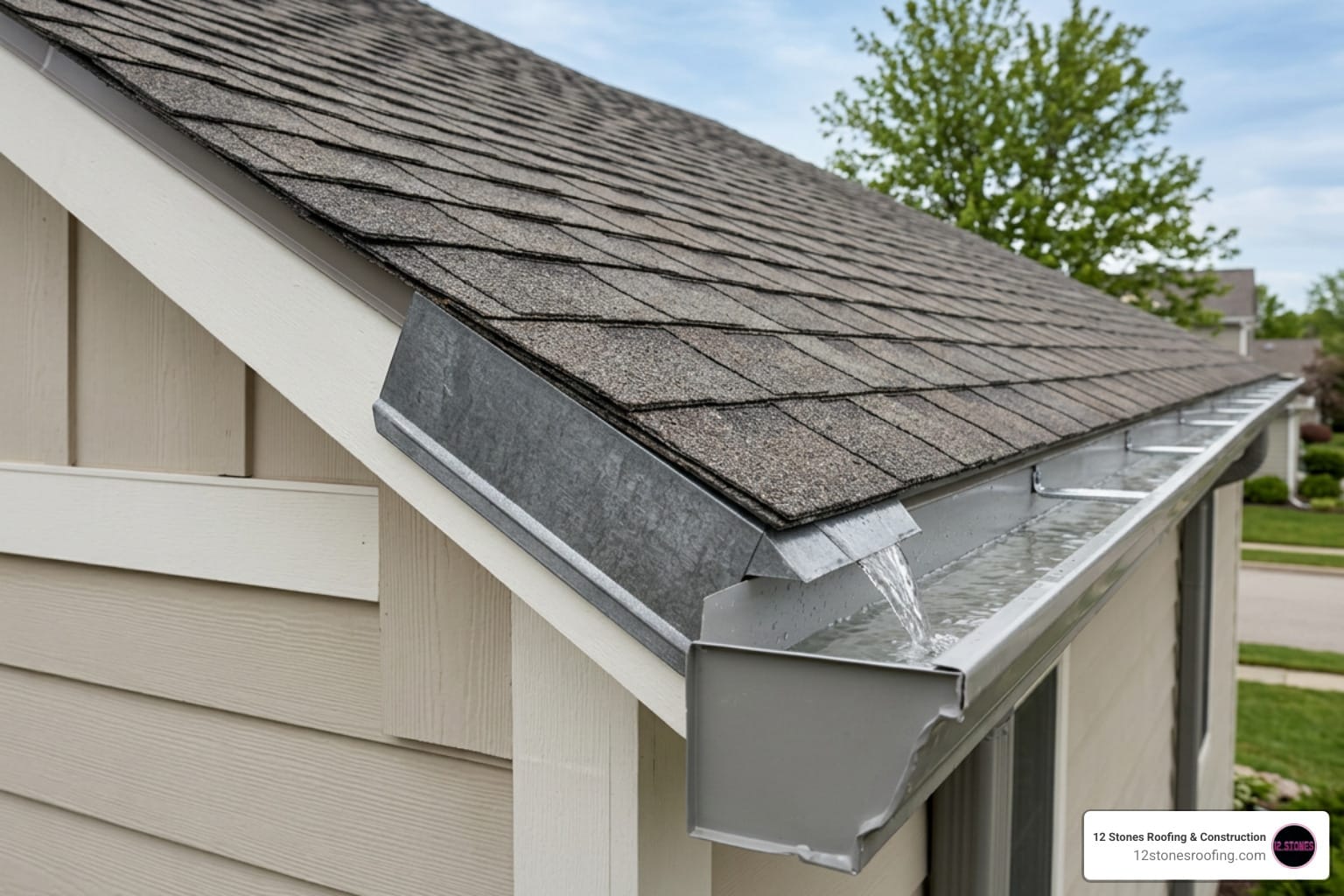
- Heavy Downpours: When a “Gully Washer” hits, existing small leaks are overwhelmed. If your gutters are clogged, water can back up under the shingles, causing rapid rot.
If you suspect your roof has been hit, don’t wait for the ceiling to drip. Check out our guide on Hail Damage Roof Repair for more specific signs to look for.
The High Cost of Delaying Emergency Roof Repair Texas
In Texas, time is literally money when it comes to roof damage. Because of our high humidity, moisture trapped in an attic becomes a breeding ground for problems almost instantly.
- Mold Growth: Mold spores can begin to colonize on damp drywall and insulation within 24 to 48 hours. Remediation for a mold-infested attic can cost thousands more than the initial roof repair.
- Structural Rot: Wood stays strong when dry. Once saturated, the “decking” (the plywood sheets) and the “rafters” (the skeleton of your roof) begin to soften and rot, leading to a much more expensive roof replacement.
- Electrical Hazards: Water and electricity are a deadly mix. Leaks often travel along wires to light fixtures and outlets, creating a significant fire risk.
- Ceiling Collapse: Drywall is heavy when wet. A saturated ceiling can eventually give way, potentially injuring someone or destroying everything in the room below.
To avoid these “secondary” damages, read our advice on Got a Gushing Roof? Navigating Emergency Leak Services.
Immediate Steps for Texas Homeowners After Storm Damage
Once the storm has passed and it is safe to step outside, your goal is “stabilization and documentation.” Here is exactly what we recommend our neighbors in Pasadena and Houston do:
- Safety Assessment: Check for downed power lines or the smell of gas. If you see lines touching your house or fences, stay away and call the utility company immediately.
- Mitigate Interior Damage: If water is coming in, move your furniture and electronics. Use plastic bins or buckets to catch drips. If a ceiling is “bulging” with water, some pros recommend carefully piercing the lowest point with a small screwdriver to drain the water into a bucket, preventing a sudden, large-scale collapse.
- Document Everything: This is for your insurance company. Take photos of the roof from the ground, photos of any debris in the yard, and photos of every water stain or drip inside. Do not climb on the roof. A wet, damaged roof is incredibly slippery and structurally unpredictable.
- Call the Professionals: Contact a local team for an emergency roof inspection.
For a step-by-step walkthrough on what to look for, see our Emergency Roof Inspection Complete Guide. If you are in the Houston area and need help fast, our team of roofers near you in Houston is ready to respond.
Professional Solutions: Tarping and Temporary Fixes
When a tornado or severe storm hits, roofing crews are often stretched thin. A permanent repair might take a few days to schedule, especially if materials need to be ordered. This is where emergency roof repair Texas specialists use temporary mitigation to “dry in” your home.
- Emergency Tarping: This is the most common response. We use heavy-duty, UV-resistant tarps secured with “furring strips” (wooden slats) to ensure the wind doesn’t catch the edges and blow it off.
- Shrink Wrapping: For more severe or long-term temporary needs, some companies use a thick plastic film that is heat-shrunk to the roof. This can last up to a year in some cases, though it is more expensive.
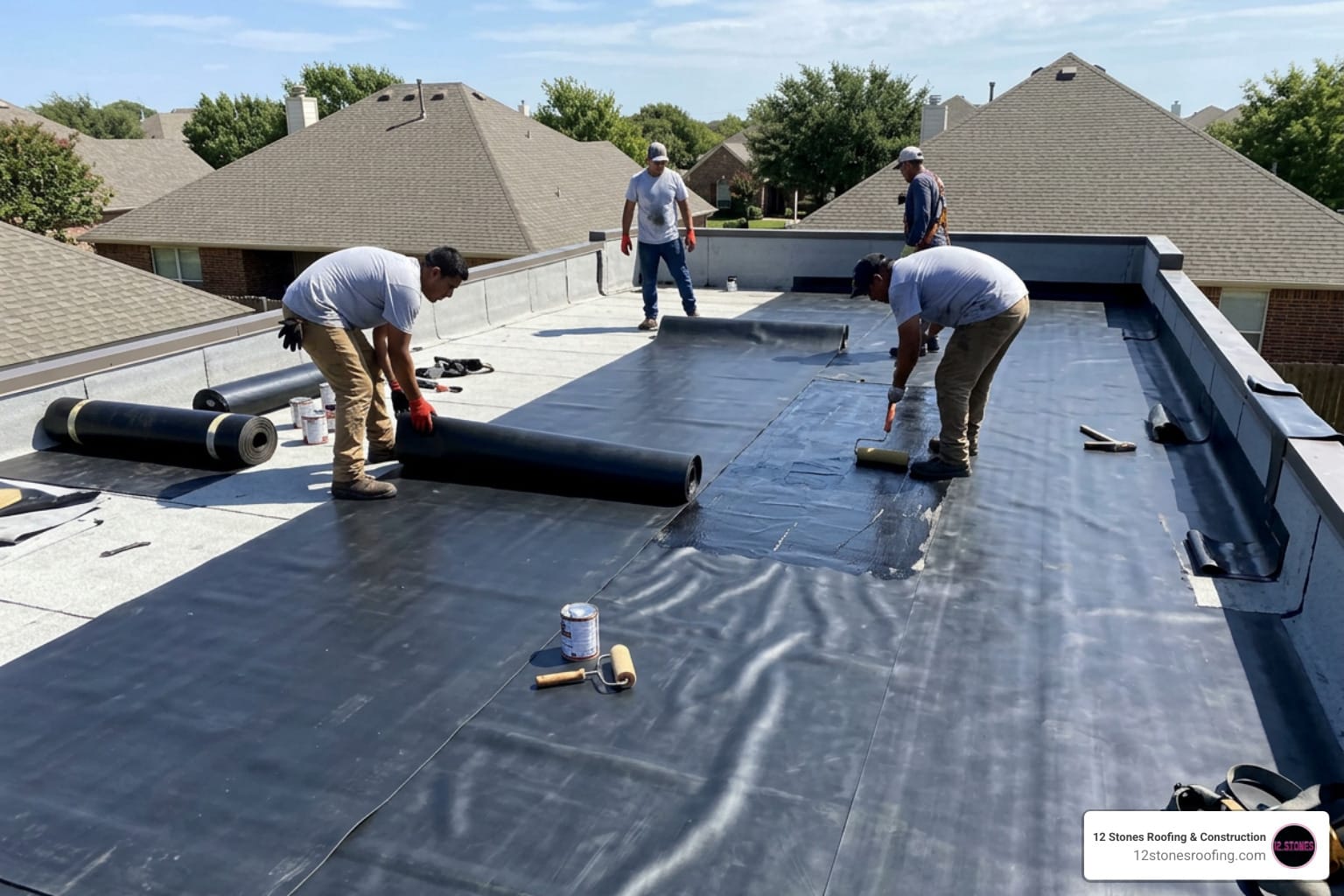
- TPO Loose Lay: On flat commercial roofs, we might lay down a temporary TPO membrane and secure it with sandbags or mechanical fasteners to stop leaks immediately until a TPO roofing specialist can perform a permanent fix.
Response Times: In the Pasadena/Houston area, we aim for a rapid response. While some companies quote 24 hours, local experts like us strive to be on-site within 2 to 4 hours for active emergencies when weather conditions allow.
| Solution | Typical Lifespan | Best For | Relative Cost |
|---|---|---|---|
| Emergency Tarping | 2-4 Weeks | Shingle roofs, localized leaks | Low |
| Shrink Wrap | 6-12 Months | Extensive damage, flat roofs | Moderate |
| Permanent Repair | 15-25 Years | Final resolution | High (Insurance covered) |
Learn more about the specifics of this process in our Roof Tarping Complete Guide.
Navigating Insurance Claims for Storm Damage
One of the biggest stressors for Texas homeowners is the insurance claim. Here’s a professional secret: Your insurance policy likely requires you to perform emergency repairs.
- The Mitigation Clause: Most Texas policies state that the homeowner must take “reasonable steps” to prevent further damage. This means if you have a hole in your roof and you don’t call for a tarp, the insurance company might deny coverage for the subsequent mold or water damage.
- Documentation is King: Keep every receipt. The cost of emergency tarping is usually fully reimbursable as part of your claim.
- The “Storm Chaser” Warning: After a big storm, “chuck in a truck” contractors from out of state often flood Texas. They take deposits and disappear. Always use a local company with a physical address in cities like Pasadena or La Porte.
- The Adjuster Meeting: We always recommend having your roofer present when the insurance adjuster arrives. We speak their language and can point out “hidden” damage like hail bruises that an adjuster might overlook.
For more help with this process, read our guide on Roofing Insurance Claims and check out our Emergency Roof Repair Quote Tips.
Frequently Asked Questions about Texas Emergency Roofing
How long does an emergency roof tarp last?
A professionally installed emergency roof tarp is designed for temporary protection, typically lasting 2-4 weeks. Its lifespan depends heavily on weather conditions and the quality of installation. While it offers crucial immediate protection, it is not a permanent solution. If a tarp is left on too long, moisture can trap underneath it, leading to wood rot. For more details, visit our Roof Tarping service page.
Does Texas homeowners insurance cover emergency repairs?
Yes, most Texas homeowners insurance policies cover emergency roof repair Texas services, especially those necessary to prevent further damage (like tarping). However, you will still be responsible for your deductible. If the damage is widespread (over 25-30% of the roof), your insurance may even cover a full roof replacement. Understanding the Emergency Roof Repair Cost Guide can help you prepare for these expenses.
What should I do if my roof leaks at night?
If your roof leaks at night, prioritize safety above all else. Do not attempt to go on the roof in the dark or during rain. Place buckets to catch water, move valuables, and avoid contact with electrical outlets or sagging drywall. Contact a professional emergency roofing service like 12 Stones Roofing & Construction immediately; we offer 24/7 dispatch for urgent situations. You can read more about these services on our Emergency Roofing page.
Can repairs be done during an active storm?
No reputable roofer will get on a roof during lightning, high winds, or heavy rain. It is a major safety violation. However, you should still call during the storm to get on the schedule. As soon as the “gust front” passes and conditions are safe, crews can be dispatched to stabilize the home.
How to Prevent the Need for Emergency Repairs
While you can’t stop a tornado, you can make your roof more resilient to standard Texas weather:
- Annual Inspections: Have a pro check your flashing and seals once a year.
- Gutter Maintenance: Keep them clear so water doesn’t back up under your shingles.
- Tree Trimming: Cut back limbs that hang over your roof; these are the first things to fall in high winds.
- Upgrade Materials: When it’s time for a new roof, consider Impact-Resistant (Class 4) shingles, which can withstand larger hail and higher winds.
Conclusion
Texas homeowners face unique challenges from severe weather, but with rapid response and expert assistance, resilience is achievable. Whether it’s a sudden tornado or a punishing hailstorm, the key is to act before the water does. 12 Stones Roofing & Construction stands as your trusted partner for emergency roof repair Texas, offering swift, professional solutions when you need them most.
Don’t let storm damage compromise your home’s safety and integrity. Our team is locally based in Pasadena and serves the entire Greater Houston area with the integrity you’d expect from a veteran-owned business.
We are here to protect what matters most.