
A Small Investment That Prevents Thousands in Water Damage
The cost to install kickout flashing is one of the best-value investments a homeowner can make — and one of the most overlooked.
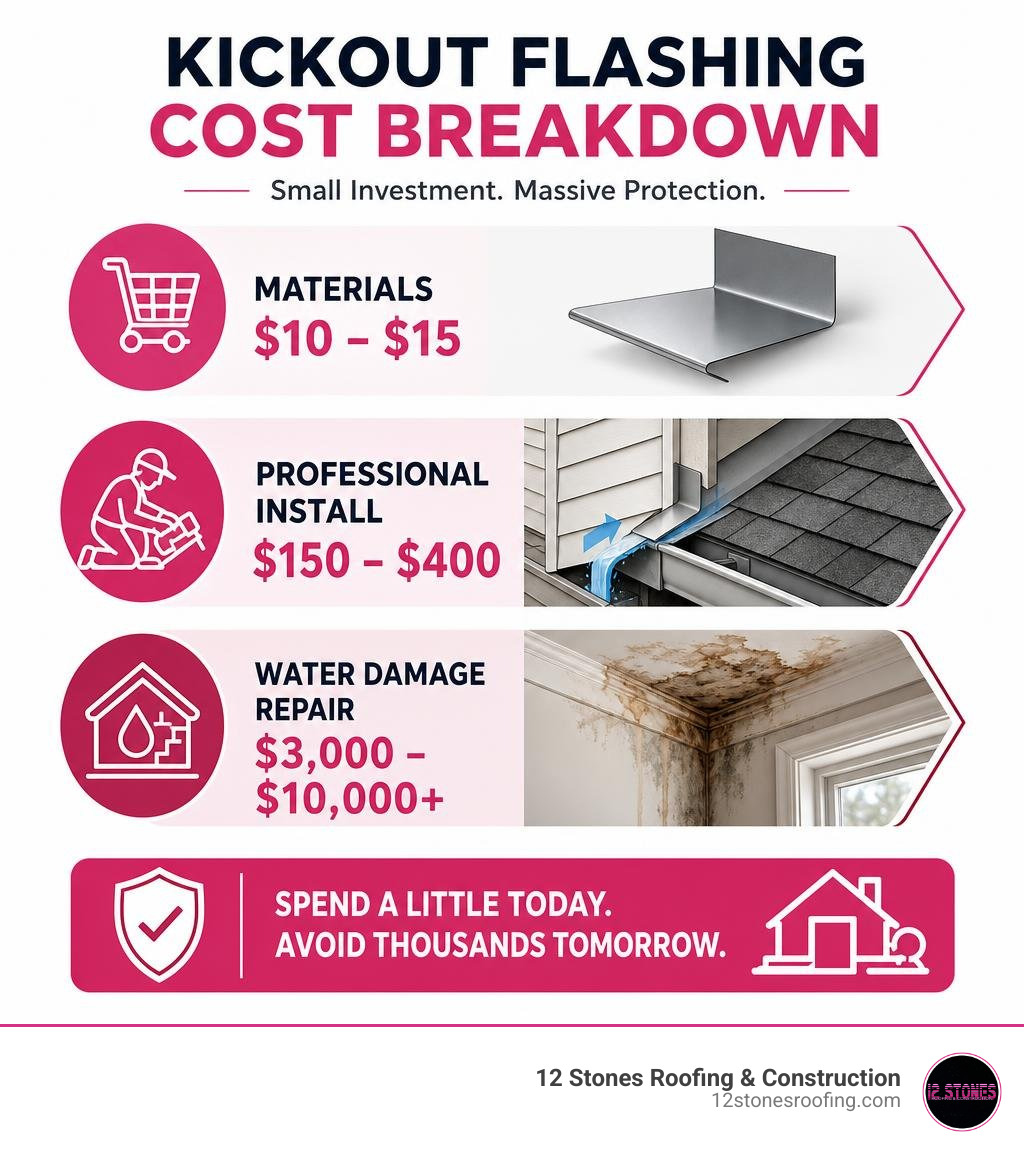
Quick answer: Most homeowners pay $150 to $400 for professional kickout flashing installation at a single location, including labor, caulking, and shingle work. Materials alone cost just $10 to $15 at any home improvement store.
| Installation Type | Typical Cost Range |
|---|---|
| Materials only (DIY) | $10 – $15 per piece |
| Professional installation (single location) | $150 – $400 |
| Minimum service call (handyman) | $110 – $175 |
| Per linear foot installed (labor + material) | $10 – $30 |
Kickout flashing is a small L-shaped metal diverter installed where a sloped roof meets an exterior wall. Its job is simple: send rainwater into your gutter instead of behind your siding. Without it, water silently seeps into your wall cavity — causing rot, mold, and structural damage that can cost $3,000 to $10,000+ to repair.
It is a problem that often hides for years. Many homeowners in the Pasadena, TX area only discover missing kickout flashing after water stains appear on interior walls or trim starts to soften and decay. Getting professional roofing services in Pasadena, TX to inspect your roof-to-wall transitions is the fastest way to know whether your home is protected.
I’m Jason Roberts, owner of 12 Stones Roofing & Construction, a Service-Disabled Veteran-Owned firm based in Pasadena, Texas, with over a decade of hands-on experience helping Gulf Coast homeowners understand the true cost to install kickout flashing and avoid far more expensive water damage repairs. In this guide, I’ll walk you through everything you need to know — from exact 2026 pricing to the warning signs your home may already be at risk.
Explore more about cost to install kickout flashing:
What is Kickout Flashing and Why is It Critical?
Kickout flashing, often referred to by contractors as diverter flashing or “elephant ears” due to its distinctive shape, is a specialized water management component. It is installed at the very edge of a roof-to-wall intersection, right where the roof line terminates at an exterior wall. Its primary function is to intercept rainwater running down the roof valley or wall joint and physically “kick” it out and away from the wall cladding, directing it straight into the gutter.
Without this crucial piece of metal, water running down the roof edge will overshoot the gutter end. It then runs down the vertical seam of your siding, finding the path of least resistance. In heavy Texas downpours, this leads to water getting trapped behind your siding, saturating your home’s wood sheathing, framing, and insulation.
According to the International Residential Code (IRC), kickout flashing must be installed at all roof-to-wall intersections where the roof line terminates at an exterior wall, ensuring water is diverted completely clear of the cladding.
Specifically, IRC Section R903.2.1 mandates flashing at these transitions to prevent water entry. For maximum effectiveness, the flashing must feature a minimum 4-inch vertical wall extension and be bent at a 110-degree angle to properly clear the siding trim. To learn more about the technical specifications of these roof-wall water diverters, you can read the Kick-Out Flashing — Roof-Wall Water Diverter Guide | Jaspector.
The Real Cost to Install Kickout Flashing in 2026
When evaluating the cost to install kickout flashing in 2026, the overall price is heavily weighted toward labor rather than materials. While a single manufactured kickout diverter costs between $10 and $15 at a local hardware store, hiring a professional to integrate it correctly with your existing roof and siding typically ranges from $150 to $400 per location.
If you hire a local handyman or contractor for a standalone, single-location retrofit, you will likely encounter a minimum service visit fee. In the Pasadena and La Porte areas, this minimum service call floor typically falls between $110 and $175 to cover the contractor’s travel, setup, and safe roof-access equipment.
To help you budget, we have compiled a cost breakdown based on the complexity of the project:
| Installation Type | Typical Cost Range (2026) | Key Details |
|---|---|---|
| New Construction / Re-Roofing | $150 – $250 per location | Installed while shingles and siding are open; requires the least amount of labor. |
| Standard Retrofit (Single-Story) | $250 – $400 per location | Requires carefully loosening existing siding and shingles to slide the flashing underneath. |
| Multi-story / Complex Retrofit | $400 – $800+ per location | Requires scaffolding or tall ladders; involves working around complex siding like stucco or stone. |
If you are looking at a broader roof maintenance project, combining this service with other repairs can lower your per-unit cost. For a more comprehensive look at localized roof repair pricing, check out our Homeowner’s Guide to Roof Flashing Costs.
Key Factors Influencing the Cost to Install Kickout Flashing
Every home in the Pasadena and La Porte, TX area is built differently, meaning the cost to install kickout flashing will vary based on several key structural factors:
- Roof Complexity and Pitch: Steeply sloped roofs (high pitch) require advanced safety harnesses and fall protection, which increases labor times. If your roof has multiple valleys intersecting near a wall, custom-bending the flashing on-site may be required to ensure a watertight fit.
- Height and Number of Stories: Working on a single-story ranch house is straightforward. However, installing flashing on a second- or third-story roof-to-wall junction adds significant safety risks. Contractors must charge more to account for additional setup times, scaffolding, or specialized lift equipment.
- Siding Material: This is often the biggest cost driver for retrofits. Vinyl siding is relatively easy to unzip and loosen to slide the flashing in. However, fiber cement (HardiePlank), wood siding, stucco, and stone veneer are rigid. Working with these materials requires extreme care, specialized cutting tools, and sometimes partial reconstruction to ensure the flashing sits behind both the siding and the secondary water-resistive barrier.

Material Selection and Its Impact on the Cost to Install Kickout Flashing
The material you choose for your kickout flashing directly impacts both the upfront cost and the long-term durability of the installation.
- Galvanized Steel: This is the most common and cost-effective metal option. A standard 4 in. x 4 in. x 8 in. Galvanized Steel Kickout Flashing typically costs around $11 to $13. It is incredibly durable, but it must be properly coated or painted to prevent rust over time in our humid Gulf Coast climate.
- Aluminum: Lightweight and naturally rust-resistant, aluminum kickout flashing is a popular choice for residential homes. It is easy to paint to match your trim and costs roughly $15 to $20 per piece.
- Copper: The absolute premium option. Copper flashing lasts 75 to 100 years and is highly sought after for historic homes or high-end properties with slate or tile roofs. However, copper costs roughly 3.4 times more than aluminum. It is generally considered an unnecessary expense for standard asphalt shingle roofs.
- Uncoated Polymer/Plastic: Molded plastic kickout diverters (like those sold in bulk) are seamless and completely leak-proof. While they are highly effective and affordable, they must be UV-resistant to withstand the intense Texas sun. You can review bulk options and specifications in this Kickout Flashing Pricing Sheet.
Retrofit vs. New Roof: When is the Best Time to Install?
While you can certainly retrofit kickout flashing as a standalone repair, the absolute best and most cost-effective time to install it is during a complete residential roof replacement.
When we perform a full roof replacement, the old shingles are completely stripped away, and the roof deck is fully exposed. This allows our team to easily integrate the new kickout flashing directly beneath the underlayment and behind the siding without having to carefully pry apart old, brittle materials.
Installing flashing during a re-roof also ensures your manufacturer warranty remains fully intact. Major shingle manufacturers like GAF, Owens Corning, and CertainTeed require brand-new flashing to be installed at all critical junctions to validate their system warranties. To learn more about how these costs align, take a look at our Roof Replacement Cost Guide 2026 and our guide on Budgeting for Your New Roof in Pasadena.
DIY vs. Professional Kickout Flashing Installation
Because the materials are so inexpensive, many homeowners are tempted to tackle kickout flashing as a weekend DIY project. While buying a $12 piece of metal and a tube of caulk sounds appealing, the reality of flashing installation is highly technical.
Roofing industry data reveals a 40% first-time DIY failure rate for flashing installations during the very first wet season.
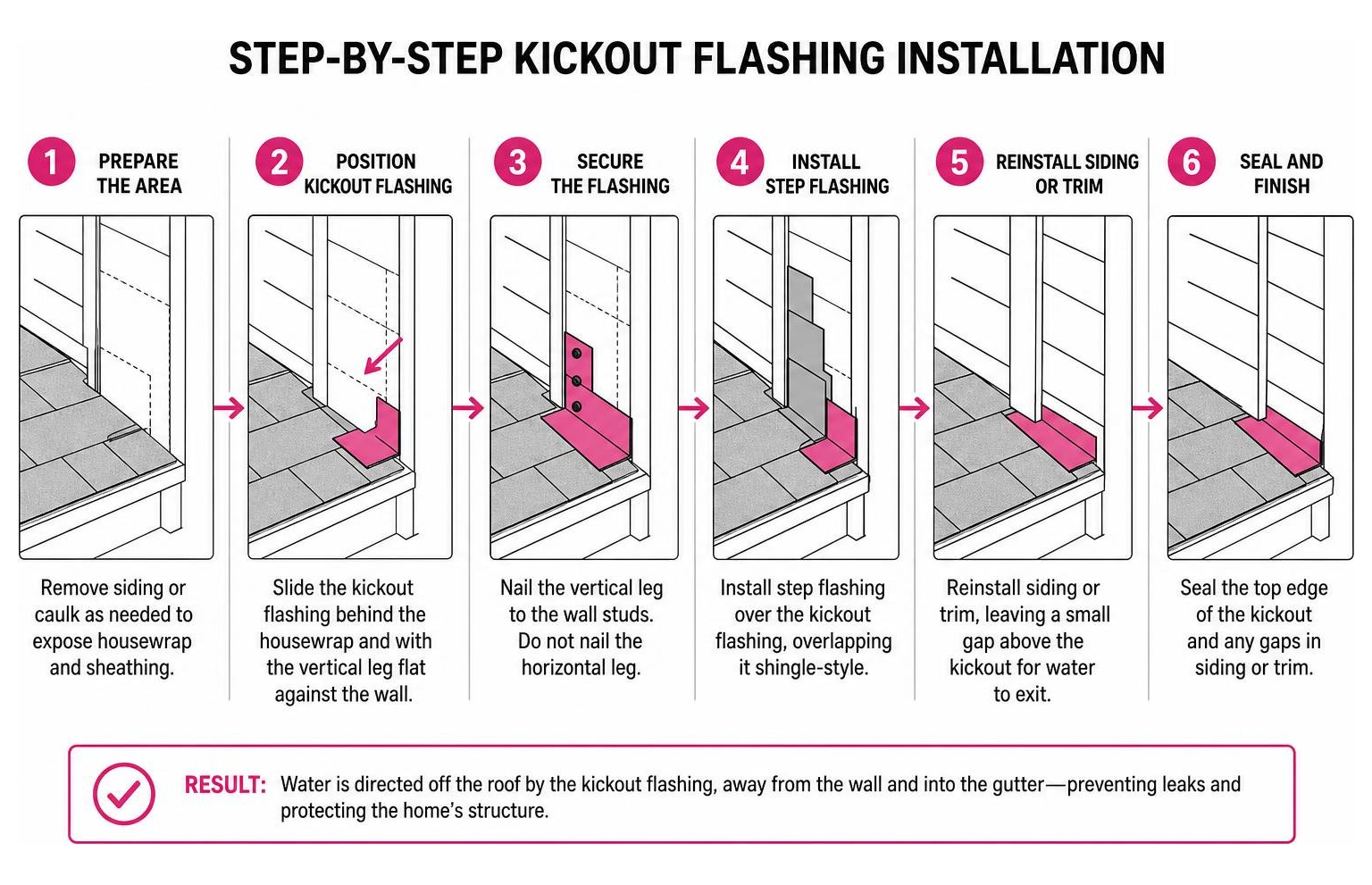
The reason for this high failure rate is improper integration with the home’s water-resistive barrier (WRB) or housewrap. If you simply nail a kickout diverter over the top of your siding and slap some caulk on the edges, water will eventually bypass the sealant, get trapped behind the metal, and run directly into your wall cavity.
To work correctly, the kickout flashing must be woven behind the housewrap and under the first piece of step flashing. This maintains the “counter-flashing principle,” where every layer overlaps the one beneath it like shingles.
If you want to read more about why proper integration is so vital, check out this guide on how Inexpensive kickout flashing protects your home from water damage and the manufacturer’s technical instructions for KICK-OUT FLASHING installation.
Understanding the Long-Term ROI: Cost to Install Kickout Flashing vs. Water Damage Repairs
While installing kickout flashing costs between $150 and $400, repairing the water damage caused by its absence averages $3,000 to $10,000 in structural wood rot and mold remediation.
When kickout flashing is missing, rainwater regularly pours down the side of your home, saturating the exterior wall. Over several years, this constant moisture leads to:
- Structural Wood Rot: The wood sheathing (OSB) and vertical wall studs behind your siding will soften and decay, compromising the structural integrity of your home.
- Toxic Mold Growth: Trapped moisture inside a warm Texas wall cavity creates the perfect breeding ground for mold, which can ruin your indoor air quality and require professional remediation.
- Siding and Trim Ruin: Fiber cement siding can delaminate, wood siding will rot, and stucco will crack and crumble from the inside out.
For a broader perspective on how small roof details affect your overall home value and repair budget, you can read our article on How Much Does a New Roof Actually Cost? and review the Roof Flashing Cost Guide For 2026: Repair And Replacement.
Frequently Asked Questions About Kickout Flashing
Is kickout flashing required by building codes?
Yes. The International Residential Code (IRC) has required kickout flashing (under Section R903.2.1) since its 2009 update. Local building standards in Pasadena and La Porte, TX strictly enforce this code for all new construction and complete re-roofing projects to protect homes from structural moisture damage.
What are the signs that my home is missing kickout flashing?
The most common warning signs include:
- Dark water stains on your exterior siding right below a roof-to-wall intersection.
- Swollen, soft, or rotting wood trim near the ends of your gutters.
- Water dripping behind the gutter system during heavy rains.
- Peeling paint or mold growth on interior walls that share a border with an exterior roofline.
How long does it take a professional to install kickout flashing?
On a straightforward single-story home with easily accessible vinyl siding, a professional roofing technician can complete the installation in about 30 to 60 minutes. However, if we need to carefully cut into stucco, stone, or fiber cement siding to properly integrate the metal, the job can take several hours.
To estimate costs for other flashing areas on your home, you can use the Roof Flashing Cost Calculator (2026) or the Chimney Flashing Cost Calculator (2026).
Conclusion
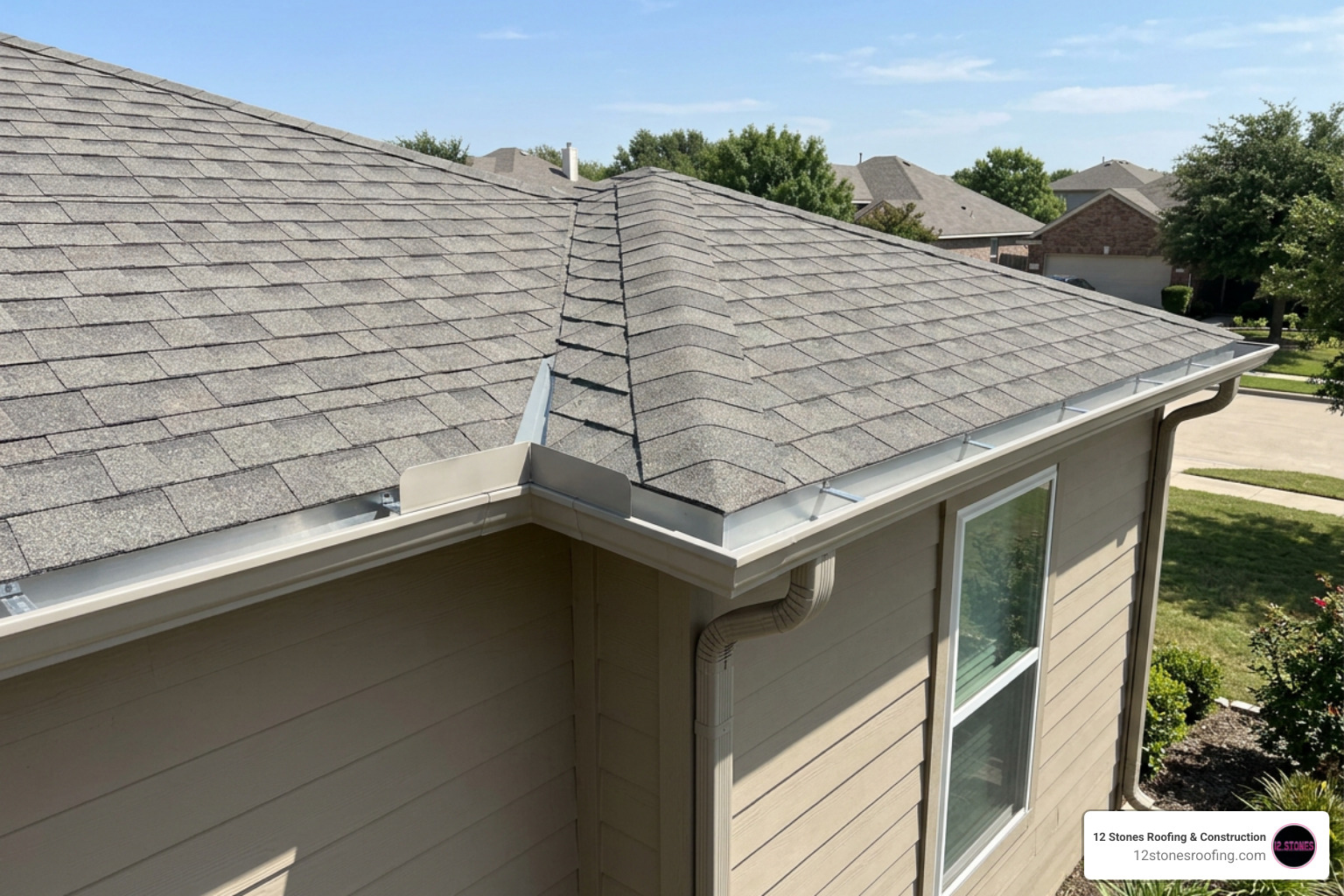
At the end of the day, paying the cost to install kickout flashing is a minor preventative measure that shields your home from incredibly expensive structural damage. For just a few hundred dollars, you gain total peace of mind knowing that the heavy Texas downpours will be safely routed away from your walls and directly into your gutters.
At 12 Stones Roofing & Construction, we pride ourselves on our attention to detail. We serve homeowners throughout Pasadena, TX and La Porte, TX, ensuring that every roof we touch is fully equipped with code-compliant, high-quality flashing systems designed to stand up to Gulf Coast weather.
Don’t wait for a brown stain to appear on your ceiling or your siding to soften. Contact the local experts at 12 Stones Roofing & Construction today for a comprehensive roof inspection and professional water-management upgrades.
Visit our service page to schedule your professional roof installation and flashing services. We are ready to protect your home with honest, reliable, and veteran-backed craftsmanship.