
What Are TPO Roofing Services — And Do You Need Them?
TPO roofing services cover the installation, repair, inspection, and replacement of thermoplastic polyolefin membranes on flat and low-slope roofs. Here’s a quick summary if you’re evaluating your options:
- Best for: Commercial buildings, warehouses, retail spaces, and low-slope residential roofs
- Lifespan: 20–30 years with proper installation and maintenance
- Energy savings: Up to 30% reduction in cooling costs from solar reflectance
- Market share: TPO accounts for approximately 40% of all commercial roofing installations in the U.S. — making it the #1-selling single-ply membrane in North America
- Installation methods: Fully adhered, mechanically attached, or RhinoBond system
- Available thicknesses: 45-mil, 60-mil, and 80-mil membranes
If your commercial or flat roof is leaking, aging, or failing under Texas heat, partnering with an experienced Pasadena roofing contractor for a professional TPO roofing installation is likely the most cost-effective long-term solution available to you right now.
When a Pasadena property owner notices water stains spreading across a warehouse ceiling after a summer storm, the clock starts ticking. Every day of delay means more moisture, more structural damage, and higher repair bills. The right roofing system — installed correctly the first time — makes all the difference.
TPO has earned its position as the dominant commercial roofing membrane in North America for good reason. It combines reflective energy performance, durable heat-welded seams, and resistance to the oils, chemicals, and UV punishment that Texas roofs face year-round. But the membrane is only as good as the contractor installing it.
I’m Jason Roberts, owner of 12 Stones Roofing & Construction — a Service-Disabled Veteran-Owned firm based in Pasadena, Texas — and I’ve spent over a decade delivering TPO roofing services across the Gulf Coast region for commercial, industrial, and multi-family properties. In this guide, I’ll walk you through everything you need to know to make a confident, informed decision about your flat roof.
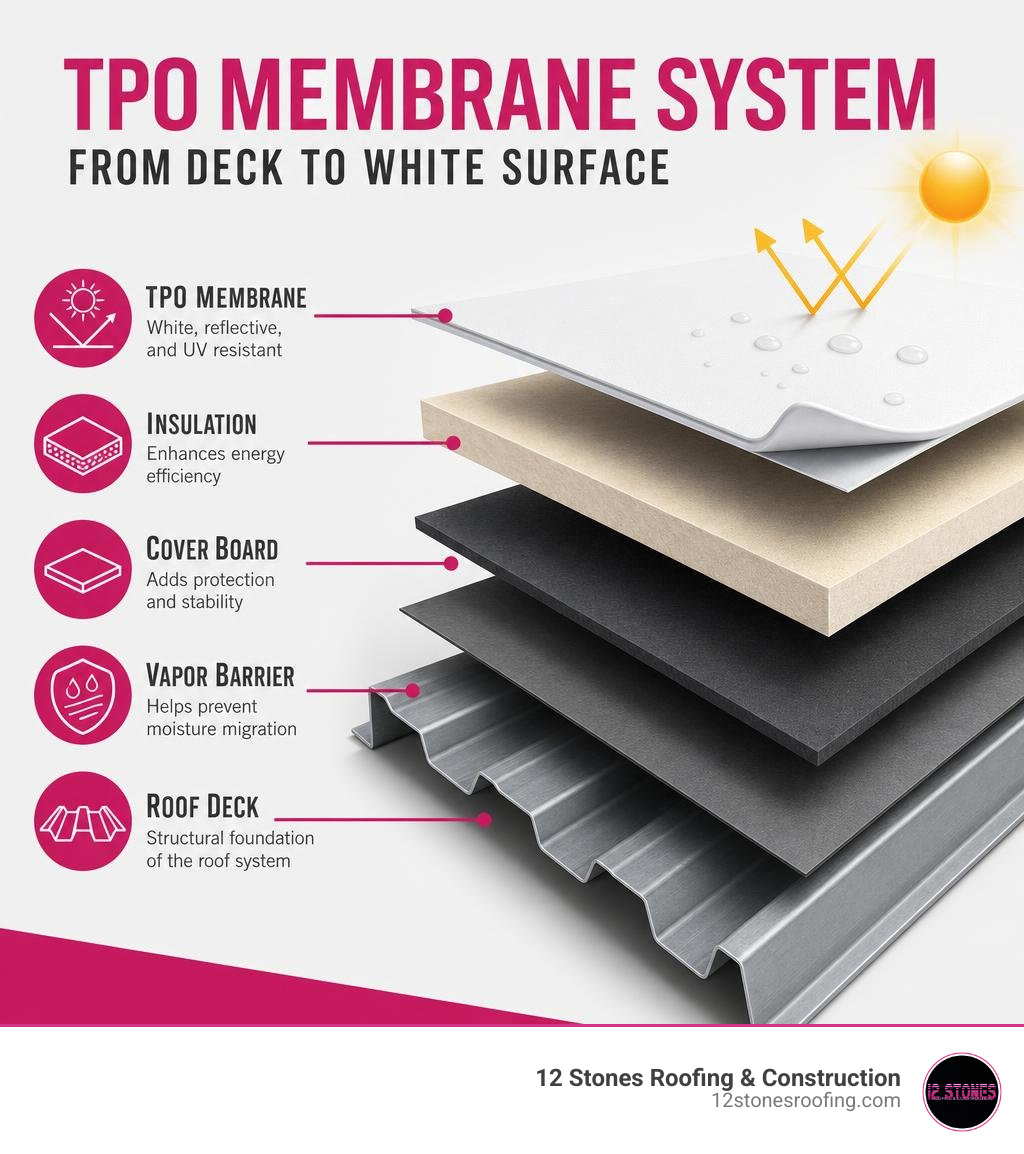
Quick TPO roofing services definitions:
What is TPO Roofing and How Does It Compare?
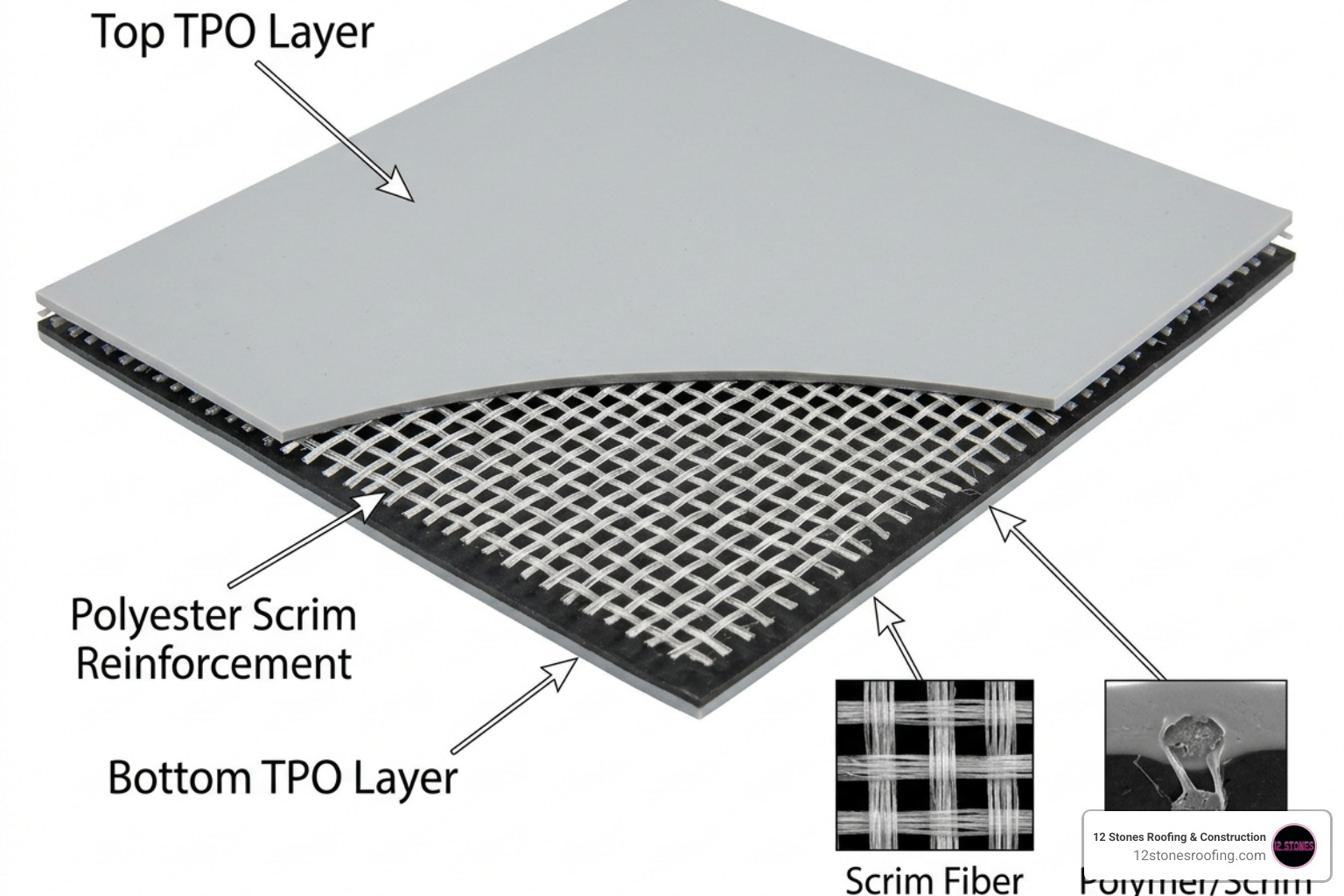
Thermoplastic Polyolefin (TPO) is a single-ply, synthetic roofing membrane engineered from a blend of polypropylene and ethylene-propylene rubber polymers. To provide structural strength, manufacturers reinforce this polymer base with a heavy-duty polyester woven scrim sandwiched between the top and bottom layers.
TPO differs fundamentally from other common single-ply roofing options like PVC (Polyvinyl Chloride) and EPDM (Ethylene Propylene Diene Monomer) in chemical formulation, seam technology, and overall cost.
TPO vs. PVC
While both are thermoplastic membranes with heat-welded seams, PVC contains plasticizers to remain flexible. Over decades of intense Texas sun exposure, those plasticizers can leach out, causing the PVC membrane to become brittle and crack. TPO is naturally flexible without plasticizers, making it highly resistant to long-term UV degradation. PVC does, however, offer superior resistance to harsh chemicals, animal fats, and grease, which makes it a preferred choice for restaurants with heavy kitchen exhaust systems.
TPO vs. EPDM
EPDM is a synthetic rubber membrane. Unlike TPO, EPDM is a thermoset material, meaning its seams must be joined using adhesive tapes or liquid sealants rather than heat welding. Taped seams represent a common point of failure because the adhesive eventually breaks down under standing water and thermal movement. TPO seams are physically fused together with hot-air welders, creating a monolithic, continuous sheet that is up to three times stronger than taped EPDM seams. Additionally, standard EPDM is black, meaning it absorbs solar heat and drives up cooling costs, whereas reflective white TPO keeps building interiors cooler.
The following table outlines the key differences between these three major single-ply roofing options:
| Feature | TPO (Thermoplastic Polyolefin) | PVC (Polyvinyl Chloride) | EPDM (Ethylene Propylene Diene Monomer) |
|---|---|---|---|
| Material Type | Thermoplastic polymer | Thermoplastic polymer | Thermoset synthetic rubber |
| Seam Method | Heat-welded (fused) | Heat-welded (fused) | Adhesive tape or liquid glue |
| Standard Color | White, light gray, tan | White, gray | Black (white is available but expensive) |
| Puncture Resistance | High | High | Moderate |
| Chemical Resistance | Resistant to animal fats, grease, oils | Highly resistant to fats, oils, chemicals | Poor resistance to oils and grease |
| Relative Cost | Moderate | High | Economical (Black) / High (White) |
For a deeper dive into choosing the right membrane for your facility, check out our AZ Guide to TPO Single Ply Membrane Options to compare chemical properties and material classes.
Key Specifications: Thicknesses, Colors, and Material Composition
To select the ideal membrane for your building, you must understand the physical specifications of TPO. The material composition, thickness, and color directly dictate how well your roof will stand up to physical wear, wind, and thermal stress.
Membrane Thickness (Mils)
TPO membrane thickness is measured in “mils” (one-thousandth of an inch). The standard industry options are:
- 45-mil (approximately 1.14 mm): This is the entry-level thickness. It is highly cost-effective and suitable for buildings with minimal foot traffic and light equipment loads.
- 60-mil (approximately 1.52 mm): The industry standard for commercial properties. It offers an excellent balance of durability, puncture resistance, and price. We highly recommend 60-mil for most commercial applications in Pasadena and La Porte.
- 80-mil (approximately 2.03 mm): The premium option. It provides maximum puncture resistance, extended weathering protection, and a longer manufacturer warranty. It is ideal for roofs with heavy HVAC maintenance traffic or high risk of storm debris damage.
Choosing a thicker membrane increases the amount of weathering material above the reinforcing scrim, extending the physical lifespan of the roof.
Color and Solar Reflectance
TPO is available in white, light gray, and tan. White is the most popular choice because of its high Solar Reflectance Index (SRI). A white TPO roof reflects up to 80% of solar radiation back into the atmosphere, keeping the roof surface up to 50°F cooler than a traditional dark-colored roof. This reflective property directly reduces the heat transfer into your building, lowering your air conditioning demands and protecting rooftop HVAC units from operating in extreme ambient temperatures.
If you are planning an installation, our White TPO Roofing Guide 2025 details how solar reflectance works under modern energy codes. You can also estimate material costs by reading How Much Does a Roll of TPO Roofing Cost? to plan your budget.
Professional TPO Roofing Services: Installation Methods Explained
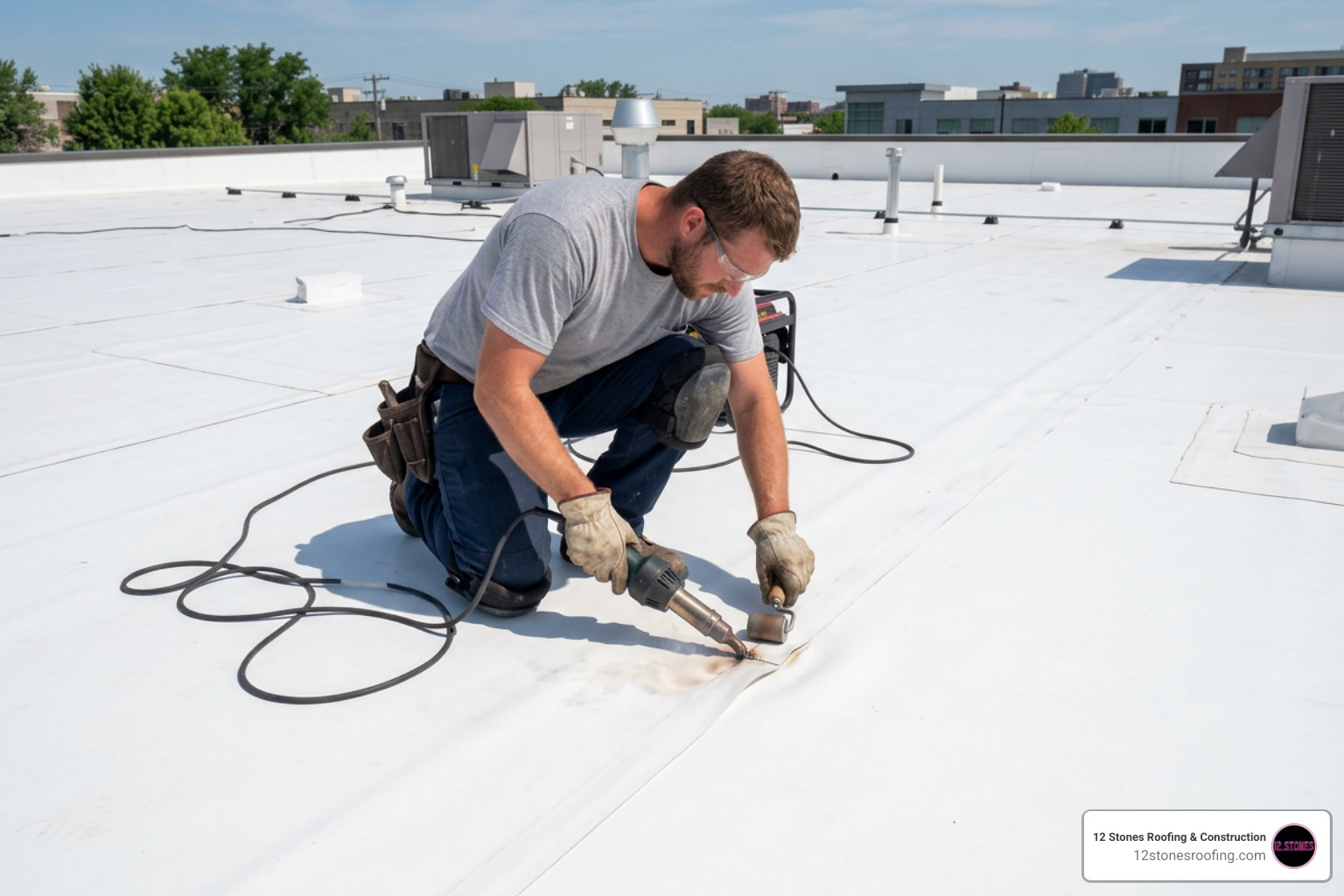
A TPO roof is only as reliable as the method used to secure it to your building’s deck. Professional TPO roofing services utilize three primary installation methods depending on the building’s structural design, wind uplift requirements, and budget.
1. Fully Adhered System
In a fully adhered installation, the TPO membrane is bonded directly to the underlying insulation board or substrate using a specialized liquid adhesive.
- When it is preferred: This is the most secure installation method. It is highly recommended for high-wind areas, buildings with high humidity, or roofs with unusual shapes.
- Pros: Excellent wind uplift resistance, smooth aesthetic appearance, and minimized risk of air migration beneath the membrane.
- Cons: More labor-intensive and requires dry, warm weather during installation to ensure proper adhesive curing.
2. Mechanically Attached System
Mechanically attached systems secure the TPO membrane to the roof deck using heavy-duty screws and plates driven through the edge of the membrane within the seam area. The overlapping sheet is then heat-welded over the fasteners to seal them.
- When it is preferred: Ideal for standard steel or wood roof decks where rapid installation and cost savings are priorities.
- Pros: Fast installation, lower labor costs, and can be installed in a wider range of temperatures.
- Cons: The membrane can “billow” or flutter slightly under high-wind conditions, placing physical stress on the fasteners.
3. RhinoBond Induction Welding System
The RhinoBond system is an advanced mechanical attachment method. Specialized plates are secured to the roof deck before the TPO membrane is rolled out. Once the membrane is in place, an induction welding tool is placed over the top of the membrane directly above the hidden plates. The tool emits magnetic energy that heats the plate, melting the underside of the TPO membrane and fusing it securely to the plate.
- When it is preferred: Excellent for achieving the wind performance of an adhered system without the mess and chemical odors of liquid adhesives.
- Pros: Distributes wind loads evenly across the entire roof surface, requires fewer fasteners, and allows for faster installation in cooler temperatures.
- Cons: Requires specialized equipment and highly trained, certified technicians.
The Importance of Heat-Welded Seams
Regardless of the attachment method, the seams of a TPO roof must be fused together using a hot-air welder. The welder heats the overlapping edges of the TPO sheets to approximately 800°F to 1,000°F, melting the top and bottom layers so they fuse into a single, cohesive piece of material. When performed correctly, a heat-welded seam is physically stronger than the membrane itself and forms an absolute barrier against water intrusion.
To understand how labor and material choices impact your bottom line, read Don’t Get Roofed: Unpacking TPO Installation Costs before signing a contract.
Lifespan, Climate Performance, and Common Membrane Problems
A properly installed TPO roofing system typically lasts 20 to 30 years. However, achieving this maximum lifespan depends heavily on how the system is engineered to handle local climate conditions and physical stressors.
Performing in the Texas Gulf Coast Climate
Pasadena and La Porte, Texas, present a brutal environment for any flat roof. Our coastal climate subjects roofs to:
- Extreme Heat and UV Exposure: Intense solar radiation accelerates the aging of inferior plastics. TPO is formulated with advanced UV stabilizers to prevent premature cracking and degradation.
- High Winds and Hurricanes: Flat roofs are highly susceptible to wind uplift forces. A properly engineered mechanical or fully adhered TPO system is critical to prevent the roof from tearing away during severe tropical storms.
- Ponding Water: Flat roofs often experience slow drainage, leading to standing water. Unlike asphalt-based systems that dissolve and degrade under standing water, TPO is highly water-resistant and can withstand ponding water, though proper drainage should always be maintained to prevent structural overload.
Common TPO Roof Membrane Problems
While TPO is exceptionally durable, it is not immune to issues, especially if installed incorrectly or neglected. Common problems include:
- Seam Failures: If the installer used incorrect temperature or speed settings on the hot-air welder, the seams may suffer from “cold welds,” which can pull apart under wind stress or thermal expansion.
- Punctures and Tears: Sharp debris, dropped tools during HVAC maintenance, or severe hail can puncture a thin 45-mil membrane.
- Shrinkage: Over decades of thermal expansion and contraction, older formulations of TPO could shrink slightly, pulling on the perimeter flashings and causing leaks. Modern TPO formulations have largely resolved this issue.
If you suspect your roof is showing signs of wear, read our guide on Uncovering the Most Common TPO Roof Membrane Problems to identify warning signs early. For local property owners researching local roofing standards, directories like THE BEST 10 ROOFING IN PASADENA, TX – UPDATED JULY 2026 can help you find reputable regional contractors.
Energy Efficiency, Maintenance, and Repair Best Practices
Operating a commercial building in the hot Texas climate requires a heavy emphasis on energy conservation. TPO roofing is one of the most effective tools available to lower your operational overhead.
Energy Efficiency and Utility Savings
By reflecting up to 80% of solar heat, white TPO membranes can reduce your building’s cooling costs by up to 30%. This “cool roof” technology lowers the heat load on your facility, meaning your HVAC systems don’t have to work as hard to maintain comfortable indoor temperatures. Many local municipal utility providers offer cash rebates and environmental incentives for installing high-reflectance commercial roofing systems.
Recommended Maintenance Routine
To protect your investment and maintain your manufacturer warranty, you should establish a biannual maintenance schedule:
- Clear Debris: Remove leaves, branches, and wind-blown trash that can block roof drains and scuppers.
- Inspect Seams and Flashings: Look closely for any signs of seam separation, cracking, or loose sealants around pipe penetrations and parapet walls.
- Check Drainage Systems: Ensure that gutters, downspouts, and interior drains are clear and flowing freely to prevent ponding water.
- Minimize Foot Traffic: Limit roof access to authorized personnel and install designated walk pads around heavy-use HVAC units to prevent accidental punctures.
Best Practices for TPO Repairs
If your TPO roof is damaged, repairs must be performed correctly to maintain the integrity of the system:
- Clean Thoroughly: TPO must be completely clean and free of dirt, atmospheric oils, and oxidation before any welding can occur. We use specialized cleaners to prepare the repair area.
- Heat-Welded Patches: Small punctures are repaired by cutting a rounded patch of matching TPO membrane and heat-welding it over the damaged area. Liquid sealants or caulking are only temporary fixes and should never be used as permanent repairs on TPO.
- Professional Inspections: We recommend scheduling professional inspections after major storm events to identify hidden wind or hail damage before water can migrate into your building’s insulation.
For a complete breakdown of commercial maintenance checklists, consult our TPO Roofing Complete Guide.
Frequently Asked Questions About TPO Roofing Services
What are the primary benefits of hiring professional TPO roofing services?
Hiring certified, professional installers ensures your TPO roof is welded correctly, preventing leaks and wind blow-offs. Professional contractors have the advanced hot-air welding equipment and training required to secure manufacturer-backed warranties, which often require certified installation to remain valid.
How much do commercial TPO roofing services cost per square foot?
In 2026, TPO roofing installation costs typically range from $6.00 to $12.00 per square foot, depending on the membrane thickness, insulation requirements (R-value), attachment method, and roof complexity. For a detailed breakdown of costs, check out The Complete Guide to TPO Price Per Square Foot.
Can TPO membranes be installed on residential flat roofs?
Yes, TPO is an excellent choice for residential flat or low-slope areas such as modern flat-roof homes, garages, home additions, and covered porches. To learn more about residential and specialized installations, read our Ultimate TPO Roofing Install Guide RV.
Conclusion
A high-performing commercial roof is the ultimate shield protecting your business operations, inventory, and employees. Investing in professional TPO roofing services ensures your building remains leak-free, highly energy-efficient, and structurally sound for decades to come.
At 12 Stones Roofing & Construction, we specialize in delivering commercial and flat TPO roofing installations, repairs, and preventative maintenance across Pasadena, TX, and La Porte, TX. As local, veteran-owned roofing experts, we understand the unique demands of the Texas Gulf Coast climate and engineer every roof to withstand intense heat, high winds, and torrential rains.
If you are ready to secure your commercial property with a durable, energy-efficient TPO roof, contact our team today to schedule your free, professional roof assessment and estimate. Let us help you protect what matters most.